Rohit Shah

Read in English Kid Mode

Kid Mode: the same story, told simply. Big ideas, small words.

Part Three · Hoof and Horn

Chapter 12

The Wild Cattle

The giant wild bull of the cave paintings, the buffalo demon, and the bison that nearly disappeared.

Assisted and Curated by Claude, Referenced and Collated by me

A massive dark gaur bull with white stockings
PlateA gaur bull, the largest wild cattle on earth. Photo: Animalkingdomvideos / Wikimedia Commons, CC BY-SA 4.0

Scientific name: Aurochs, gaur, wild buffalo, bison

In 1627, in a forest in Poland, the very last aurochs died. The aurochs was a giant wild bull, black, with huge curved horns, standing taller than a grown man at the shoulder. Kings had guards to protect the last herd, but hunting, disease and farm cattle finished them.

Every cow you have ever seen comes from the aurochs. Cave painters drew aurochs on the walls of Lascaux in France seventeen thousand years ago, and they are the biggest animals in the cave.

From wild bull to sacred cow

People tamed cattle at least twice. In the Middle East, about ten thousand years ago, they tamed the aurochs. And around the Indus Valley, they tamed the Indian aurochs, which became our humped zebu cows. Beautiful bulls are carved on Indus Valley seals.
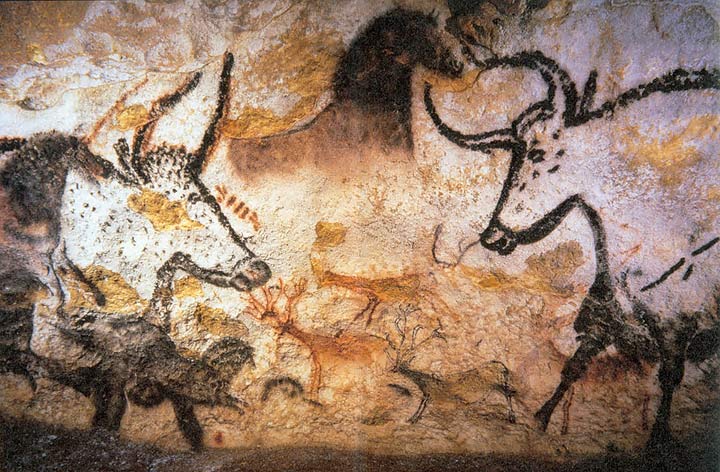
A cave painting of a large bull
PlateAn aurochs painted at Lascaux about 17,000 years ago. The last aurochs died in Poland in 1627. Photo: Lascaux cave / Wikimedia Commons

The bull stood for strength in many old stories. In Crete, young people leapt over the horns of bulls. In Egypt, a special bull called Apis was worshipped. In India, the bull Nandi is Shiva's companion, and his statue sits facing the god in every Shiva temple.

A small square stone seal with a bull figure
PlateA seal from Mohenjo-daro showing a one-horned bull, about 2500 BCE. Photo: Ernest Mackay / Wikimedia Commons
A fossil skull with long horns
PlateSkull of the Indian aurochs, wild ancestor of the zebu. Photo: Jochen Ackermann (User name: Altaileopard) / Wikimedia Commons, CC BY-SA 3.0

Nine thousand years ago, people decorated their homes with bull horns. Krishna is called Gopala, the cowherd.

SketchKrishna lifts the Govardhan hill like an umbrella to shelter the herds and the herders from Indra's storm. Drawing made for this book
A polished stone bull on a pillar capital
PlateThe Rampurva bull, an Ashokan pillar capital of the third century BCE, now in Rashtrapati Bhavan. Photo: Copyright © 2016 The Presidents Secretariat, / Wikimedia Commons, GODL-India
A grey bull with large lyre-shaped horns
PlateA Kankrej bull of Gujarat, one of India's native breeds. Photo: Pavanaja / Wikimedia Commons, CC BY-SA 3.0
Film 1The attempt to bring back the aurochsBen G Thomas · YouTubeHeck cattle and the long effort to breed back the wild ancestor of all cattle.

The gaur

India has the biggest wild cattle on Earth, the gaur. A big gaur bull can weigh more than a tonne, as much as a small car! It is dark brown, with white 'socks' on its legs. Even tigers usually leave grown-up bulls alone. Gaur are shy and live in herds in hilly forests.

A herd of gaur standing in a forest clearing
PlateA gaur herd at a mineral lick in Nagarhole, Karnataka. Photo: Amog / Wikimedia Commons, CC BY-SA 3.0
Gaur grazing in Kanha
PlateGaur in Kanha. Even tigers rarely take on a full-grown bull. Photo: Nikhilkobe / Wikimedia Commons, CC BY-SA 4.0
Gaur grazing on a hillside
PlateGaur in Periyar, Kerala. Photo: Anand2202 / Wikimedia Commons, CC BY-SA 4.0

In northeast India, some communities keep the mithun, a tame form of the gaur, as a sign of wealth and a wedding gift. The wild water buffalo survives in small numbers in places like Kaziranga in Assam, and the wild yak lives high in the Himalaya.

A gaur cow and calf
PlateA gaur with her calf. Photo: Punithgowdanpg / Wikimedia Commons, CC BY-SA 4.0
Film 2Why the gaur came close to peopleMongabay India · YouTubeIndian bison in the Nilgiris and Kodagu, moving out of the forest.

The buffalo demon and the lord of death

In Hindu stories, Yama, the god of death, rides a black buffalo. The famous demon Mahishasura could take the form of a buffalo. No god could defeat him, so the gods joined their powers to create the goddess Durga. She fought him for nine days and won on the tenth. That is what Navaratri and Durga Puja celebrate!

A painting of Durga killing a buffalo-demon
PlateDurga slays the buffalo demon Mahishasura. Photo: LACMA / Wikimedia Commons
A painting of Yama seated on a buffalo
PlateYama, god of death, rides a water buffalo. Photo: Unknown artist / Wikimedia Commons
A stone carving of Durga spearing a buffalo
PlateDurga killing the buffalo demon, eighth to ninth century temple sculpture. Photo: Ms Sarah Welch / Wikimedia Commons, CC BY-SA 4.0

The Toda people of the Nilgiri hills keep buffaloes at the centre of their religion. Their dairies are like temples.

A decorated clay image of Durga
PlateA Durga Puja image in Bengal, the goddess with her children above the slain demon. Photo: Augustus Binu/ facebook / Wikimedia Commons, CC BY-SA 3.0
Clay idols being made
PlateDurga idols being made at Kumartuli, Kolkata, for the festival that celebrates her victory over the buffalo demon. Photo: Pinakpani / Wikimedia Commons, CC BY-SA 4.0

The white buffalo

Two hundred years ago, tens of millions of bison roamed North America. Herds took days to pass by! For Native American peoples like the Lakota, the bison gave food, clothes, homes and tools. A holy story tells of White Buffalo Calf Woman, who brought the people sacred gifts and then turned into a white buffalo calf.

A pale gaur in forest
PlateA rare pale gaur, the 'white bison' of Chinnar, Kerala. Pale animals have often been treated as sacred. Photo: N.A.Nazeer / Wikimedia Commons, CC BY-SA 2.5

Then hunters killed the bison by the millions. By the 1880s, fewer than a thousand were left. A few people saved the last ones, and now there are hundreds of thousands again. In Europe, the European bison disappeared from the wild in 1927 but was bred back from just about a dozen animals in zoos.

Film 3How the American bison came backTerra Mater · YouTubeFrom a few hundred animals to herds again.

The bull in the arena

In Tamil Nadu, during the Pongal harvest festival, young men try to hold on to the hump of a running bull. This sport is called jallikattu. Some people love it as part of Tamil culture; others worry it is cruel. It is still argued about today.

A crowd of men grabbing at a bull in an arena
PlateJallikattu in Tamil Nadu, 2019. Young men try to hold on to a running bull's hump. Photo: Sundaram Perumal / Wikimedia Commons, CC BY-SA 4.0
A large carved stone bull
PlateNandi, Shiva's bull, at Warangal Fort, twelfth century. Photo: Harshil Mehta / Wikimedia Commons, CC BY-SA 4.0
A small seal showing a bull and figures
PlateAn Indus seal often read as a bull-leaping scene, perhaps an ancestor of jallikattu. Photo: JENCY NACHIYAR / Wikimedia Commons, CC0
A large crowd on a beach
PlateProtesters at Chennai's Marina beach demanding the return of jallikattu, January 2017. Photo: Kapeway7 / Wikimedia Commons, CC BY-SA 4.0
A large stone bull facing a temple
PlateThe great Nandi at Gangaikondacholapuram, Tamil Nadu. Photo: Wikimedia Commons contributor / Wikimedia Commons, CC BY-SA 1.0

On Mattu Pongal, families paint their cows' horns and give them garlands, and in Karnataka buffaloes race through muddy fields in Kambala.
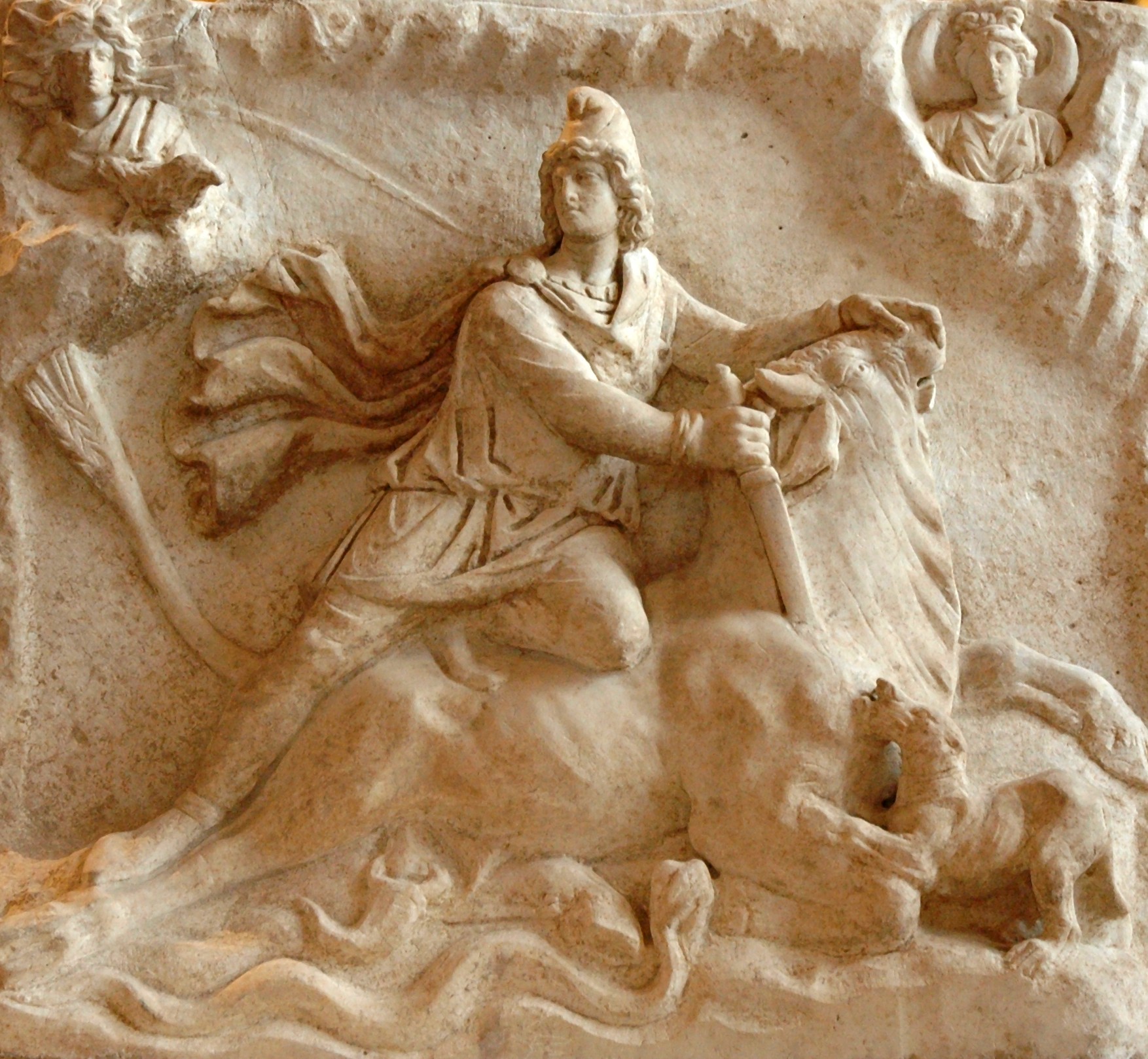
A carved scene of a god killing a bull
PlateMithras slaying the bull, a Roman sculpture in the Louvre. Photo: Jastrow / Wikimedia Commons
A huge pile of bison skulls
PlateA mountain of bison skulls, 1870s: how close the American bison came to the end. Photo: Soerfm / Wikimedia Commons, CC BY-SA 3.0
Men racing buffaloes through water
PlateKambala, the buffalo race through flooded paddy fields in coastal Karnataka. Photo: Rayabhari / Wikimedia Commons, CC BY-SA 3.0

What the wild cattle teach

The wild cattle show how much people can change an animal, turning the wild aurochs into the gentle cow, and how fast we can lose one. But the strength of the bull still lives on in our stories and festivals.

A gaur bull in a forest
PlateA gaur bull in Satpura Tiger Reserve. Photo: A. J. T. Johnsingh, WWF-India and NCF / Wikimedia Commons, CC BY-SA 4.0

Read Premchand's story 'Do Bailon Ki Katha', about two loyal bullocks named Heera and Moti.

Assisted and Curated by Claude, Referenced and Collated by me. About this material