Part Five · Scale and Water
Chapter 24
The Serpent
The animal that sheds its skin, the Nagas of India, and how to stay safe around snakes.
Assisted and Curated by Claude, Referenced and Collated by me
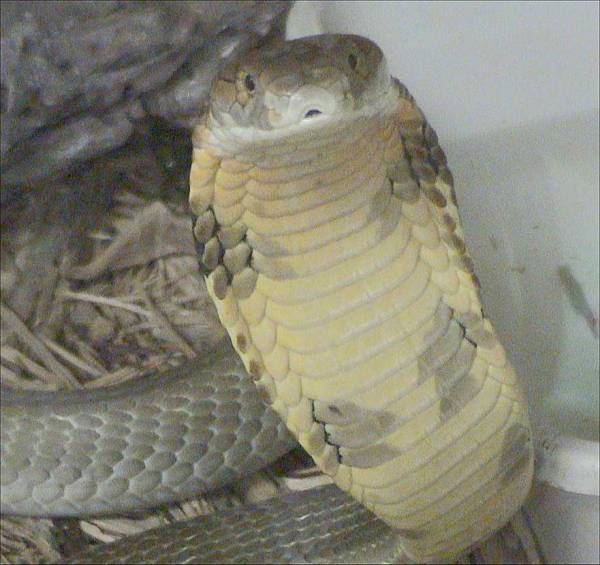
Scientific name: Cobras, pythons and their kin
One of the oldest stories in the world is about a king called Gilgamesh. He searched everywhere for a plant that could make people young again. He finally found it at the bottom of the sea. But on the way home, while he was bathing, a snake smelled the plant and ate it. Then the snake shed its old skin and slid away looking brand new. Gilgamesh sat down and cried.
People everywhere have seen snakes shed their skin and come out shiny and new. It seemed as if snakes knew the secret of being born again. That is one reason snakes are such powerful symbols in stories.

How a snake knows the world
Snakes have no outside ears and no eyelids. But they have amazing senses. A snake flicks its forked tongue to catch smells from the air, then touches them to a special organ in its mouth. With two tips on its tongue, it can tell which side a smell is stronger on, and follow a trail.

Pythons and some vipers have little pits on their faces that sense heat. They can 'see' a warm mouse in total darkness!

Have you seen a snake charmer's cobra sway to the music? The cobra cannot really hear the tune. It is following the moving pipe, which it thinks might be a threat. Snake charming was banned in 1972 because it was cruel, and many former charmers now rescue snakes instead.


The king cobra and the spectacled cobra
The king cobra is the longest venomous snake in the world, more than five metres long. It eats other snakes! The mother king cobra is the only snake that builds a nest for her eggs, out of leaves, and she guards it for weeks.


The spectacled cobra has a pattern on the back of its hood that looks like a pair of glasses. It is the cobra of Indian art and stories.


Snakebites are a serious problem in India, especially for farmers. To stay safe: wear shoes outdoors, use a torch at night, sleep on a raised bed if you can, and never try to touch or catch a snake. If someone is bitten, take them to a hospital quickly.


The Nagas
In India, snakes are very special. Nagas are magical serpent beings who live in underground palaces full of jewels and guard rivers and rain.

Vishnu rests on the coils of the giant serpent Shesha, who holds up the worlds on his thousand hoods. Shiva wears a snake around his neck. Little Krishna danced on the hoods of the serpent Kaliya to drive him out of the Yamuna river. And when the Buddha was meditating in a storm, the snake king Mucalinda spread his hood over him like an umbrella.

In Bengal, people pray to Manasa, the snake goddess. In her story, a brave young woman named Behula travels down the river on a raft for months and dances before the gods to bring her husband back to life. On Nag Panchami, people offer milk to snakes. In Kerala, little sacred forests for snake gods have protected trees and wildlife for hundreds of years.
In the old play Nagananda, a kind prince offers himself to Garuda to save a young snake, and Garuda is so moved that he stops hunting snakes.

Serpents of the world
Snakes appear in stories everywhere. The Greek god of healing carried a staff with a snake around it, and it is still the symbol of medicine. In Mexico, Quetzalcoatl was a feathered serpent god. In Australia, the Rainbow Serpent made the rivers and waterholes.
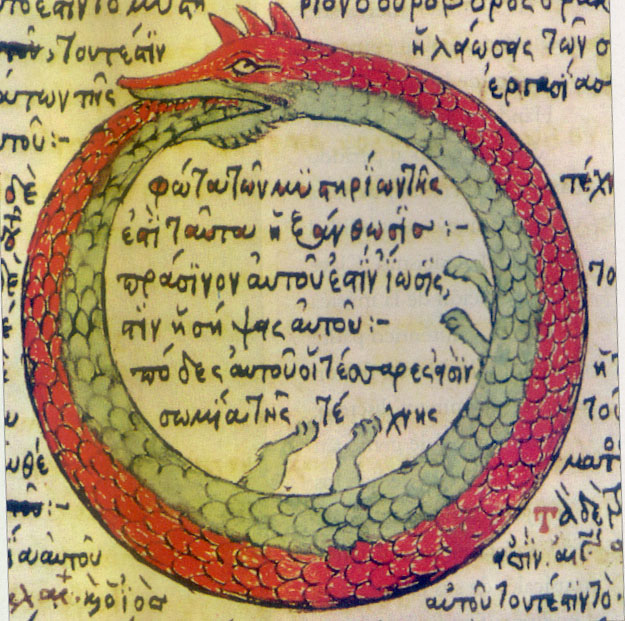
The ouroboros is a snake biting its own tail, making a circle. It stands for things that go on and on forever.


A scientist once worked out the ring shape of a molecule after daydreaming about a snake biting its own tail. Read Kipling's 'Rikki-Tikki-Tavi', about a brave mongoose, and The Little Prince, which begins with a snake that swallowed an elephant!

Pythons and people
The Indian rock python is one of the biggest snakes in the world. It can swallow a whole deer by stretching its jaws very wide! It squeezes its prey to stop its blood flowing. In Florida, pet pythons that escaped have eaten so many small animals that rabbits and raccoons have almost disappeared there.


What the serpent teaches
Snakes are feared more than almost any other animal, but they are also among the most sacred. Perhaps because they stand for two big things: danger, and the hope of being born again. Respect snakes, keep a safe distance, and let them live.

