Part Four · Wings
Chapter 23
The Bat
The mammal that flies and sees with sound, the flying foxes of the village banyan, the planters of forests and the eaters of pests, and the animal we fear more than we understand.
Assisted and Curated by Claude, Referenced and Collated by me

Order Chiroptera
In 1793, in the Italian city of Pavia, a priest and scientist named Lazzaro Spallanzani carried out a strange experiment. He had noticed that his pet owl, released in a dark room, flew into walls and objects. But bats, released in the same dark room, flew perfectly, avoiding every obstacle. How did they do it? He blindfolded some bats. They still flew perfectly. He went further, in experiments that seem cruel to us now: he blinded bats completely. They still flew perfectly, and when he released them outside and caught them again days later, their stomachs were full of insects. Clearly, bats did not need their eyes to fly. Then a Swiss scientist, Louis Jurine, tried plugging bats' ears with wax. Now they crashed into things and could not fly properly. Spallanzani confirmed it. Bats, it seemed, found their way with their ears.


But how? Spallanzani could not hear any sound from the bats. Most people thought his idea was absurd. One scientist mocked him: if bats see with their ears, do they hear with their eyes? The mystery lasted for nearly a hundred and fifty years. Then, in 1938, a young American biology student at Harvard named Donald Griffin took some bats to the physicist George Pierce, who had built one of the first devices that could detect ultrasound, sounds too high-pitched for human ears. Pierce's machine revealed that bats were shouting constantly as they flew, in calls far above the range of human hearing. They were listening to the echoes. In 1944 Griffin gave this ability a name: echolocation.
Bats are among the most remarkable animals on earth, and among the most misunderstood. They are the only mammals that can truly fly. They make up about one in five of all mammal species. They pollinate flowers, spread the seeds of forests, and eat vast numbers of insects, including pests of crops and the mosquitoes that carry disease. And they are feared and hated in many places, linked with darkness, death, vampires and disease. In India, they hang in their thousands from the banyans and peepals of villages, and they flit around the street lights of every town at dusk. This chapter is about the animal we see every evening and almost never really look at.
The flying mammal
There are more than fourteen hundred species of bats, found on every continent except Antarctica. They range in size from the bumblebee bat of Thailand and Myanmar, which weighs about two grams and is one of the smallest mammals in the world, to the great flying foxes of Asia and the Pacific, with wingspans of up to one and a half metres. India has about 130 species, from tiny insect-eating bats that roost in roof cracks and temple walls to the Indian flying fox, one of the largest bats in the world.


A bat's wing is a hand. The scientific name of the order, Chiroptera, means "hand-wing". Its arm bones are long, and its four fingers are enormously lengthened, much longer than the rest of its body in some species. Between the fingers, and from the fingers to the body and the legs, stretches a thin, elastic skin, the wing membrane, laced with blood vessels, nerves and tiny muscles. The thumb is free, short and clawed, and bats use it to climb and hold on. Because a bat can move each finger separately, it can change the shape of its wing far more than a bird can, giving it great control in the air. Bats can turn sharply, hover in some species, and catch insects in mid-flight with the wing membrane, scooping them towards the mouth.
The wing membranes are also covered in tiny hairs, each linked to sensitive nerve endings. Experiments have shown that these hairs detect the flow of air over the wing, helping the bat to sense when it is about to stall and to adjust its flight. When researchers removed the hairs, bats flew less skilfully, especially when making sharp turns.
Bats hang upside down to rest. Their legs are rotated, with the knees facing backward, and their feet have a special tendon-locking mechanism: when a bat hangs, its body weight pulls the tendons tight and closes its claws around the perch, without any effort from its muscles. A bat can sleep hanging upside down all day without tiring, and dead bats have been found still hanging. Hanging also makes take-off easy: a bat simply lets go and drops into flight, without needing the run-up or the strong leg muscles that birds use.
Seeing with sound
Most bats, though not all, use echolocation. An insect-eating bat flying at night makes a series of very high-pitched calls, usually through its mouth, sometimes through its nose. The calls bounce off objects around it, and the bat listens to the echoes with its large, sensitive ears. From the time it takes for an echo to return, the bat can work out how far away an object is. From the difference between the echoes reaching its two ears, it can tell in which direction the object lies. From subtle changes in the echo's pitch and pattern, it can tell whether the object is moving toward it or away, how big it is, and even its texture. A bat can detect a wire thinner than a human hair, and tell a moth from a leaf.

When a bat closes in on an insect, it speeds up its calls, from a few per second to more than a hundred and fifty per second, a burst of sound called the feeding buzz. This gives it rapidly updated information in the final moments of the chase. Bat calls are extremely loud. Some are louder than a rock concert, but because they are so high-pitched, we cannot hear them. To avoid deafening itself, a bat contracts a tiny muscle in its middle ear each time it calls, briefly reducing its sensitivity, and relaxes it in time to hear the echo.
Different bats have different calls. Horseshoe bats, which have complicated folds of skin around their noses, produce long calls of nearly constant pitch, and can detect the flutter of an insect's wings by the tiny changes it makes in the echo. Other bats use short calls that sweep downward in pitch. Bat researchers use bat detectors, devices that make bat calls audible, to identify species by their calls, much as birdwatchers identify birds by their songs.
Moths, the bats' main prey, have fought back. Many moths have ears tuned to the frequencies of bat calls, and when they hear a bat approaching, they dive, loop or drop to the ground. Some tiger moths produce their own ultrasonic clicks, which may startle bats, warn them that the moth tastes bad, or even jam the bat's sonar. Some moths have scales on their wings that absorb sound, making them harder to detect. The battle between bats and moths, fought every night in a world of sound we cannot hear, is one of the great evolutionary arms races.
The battle between bats and moths is fought every night, in a world of sound we cannot hear.
In 1974, the American philosopher Thomas Nagel published a famous essay called "What Is It Like to Be a Bat?". Nagel chose the bat precisely because its way of experiencing the world, through echolocation, is so different from ours. We can study the physics of bat calls and the structure of bat brains in great detail, he argued, but we can never know what it is like, from the inside, to be a bat perceiving the world through sound. The essay became one of the most influential works in the philosophy of mind, at the centre of debates about consciousness that continue today.


The flying foxes of the village tree
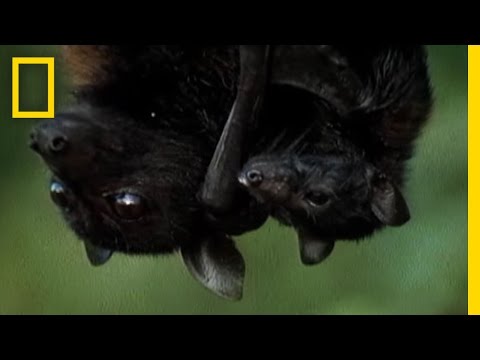
The largest bats in India are the fruit bats, and the largest of these is the Indian flying fox, Pteropus medius, sometimes still called Pteropus giganteus. It has a wingspan of more than a metre, a fox-like face with large dark eyes, and a reddish-brown neck and shoulders. Unlike most smaller bats, fruit bats do not echolocate, or only very simply. They find their food by sight and smell, using their large eyes, which see well in dim light, and their keen noses.

Flying foxes live in large colonies, often of hundreds or thousands of bats, which roost by day in tall trees, very often near villages, temples, ponds or rivers. Banyans, peepals, tamarinds and other big trees may be used by the same colony for decades or even centuries. By day, the bats hang from the branches, wrapped in their wings, squabbling, grooming and fanning themselves in the heat. At dusk, they set out, flapping slowly across the sky in long streams, to feed on fruit and nectar, sometimes flying fifty kilometres or more in a night.
In many parts of India, villages have protected their bat colonies for generations. In some places, people believe the bats are protected by a local deity, or that they bring good fortune, and harming them is forbidden. Villages in Tamil Nadu, Karnataka, Bihar and elsewhere have been reported to give up bursting firecrackers during Diwali, so as not to frighten the bats roosting in their trees. In Sarsai, a village in the Vaishali district of Bihar, a large colony of flying foxes has long been regarded as a sign of prosperity, and villagers protect them. Such beliefs have kept many colonies safe, even as large trees have been cut elsewhere.
Not everyone loves the bats. Flying foxes sometimes raid orchards of mango, guava, lychee and other fruits, and farmers have killed them. They have been hunted for meat and for traditional medicine in parts of India; some people believe that bat meat or fat cures asthma or rheumatism, beliefs with no scientific basis. Until 2022, the Indian flying fox was listed in Schedule V of the Wildlife (Protection) Act, the list of "vermin", along with the common crow and rats, which meant it had no legal protection and could be killed freely. The Wildlife (Protection) Amendment Act of 2022 removed the vermin schedule altogether, and fruit bats are now protected.

India's hundred and thirty bats
Most people in India know only two kinds of bat: the big fruit bats that hang in village trees, and the little bats that flit around street lights in the evening. But India has about 130 species, and they are astonishingly varied.
Among the fruit bats, besides the Indian flying fox, there is the fulvous fruit bat, which roosts in caves and old buildings, and the greater short-nosed fruit bat, Cynopterus sphinx, a small fruit bat with a dog-like face that lives in gardens across India. Short-nosed fruit bats are known for making "tents": a male chews through the veins of a palm or banana leaf, or the stems of a cluster of flowers, so that they droop down to form a shelter, under which he roosts with a group of females. In the Western Ghats lives Salim Ali's fruit bat, named after the great ornithologist, a rare species found only in a few forest areas of Kerala and Tamil Nadu, and one of the least known mammals in India.


Among the insect-eaters, there are the tiny pipistrelles, which roost in cracks in walls and roofs of houses and are the most common bats in Indian towns; the horseshoe bats and leaf-nosed bats, with their elaborate nose-leaves; the sheath-tailed bats and tomb bats, which roost on the walls of old buildings and monuments; and the free-tailed bats, with long, narrow wings built for fast flight in open air. The greater false vampire bat, with enormous ears joined at the base, does not drink blood, despite its name, but hunts large insects, frogs, lizards, fish and even other bats, catching them on the ground or in the air and carrying them back to a feeding roost.
Some Indian bats are extremely rare. Wroughton's free-tailed bat was known for decades only from a single cave, Barapede, in the Western Ghats of Karnataka, before being found also in Meghalaya and Cambodia. Several bats new to science have been described from India in recent decades, especially from the Northeast and the Western Ghats, and researchers believe more remain to be found. Many of India's bats are poorly studied, and for some, almost nothing is known about their numbers or habits.
Mothers in the dark
Bats reproduce slowly for animals of their size. Most species give birth to only one pup a year, and some only every other year. A newborn bat is large, often a quarter to a third of its mother's weight, the equivalent of a human mother giving birth to a child weighing twenty kilograms. The mother carries the pup, clinging to her fur, in its first days, and then leaves it in the roost while she goes out to feed, returning to nurse it.
In many species, females gather in maternity colonies to give birth and raise their young. Some of these colonies are enormous. In caves in Texas and Mexico, millions of Mexican free-tailed bat pups may hang together on the walls, packed at densities of thousands per square metre. When a mother returns from a night's hunting, she must find her own pup among them. Studies have shown that she does this using memory of the place where she left it, and then calls, listening for its reply, and finally checks it by smell. Mothers find and nurse their own pups most of the time, though in some species they may also nurse others.

Young bats learn to fly after a few weeks, and must then learn to echolocate and hunt. In some species, mothers seem to guide their pups on their first flights, and young bats may follow adults to feeding areas. Learning to catch insects in the dark takes practice, and young bats are clumsy at first.
Because they breed so slowly, bat populations take a long time to recover when they are reduced. A colony that loses many adults, to hunting, disease or the destruction of its roost, may take decades to return to its former size. This is one reason why bat conservation focuses so strongly on protecting roosts, especially maternity colonies and hibernation caves.
A night with the flying foxes
Follow a flying fox through a night, and you see a side of India that most people sleep through. The bat leaves its roost tree just after sunset, part of a long, loose stream of bats crossing the evening sky, wings beating slowly, sometimes gliding. It may fly ten, twenty or fifty kilometres to a feeding place: a fig tree heavy with fruit, a grove of mango or guava, a row of flowering silk cotton trees, or a patch of banana plants in a village garden. It finds the fruit by smell and by sight, and remembers good feeding trees from one night to the next.
At the tree, it lands clumsily, grabbing a branch with its feet and thumb claws, and hangs to feed. A flying fox does not swallow most of the fruit. It crushes it in its mouth, squeezing out the juice and soft pulp, and spits out the fibres and larger seeds in a little pellet. Small seeds, such as those of figs, are swallowed and pass through the gut in less than an hour, to be dropped wherever the bat happens to be flying. In this way, a single flying fox can scatter thousands of fig seeds across the landscape in one night.

Through the night, the bats squabble over the best fruit, screeching and flapping, and move between trees. Before dawn, they fly back to the roost, where the noise rises again as thousands of bats jostle for their places on the branches, quarrelling over the best spots, and then settle down. During the day, they sleep, groom and nurse their young, and on hot days they fan themselves with their wings and lick their bodies to cool down.
A large flying fox colony is one of the great wildlife sights of India, and many of them are in plain view: in the trees of village squares, along canals, in temple gardens and in city parks. In some towns of Karnataka, Kerala and Tamil Nadu, and in Bihar and West Bengal, flying fox colonies have lived in the same trees for as long as anyone can remember. Watching the evening fly-out, as thousands of bats rise from the trees and stream away into the dusk, is to see one of the oldest rhythms of the Indian countryside.
Gardeners of the dark
Bats do work for the world that most people never notice. Fruit bats are important dispersers of seeds. They eat fruit, often carrying it away from the tree to eat in safety, and they swallow small seeds and drop larger ones as they fly. Because they fly long distances and are active at night, they spread the seeds of many trees across the landscape, including into cleared land, where the seeds can start new forest. Studies in tropical forests have found that bats can be responsible for a large share of the seeds that fall into open, deforested areas, helping forests to regenerate.
Many bats are also pollinators. Nectar-feeding bats visit flowers at night, pushing their long snouts and tongues deep inside, and carrying pollen from flower to flower on their fur. Plants that depend on bats often have large, pale, strong-smelling flowers that open at night. In India, bats pollinate the flowers of trees and plants such as the silk cotton tree and the wild banana. In Southeast Asia, bats are the main pollinators of the durian, one of the most valuable fruits of the region. In Africa, the baobab is pollinated by bats. In Mexico, the agave plants from which tequila is made depend on long-nosed bats for pollination; some tequila makers now let some agave plants flower, instead of harvesting them all, to support the bats.


Insect-eating bats are pest controllers. A single small bat can eat hundreds of insects in an hour. A large colony may eat many tonnes of insects in a night. In 2011, a study in the journal Science estimated that bats save farmers in the United States billions of dollars a year by eating pests of crops, reducing the need for pesticides. In India, too, studies in rice fields, cotton fields and orchards have found that bats eat many crop pests. Bats also eat mosquitoes, though their importance in controlling mosquito-borne diseases is debated.
In India, researchers studying bats in farmland have found that insect-eating bats feed heavily on moths and beetles that damage crops such as rice, cotton, maize and tea. In some studies, the DNA of crop pests has been identified in bat droppings collected beneath roosts, showing directly which pests the bats are eating. A small colony of bats living in a farmhouse roof or a village temple may be providing a farmer with free pest control every night of the year. In parts of Southeast Asia, farmers have begun putting up bat houses near rice fields and orchards to encourage bats to stay.
Bat droppings, called guano, which pile up in thick layers in caves where bats have roosted for centuries, are one of the richest natural fertilisers known. In the nineteenth century, guano mined from caves and islands was an important item of world trade. In parts of India and Southeast Asia, guano is still collected from caves and used on fields.
The vampire's cousins and other wonders
Bats have evolved an astonishing variety of ways of life. Besides fruit-eaters, nectar-feeders and insect-eaters, there are bats that eat fish, catching them with their long, hooked claws as they skim low over water; bats that eat frogs, locating them by listening to their mating calls; bats that eat scorpions, apparently immune to their stings; and the three species of vampire bats, which drink blood.
Some bats are astonishingly small. The bumblebee bat, or Kitti's hog-nosed bat, found in caves in western Thailand and southeastern Myanmar, weighs about two grams, less than a coin, and has a body about three centimetres long. It was discovered by the Thai biologist Kitti Thonglongya in 1973. At the other end of the scale, the largest flying foxes of Southeast Asia and the Philippines, such as the giant golden-crowned flying fox, have wingspans of up to about one and a half metres.

Some bats migrate long distances, like birds. In Africa, straw-coloured fruit bats gather each year in Kasanka National Park in Zambia, where up to ten million bats arrive in October and November to feast on fruit, the largest mammal migration in the world by numbers. In Europe, some small bats fly more than a thousand kilometres between their summer roosts and their winter hibernation sites.
Bats have also evolved remarkable ways of saving energy. Many insect-eating bats in cold climates hibernate through the winter, lowering their body temperature almost to that of their surroundings and slowing their heart rate from hundreds of beats a minute to just a few. In tropical India, where insects are available all year, most bats do not hibernate, but some reduce their activity in the cooler months, and those in the high Himalaya may hibernate in caves and crevices.
Bats and disease
In recent decades, bats have become known as carriers of viruses that can infect humans. Bats can carry many viruses without falling ill themselves, and some of these viruses have spilled over into people, sometimes with deadly results. In Malaysia in 1998 and 1999, a new virus, named Nipah after the village where it was first found, caused an outbreak of brain disease among pig farmers, killing more than a hundred people. The virus was traced to fruit bats, which had dropped half-eaten fruit into pig pens. In Bangladesh and India, Nipah outbreaks have occurred repeatedly, often linked to people drinking raw date palm sap contaminated by bats. In Kerala, an outbreak in the Kozhikode district in 2018 killed seventeen people, and further outbreaks have followed in later years.

Bats have also been linked to the origins of other diseases, including the SARS outbreak of 2002 and 2003, and are thought to be the original source of the virus family that includes the coronavirus behind the COVID-19 pandemic, which began in 2019. These links have made many people afraid of bats, and in some places, bats have been attacked or their roosts destroyed.
Scientists warn that this is a mistake. Killing bats or destroying their roosts can make matters worse, by stressing the bats, which may cause them to shed more virus, and by scattering them into new areas. The risk of disease spreading from bats to people rises when people destroy bats' habitats, crowd them into smaller areas, hunt and handle them, and bring livestock and people into close contact with them. The best way to avoid diseases from bats, experts say, is to leave them alone, protect their habitats, and avoid eating food they may have contaminated.
Why can bats carry so many viruses without getting sick? Part of the answer may lie in flight. Flying is extremely demanding, raising a bat's body temperature and metabolism, and over millions of years, bats seem to have evolved ways of controlling inflammation and repairing damage to their cells. These same adaptations may let them tolerate viruses that would make other mammals ill. Bats are also remarkably long-lived for their size. A small Brandt's bat, weighing less than ten grams, has been recorded living for more than forty years in the wild. Scientists study bats in the hope of learning more about immunity and ageing.
Bats in myth and fear
In many cultures, bats have been linked with darkness, witchcraft and death. In medieval Europe, devils and demons were often painted with bat wings, while angels had bird wings. Bats were believed to be the companions of witches. The vampire bats of Central and South America, which feed on the blood of animals, inspired legends that merged with older European stories of the undead. When the Irish writer Bram Stoker published Dracula in 1897, his vampire count could take the form of a bat, and ever since, bats and vampires have been linked in popular imagination.


The real vampire bats are more interesting than the legends. There are three species, all in the Americas, and they feed mostly on the blood of cattle, horses and birds, making a small cut with their sharp teeth and lapping up the blood. They need to feed often: a vampire bat that fails to find blood for two or three nights in a row may starve. In the 1980s, the American biologist Gerald Wilkinson discovered that vampire bats that had fed well would regurgitate blood to share with hungry roost-mates, including some that were not their relatives, and that they were more likely to share with bats that had shared with them in the past. It was one of the clearest examples of reciprocal altruism, or "you help me, I'll help you", in the animal world. Later research by Gerald Carter and others showed that vampire bats form long-term friendships.
In China, bats are a symbol of good fortune, because the Chinese word for bat, fu, sounds the same as the word for luck or blessing. Bats appear everywhere in Chinese art: on porcelain, embroidery, furniture and buildings. A common design shows five bats around a central symbol, representing the five blessings: long life, wealth, health, love of virtue, and a peaceful death. In the Forbidden City in Beijing, bat designs decorate the palaces of the emperors.
Among the Maya of Central America, the bat was linked with death and the underworld. In the Popol Vuh, the sacred book of the K'iche' Maya, the hero twins, on their journey through the underworld, must spend a night in the House of Bats, where a monstrous bat called Camazotz snatches off the head of one of them.

In Aesop's fables, the bat is a creature that belongs to neither side. In one fable, during a war between the birds and the beasts, the bat joins whichever side seems to be winning, claiming to be a bird when the birds are ahead and a beast when the beasts are. When peace comes, both sides reject it, and so it must hide in the dark, coming out only at night. A similar story exists in Indian folk tradition. The bat, which is neither bird nor beast, became a symbol of the person who cannot be trusted because they belong to no one.
In India, bats have a mixed reputation. In some places, as we have seen, they are protected by local gods. In others, they are seen as bad omens; a bat entering a house is thought by some to bring misfortune. The Hindi word for bat, chamgadad, is used for someone who hangs upside down, or as a mild insult. In some Indian languages, bats are linked with ghosts and with deserted buildings, where they roost in large numbers.
There are also kinder stories. In parts of rural India, the sight of flying foxes leaving their roost at dusk was used as a clock, telling farmers it was time to bring the cattle home. Children in some villages grew up watching the bats every evening and learned to tell the seasons by the fruits they carried. In some temple towns, bats roosting in the gopurams, the great towers, are left undisturbed, and priests say they have always been part of the temple's life. A bat that lives quietly in the roof of a shrine for decades becomes, in a sense, a member of the household.
The caves of Meghalaya
Some of the richest bat sites in India are the caves of Meghalaya, in the northeast. Meghalaya has some of the longest and deepest cave systems in the Indian subcontinent, formed in limestone by the heavy rains that fall on the state. The caves of the Garo, Khasi and Jaintia hills have been explored by Indian and European cavers since the 1990s, and many of them hold large bat colonies. One of the best-known caves in the Garo hills is called Dobakkol, which in the Garo language means "cave of bats". The cave at Siju, near the Simsang river, is famous for its bats and for the many cave animals that depend on their guano.

Caves are important for bats around the world. Many species roost in caves in huge numbers, and some caves have been used by bats for thousands of years. The world's largest known bat colony, at Bracken Cave in Texas, holds millions of Mexican free-tailed bats in summer, and when they emerge at dusk, they form a dark cloud that can be seen on weather radar. Bats in caves are vulnerable to disturbance: when people enter a cave during the hibernation season or when mothers are raising pups, the bats may abandon the cave, or use up the fat reserves they need to survive.
In North America, since 2006, a fungal disease called white-nose syndrome has killed millions of hibernating bats. The fungus grows on the muzzles and wings of sleeping bats, waking them repeatedly so that they burn up their fat and starve before spring. Some species have declined by more than ninety percent in affected areas. The disease is thought to have been carried from Europe, where bats seem resistant to it, possibly on the boots or equipment of cavers.

Learning to love bats
Attitudes to bats can change. In 1980, a bridge across the Colorado River in the city of Austin, Texas, the Congress Avenue Bridge, was rebuilt, and the new design left narrow gaps underneath that were perfect for bats. Mexican free-tailed bats moved in by the hundreds of thousands. At first, residents were horrified, and there were calls to remove them. Then the American bat biologist Merlin Tuttle, who had founded the organisation Bat Conservation International in 1982, moved its headquarters to Austin and began a campaign to explain the bats to the public: that they were harmless, that they ate tonnes of insects every night, and that their evening emergence was a spectacle.
Today, the Congress Avenue Bridge holds the largest urban bat colony in North America, with perhaps a million and a half bats in summer. Every evening, crowds gather on the bridge and along the river to watch them stream out into the sky, and the bats have become a symbol of the city, bringing in millions of dollars from tourism. A colony that people once wanted to destroy has become one they celebrate.

In India, too, people are learning to see bats differently. Researchers and naturalists have run bat walks in cities such as Bengaluru, Pune and Mumbai, using bat detectors to let people hear the calls of the bats flying overhead. Studies of bats in Indian farms and orchards have measured the services they provide, from pest control to pollination. And the 2022 change in the law, which removed fruit bats from the list of vermin, recognised that bats deserve protection.
There is still a long way to go. Old trees used by flying fox colonies are cut for roads and buildings. Caves are disturbed by tourism, quarrying and religious gatherings. Wind turbines, which are spreading rapidly across India as a source of clean energy, kill bats in some places, as they do around the world, because bats are drawn to the turbines and are killed by changes in air pressure near the spinning blades. Researchers are working on ways to reduce this, for example by stopping turbines at low wind speeds on nights when bats are most active.
Heat is a new danger. Flying foxes have difficulty coping with extreme heat. In Australia, heat waves have killed tens of thousands of flying foxes in a single day, the bats falling dead from their roosts. In India, during the severe heat waves of recent summers, there have been reports of fruit bats dying in large numbers in parts of Uttar Pradesh, Bihar and elsewhere. As heat waves become more frequent with climate change, flying foxes may be among the first animals to suffer.

What the bat teaches
The bat teaches that our senses are not the only way to know the world. Bats live in a world of echoes, building pictures of their surroundings from sound. Thomas Nagel was right that we can never know exactly what that is like, but understanding that other animals experience the world in such different ways is itself a kind of wisdom. The world is richer and stranger than our eyes and ears tell us.

It teaches that the animals we fear are often the ones we most depend on. Bats pollinate fruits we eat, plant forests we need, and eat insects that would destroy our crops. The diseases they carry are a real danger, but the greatest risks come when we disturb and destroy them.
It teaches, too, that what we call ugly or frightening often depends on how little we know. A flying fox seen up close has large, gentle eyes, a soft furry face and a careful way of eating. A tiny pipistrelle, held in the palm of a hand by a researcher, weighs less than a coin and trembles like a bird. The more closely people look at bats, the less they fear them.
And it teaches that small acts of tolerance can protect a whole species. In villages across India, people have given up firecrackers at Diwali, protected the old trees where bats roost, and let the flying foxes live among them for generations. They did not need to know about seed dispersal or pollination. They simply believed that the bats belonged there. Every evening, as the flying foxes rise from the banyan and stream across the sky, that belief is proved right.