Part Five · Scale and Water
Chapter 24
The Serpent
The animal that sheds its skin and seems to live again, the Naga beneath the world, and the bite that still kills tens of thousands.
Assisted and Curated by Claude, Referenced and Collated by me
Cobras, pythons and their kin
In the Epic of Gilgamesh, written down in Mesopotamia about four thousand years ago, the hero, devastated by the death of his friend Enkidu, sets out to find the secret of immortality. At the end of his long journey, he learns of a plant that grows at the bottom of the sea that can restore youth. He ties stones to his feet, dives down, and retrieves it. On the way home, he stops to bathe in a pool, leaving the plant on the bank. A snake smells its fragrance, slithers up, and eats it. As it slides away, it sheds its skin. Gilgamesh sits down and weeps.
The story is one of the oldest in the world, and it records an observation that people everywhere have made: the snake sheds its skin, emerging bright and new, as though it had been reborn. To the ancient mind, the snake possessed the secret that human beings most wanted and could not have: the power to renew itself, to cast off age, to escape death. That is one of the reasons the serpent has been, across the world, the most powerful and ambivalent of all animal symbols: healer and poisoner, guardian and tempter, creator and destroyer.
The Epic of Gilgamesh was lost for two thousand years. Clay tablets inscribed with it lay buried in the ruins of the library of the Assyrian king Ashurbanipal at Nineveh, the same king whose lion-hunt reliefs we met earlier. In 1872, George Smith, a self-taught Assyriologist working at the British Museum, was translating tablets when he came across a flood story strikingly like Noah's. He was reportedly so excited that he began undressing in the reading room. Since then, more tablets have been found, and the epic has been pieced together: the story of a proud king of Uruk, his friendship with the wild man Enkidu, Enkidu's death, and Gilgamesh's failed quest for immortality. The episode of the snake eating the plant of youth is one of the oldest written explanations of why snakes shed their skin, and why humans do not. The serpent here is not evil, as in Genesis. It is simply lucky, a creature that got what humans most wanted by chance.

How a snake knows the world
A snake has no external ears and no eyelids, and many species see poorly. But it perceives the world in ways that are, to us, almost magical. Its forked tongue flickers out to collect scent particles from the air and ground, and then delivers them to a special chemical sensing organ in the roof of its mouth, the Jacobson's organ; the fork allows the snake to compare the concentration of scent on the left and right, and so to follow a trail. Snakes feel vibrations through the ground with their jaws and bodies. Pythons, boas, and pit vipers have heat-sensing pits along their lips or between their eyes and nostrils, which can detect the body warmth of a mouse in total darkness, forming what amounts to a thermal image of the world.

The famous snake charmers of India play a pipe, the pungi, before a cobra, and the snake seems to sway to the music. In fact, the cobra cannot hear the music in the ordinary sense; it is responding to the movement of the pipe and the charmer, which it regards as a potential threat, following it with its raised hood. Traditional snake charmers, such as the Saperas, have for generations caught and handled snakes, often defanging them cruelly; snake charming was banned under wildlife law in 1972, and many former charmers now work as snake rescuers, using their inherited knowledge to remove snakes safely from homes.
The fear of snakes goes deep, deeper perhaps than any other fear of animals. Many people who have never been near a snake still feel a jolt when they see one, even in a picture. Where does that come from? The American anthropologist Lynne Isbell offered a bold answer in her book The Fruit, the Tree, and the Serpent (2009). For tens of millions of years, she pointed out, our distant ancestors, small tree-living primates, were hunted by snakes, and venomous snakes could kill them in a moment. The primates that survived were the ones that could spot a snake fast: pick out its shape and scales among leaves and branches before it struck.
Isbell argued that this need helped shape the sharp, colour-sensitive eyesight of primates, including us. Our brains have parts that react to snake-like shapes very quickly, even before we are aware of having seen anything. Later experiments have found that even babies and young monkeys who have never seen a snake notice snake pictures faster than pictures of flowers or frogs. If she is right, then when you jump back from a coiled rope on a dark path, you are reacting with an alarm system much older than humanity itself. Our fear of snakes may be one of the reasons we see the world the way we do.

The film character Indiana Jones, who is afraid of nothing else, sums up the feeling in Raiders of the Lost Ark (1981) when he looks down into a pit full of snakes and groans, "Snakes. Why did it have to be snakes?" Audiences laughed because they understood.
The Irula people of Tamil Nadu turned that fear into skill. For generations they were expert snake catchers, and for a time they made a living catching snakes for the skin trade, until it was banned. Working with the herpetologist Romulus Whitaker, they set up a cooperative in 1978 that catches snakes, especially the "big four" venomous species, takes their venom carefully, and then releases them back into the wild. The venom is used to make antivenom, the only real cure for snakebite, which saves lives across India, where tens of thousands of people still die from snakebite every year. An ancient skill, once used to kill snakes for their skins, now saves both snakes and people.
The forked tongue was explained by the American biologist Kurt Schwenk in the 1990s. Scientists had long known that snakes flick their tongues to pick up scent, but why the fork? Schwenk showed that when a snake flicks its tongue, the two tips spread wide apart, sampling the air at two points, and then deliver the chemicals to the two openings of the Jacobson's organ, also called the vomeronasal organ, in the roof of the mouth. By comparing the strength of a scent on each side, the snake can tell which way a trail leads, rather like how we use two ears to tell the direction of a sound. A snake following a mouse or a mate can track the scent trail with great accuracy, flicking left and right. Many animals, including cats, horses and some primates, have a vomeronasal organ too; the flehmen grimace of a tiger or a stallion, lifting the upper lip, helps draw scent into it.

Lynne Isbell's "snake detection theory" offers a striking explanation for some features of primate vision. Isbell, an anthropologist at the University of California, Davis, noticed that the primates with the sharpest eyesight and the best colour vision, such as the monkeys and apes of Africa and Asia, have lived alongside venomous snakes for tens of millions of years, while primates in Madagascar, where there are no venomous snakes, have poorer vision. She argued that the need to spot camouflaged snakes quickly, before stepping on them, was one of the forces that shaped our visual system. Later experiments found that monkeys, and human babies and adults, detect pictures of snakes faster than pictures of flowers or other animals, even when shown very briefly, and that certain neurons in the monkey brain fire especially fast at snake images. Our fear of snakes may be written into our eyes.
Snake charming has a long and painful history in India. The Saperas and related communities, such as the Kalbelias of Rajasthan, travelled from village to village with cobras in baskets, playing the been or pungi, a gourd pipe, and performing for coins. They were also skilled at catching snakes and knew herbal remedies for bites, although many of these did not work. Snake charmers were among the most photographed figures in colonial images of India, and the image of the cobra rising from the basket became a stereotype of the "exotic East". The Wildlife Protection Act of 1972 banned keeping wild snakes, but enforcement began seriously only in the 1990s and 2000s. Many Kalbelias turned to their dance, which imitates the movements of serpents in swirling black skirts; in 2010, UNESCO listed Kalbelia folk songs and dances as part of the intangible cultural heritage of humanity. The serpent survived in the dance, after it left the basket.

The king cobra and the spectacled cobra
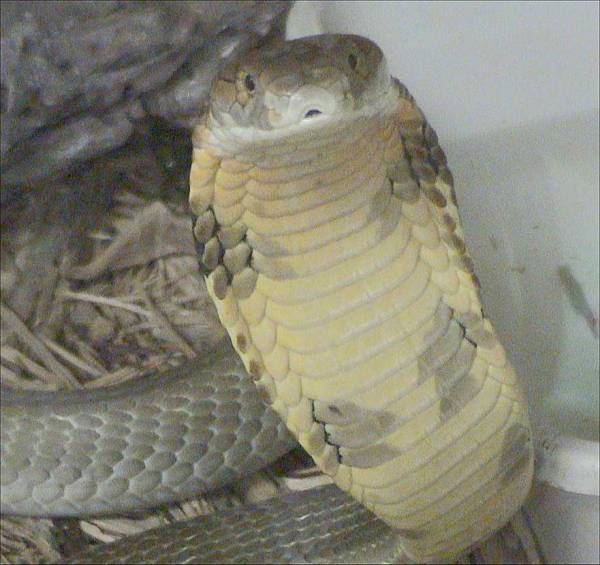
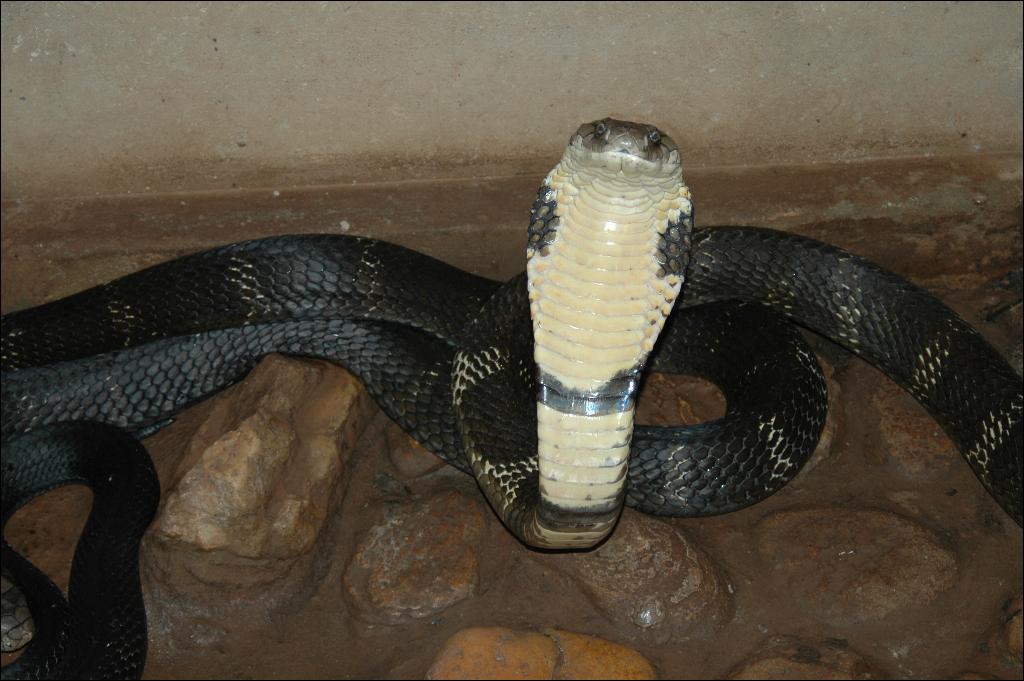
The king cobra is the longest venomous snake in the world, reaching over five metres. It eats mainly other snakes, which is what its scientific name, Ophiophagus, "snake-eater," means. The female king cobra is the only snake known to build a nest: she gathers leaves and debris with her body into a mound, lays her eggs inside, and guards them for weeks. When threatened, a king cobra can raise a third of its body off the ground, standing eye to eye with an adult person, and it emits a low growl. In 2024, a study concluded that what had been considered a single species of king cobra is actually four, one of them found in the Western Ghats.

The spectacled cobra, with the distinctive spectacle-shaped marking on the back of its hood, is the cobra of Indian art and religion. It is also one of the "big four" snakes, along with the common krait, Russell's viper, and saw-scaled viper, responsible for most snakebite deaths in India. And those deaths are staggering in number. A 2020 study estimated that India had around fifty-eight thousand snakebite deaths each year between 2000 and 2019, more than any other country in the world, most of them among rural farmers and their families bitten while working in the fields or sleeping on the floor at night. Snakebite is one of the great neglected health crises of the world.

The snake sheds its skin and emerges new. It seemed to possess the secret that human beings most wanted.

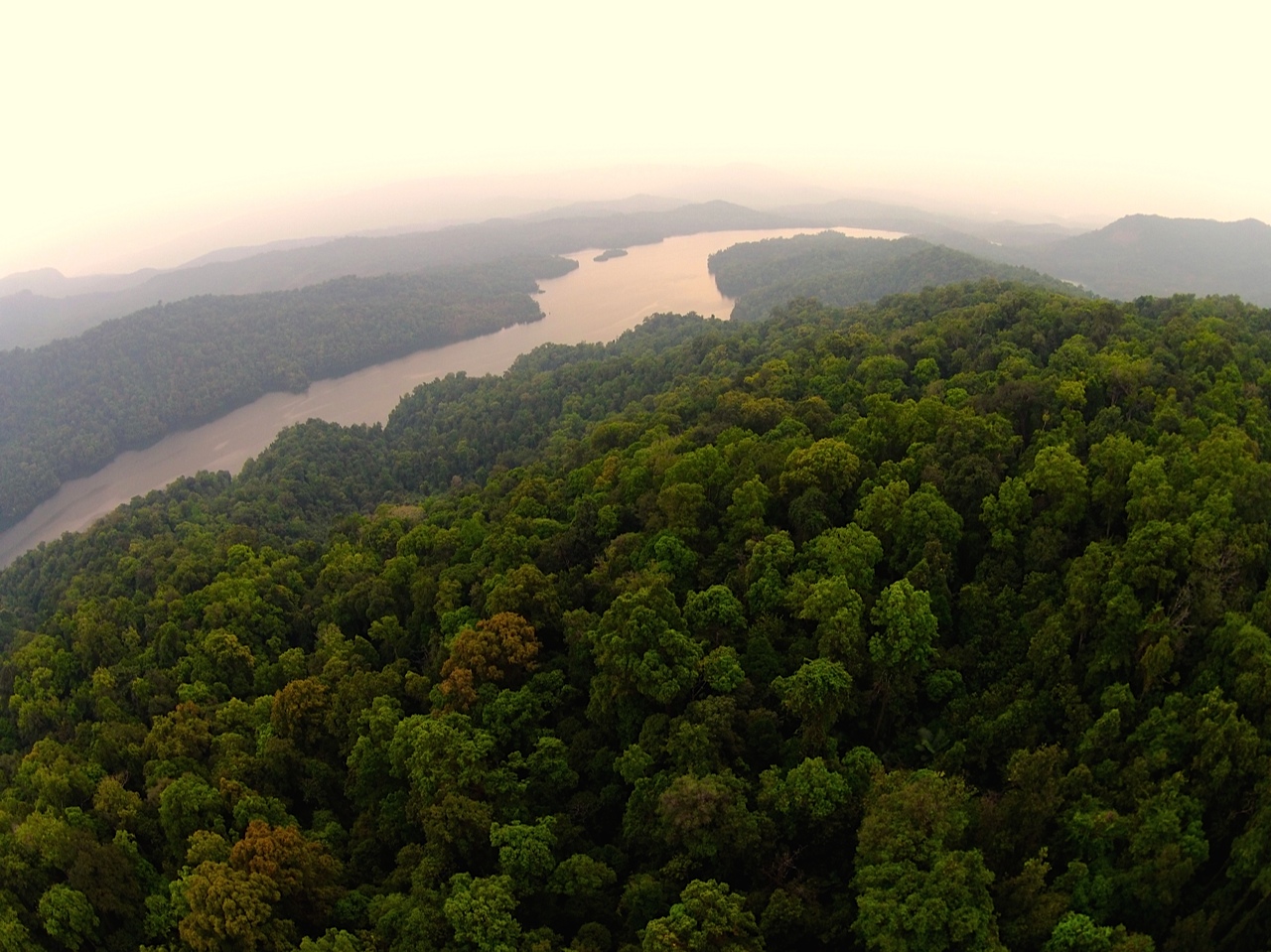
The king cobra's nest-building was first described carefully by naturalists in the twentieth century, and has been studied at Agumbe, in the rainforests of Karnataka's Western Ghats, where Romulus Whitaker founded the Agumbe Rainforest Research Station in 2005. Agumbe receives more than seven metres of rain a year, and its forests are home to many king cobras. Researchers there, including Gowri Shankar, whose TED talk appears in this chapter, radio-tracked king cobras for the first time in India, following them for months through forest and plantation. They found that females gather leaves into a mound using their bodies as a scoop, lay twenty to forty eggs inside, and guard the nest for over two months, then leave just before the eggs hatch, perhaps to avoid eating their own young. King cobras feed mainly on rat snakes and other snakes. In 2024, Shankar and colleagues published a study showing that what was called one species is actually four, including the Western Ghats king cobra, Ophiophagus kaalinga, named from kaalinga sarpa, the Kannada name for the king cobra, which echoes Kaliya, the serpent subdued by Krishna.

India's snakebite crisis has been measured more carefully in recent years. A study led by Wilson Suraweera and Prabhat Jha of the Million Death Study, published in 2020, estimated that about 1.2 million people died of snakebite in India between 2000 and 2019, an average of about 58,000 a year, nearly half of the world's snakebite deaths. Most victims were farmers, labourers and children in rural areas, bitten at night or during the monsoon, especially in Uttar Pradesh, Bihar, Madhya Pradesh, Odisha and Andhra Pradesh. Many died because they first went to traditional healers or temples, or because hospitals lacked antivenom or trained doctors. India's antivenom is made from the venom of the "big four" species, collected mostly by the Irula cooperative, and injected into horses, whose antibodies are then purified. In 2024, India launched a national plan to halve snakebite deaths by 2030, and snakebite was made a notifiable disease, so that cases must be reported.

The other members of the "big four" deserve to be known, because they cause most of India's snakebite deaths. The common krait, glossy black with thin white bands, is active at night and often enters homes in search of rats; it bites people sleeping on the floor, and its bite may be almost painless at first, so victims may not know they have been bitten until paralysis sets in. Russell's viper, thick and brown with three rows of dark chain-like spots, hisses loudly and bites farmers in paddy and sugarcane fields; its venom causes bleeding and kidney failure. The saw-scaled viper, small and sandy, rubs its scales together to make a sizzling warning sound, and is responsible for many bites in the dry regions of the west and south. Doctors and herpetologists stress simple protections: sleep on a raised bed or under a mosquito net, use a torch at night, wear shoes in fields, and go straight to a hospital with antivenom if bitten, keeping the bitten limb still. Many deaths happen because time is lost on ineffective remedies. Researchers have also found that Indian antivenom works less well against snakes from some regions, because venom varies, and are working on better, region-specific antivenoms.


The serpent's India
India's snakes are richest in its wettest forests. The Western Ghats, a UNESCO World Heritage Site, hold the greatest number of snake species found nowhere else, including many shieldtails, pit vipers and the king cobra's southern species. Agumbe, in Karnataka's Shivamogga district, often called the "Cherrapunji of the south" for its rainfall, lies near the source of the Sita river, and its rainforests and areca plantations are king cobra country. The Sharavathi valley, the Kudremukh National Park, the Silent Valley and the Anamalais are other snake-rich forests of the Ghats. Further north, king cobras live in the forests of Goa, Odisha's Similipal and the Eastern Ghats, the Terai of Uttarakhand, and across the Northeast, in Kaziranga, Manas and Namdapha. The Andaman Islands have their own cobras and pit vipers, found nowhere else.


The "big four" snakes live where people farm. Russell's vipers are common in the paddy fields of the Kaveri and Godavari deltas and the sugarcane country of Maharashtra and Uttar Pradesh; kraits enter village homes across the Gangetic plain in Bihar, Uttar Pradesh and West Bengal; saw-scaled vipers thrive in the dry scrub of Rajasthan, Gujarat and the Deccan. Rock pythons live in forests and grasslands from Keoladeo to Kerala, often in porcupine burrows, and the reticulated python, one of the world's longest snakes, lives in the Northeast and the Nicobars. The Irula snake catchers come from the villages of Chengalpattu district and the coast south of Chennai, near Mamallapuram, where their cooperative's venom centre stands. The sacred snake groves of Kerala, the Naga stones of Karnataka, and the Nag Panchami shrines of Maharashtra and Bengal map India's snake worship onto the same landscapes where its snakes are most common.
The Nagas
Nowhere is the serpent more sacred than in India. The Nagas, divine serpent beings, are among the most ancient figures of Indian religion, worshipped by Hindus, Buddhists, and Jains alike. They live in the underworld, Patala, in jewelled palaces, and guard treasures and the waters. They bring rain and fertility, and they can punish those who harm them.

Vishnu sleeps on the coils of the cosmic serpent Shesha, or Ananta, "endless," floating on the ocean of milk between cycles of creation, and Shesha holds up the worlds on his thousand hoods. In the churning of the ocean, the gods and demons used the serpent Vasuki as a rope, wrapped around the mountain Mandara, to churn the ocean for the nectar of immortality. Shiva wears a serpent around his neck. Krishna, as a boy, danced on the hoods of the serpent Kaliya, who had poisoned the Yamuna river, subduing him and driving him away. In Buddhist tradition, when the Buddha was meditating after his enlightenment, a great storm arose, and the Naga king Mucalinda coiled beneath him and spread his hood over his head to shelter him from the rain. That image of the Buddha seated on the coils of a serpent, beneath its sheltering hood, is common in the art of Cambodia and Thailand.
In Bengal, the snake goddess Manasa is worshipped for protection against snakebite, and her story, told in the Bengali Manasamangal poems, is one of the great folk epics of India: the merchant Chand Sadagar refuses to worship her, and she kills his sons one by one, including his youngest, Lakhindar, bitten on his wedding night despite a chamber built of iron. His young wife Behula refuses to accept his death, floats down the river on a raft with his body for months, and finally reaches the heavens, where she dances before the gods and wins back her husband's life. On Nag Panchami, a festival held during the monsoon, when snakes are driven from their holes by the rains, people across India offer milk and prayers to snakes and serpent images. In Kerala, sacred groves called sarpa kavu, dedicated to serpent deities, preserved patches of ancient forest around homes and temples for centuries, and some remain as refuges of biodiversity.
Nagas are carved all over India. At Ajanta in Maharashtra, Cave 19 has a graceful carving of a Naga king seated with his queen beside him, under a great canopy of cobra hoods spreading behind his head like a halo. He sits calmly, at ease, a picture not of danger but of royal dignity and protection. Naga figures also appear in early Buddhist art at Bharhut and Sanchi, often bowing to the Buddha or guarding sacred places. At Mannarasala in Kerala, a famous serpent temple set in a thick sacred grove, with thousands of stone snake images among the trees, is led by a woman priest, the eldest woman of the family, a rare thing in Indian temples. Childless couples come there to pray for children.
One of the most moving serpent stories in Indian literature is a play. In King Harsha's Sanskrit drama Nagananda, "the joy of the serpents", written in the seventh century, Prince Jimutavahana learns that the Nagas have made a terrible deal with Garuda: to stop him destroying their whole race, they send him one Naga every day to eat. He meets a young Naga, Shankhachuda, whose turn has come, and whose old mother is weeping. The prince puts on the red cloth of the victim and lies down in his place. Garuda swoops, carries him off and starts to eat him, and is amazed that his victim feels no fear and even seems glad. When he learns that a human has given his life for a serpent, Garuda is filled with shame. He repents and promises never to hunt the Nagas again, and the gods bring the prince back to life. It is a story about compassion so complete that it can change even an enemy whose whole nature is to kill.

The playwright Girish Karnad's Nagamandala (1988), based on Kannada folk tales and filmed in 1997, is a very different kind of serpent story. Rani is a young bride whose husband locks her up in the house all day and spends his nights with another woman. Lonely and miserable, she is given a magic root to make him love her, and by accident it is a cobra who swallows it. The cobra falls in love with her and comes to her each night in the shape of her husband, gentle and loving, while by day the real husband stays cold and cruel. The play uses the serpent to explore loneliness, desire and the gap between the person we live with and the person we long for. It is also about how stories themselves, passed from woman to woman, give voice to what cannot be said openly.
Cinema made the shape-shifting serpent woman an Indian tradition. Nagin (1954), with its famous snake-charmer tune played on the been, was a huge hit; the tune is still the sound most Indians think of when they think of snakes. It was followed by Nagina (1986), with Sridevi as a serpent woman taking revenge, and every summer around Nag Panchami, television still fills with serpent-goddess serials. The serpent woman is beautiful and dangerous, loyal and vengeful, and audiences never seem to tire of her.
Carl Jung was drawn to India's serpents. In 1932 he gave a famous set of talks in Zurich on Kundalini yoga. In that tradition, a serpent of energy, Kundalini, is said to lie asleep, coiled three and a half times, at the base of the spine. Through spiritual practice it awakens and rises up through the body, passing through a series of centres, the chakras, until it reaches the crown of the head and the person is fully awakened. Jung did not read this literally. He read it as a map of the growth of the psyche: the long, slow journey from a life ruled by simple drives, like survival and desire, up through feeling and understanding, towards a fully conscious, whole self. The serpent, which lies coiled and hidden until it is woken, was for him the perfect picture of the energy for that growth, sleeping in each of us.

Naga worship in India is ancient. Snake stones, nagakals, carved with cobras, coiled serpent pairs or half-human naga figures, stand under peepal and neem trees across south India; women offer them milk, turmeric and flowers, especially when praying for children. Early Buddhist art at Bharhut and Sanchi shows naga kings with cobra hoods above their human heads, worshipping the Buddha, and Ajanta's Cave 19, carved in the fifth century, has a famous relief of a naga king seated with his queen, his head crowned with seven cobra hoods, she holding a lotus. The Mannarasala temple in Kerala, with its tens of thousands of serpent images under the trees, is led by a woman priest called the Valiyamma, from the Mannarasala family. Childless couples come to offer a bronze vessel, uruli, turned upside down, and return to give thanks when a child is born.
Harsha, who wrote Nagananda, was the emperor of much of north India from 606 to 647 CE, and was praised by the Chinese pilgrim Xuanzang, who visited his court. A patron of both Hinduism and Buddhism, Harsha wrote three Sanskrit plays. Nagananda, "Joy of the Serpents", tells of Prince Jimutavahana, a Vidyadhara, a semi-divine being, who gives up his kingdom out of generosity. He learns that Garuda eats one naga every day, under an agreement with the serpent king. When the turn falls on a young naga, Shankhachuda, whose mother is weeping, Jimutavahana takes his place, wrapped in the red cloth of the victim. Garuda carries him off and begins to eat him, but is so astonished by his calm and joy that he stops, repents, and vows never to kill nagas again. The goddess Gauri restores Jimutavahana to life. The play combines a Buddhist ideal of self-sacrifice with Hindu gods, and it is still performed, including in the Kutiyattam tradition of Kerala.
Girish Karnad's Nagamandala, "Play with a Cobra", was written in 1988 and draws on two Kannada folk tales Karnad had heard from the scholar A. K. Ramanujan. A young bride, Rani, is locked up and neglected by her husband Appanna, who visits his mistress. An old woman gives her a magic root to make him love her; she mixes it into a curry, but, frightened when it turns blood-red, pours it into an anthill. A king cobra living there drinks it, falls in love with Rani, and begins visiting her at night in the form of her husband, tender where the real husband is cruel. When she becomes pregnant, her husband accuses her of adultery, and she must prove her innocence by putting her hand in a snake's hole. The cobra does not bite. The village declares her a goddess. The play explores marriage, desire, truth and the power of stories, and was filmed by T. S. Nagabharana in 1997. It is one of the best-known Indian plays of the twentieth century.
Nagin (1954), directed by Nandlal Jaswantlal, starred Vyjayanthimala and Pradeep Kumar as lovers from two rival snake-charming tribes. Its music, by Hemant Kumar, includes the famous "Man dole mera tan dole", whose snake-charmer tune, played on a clavioline imitating the been, became one of the most recognisable melodies in Indian film. The film began a whole genre. In Nagina (1986), Sridevi plays an ichchhadhari nagin, a shape-shifting serpent woman who takes human form, marries into a family and is pursued by a sinister snake charmer, played by Amrish Puri; her snake dance became iconic. Television serials such as Naagin, running since 2015, have carried the shape-shifting serpent into millions of Indian homes. These stories draw on the old Naga legends, in which serpent women, nagakanyas, were beautiful, powerful and dangerous, able to marry humans and found royal lines. Several Indian dynasties, including the Pallavas, claimed descent from a naga princess.Serpents of the world
The serpent is everywhere in world mythology. In the Book of Genesis, the serpent tempts Eve in the garden of Eden, bringing knowledge and death into the world. In Egypt, the cobra goddess Wadjet, in the form of the uraeus, rose from the forehead of the pharaoh as his protector, while the giant serpent Apep attacked the sun boat of Ra every night as it passed through the underworld. In Greece, the god of healing, Asclepius, carried a staff with a single serpent wound around it, which remains the symbol of medicine today. At Delphi, Apollo killed the serpent Python to claim the oracle. The Norse Midgard serpent, Jörmungandr, encircles the world beneath the ocean, biting its own tail. In Mesoamerica, Quetzalcoatl, the feathered serpent, was a creator god of wind, learning, and priesthood. In Aboriginal Australia, the Rainbow Serpent, known by many names across the continent, shaped the land, created the waterholes and rivers, and is associated with rain, fertility, and the power of healers.
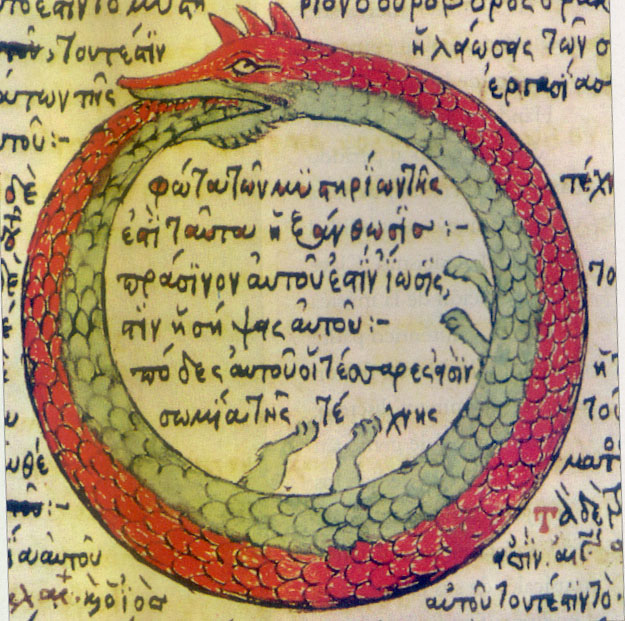
The ouroboros, the serpent swallowing its own tail, found in Egyptian, Greek, Norse, and alchemical traditions, became a symbol of eternity and the cycle of renewal. It is Gilgamesh's snake, shedding its skin forever.
The serpent is carved on some of the oldest temples on earth: on the great stone pillars of Göbekli Tepe in Turkey, about eleven thousand years ago, snakes slither down the stone, often in groups. The Rainbow Serpent, a great snake who shaped the land and the rivers and still controls the rain, appears in the ancient rock art of Arnhem Land in northern Australia, and is one of the oldest continuing religious images in the world.
In 1895 and 1896, a young German art historian, Aby Warburg, travelled to the American Southwest and watched the Hopi and other peoples perform their dances and rituals, including the Hopi snake dance, in which dancers carry live snakes, even rattlesnakes, in their mouths, and then release them to carry prayers for rain to the underworld. Many years later, in 1923, Warburg was a patient in a mental hospital in Switzerland after a breakdown. He gave a lecture there about what he had seen among the Hopi, partly to show the doctors that he was well enough to leave. In it, he spoke about how the serpent, perhaps the most frightening of creatures, helps people turn raw fear into symbols, and how making symbols is one of the ways human beings create a calm space for thought between themselves and the terrors of the world. It is a moving idea, given by a man who was himself fighting to find that calm.

The serpent even entered science. The ouroboros, the ancient symbol of a snake biting its own tail, forming a circle, stands for endless cycles and for wholeness. The German chemist August Kekulé said, many years after the event, that he had understood the ring shape of the benzene molecule, a puzzle that had baffled chemists, after dozing by the fire and seeing in a daydream a snake seizing its own tail. Whether or not it happened exactly so, it has become a famous story about how images from the edge of sleep can help solve problems that waking reason cannot.
Literature is full of serpents. In John Milton's Paradise Lost (1667), Satan enters the body of a sleeping serpent to tempt Eve in the Garden of Eden, and the snake becomes, for the Christian West, the very form of temptation and the fall. Kipling gave us the hypnotic python Kaa in The Jungle Book, old, terrifying and wise, and the brave mongoose of "Rikki-Tikki-Tavi", who fights a pair of cobras in an Indian garden, cobras whom Kipling named Nag and Nagaina.
In Antoine de Saint-Exupéry's The Little Prince (1943), the very first drawing is of a boa constrictor that has swallowed an elephant whole; grown-ups looking at it see only a hat. At the end of the book, a yellow snake offers to help the little prince return to his far-away planet, and he lets it bite him, so that his body can be left behind and he can go home. The snake is death, but a quiet, almost kind one. And in the Harry Potter books, Voldemort's great serpent Nagini carries an echo of the Indian Naga in her name.

Jung's seminar on Kundalini yoga was given in Zurich in 1932, together with the German Indologist Jakob Wilhelm Hauer. In tantric yoga, Kundalini is a sleeping energy, imagined as a serpent coiled three and a half times at the base of the spine. Through practice, she is awakened and rises through the six chakras, the energy centres of the body, until she reaches the crown of the head and unites with Shiva. Jung read this as a map of the development of consciousness: the serpent is the unconscious life force, and its rise represents the gradual growth of awareness through different stages of life. He warned Westerners against simply copying yoga, saying they should find their own path. The seminar was published in English in 1996. It remains one of the most important early meetings between Western psychology and Indian spiritual traditions.
Kekulé's dream is one of the most famous stories in the history of science. In 1865, the German chemist August Kekulé proposed that benzene, a puzzling compound with six carbon atoms, had a ring structure. In a speech in 1890, at a celebration in his honour, he said that the idea had come to him while dozing by the fire: he saw atoms dancing before his eyes, forming long chains, twisting like snakes, and then one of the snakes seized its own tail and whirled before him. He woke and worked out the consequences. Historians have doubted whether the story is literally true, and there were rival claims to the ring idea. But Kekulé's dream-snake, an ouroboros, has become the standard example of how creative insight can come from images rising out of the unconscious, a story Jung himself liked to tell.

Aby Warburg's lecture on the Hopi serpent ritual has a remarkable history. Warburg, an art historian from a wealthy Hamburg banking family, travelled to the American Southwest in 1895–96 and visited Hopi and Pueblo villages, where he saw dances and photographed rituals. He heard about the Hopi snake dance, in which priests dance with live rattlesnakes, including some held in their mouths, before releasing them to carry prayers for rain to the underworld. Decades later, in 1923, Warburg was a patient in a psychiatric clinic in Kreuzlingen, Switzerland, after a breakdown. To prove to his doctors that he was well enough to be released, he gave a lecture on his Pueblo experiences. In it, he argued that the serpent symbol, from the Hopi to the Greek Laocoön to the Bible, was a way people turned terror into symbols they could handle, and that modern technology, like the electric wire that "steals the lightning", threatened to destroy the space for such symbols. He was released the following year. The lecture is now a classic of cultural history.
Saint-Exupéry's The Little Prince begins with a drawing that grown-ups think is a hat. It is actually a boa constrictor that has swallowed an elephant. Grown-ups, the narrator complains, never understand anything by themselves. At the end of the book, the little prince, homesick for his tiny planet and his rose, lets a yellow snake bite him so that he can leave his heavy body and go home. The snake, who says he can carry anyone farther than a ship, speaks in riddles and is both kind and deadly. The book was written in New York in 1942, while Saint-Exupéry, a French pilot, was in exile during the war; he disappeared on a reconnaissance flight over the Mediterranean in 1944. The snake at the end of his book, which takes the prince "home", has often been read as his own premonition of death.
Pythons and people
The Indian rock python and the Burmese python are among the largest snakes on earth, capable of swallowing deer and wild pigs whole by dislocating their flexible jaws. They kill by constriction, and recent research has shown that they do not suffocate their prey, as was long thought, but stop its blood circulation. Burmese pythons released or escaped from the pet trade have established themselves in the Everglades of Florida, where they have devastated populations of small mammals; the number of raccoons, opossums, and rabbits in parts of the park fell by around ninety percent or more.


The serpent coils beneath the sleeping god, shelters the meditating Buddha, and bites the farmer in the field.


What the serpent teaches
The serpent is the most feared animal on earth; primatologists have suggested that the fear of snakes is so deep in primates that it may have helped shape the evolution of our vision. It is also, across the world, one of the most sacred. Perhaps it is because the snake combines, in one body, the two things human beings most fear and most desire: sudden death, and the power to be born again. It coils beneath the sleeping god, shelters the meditating Buddha, and bites the farmer in the field. Every snake that sheds its skin is still, in a sense, eating Gilgamesh's plant.

In Kerala, the sacred snake groves, sarpa kavu, are now studied by scientists as pockets of old forest kept alive by belief. Families and temples kept these patches of forest untouched for generations, because they were the home of the serpent gods, and no one dared to cut a tree there. As forests elsewhere were cleared, these small groves survived, and they now shelter rare trees, medicinal plants, birds, frogs and insects found almost nowhere else. It is a case where fear and reverence together protected a whole web of life, long before anyone used the word "conservation".
Most of India's three hundred or so snake species are harmless to people, and many are beautiful and useful. The rat snake, dhaman, often mistaken for a cobra, is a large, fast, non-venomous snake that eats huge numbers of rats in farms and towns. The bronzeback tree snake, the green vine snake with its pointed snout and horizontal pupils, the shieldtails of the Western Ghats, which live underground and have tails like little shields, and the sea snakes of India's coasts are all part of a rich snake fauna, much of it found nowhere else. New species are still being discovered; in recent years Indian herpetologists have described new shieldtails, keelbacks and pit vipers, one of them, Salazar's pit viper from Arunachal Pradesh, named in 2020 after a character in the Harry Potter books. Snake rescue groups in cities across India now catch and relocate snakes that enter homes, and run awareness campaigns in schools. The old fear is slowly being joined by curiosity.
