Rohit Shah

Read in English Kid Mode

Kid Mode: the same story, told simply. Big ideas, small words.

Part Five · Scale and Water

Chapter 25

The Crocodile

A design older than the dinosaurs' end, a gentle mother, the makara of Ganga, and the gharial's comeback.

Assisted and Curated by Claude, Referenced and Collated by me

A mugger crocodile basking
PlateThe mugger, India's marsh crocodile. Photo: Charles J. Sharp / Wikimedia Commons, CC BY-SA 4.0

Scientific name: Order Crocodylia

In an old Indian story, a mighty elephant king named Gajendra went to bathe in a lotus lake. A crocodile grabbed his leg and pulled him under. Gajendra struggled and struggled, but he grew tired. At last he lifted a lotus flower with his trunk and called to Vishnu. Vishnu came at once, riding Garuda, and saved him. This story, Gajendra Moksha, is painted on temple walls all over India.

SketchGajendra lifts a lotus in surrender, and Vishnu's discus flies to free him from the crocodile's grip. Drawing made for this book

In the story, the crocodile stands for being stuck in a tight grip. Real crocodiles are very patient hunters. They can wait without moving for hours, with just their eyes and nose above the water.

An ancient design

Crocodiles, alligators and gharials have been around for more than two hundred million years, since the time of the dinosaurs. Their closest living relatives are birds!

Crocodiles lying on a muddy bank
PlateSaltwater crocodiles basking in the Sundarbans. Their body plan has barely changed in millions of years. Photo: Fabian Roudra Baroi / Wikimedia Commons, CC BY-SA 4.0

Their bite is one of the strongest of any animal. But the muscles that open their jaws are weak, so a strong person could hold a crocodile's mouth shut. Their skin has tiny sense spots that feel the smallest ripples in water.

A crocodile skull
PlateA saltwater crocodile's skull. Photo: Mariomassone / Wikimedia Commons, CC BY-SA 3.0
A crocodile skull
PlateA young Nile crocodile's skull, showing the armoured design. Photo: Holger Krisp / Wikimedia Commons, CC BY 3.0

India has three kinds. The saltwater crocodile is the biggest reptile on Earth and can be longer than six metres. The mugger lives in rivers and lakes. And the gharial has a long, thin snout full of small teeth for catching fish. Male gharials have a round bump on the nose like a ghara, a clay pot, which is how they got their name.

A crocodile leaping from water
PlateA saltwater crocodile leaping from the Adelaide River. Photo: Wikimedia Commons contributor / Wikimedia Commons
A huge crocodile skeleton in a museum
PlateSarcosuchus, the 'super croc' of the dinosaur age, around nine metres long. Photo: Shadowgate from Novara, ITALY / Wikimedia Commons, CC BY 2.0
Film 1A mugger at the waterholeBBC Earth · YouTubeA mugger crocodile ambushes deer at a drying pool.

The tender mother

Crocodiles are caring parents. The mother lays eggs in a nest and guards it for weeks. When the babies are ready, they chirp from inside their eggs. The mother digs them out and gently carries them to the water in her huge mouth! A gharial father may watch over hundreds of babies.

Several young gharials
PlateYoung gharials at a breeding centre in Chitwan, Nepal. Crocodile mothers guard nests and carry hatchlings to water. Photo: Adam Jones from Kelowna, BC, Canada / Wikimedia Commons, CC BY-SA 2.0

Crocodiles may be clever too. Some muggers in India have been seen floating with sticks on their snouts during the season when birds collect sticks for nests. When a bird comes for the stick... snap!

And 'crocodile tears' are real. Scientists found that crocodiles and alligators really do shed tears while eating, probably because of air pushing through their noses.

A baby gharial
PlateA young gharial at the Kukrail breeding centre, Lucknow. Photo: Snehil3 / Wikimedia Commons, CC BY-SA 3.0
Film 2A crocodile mother carries her babiesNature on PBS · YouTubeThe gentlest thing a crocodile's jaws ever do.

Sobek and the makara

In ancient Egypt, the crocodile god Sobek was worshipped. Real crocodiles were kept in temple pools, decorated with jewellery and, when they died, made into mummies!

A stone statue of a crocodile-headed god
PlateSobek, the crocodile god of Egypt. Photo: BVBurton / Wikimedia Commons, CC BY-SA 4.0

In India, the crocodile's magical form is the makara, a sea creature with a crocodile's body, an elephant's trunk and sometimes a peacock's tail. The river goddess Ganga rides on a makara. Makaras decorate the doorways of many temples. The festival of Makar Sankranti is named after it too.
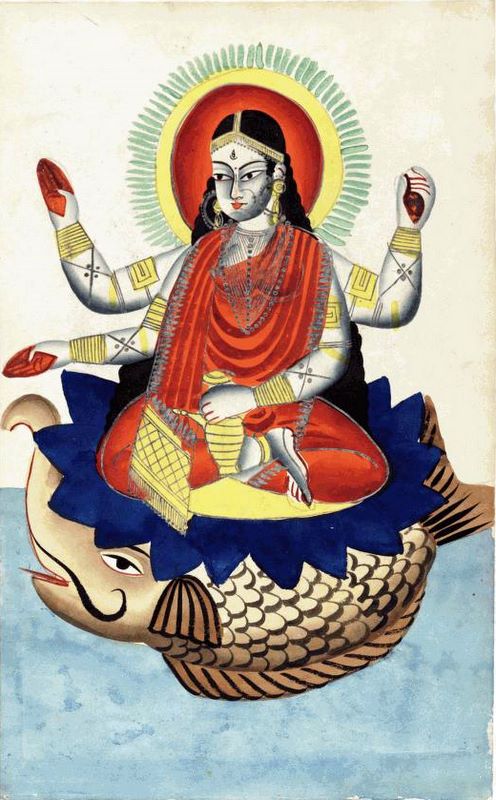
A painting of the goddess Ganga riding a crocodile-like creature
PlateGanga on her makara, in a Kalighat painting of 1875. Photo: Kalighat painter / Wikimedia Commons
A relief of a crocodile-headed god
PlateSobek carved on the walls of Kom Ombo temple. Photo: Hedwig Storch / Wikimedia Commons, CC BY-SA 3.0

A story says that when Adi Shankaracharya was a boy, a crocodile grabbed his leg in a river, and it let go only when his mother agreed he could become a monk.

A carved mythical creature on a temple
PlateA makara face at Konark. Photo: Pratishkhedekar / Wikimedia Commons, CC BY-SA 4.0
A frieze of carved creatures
PlateA row of makaras at the Hoysaleswara temple, Halebidu. Photo: Suffering Socrates / Wikimedia Commons, CC BY 2.0

Kites fill the sky at Makar Sankranti, a festival named after the makara.

Columns of an Egyptian temple
PlateThe temple of Kom Ombo in Egypt, half of it dedicated to the crocodile god Sobek. Photo: Steven C. Price / Wikimedia Commons, CC BY-SA 4.0
Mummified crocodiles in glass cases
PlateMummified crocodiles in the Crocodile Museum at Kom Ombo. Photo: JMCC1 / Wikimedia Commons, CC BY-SA 3.0

The gharial's return

By the 1970s, only about two hundred gharials were left in the wild. They were caught in fishing nets, and their rivers were damaged by dams and sand mining.

A gharial with a long thin snout on a sandbank
PlateA gharial in the Chambal river, home to most of the world's wild gharials. Photo: Clpramod / Wikimedia Commons, CC BY-SA 4.0
A male gharial showing the bulb on its snout
PlateA male gharial with the pot-shaped 'ghara' on its snout, which gives the animal its name. Photo: Charles J. Sharp / Wikimedia Commons, CC BY-SA 4.0
A wide river through ravines
PlateThe Chambal near Dholpur, Rajasthan. Photo: Yann (talk) / Wikimedia Commons, CC BY-SA 4.0

In 1975, India started collecting gharial eggs, hatching them safely and releasing the young into rivers like the Chambal. The Madras Crocodile Bank near Chennai also helped. Today the Chambal river is the gharial's best home. But gharials are still in danger, so the work goes on.
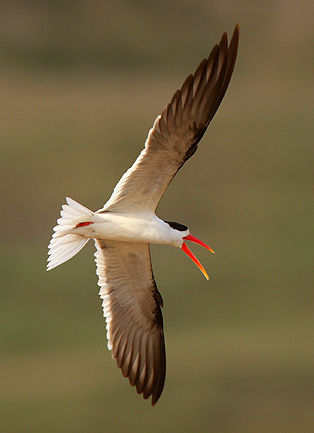
A black-and-white bird with an orange bill
PlateAn Indian skimmer on the Chambal, another rare river bird. Photo: Jayanth Sharma / Wikimedia Commons, CC BY 3.0
A gharial with a turtle
PlateA gharial at the Madras Crocodile Bank, which bred gharials when they were close to extinction. Photo: Adam Jones Adam63 / Wikimedia Commons, CC BY-SA 3.0
Sunrise over mangrove creeks
PlateSunrise at Bhitarkanika in Odisha, where the saltwater crocodile was brought back. Photo: Puru150 / Wikimedia Commons, CC BY-SA 4.0
Film 3Gharials of ChambalRoundglass Sustain · YouTubeThe fish-eating crocodile of India's cleanest big river, and the fight to save it.

What the crocodile teaches

Crocodiles have survived since the time of the dinosaurs and through many ice ages. In stories, passing through a crocodile's mouth means being changed into something new. In real life, they show us that even the toughest animals need our help when their rivers are harmed.

A mugger and a gharial basking together
PlateA mugger and a gharial share a riverbank. Photo: Mike Prince from Bangalore, India / Wikimedia Commons, CC BY 2.0

Read the Panchatantra tale of the monkey and the crocodile: the monkey escapes by saying he left his heart in the jamun tree! Also try Peter Pan, with the tick-tock crocodile, and Roald Dahl's The Enormous Crocodile.

A tiger and a crocodile at a lake edge
PlateA tiger meets a large mugger at Rajbagh lake, Ranthambore. Photo: Vickey Chauhan / Wikimedia Commons, CC BY-SA 4.0

Assisted and Curated by Claude, Referenced and Collated by me. About this material