Part Five · Scale and Water
Chapter 25
The Crocodile
An ancient design, a tender mother, the makara of Ganga, and the gharial's long road back from the brink.
Assisted and Curated by Claude, Referenced and Collated by me

Order Crocodylia
In the Bhagavata Purana, there is a story that is painted on temple walls and told to children across India. Gajendra, a mighty king of elephants, went with his herd to bathe in a lotus lake. As he played in the water, a crocodile seized his leg and began to drag him under. Gajendra struggled for what the story calls a thousand years. His herd could not help him. His strength failed. Finally, at the point of exhaustion, he lifted a lotus flower in his trunk and called on Vishnu, not for rescue, but in pure surrender. Vishnu came instantly, riding on Garuda, and killed the crocodile with his discus, freeing the elephant. The story, Gajendra Moksha, "the liberation of the elephant king," is a parable of the soul trapped in the jaws of worldly existence, saved only by surrender to the divine. The crocodile is the grip of the world, patient and unrelenting.

It is a fitting role. The crocodile is the ultimate patient predator: an animal that can wait motionless for hours at the water's edge, its eyes and nostrils barely breaking the surface, and then explode into action faster than its prey can react.
The Gajendra Moksha story is told in the eighth book of the Bhagavata Purana, and it is one of the most recited passages in Vaishnava devotion. Gajendra lives on the beautiful mountain Trikuta with his herd, and one hot day leads them to a lake to bathe and play. A crocodile, in some versions a cursed Gandharva named Huhu, seizes his leg. The struggle goes on for a thousand years, as the herd tires and leaves. Finally, in despair, Gajendra remembers a prayer from a former life, when he had been a king named Indradyumna, cursed by a sage to be born an elephant. His prayer, which praises the formless Lord beyond all names, is one of the great hymns of the Purana. Vishnu arrives on Garuda, pulls both elephant and crocodile from the water and cuts the crocodile's jaws with his discus. Both are freed from their curses. The story is painted on the walls of temples across India, and in some Vishnu temples it is enacted on festival days. Its lesson, that grace comes when the ego's struggle is exhausted, has been compared to the Christian idea of surrender in prayer.
Potana's Telugu version of the Bhagavata, written in the fifteenth century, turned the Gajendra Moksha into one of the most beloved poems in Telugu. Bammera Potana, a poet-farmer who refused to dedicate his work to a king, saying it belonged only to Rama, wrote verses of such sweetness that generations of Telugu speakers have learned them by heart. His description of Vishnu rushing to save the elephant, in such haste that he does not tell Lakshmi where he is going, does not take his conch or discus properly, and leaves his garment trailing, is especially famous: the god running barefoot to answer a prayer. In Telugu homes, the Gajendra Moksha verses are often recited in times of trouble.
An ancient design
Crocodiles, alligators, caimans, and gharials, together called crocodylians, are the closest living relatives of birds, sharing a common ancestor with the dinosaurs. Their lineage stretches back more than two hundred million years, and modern crocodylians have changed relatively little in form for tens of millions of years, which has earned them the misleading label of "living fossils." In fact, they are highly sophisticated animals. Their hearts have four chambers, like those of mammals and birds, with a special valve that allows them to divert blood away from the lungs when diving. Their jaws can close with one of the strongest bite forces ever measured in a living animal, but the muscles that open them are weak; a strong person can hold a crocodile's jaws shut with their hands. Their skin is studded with tiny sensory organs, more sensitive than human fingertips, which detect the smallest ripples in the water.

The saltwater crocodile, found from India's eastern coast to northern Australia, is the largest living reptile. Males can exceed six metres and a tonne in weight. It swims long distances at sea and is responsible for many fatal attacks on people. The mugger, or marsh crocodile, is the common crocodile of India's rivers, lakes, and reservoirs. And the gharial, found only in the Indian subcontinent, is one of the strangest of all: it has an extremely long, thin snout, lined with more than a hundred small, sharp teeth, perfectly adapted for snapping sideways at fish. Mature males develop a bulbous growth at the tip of the snout, called a ghara after the Hindi word for a round earthen pot, from which the animal takes its name. They use it to produce a buzzing sound and bubbles during courtship.
The crocodile's jaws close with one of the strongest bites in nature, but open with muscles a person can hold shut by hand.

Popular psychology has made the crocodile a part of us. People often talk about our "reptilian brain" or "crocodile brain": a primitive, angry, frightened core buried beneath the thinking mind, which takes over when we panic, lash out or fight for survival. The idea comes from an American neuroscientist, Paul MacLean, who in the 1960s put forward what he called the "triune brain" theory. He suggested that the human brain was built in three layers, laid down one on top of the other over the course of evolution, like the floors of a house: at the bottom a reptile brain for basic survival, then an old mammal brain for feelings, and on top a new, thinking brain. The idea was made famous by writers like Carl Sagan and became hugely popular.
Today's neuroscientists say it is wrong. Our brains did not grow in neat layers on top of a reptile's. Reptiles, birds and mammals all have brains with the same basic parts, which have changed and been rewired together over hundreds of millions of years. Feeling and thinking are not in separate floors of the house; they are woven through each other everywhere. Yet the phrase "crocodile brain" lives on in self-help books and offices, and that says a lot about what the crocodile means to us. We need a picture for the part of ourselves that is cold, ancient and hungry, that strikes without thinking. And the crocodile, lying motionless in the water with only its eyes showing, waiting, is the perfect picture.

The gharial is old in Indian art too. Small tablets from the Indus cities, more than four thousand years old, sometimes show a gharial, recognisable by its long thin snout, with a fish held in its jaws. The people of those river cities clearly knew the fish-eating crocodile of their rivers well. It is a link across forty centuries to the gharials still hunting fish in the Chambal today.
The crocodile's family history is more surprising than its "living fossil" label suggests. Around 230 million years ago, crocodile relatives and early dinosaurs both belonged to a group called the archosaurs, the "ruling reptiles". In the Triassic period, crocodile relatives were extraordinarily varied: some walked upright on long legs, some ran on two legs, some were plant-eaters, some lived in the sea with flippers and tail fins. After a mass extinction around 201 million years ago, dinosaurs came to dominate, but crocodile relatives survived, and some grew huge. Sarcosuchus, which lived in Africa about 112 million years ago, was about eleven or twelve metres long, and Deinosuchus in North America may have hunted dinosaurs. When the asteroid struck 66 million years ago and wiped out the non-bird dinosaurs, crocodiles came through. Their success lay partly in their way of life: cold-blooded animals that can go months without food, that lurk in water, and that eat almost anything, are well equipped for a world in crisis. The same qualities have helped them outlast every human empire that worshipped or feared them.

Paul MacLean's "triune brain" theory, which gave us the "reptilian brain", was proposed in the 1960s and became famous through Carl Sagan's book The Dragons of Eden (1977). MacLean, an American neuroscientist, suggested that the human brain was built in three layers over evolution: a "reptilian complex" at the base, controlling instinct and aggression; a "limbic system" added by early mammals, controlling emotion; and a "neocortex", controlling reason, added last. The idea was simple and appealing, and spread into business books and self-help: the "lizard brain" makes us fearful, the "rational brain" must take control. But modern neuroscience has found that reptile and bird brains have structures similar to our cortex, and that the brain did not evolve by adding layers on top of an old core. Every part has changed together. The theory survives in popular culture, the crocodile still stands in for our worst instincts, but scientists now treat it as a myth, a modern one about the beast inside.
The mugger crocodile has adapted remarkably well to life near people. It lives in rivers, lakes, marshes, irrigation canals and village ponds across India, Sri Lanka, Nepal, Pakistan and southern Iran, and can survive droughts by digging burrows in riverbanks and resting there for months. In Gujarat's Charotar region, near Anand and Vadodara, muggers live in dozens of village ponds, sharing the water with buffaloes and washerwomen, often with remarkable tolerance; villagers say the crocodiles are guardians of the pond. In the city of Vadodara, muggers live in the Vishwamitri river, which flows through the town, and sometimes wander into streets and homes during monsoon floods, to be rescued by volunteers. Studies there have found hundreds of muggers living within city limits. Conflict does happen, sometimes fatally, but the mugger shows that even a large predator can find a place in a crowded landscape, if people allow it.

The saltwater crocodile is a different story. It is the largest living reptile, capable of growing over six metres and weighing over a tonne, and it is a true ocean-goer, travelling hundreds of kilometres along coasts and between islands, riding ocean currents. In India it lives in the Sundarbans, in the Bhitarkanika mangroves of Odisha and in the Andaman and Nicobar Islands. Bhitarkanika's population was rebuilt from a few dozen in the 1970s by a project led by the Australian crocodile biologist H. R. Bustard and Indian colleagues, including Sudhakar Kar, and now numbers over 1,700. One huge male there, measured in 2006, was listed by Guinness World Records as the largest crocodile in the world, about seven metres long. In Australia, the saltwater crocodile recovered so well after a hunting ban in the 1970s that it now lives in towns like Darwin, where rangers catch dozens each year from the harbour. People who live with "salties" learn simple rules: do not swim in their waters, do not camp near the bank, and do not clean fish at the water's edge.

The tender mother
For an animal with such a fearsome reputation, the crocodile is a remarkably attentive parent. The female builds a nest, either a mound of vegetation or a hole dug in a sandbank, and lays her eggs inside. The sex of the hatchlings is determined not by chromosomes but by the temperature of the nest during incubation: in many species, very warm and very cool temperatures produce females, and intermediate temperatures produce males. The mother guards the nest for weeks or months. When the babies are ready to hatch, they call from inside their eggs with high-pitched chirps, and the mother digs them out, gently picks them up in her enormous jaws, and carries them to the water. She may guard them for weeks or months more, and in the case of gharials, a single dominant male may watch over a crèche of hundreds of young.

Crocodiles are also more intelligent than once thought. The zoologist Vladimir Dinets reported in 2013 that muggers in India and American alligators in Louisiana had been observed lying in the water near the nesting colonies of egrets and herons with sticks balanced on their snouts, during the season when the birds were collecting sticks for their nests. When a bird approached to take a stick, the crocodile lunged. It appeared to be using the sticks as lures, which, if confirmed, would make crocodiles among the few reptiles known to use tools.
And yes, crocodiles do weep. The phrase "crocodile tears," meaning false grief, comes from a medieval legend that crocodiles weep while eating their victims. In 2006, the neurologist D. Malcolm Shaner and the zoologist Kent Vliet observed caimans and alligators feeding on land, and found that many of them did shed tears while eating, probably because of air being forced through their sinuses as they chewed. The legend, as so often, was based on an accurate observation.
The discovery that temperature decides the sex of crocodile hatchlings was made in the early 1980s, when researchers in the United States, notably Mark Ferguson and Ted Joanen, studied American alligator nests in Louisiana. They found that eggs incubated at cooler temperatures, below about thirty degrees Celsius, produced females, and warmer eggs, around thirty-three degrees, produced males, with a narrow range between. In many crocodile species, very hot nests also produce females. Turtles have a similar system. This raises worrying questions in a warming world: if nests get hotter, populations could become dominated by one sex. Crocodile mothers may have some control, choosing shady or sunny nest sites and digging deeper or shallower. Studies of gharials in the Chambal have found that nest temperatures are already changing as the river's sandbanks are disturbed by sand mining.

Vladimir Dinets's study of crocodiles using sticks as bait was published in 2013, with his colleagues J. C. Brueggen and J. D. Brueggen. Dinets had first noticed the behaviour while watching mugger crocodiles in a small pond at a temple in India, where crocodiles lay near the water's edge with sticks balanced on their snouts during the nesting season of egrets. He then watched alligators in Louisiana and found the same behaviour, mostly in the weeks when herons and egrets were building nests and collecting sticks. Some scientists remain sceptical, wanting more evidence that the crocodiles place the sticks on purpose. But if confirmed, it would make crocodiles among the very few reptiles known to use tools, and the only animals known to use seasonal lures that depend on the timing of another species' behaviour. Dinets also wrote a popular book, Dragon Songs (2013), about his travels in search of crocodile courtship calls around the world.
India's crocodile conservation programme of 1975 relied on a technique called "rear and release". Eggs were collected from wild nests, where floods, predators and people destroyed most of them, and hatched in safety. The young were raised for two or three years, until they were large enough to escape most predators, and then released. The programme was planned with help from the UN Food and Agriculture Organisation and led by the biologist H. R. Bustard, and it set up breeding centres at places such as Nandankanan in Odisha and Kukrail in Lucknow. Thousands of gharials and muggers were released. Critics later noted that releasing animals without protecting their rivers could not succeed on its own, and that many released gharials died. The lesson, learned the hard way, was the same as with tigers: save the habitat, and the animal can save itself.

Sobek and the makara
In ancient Egypt, where Nile crocodiles were a constant danger to anyone who approached the river, the crocodile god Sobek was worshipped as a god of the Nile's fertility, of military prowess, and of protection. At his temples, at Kom Ombo and in the Fayum, sacred crocodiles were kept in pools, fed, adorned with jewellery, and after death, mummified. Thousands of crocodile mummies have been found, from tiny hatchlings to huge adults. In the Egyptian underworld, the monster Ammit, part crocodile, part lion, and part hippopotamus, waited beside the scales on which the heart of the dead person was weighed against the feather of truth, ready to devour the hearts of the unworthy.

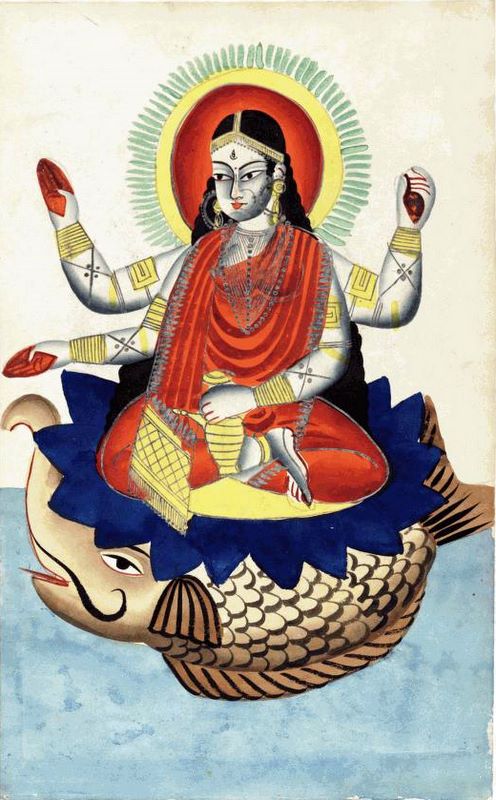
In India, the crocodile's sacred form is the makara, a composite sea creature usually shown with the body of a crocodile or fish, the trunk of an elephant, and sometimes the tail of a peacock. The makara is the mount of the river goddess Ganga, who is often depicted standing on it, and of Varuna, the god of the waters. It is the emblem on the banner of Kamadeva, the god of love. The makara's open jaws frame the doorways of temples throughout South and Southeast Asia, in the arches called makara toranas, from which garlands of foliage and pearls spill, and water spouts in the shape of makaras channel rain from temple roofs. The makara is also the sign of Capricorn, Makara in the Indian zodiac, and the festival of Makar Sankranti celebrates the sun's entry into it.
According to a popular story about the philosopher Adi Shankaracharya, when he was a boy, he wanted to become a renunciate, but his widowed mother refused to allow it. One day, while he was bathing in the river, a crocodile seized his leg. As it dragged him, he called to his mother that he could die in peace only if she allowed him to take sannyasa. She agreed, and the crocodile released him. The crocodile, as in the story of Gajendra, is the grip of the world, released only through renunciation.
Elsewhere, crocodiles are ancestors. Among the Iatmul people of the Sepik River in Papua New Guinea, the world was created by a crocodile ancestor, and young men undergoing initiation are cut with hundreds of small incisions across their backs and chests, which heal into raised scars resembling crocodile skin; they are said to have been swallowed by the crocodile and reborn as men. At the shrine of Mangho Pir near Karachi, in Pakistan, a colony of mugger crocodiles has been kept and fed for centuries, and the chief crocodile is garlanded by devotees.

Thousands of mummified crocodiles, from tiny hatchlings to giants several metres long, have been found in ancient Egyptian cemeteries. They were wrapped and buried as offerings to Sobek, the crocodile god, in the hope of his protection and blessing. Many are on show at the Crocodile Museum at Kom Ombo, beside the temple shared by Sobek and the falcon god Horus. Walking among them, one feels how seriously the Egyptians took this animal: as something to be feared, honoured and bargained with.
In India, the makara, the crocodile-like creature of the waters, appears very early. Makaras carved on the railings of the Bharhut stupa, more than two thousand years ago, are among the earliest in Indian art, with crocodile jaws and curling fish tails. Every year at Makar Sankranti, in the middle of January, millions of people across India bathe in rivers, fly kites and eat sweets of sesame and jaggery, marking the day the sun moves into Makara, the crocodile-sign of the Indian zodiac, which the West calls Capricorn. The days begin to grow longer, and the festival celebrates the return of the light. So a crocodile, of a sort, marks one of the happiest days of the Indian year.

The Gajendra Moksha story, told in the Bhagavata Purana, about the king of elephants seized by a crocodile in a lake and saved by Vishnu when he calls out in surrender, became in Bammera Potana's fifteenth-century Telugu version one of the best-loved poems in the language. Many Telugu families recite its verses by heart, especially in times of trouble, because it is about the moment when a strong being, who has tried everything, finally lets go of pride and asks for help. That moment, the story says, is when help comes.

Far away, among the Iatmul people of the Sepik River in Papua New Guinea, the crocodile is the creator who made the world. In their old initiation ceremonies, young men had their backs and chests cut in patterns of small raised scars, so that their skin would look like a crocodile's, to show that they had been "swallowed" by the crocodile spirit and reborn as men. And at Mangho Pir, on the edge of Karachi, mugger crocodiles have been fed and honoured at a Sufi shrine for centuries. Local legend says they came from the lice of the saint himself. Pilgrims still bring them meat. It is one of the strangest and oldest places in South Asia where people and crocodiles meet in peace.
Sobek's cult was strongest in the Fayum, an oasis region west of the Nile, where the Greeks called the main town Crocodilopolis. The Greek historian Herodotus, visiting Egypt in the fifth century BCE, wrote that the people there kept a sacred crocodile, tamed, with earrings of glass and gold and bracelets on its forefeet, fed with special food and buried in a sacred tomb when it died. Excavations at Kom Ombo, Tebtunis and elsewhere have found thousands of crocodile mummies, some wrapped with baby crocodiles or eggs, and scans of mummified crocodiles have revealed that some were wild animals killed for the purpose, suggesting a large trade in offerings. Kom Ombo's double temple, built under the Ptolemies, is dedicated on one side to Sobek and on the other to Horus, the falcon god; its Crocodile Museum, opened in 2012, displays about two dozen mummies. The Egyptians, who lived beside the Nile crocodile, one of the most dangerous animals in Africa, chose to worship it, as if honouring it could keep its power on their side.

The makara is one of the most important animals in Indian art, even though it never existed. It appears in early Buddhist art at Bharhut, Sanchi and Amaravati, as a creature with a crocodile's jaws and a fish's tail, often spouting foliage or jewels. Over the centuries it gained an elephant's trunk, a lion's paws or a peacock's tail, depending on the region. It stands at the doorways of temples, at the ends of arches called makara toranas, where garlands, pearls or small figures pour from its mouth, and as water spouts on temple roofs. It is the vehicle of Ganga, the river goddess, and of Varuna, god of the waters, and the emblem of Kamadeva, the god of love, whose banner is called Makaradhvaja. In Sri Lanka, Nepal, Tibet, Thailand, Cambodia and Indonesia, makaras guard temples and stairways. Scholars think the makara began as the real Gangetic crocodile, the gharial or mugger, the most powerful animal of the great rivers, and grew into a symbol of the life-giving, dangerous power of water itself.

The story of Adi Shankaracharya and the crocodile is told in the traditional biographies of the great philosopher, written centuries after his life in the eighth century. Born in Kaladi in Kerala, Shankara wished from childhood to become a sannyasi, a renunciate, but his widowed mother refused, as he was her only son. One day, as he bathed in the Purna river, a crocodile caught his leg. He called to his mother that if she let him take sannyasa now, he could die as a monk. She agreed, the crocodile let go, and Shankara left home, promising to return when she was dying, a promise he kept. He went on to travel the length of India, debating other philosophers and founding monasteries at Sringeri, Dwarka, Puri and Joshimath. In Kaladi, a ghat on the river is still called Mudala Kadavu, the crocodile ghat.
The gharial's return
By the mid-1970s, the gharial, hunted for its skin, caught in fishing nets, and losing its river habitats to dams and sand mining, had declined catastrophically; surveys suggested only around two hundred remained in the wild. In 1975, India launched a crocodile conservation project, collecting eggs from the wild, hatching them in captivity, and releasing the young into protected rivers, especially the Chambal, which flows through Rajasthan, Madhya Pradesh, and Uttar Pradesh. In 1976, the herpetologist Romulus Whitaker founded the Madras Crocodile Bank near Chennai, which became one of the world's great reptile conservation centres. The National Chambal Sanctuary is now the stronghold of the gharial, with a population in the high hundreds or low thousands. But the species remains critically endangered, and one bad season of floods, disease, or illegal sand mining can undo years of work.

The crocodile is the grip of the world, patient and unrelenting, released only through surrender.


Romulus Whitaker, who founded the Madras Crocodile Bank in 1976, was born in New York in 1943 and came to India as a boy when his mother married an Indian. Fascinated by snakes from childhood, he worked with the Irula snake catchers, founded the Madras Snake Park in 1972, and set up the Irula Snake Catchers' Industrial Cooperative Society in 1978. The Crocodile Bank, south of Chennai, began as a breeding centre for India's three threatened crocodilians and became one of the largest reptile collections in the world, with thousands of animals and many species from around the world. Whitaker, with his wife Zai Whitaker, an author, and many Indian colleagues, trained a generation of herpetologists. In 2008 he won the Whitley Award, and in 2018 India gave him the Padma Shri. His documentary work, including films on king cobras and gharials, brought India's reptiles to world audiences.
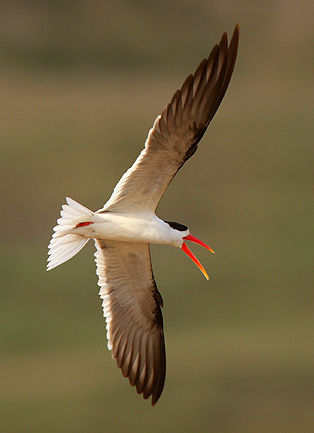

The National Chambal Sanctuary was created in 1979 along about 400 kilometres of the Chambal river, through Madhya Pradesh, Rajasthan and Uttar Pradesh. The Chambal is one of India's cleanest large rivers, partly because its ravines, the famous badlands once home to dacoits, kept people and industry away. Besides gharials, it shelters muggers, the Ganges river dolphin, eight species of turtle including the endangered red-crowned roofed turtle, and birds like the Indian skimmer. In the winter of 2007–08, more than a hundred gharials died suddenly in the Chambal, apparently from a toxin, possibly heavy metals building up in the food chain from polluted tributaries; the exact cause remains debated. Illegal sand mining, which destroys the sandbanks where gharials nest, is a constant threat. Yet each year, researchers and forest staff protect nests and help hatchlings, and the Chambal remains the gharial's best hope. A creature that has outlasted the dinosaurs now depends on a few hundred kilometres of sand.


The crocodile's rivers
Each of India's three crocodilians has its own waters. The gharial needs deep, clean, fast rivers with sandbanks for basking and nesting. Its stronghold is the Chambal, protected along about four hundred kilometres where it forms the border of Madhya Pradesh, Rajasthan and Uttar Pradesh. Smaller populations live in the Girwa river in Katarniaghat Wildlife Sanctuary in Uttar Pradesh, on the Nepal border, in the Son river's gharial sanctuary in Madhya Pradesh, in the Ken, in the Gandak in Bihar, and in the Mahanadi's Satkosia gorge in Odisha, where gharials have been released to restart a lost population. The Ganga at Hastinapur, the Ghaghra and the Beas in Punjab have also seen releases.


The mugger lives in almost every kind of fresh water. It is found in the Vishwamitri river of Vadodara and the village ponds of Charotar in Gujarat, in Ranganathittu bird sanctuary on the Kaveri near Mysuru, where boats pass muggers basking under trees full of nesting storks, in the lakes of Ranthambore and Sariska, in the Moyar and Bhavani rivers of the Nilgiris, in the Krishna and Godavari, in the backwaters of dams across Maharashtra and Karnataka, and in the Chambal alongside the gharial. The saltwater crocodile lives in the mangrove deltas of the east: Bhitarkanika, in the delta of the Brahmani and Baitarani rivers in Odisha, the Sundarbans, and the creeks and coasts of the Andaman and Nicobar Islands. Bhitarkanika's mangrove channels, lined with stilt roots and visited by monitor lizards and kingfishers, are among the best places in the world to see wild saltwater crocodiles.

What the crocodile teaches
The crocodile has outlived the dinosaurs, survived five ice ages, and adapted to rivers, swamps, estuaries, and the open sea. It is the most ancient large predator still living alongside humans, and it has been feared, worshipped, farmed, hunted, and mythologized. Its jaws are the jaws of death in the Gajendra story, and the gateway of the temple in the makara torana. Both images say the same thing: to pass through the mouth of the crocodile is to be transformed, whether into a liberated soul, an initiated man, or a pilgrim entering the house of the god.

Storytellers have used the crocodile's jaws for comedy as well as fear. In the fourth book of the Panchatantra, a monkey lives in a jamun tree by a river, and every day he throws sweet jamun fruit down to a crocodile, and they become friends. But the crocodile's wife grows jealous, and says that a monkey who eats such sweet fruit must have a very sweet heart, and she wants to eat it. The crocodile, torn but weak, invites the monkey to his home and carries him across the river on his back. In the middle of the water he confesses his plan. The monkey, thinking fast, says: what a pity you did not tell me sooner, I left my heart up in the jamun tree, let us go back and fetch it. The foolish crocodile swims back, and the monkey leaps into the tree and is safe. The lesson is that quick wits can save you even in the worst danger, and that a friend who will betray you for someone else's wish was never really a friend.
In J. M. Barrie's Peter Pan, the villain Captain Hook is followed everywhere by a crocodile. Peter once cut off Hook's hand and threw it to the crocodile, which liked the taste so much it has followed Hook ever since, hoping for the rest of him. It has also swallowed a clock, so Hook always hears it coming, tick-tock, tick-tock. It is a joke, but a clever one: the crocodile is time itself, ticking away, which no one escapes in the end. Hook is terrified of it because he is terrified of growing old and dying.
Kipling's "The Elephant's Child", in his Just So Stories, is about a young elephant, back when elephants had short noses, who is full of curiosity and keeps asking questions. He wants to know what the crocodile eats for dinner. He goes to the great grey-green greasy Limpopo River to find out, and the crocodile grabs him by the nose and pulls. The elephant's child pulls back, and his nose stretches and stretches into a trunk. It turns out to be very useful. The story is a cheerful defence of curiosity, even when it gets you into trouble. Roald Dahl wrote The Enormous Crocodile (1978), in which a greedy crocodile tries one clever trick after another to catch children for lunch and is foiled each time by the other animals.
On screen, Crocodile Dundee (1986) made the Australian bush famous worldwide, and the Australian wildlife presenter Steve Irwin, "the Crocodile Hunter", turned his love of crocodiles into a lifelong campaign for conservation. He bounded up to crocodiles with huge excitement, shouting about how beautiful they were, and made millions of viewers who had only feared crocodiles see them as wonderful animals worth protecting. He died in 2006, killed by a stingray while filming, but the zoo and conservation work he began goes on.

The Panchatantra story of the monkey and the crocodile opens the fourth book, Labdhapranasha, "loss of what has been gained". A monkey named Raktamukha lives in a jamun tree beside the sea, and befriends a crocodile named Karalamukha, giving him sweet fruits every day. The crocodile takes some home to his wife, who becomes jealous of the friendship and decides that a monkey who eats such sweet fruit must have a very sweet heart. She demands the monkey's heart, pretending to be ill. Torn, the crocodile invites the monkey home and carries him across the water on his back. Halfway, he confesses the plan. The monkey, thinking quickly, tells him that monkeys keep their hearts in the tree for safety, and asks to be taken back to fetch it. Once on the shore, he climbs the tree and refuses to come down, telling the crocodile that their friendship is over. The tale appears also in the Jatakas, where the monkey is the Bodhisattva, and it travelled to Persia and Europe. It is one of the most loved stories in Indian schools, a lesson about presence of mind and false friends. It also shows how the crocodile, in Indian story, can be foolish rather than evil.
J. M. Barrie's crocodile in Peter Pan first appeared on stage in 1904. In the story, Peter cut off Captain Hook's hand and fed it to a crocodile, which liked the taste so much that it follows Hook everywhere hoping for more. It has also swallowed a clock, so Hook hears it coming by its "tick-tock". In the end, the clock runs down, the crocodile approaches silently, and Hook is eaten. The crocodile has been read as a symbol of time and death, which follow us all and arrive when least expected, a reading that suits Barrie's story about a boy who refuses to grow up. Kipling's "The Elephant's Child" (1902), from the Just So Stories, is a joyful counterpart: the curious young elephant, asking what the crocodile has for dinner, has his short nose seized by the crocodile on the banks of "the great grey-green, greasy Limpopo River" and stretched into a trunk, which turns out to be very useful. Here the crocodile's terrible grip creates something new, just as in the Gajendra and Shankaracharya stories.
Roald Dahl's The Enormous Crocodile (1978) is a gleefully wicked picture book, illustrated by Quentin Blake, about a crocodile who leaves his muddy river and goes into town with "secret plans and clever tricks" to eat a child. He disguises himself as a coconut tree, a seesaw, a merry-go-round and a picnic bench, but each time the other animals, the Muggle-Wump monkey, the Roly-Poly Bird and the elephant Trunky, warn the children. Finally Trunky swings him by the tail into space, where he hits the sun and is "sizzled up like a sausage". Dahl's crocodile is the trickster gone wrong, a creature whose cleverness serves only greed, and is defeated by a team of animals who care for the children. Children love it partly because it lets them laugh at their fear. In this, it is not so far from the Panchatantra's monkey, outwitting the jaws of the crocodile with quick thinking, or from the stories told to Indian children by grandmothers to make the dangerous river a place of adventure rather than terror.