Part Six · The Shape of Change
Chapter 27
When Things Make Things Happen
A speed breaker makes cars slow down. A road changes a forest. A virus changes the whole world's plans. Can things act too?
Featuring Latour · DeLanda · Luhmann
Assisted and Curated by Claude, Referenced and Collated by me
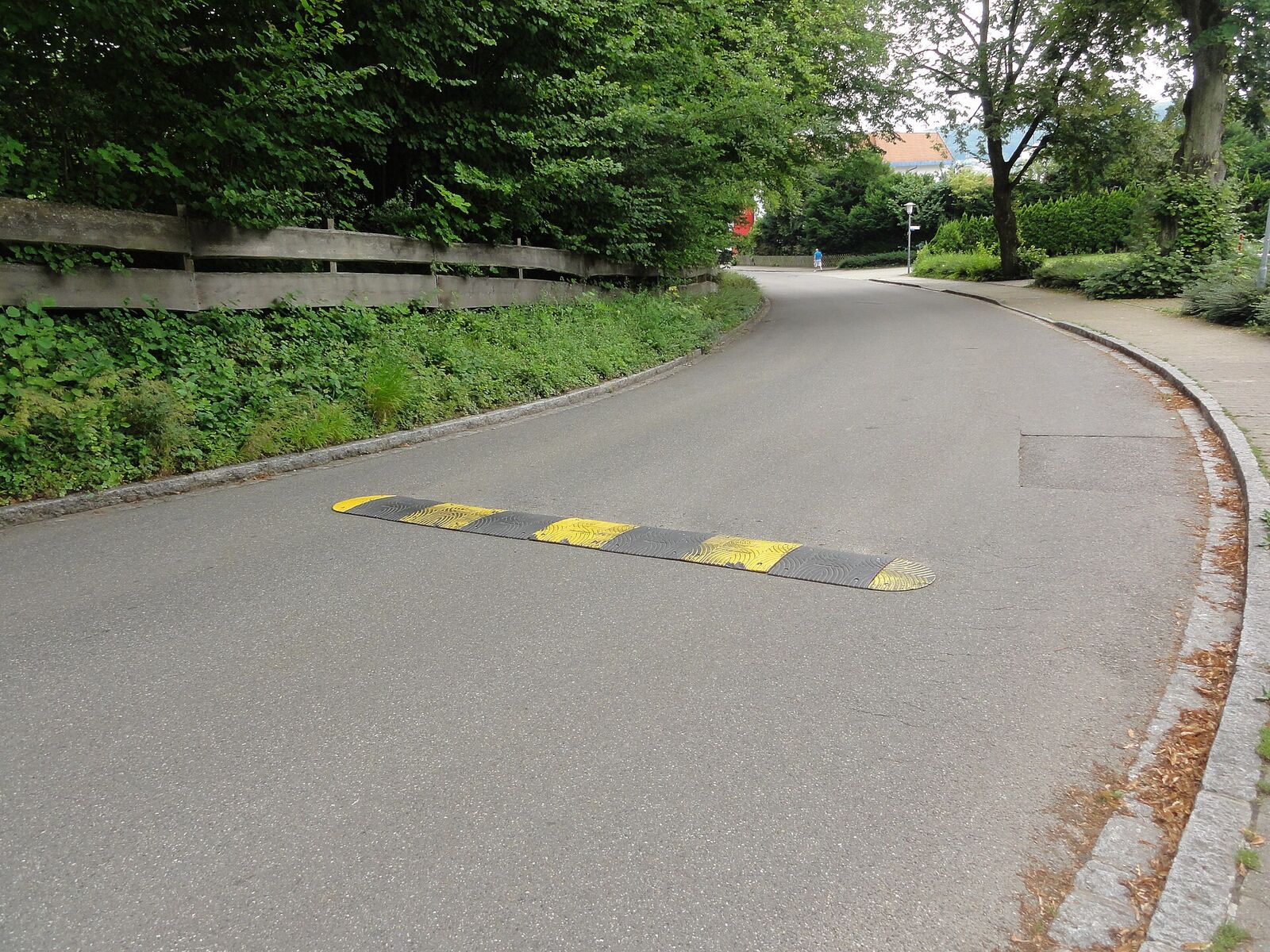
The sleeping policeman
On roads in almost every Indian town, there's a hump across the road: a speed breaker. Drivers slow down for it, not because they read a sign or see a policeman, but because if they don't, their car gets damaged and their passengers get bumped! In Britain, it's called a "sleeping policeman". It does a traffic officer's job day and night, without wages, without getting tired and without accepting bribes. A rule, "slow down near the school", has been handed from a person to a lump of concrete!
There are many more examples. Hotels once attached heavy weights to room keys, so guests left them at reception instead of carrying them out. A car beeps until you put on your seat belt. A metro turnstile only lets in people who've paid, doing a ticket checker's job. A fingerprint machine at a ration shop decides who gets grain. In each case, a rule has been built into an object, and the object then acts.
Most sociologists explained society through human things: rules, values, beliefs, interests and power. Objects were just tools or background. One French thinker insisted this was a mistake.
Putting society back together
Latour's first book described how scientific facts are made. In the lab, he didn't find scientists quietly gazing at nature. He found them surrounded by machines that turned things into graphs and numbers, and people writing, arguing and checking. A new idea starts with lots of "maybes". Through experiments, checks and other scientists agreeing, the "maybes" fall away until it becomes a fact everyone accepts. Latour didn't mean facts are fake. He meant they're made, through lots of work by people, instruments and papers.
Networks of people and things
Latour and his friends developed actor-network theory. Old sociology said there's a special thing called "society" that explains everything else. Latour flipped this around. He said "society" isn't a ready-made thing. It's a temporary connection of many different pieces, both people and things, which must keep being put together. If the work stops, it falls apart.
The boldest part of his idea is that things are actors too: anything that makes a difference. The speed breaker makes drivers slow down. Even germs are actors! Latour wrote about Louis Pasteur, the famous scientist. Pasteur didn't just discover germs. He built a network of labs, doctors, vets, farmers, town officials and the germs themselves, made visible in vaccines. That network changed medicine and farming in France. Before, germs acted invisibly and made people sick; afterwards, they could be tracked and stopped.
Latour said society is held together not just by rules and values, but by walls, roads, papers, machines and objects. Without them, relationships would be wobbly. He compared humans to baboons. Baboons have leaders, friendships and rivalries, but they must keep proving them through grooming and showing off, because they have nothing to fix them in place. Humans use things: thrones, offices, files, fences, land records, uniforms and passports. A king without a palace, a treasury, soldiers and written orders is just a man with opinions!
Society is held together not just by rules and values, but by walls, roads, papers and things.
Following the network into the forest
How does a government reach a faraway forest district? Latour would say: follow the things! A road changes who can come and go. A bridge lets people cross a river in the monsoon. A mobile tower changes who can be reached. Electricity lines and solar panels on a school roof bring power. A ration shop has a scale and a fingerprint reader linked to a faraway computer. Bank accounts, ID cards, land records and files move between offices, along with officials, teachers, health workers and police. Each of these acts, and each can fail.
When the fingerprint reader can't recognise an old woman's fingers, worn smooth by years of work, the government's promise of food fails right there, whatever the official policy says. When the mobile tower goes down, messages, payments and alerts go silent. When a road is built, traders arrive with new goods and prices, young people leave more easily for cities, officials visit more often, and timber and mining companies arrive too. A road isn't neutral; it's an actor that rebuilds the world around it. Latour taught that power is a network that must be built and looked after, link by link, and it can break at any link.
Nature and society are mixed up
Latour said modern people split the world into two boxes: nature (studied by scientists) and society (studied by social scientists and run by politicians). But real problems are mixtures of both! The hole in the ozone layer is chemistry, and also fridge makers, international agreements and health statistics. The coronavirus was a virus, and also air travel, lockdown rules, oxygen supplies, migrant workers on highways and vaccine rules. Keeping nature and society in separate boxes stops us from understanding these mixed-up problems.
In his last years, Latour said the Earth isn't a quiet background to human history. It's an active player that reacts to what we do: the climate warms, oceans rise, species vanish and soils wash away. He imagined a "parliament of things", where rivers, forests and the climate could be represented by people who speak for them.
This isn't just a fantasy! In 2017, New Zealand declared the Whanganui River, sacred to the Māori people, a legal person with its own rights, represented by two guardians. In the same year, a court in Uttarakhand declared the Ganga and Yamuna rivers legal persons, though the Supreme Court soon paused the order, partly because of practical questions like who'd be responsible when the rivers flooded. It showed how appealing and how tricky Latour's idea is: who speaks for things that can't speak?
Building blocks
DeLanda said thinkers often make two mistakes. Some explain society only through individual people, as if it were just a pile of people. Others treat society like a body, where every part only matters because of the whole. DeLanda said society is made of assemblages: groups of very different parts, like people, objects, technology, buildings, papers, animals and money, which work together to create something new. But each part can be taken out and used somewhere else.
That's different from a body. You can't take a heart out of one body and expect it to work elsewhere without help! But in an assemblage, a person can leave one group and join another. A road built for one purpose can serve another. A mobile phone bought for calls becomes a bank, a newspaper and a shop! Assemblages fit inside bigger ones, like conversations inside families, families inside villages, villages inside countries, and they can become stronger or fall apart when any part changes.
Think one last time about the Thursday market under the mahua trees. It's an assemblage of women and traders, baskets and plastic sheets, tamarind and bangles, forest paths and the road from town, motorbikes, prices, customs, a weekly rhythm and festival dates, phones, money, gods, spirits and a forest guard with his register. No single piece is the market. The market is what happens when they all come together, week after week. And it changes when any part changes. Build a paved road, and city traders arrive with cheaper goods. Bring mobile phones, and villagers can check prices in town before selling. Close the market for a season, and people scatter. When it reopens, it may never be quite the same.
The market isn't any one piece. It's what happens, week after week, when people and things meet.
Systems and networks
Niklas Luhmann, whom we met earlier, saw society as separate systems that talk only in their own language, and left people and things outside. Latour saw networks of people and things that must be carefully built and kept together. Both agreed that modern society has no single centre and is harder to steer than older thinkers believed. Granovetter's ideas about close and casual friends show the same thing for people: society is made of connections, and the shape of the connections matters.
The world we share
This chapter ends the long journey with a fitting idea: the world we share is made not just of people, but of things like roads, towers, fingerprints, scanners, viruses, rivers, files and phones. Society is the ongoing, fragile work of holding them all together. At the start of this book, Ibn Khaldun said people must cooperate to survive a harsh environment. At the end, Latour says the environment itself is an actor, and the Earth now needs a seat at the table.
Between them lie seven hundred years of big questions. What holds people together? How does unfairness hide and last? How are meanings and selves made? How does power command and control? How are some people left out, and how do they fight back? And how do societies change? Now it's time to return to where we began.