Part Six · The Shape of Change
Chapter 26
Cities, Journeys and Strangers
Places aren't just empty boxes we live in. People build them, fight over them and fill them with meaning.
Featuring Simmel · Lefebvre · Castells · Sassen · Appadurai · Robertson · Urry
Assisted and Curated by Claude, Referenced and Collated by me
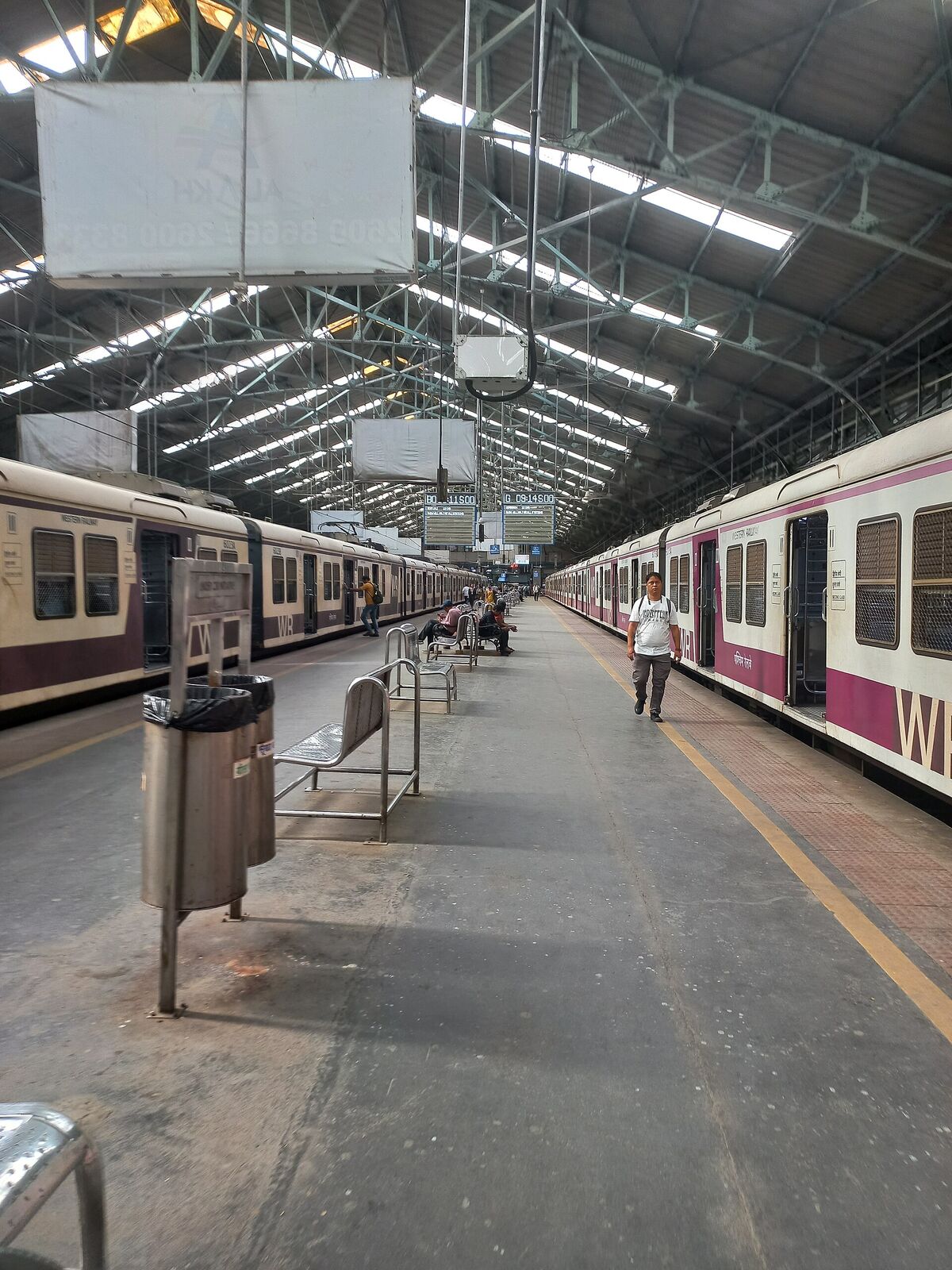
Churchgate at six o'clock
Stand at Churchgate station in Mumbai at six in the evening. Every few minutes a local train arrives, and the crowd rushes toward it before it stops. People jump into carriages packed with many more passengers than they were built for. Millions use these trains every day. Look at the faces: most people stare at their phones or straight ahead. They avoid each other's eyes and walk past almost everything. If you stopped to chat with every stranger like a villager talks to neighbours, you'd never catch your train!
Over a hundred years ago, a German thinker called Georg Simmel described exactly this. He said big cities bombard us with sights and sounds and thousands of strangers. A villager knows a few people deeply. If a city person felt deeply about everyone they met, they'd be worn out! So city people use their heads more than their hearts. They become quick, punctual and a bit cool toward others. Simmel called this the blasé attitude, which means not being bothered by much.
But Simmel saw something good too. In a village, everyone knows your business. In a city, nobody knows who you are, so you can become someone new! A young woman from a small town may feel lonely in the city, but she's also free from everyone watching her. A Dalit young man may escape some of the daily unfairness of caste where nobody knows his family. Simmel also wrote about the stranger: someone who arrives and stays, who is part of the group but also an outsider. People may tell the stranger secrets because he's not part of local quarrels. But when trouble comes, he's often the first to be blamed.
The thinkers in this chapter went further. They said places like cities, roads and networks are made by people and shaped by power.
How places are made
Lefebvre said everyday life matters a lot: eating, dressing, travelling to work, shopping. He worried that modern life turns all this into boring routine and shopping, and wanted people to bring back festivals, play and creativity.
His biggest idea was that space is made by people. An old town with a temple in the middle and a market square shows one kind of society. A modern city with business towers, highways, malls and walled colonies shows another.
He said there are three ways to see a place. There's how we actually use it, like the path a woman walks to the water pump. There's how planners draw it, on maps and plans. And there's how people feel about it: the special tree, the childhood courtyard, the corner where friends meet.
Lefebvre worried that planners' maps often ignore what places mean to the people who live there.
Look at the Niyamgiri hills in Odisha. To a mining company, the hills were full of bauxite, a valuable mineral. But for the Dongria Kondh, about eight thousand people who live there, the hills are the home of their god Niyam Raja, the source of their streams and the forest that feeds them. In 2013 the Supreme Court said the villages should decide. Twelve village meetings were held, and all twelve said no to the mine! It was a rare case where people's feelings about a place won over the planners' map.
When a holy forest is redrawn as a mine on a map, the planner's map is ignoring the people's world.
Who does the city belong to?
Lefebvre said everyone should have a right to the city: not just to use it, but to help shape it. In India, this idea comes up when poor people's homes are knocked down for new roads, when street sellers ask for space on pavements (a law in 2014 gave them that right), and when people ask who new smart cities are really built for.
A world of networks
Castells said we now live in a network society. Companies, money, information and even groups of friends are all linked together like a giant web, using computers and the internet.
He described two kinds of space. The "space of flows" is the internet, airports and banks, where money and information zoom around the world. The "space of places" is where most people actually live their everyday lives. Powerful people zoom around the flows; ordinary people stay in their places. A software engineer in Bengaluru might have meetings with people in America and Germany all day, while the woman who cleans her flat lives in a village the city has swallowed up, and her world ends at her neighbourhood.
In Bengaluru you can see both: shiny glass tech parks connected to the whole world, right next to old villages, workers' huts, polluted lakes and traffic jams. They're side by side, but feel like different worlds.
Castells also said that when the world feels big and cold, people hold more tightly to who they are: their religion, region, language or community.
The global city
People once thought the internet would make big cities less important. Sassen showed the opposite! When factories and offices spread all over the world, someone has to run everything from the centre. So top lawyers, bankers and advertisers gather in a few global cities like New York, London, Tokyo, Singapore, Dubai and Mumbai.
These cities have very rich people at the top. Their busy lives need many low-paid workers too: cleaners, cooks, drivers, guards and delivery riders, often from far away. So global cities have huge riches and real hardship side by side.
In Mumbai, the shiny towers of the Bandra-Kurla Complex stand near Dharavi, where perhaps a million people live and work packed into a very small area. Dharavi is full of busy workshops making leather goods, pottery and clothes, and recycling things. Gurugram near Delhi grew from fields into a city of towers and malls in just thirty years, built and run with the help of workers from villages nearby and far away.
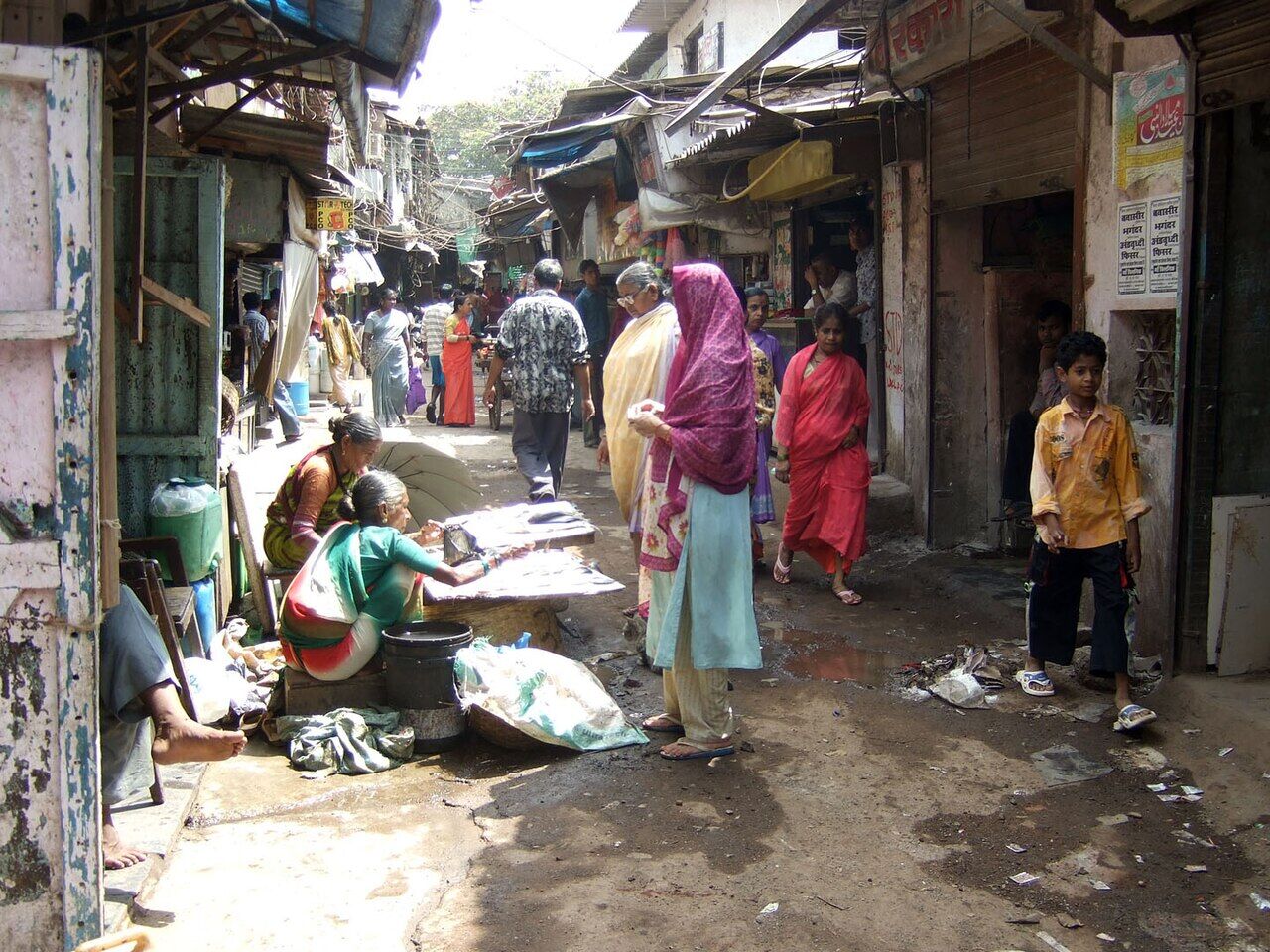
Sassen later wrote that today's world economy doesn't just leave some people behind. It pushes them out of their land, homes and jobs.
Dreams of faraway places
Some people thought the whole world would become just like America. Appadurai said no: ideas, films, money, people and technology all move in different directions, and each place mixes them in its own way.
His big idea was about imagination. Today, ordinary people everywhere imagine other lives, shaped by films, TV, the internet and stories from relatives abroad. A boy in a Bihar village watches films and dreams of Mumbai. A nurse in Kerala dreams of working in the Gulf or Canada. Since the 1970s, so many people from Kerala have worked in the Gulf that the money they sent home built houses and schools and changed families. Imagination isn't just for artists. It moves real people!
Appadurai also wrote about cricket. It was an English game brought by the British. But Indians made it their own, with radio commentary in many languages, TV and the IPL. Today India is the centre of world cricket! The rulers' game became the people's festival.
Global and local together
Robertson said globalisation means the world is getting more connected, and also that people increasingly think of the world as one place.
He invented a fun word: glocalisation (global + local). Global things become local everywhere they go. A big burger chain in India took beef off its menu and created a potato burger! Satellite TV was expected to make India like America, but instead it created lots of channels in Tamil, Telugu, Bengali, Marathi, Bhojpuri and more. And yoga travelled from India to the world, became a huge fitness business, and came back to Indian cities in a new form.
A world on the move
Urry wrote about the tourist gaze: the way tourists look at places. Guidebooks, ads and social media tell us what's worth seeing. Then places change to please tourists. Old havelis become hotels, dancers perform for visitors, and waterfalls get selfie points! Tourism brings money and connections, but it also changes the lives of the people being looked at.
He also worried about our love of cars. Cities like Delhi have been rebuilt around cars, with flyovers, traffic jams, long journeys and winter smog. Near the end of his life, he wrote about climate change and how we might learn to travel less.
Back at the station
Go back to Churchgate at six. The busy commuters are Simmel's cool city people, and many are also strangers from every state. The station was planned by officials and is used in people's own ways. Some passengers work in global offices and zoom through networks all day, then go home to faraway suburbs. Their phones carry films and dreams from around the world. The city isn't a box. It's something all of them make together, every single day.
So far, we've assumed only people make things happen. The last chapter asks a strange question: can roads, machines, germs and rivers make things happen too?