Part Four · Power
Chapter 15
The Power of Watching
Modern power doesn't need to shout. It watches, measures and keeps records, until we start watching ourselves.
Featuring Foucault · Deleuze
Assisted and Curated by Claude, Referenced and Collated by me
Two scenes
In 1757 in Paris, a man who had tried to attack the King of France was punished in front of a huge crowd, very cruelly. The punishment was a show. It was meant to show everyone how powerful the king was, and what happened to anyone who challenged him.
About eighty years later, a prison for young people in Paris had a very different kind of day. Wake up at six. Dress in silence. Pray. Work for nine hours. Eat at fixed times. Two hours of lessons. Bed at nine. No crowds, no cruelty. Just a timetable, with every minute planned.
A French thinker named Michel Foucault started a famous book with these two scenes. Most people say the change shows that people became kinder. Foucault said something else happened: power didn't disappear, it changed. It became quieter, and it was everywhere. Instead of hurting bodies, it began training them and shaping minds.
The thinker of prisons and hospitals
Foucault said knowledge and power go together. When experts like doctors and psychologists study people, they don't just discover facts. They create labels, like "normal" and "abnormal", that are then used to manage people. Knowing about someone in this way is already a kind of power over them.
He studied how people who were mentally unwell were treated through history. Long ago they lived among everyone else. Later they were locked away with beggars and the poor. Then hospitals and doctors took charge. He also studied how doctors learned to "read" the body like a book of signs, so that what the doctor saw started to matter more than what the patient said.
Training the body
Foucault said discipline is a set of ways to control bodies. It grew in armies, schools, hospitals, factories and prisons. You can see it all around you!
Discipline gives everyone their place. Think of a classroom with numbered rows of desks, a hospital ward with numbered beds, or soldiers' beds in lines. One look tells you who is missing.
Discipline controls time with timetables, school bells, factory sirens and roll calls. It even controls tiny movements: how to hold a pen, sit at a desk, stand straight or salute. These are practised until the body does them automatically.
It moves people up through stages, with tests at each step. And it makes many bodies work together like one big machine, like a class reciting together or a team marching in step.
Think of a police training academy. A new recruit gets a bed, a uniform and a number. Whistles divide his day: exercise before dawn, marching, classes, practice, meals and lights out. His posture and salute are corrected again and again, until they live in his muscles. After months he stands and moves differently. Foucault said this kind of power works mostly on bodies, not beliefs. It isn't only about saying no. It also makes people able to do things, while making them obedient.
Watching, judging and testing
Foucault named three tools of discipline. First, watching: buildings arranged so some people can see others. Second, judging: setting a "normal" level and ranking everyone against it, with small punishments for being late or messy. Third, the exam, which combines both and turns each person into a record in a file.
For the first time, ordinary people became worth writing about.
Report cards, attendance registers, medical records and files are everywhere. Long ago, only kings and heroes had their lives written down. Now everyone does, not to celebrate us, but to know and manage us. A child today has records before she can even read!
The Panopticon
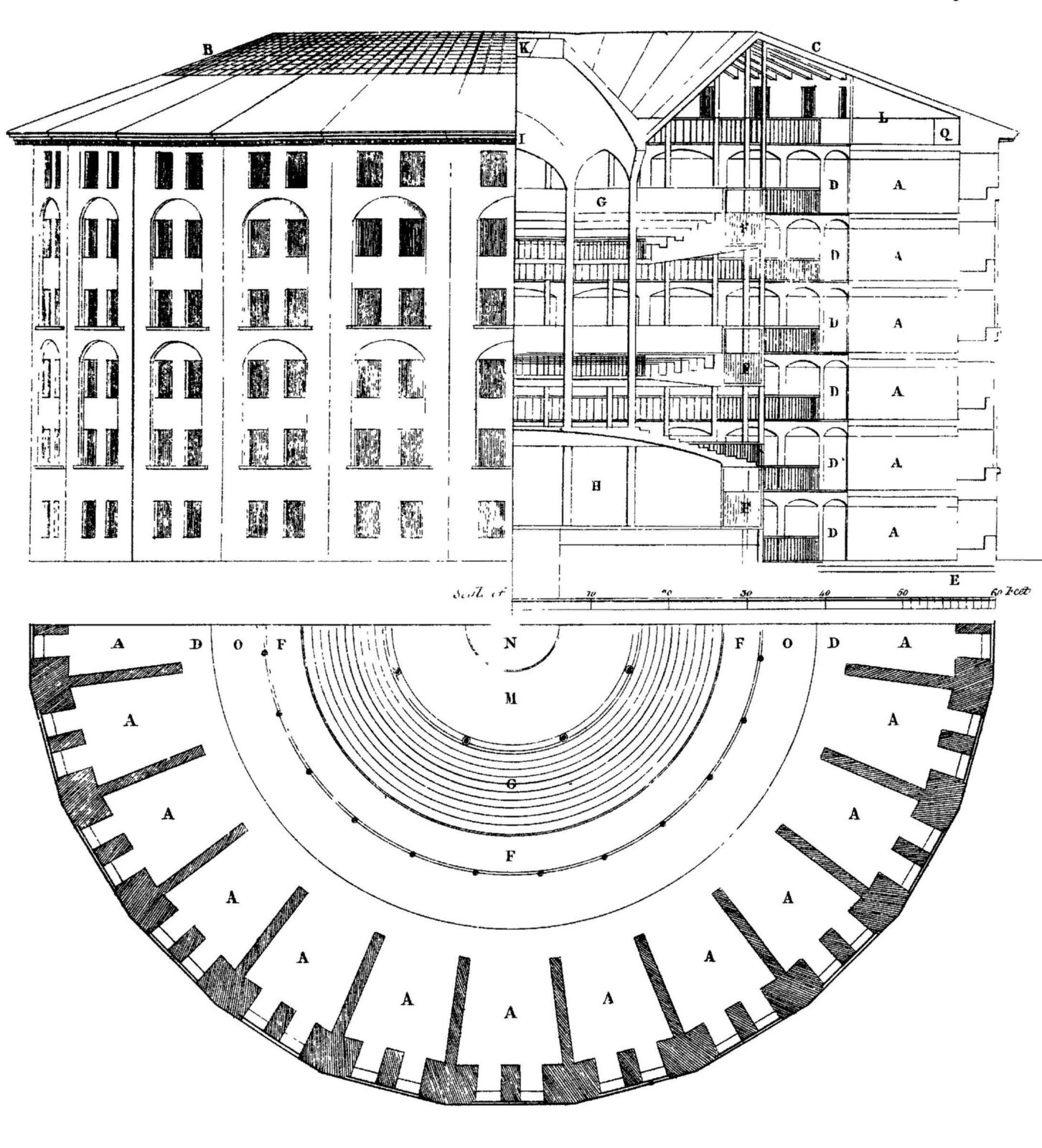
Foucault's most famous example is the Panopticon (say "pan-OP-tee-con"), a prison designed by Jeremy Bentham in 1791. It is a ring of cells around a tall watchtower in the middle. The guard in the tower can see into every cell, but the prisoners can't see whether anyone is in the tower. So they must always assume they might be watched.
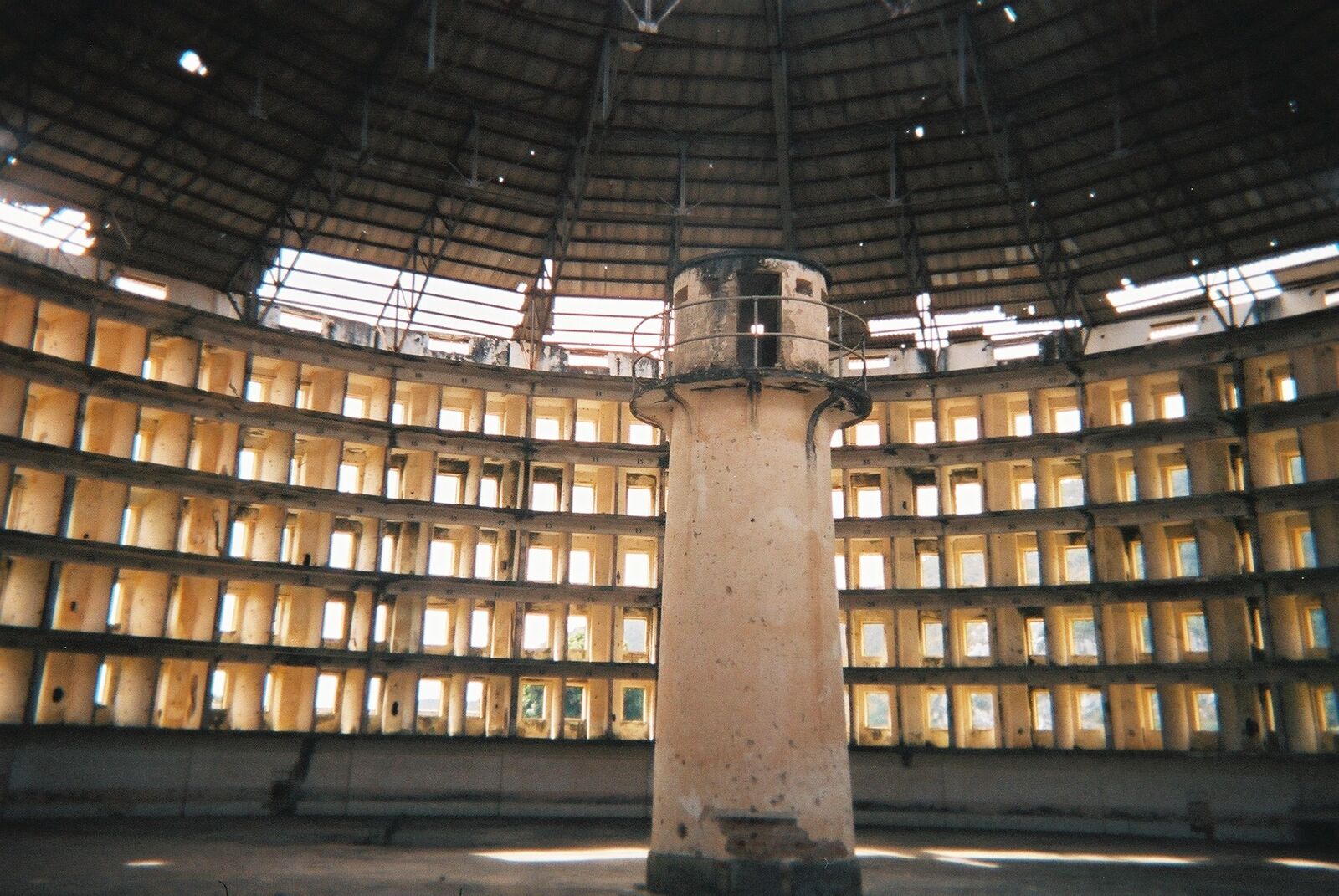
The clever and scary part is that the prisoners start watching themselves! The guard doesn't even need to look all the time. Bentham thought this design could be used for schools, hospitals and factories too.
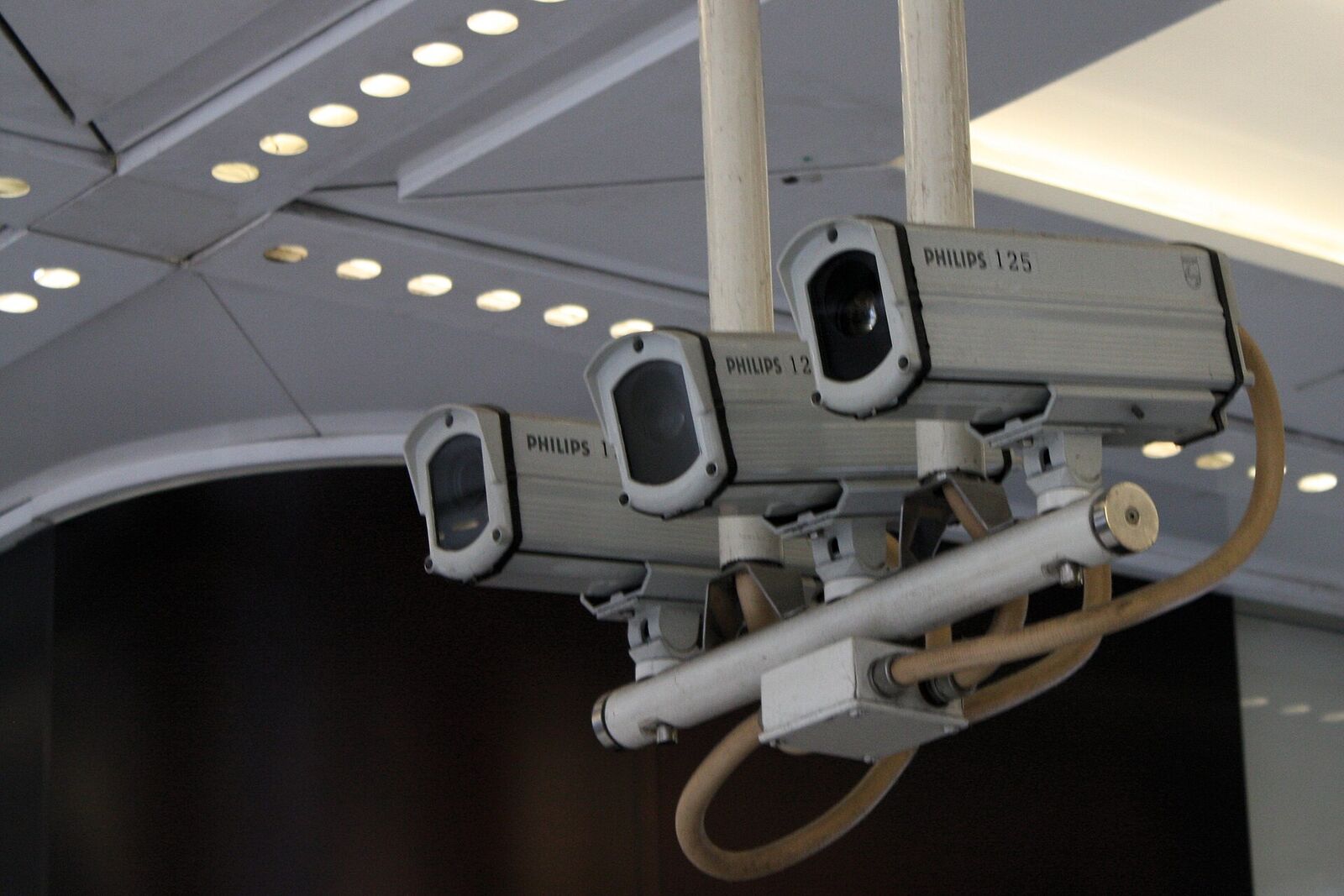
Today the idea feels very real. Security cameras watch streets and stations, and you behave differently when you see one, even if nobody is looking at the screen. Phones share where we are. On social media, we are all watching and being watched, so people carefully choose what to post. Many of us end up watching ourselves.
Why prisons stay
Foucault noticed something odd. Ever since prisons began, people have said they don't work well. They don't reduce crime, and they can turn small offenders into bigger ones. People said this in the 1820s and still say it today. So why do prisons stay?
Foucault's answer was that prisons create a group of people labelled "criminals" whom the police can keep track of. And they treat the rule-breaking of the poor, like small thefts, more harshly than the rule-breaking of the rich, like cheating on taxes.
In India, about three out of four people in prison haven't been found guilty of anything. They're waiting for their trial, often for years, because they can't pay for bail or a lawyer. Most are poor. Foucault didn't think anyone planned this. But he showed that the system keeps working in ways that fall hardest on the poor.
The colonies as testing grounds
Foucault wrote mostly about Europe. But other scholars pointed out that many watching methods were first tried in colonies like India.
Modern fingerprinting was developed in Bengal! In the 1850s a British officer, William Herschel, made contractors put handprints on agreements so they couldn't deny them later. In the 1890s, two Indian police officers, Azizul Haque and Hem Chandra Bose, worked out the clever maths for sorting fingerprints. But for a long time, only their British boss, Edward Henry, got the credit. The system spread all over the world.
The census, counting everyone, started in 1871. It sorted people by religion, caste, language and job, and even tried to rank castes on one ladder. Caste groups asked to be written down higher! The census didn't invent caste, but it made it more fixed. And a cruel law in 1871 labelled whole communities as "criminal" and made them report to the police all the time.
Looking after life
Foucault also showed that modern societies talk endlessly about the body and health, and use labels to sort people into types.
He described biopower: the government's power over the life and health of a whole population. Old kings had the power to punish. Modern governments look after health with vaccines, clean water, hospitals, nutrition and statistics about births and deaths. This has saved countless lives! But it also lets governments decide whom to care for and whom to neglect.
India shows both sides. Huge vaccine drives ended smallpox in the 1970s and polio by 2014. Health workers went house to house and tracked every child. That was amazing! But during the Emergency of 1975 to 1977, the same kind of power was used badly: millions of poor men were pressured into operations so that they couldn't have children, just to meet targets. People were angry, and the government lost the next election. Today, ID numbers and ration cards help get food and pensions to people, but they also let the government track and sort everyone.
Guiding our choices
Foucault said modern power often works by shaping our choices rather than giving orders, through rewards, advertisements and advice. It teaches us to manage ourselves and to treat our lives like a business: our studies, health and looks become "investments". If things go wrong, we blame ourselves.
A student spending years at coaching classes, someone counting steps and sleep on a phone app, a worker taking course after course to keep a job: these people aren't being ordered. They're being guided by their own hopes and worries.
Modern power works less by giving orders and more by shaping our choices.
Power is everywhere
Earlier thinkers saw power as something a king, a government or rich people have. Foucault said power is in every relationship: doctor and patient, teacher and student, parent and child. It doesn't only say no; it also creates knowledge, skills and identities. And wherever there's power, there's also resistance.
From walls to passwords
Deleuze wrote a tiny essay in 1990, only five pages long, that predicted the future amazingly well.
He said Foucault described a world of enclosed places: home, then school, then the army or the factory. You moved from one to the next, starting fresh each time.
Deleuze said a new kind of power was taking over, which he called control. In the old world, you finished school and moved on. In the new world, you're never finished: there's always more training, more ratings, more targets and more checking. Control isn't in one building. It follows you everywhere.
Deleuze said each person becomes a bundle of data: codes, passwords and numbers that computers sort and combine. Instead of a wall, there's a password that lets you in or keeps you out. He imagined a city where your electronic card opens doors on some days but not others.
In the old world you were always starting again. In the new world you're never finished.
He wrote this before smartphones and apps existed, yet it all came true! Think of a food delivery rider. No boss watches him. Instead, an app tracks him every second, counts his speed, collects customer star ratings, and can lower his pay or block him automatically. There's always the next order. Or think of a worker whose fingerprints have worn away from hard work, so the machine at the ration shop can't read them, and his family can't get their grain that month. Deleuze asked what new tools we might find to resist this kind of control. We're still working that out.
Seeing places in a new way
After learning about Foucault and Deleuze, schools, hospitals, police stations, ration shops and phones never look quite the same. They teach us to ask how power works: through files, timetables, tests, cameras, codes and apps. The strongest power often doesn't feel like power at all. But by showing that these things have a history, they also show that things could be different.
But this raises a frightening question. What happens when all these clever ways of managing people are used to harm them? The twentieth century gave a terrible answer, which comes next.