Part Four · Power
Chapter 16
When Clever Becomes Cruel
How can ordinary people, just doing their jobs, end up taking part in something terrible? And how can we stop it?
Featuring Adorno · Arendt · Bauman · Habermas
Assisted and Curated by Claude, Referenced and Collated by me
A line drawn in five weeks
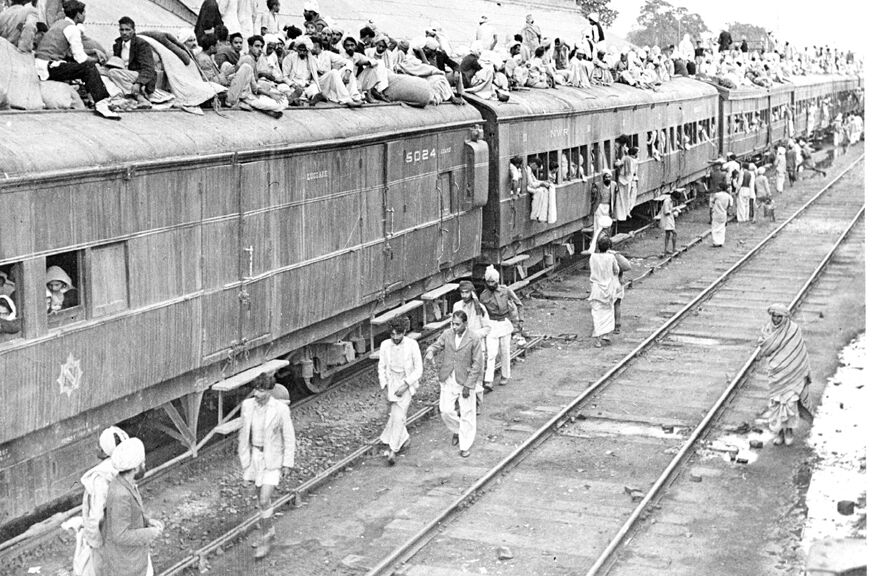
In 1947, a British lawyer named Cyril Radcliffe came to India for the very first time. He was given just five weeks to draw the border that would split Punjab and Bengal between India and Pakistan. He worked in a closed room in Delhi with old maps. His lines cut through villages and farms, separating fields from their wells. After independence, millions of people had to leave their homes and cross the new border, and a great many lost their lives in the terrible violence that followed. Radcliffe left India and never came back.
Radcliffe wasn't a cruel man. He was careful and was troubled by his job. He never ordered anyone to be hurt. He just drew lines on maps, as he'd been asked to. But the distance between his room in Delhi and the villages of Punjab let a decent man do something with terrible results.
This chapter is about that distance. Modern people were proud of their science, planning and organisation. Then, in the 1940s, Germany used trains, chemistry and careful office work to murder millions of Jewish people and others in what we call the Holocaust. Was this people going back to being savage? Or did modern cleverness itself help make it possible?
When reason goes wrong
Two German thinkers, Theodor Adorno and Max Horkheimer, had to escape from the Nazis to America. In 1944, while the camps were still running, they wrote a gloomy book. They said human reason was meant to free us from fear, but the modern world had ended in disaster.
They described something called instrumental reason: thinking only about how to do something efficiently, never asking whether it's worth doing. This kind of thinking built science and factories. But it can't tell good goals from bad ones. And it can end up treating people like things to be counted and managed.
They said the camps weren't a return to the ancient past. They were modern: careful records, train timetables and people turned into numbers.
They told an old Greek story. The hero Odysseus wanted to hear the beautiful songs of the Sirens, which lured sailors to their doom. So he had himself tied to the ship's mast while his sailors, with wax in their ears, kept rowing. He enjoyed the song while others worked without hearing anything. Adorno and Horkheimer said this shows how controlling nature, controlling yourself and controlling others go together.
Other thinkers said this was too gloomy. Reason also gave us human rights and democracy, which condemned the camps. But their question remains: if a society is very powerful but can't judge what's good, what stops it from doing terrible things?
When evil is ordinary
Hannah Arendt, whom we met earlier, looked at this question through one man.
In 1961, Arendt went to watch the trial of Adolf Eichmann, the Nazi officer who had organised the trains that took millions of Jewish people to the camps. She expected to see a monster. Instead she saw a dull office worker who spoke in boring official phrases, was proud of doing his job well, and said he was just following orders.
Arendt called this the banality of evil ("banal" means ordinary and dull). She didn't mean Eichmann was innocent; she believed he deserved his punishment. Her point was even more worrying: terrible crimes can be done not only by monsters but by ordinary people who don't stop to think about what they're doing to others. Later historians found Eichmann hated Jews more than he pretended. But Arendt's idea is still important.
The man in the grey coat
Around the same time, an American scientist named Stanley Milgram ran a famous experiment. Volunteers were told by a man in a grey lab coat to give electric shocks to a "learner" in the next room every time he got an answer wrong. The learner was really an actor and got no shocks, but the volunteers didn't know that! As the shocks seemed to get stronger, the actor cried out and begged them to stop. Yet about two out of three volunteers kept going to the very end, because the man in charge calmly told them to. Many were very upset, but they obeyed.
In other versions, things changed. When the learner sat in the same room, far fewer people obeyed. When others in the room refused, people refused too. So obedience depended on distance. The closer the person who might get hurt, the harder it was to hurt him.
The closer the person, the harder it was to hurt him.
Modern life and the Holocaust
In 1989, Bauman wrote that the Holocaust wasn't just a breakdown of modern life. It used modern things: big offices, trains, record-keeping, and governments that wanted to redesign society. It couldn't have happened without them.
The gardener government
Bauman said some governments act like gardeners. A gardener has a plan for a perfect garden, so he plants what fits and pulls out "weeds". A weed isn't bad; it's just a plant in the "wrong" place. The Nazis treated people who didn't fit their plan as weeds. Bauman warned that this gardener idea can show up in milder forms too, whenever planners treat people as being "in the way" of a perfect plan, like clearing poor families' homes for a beautiful city.
How people stop caring
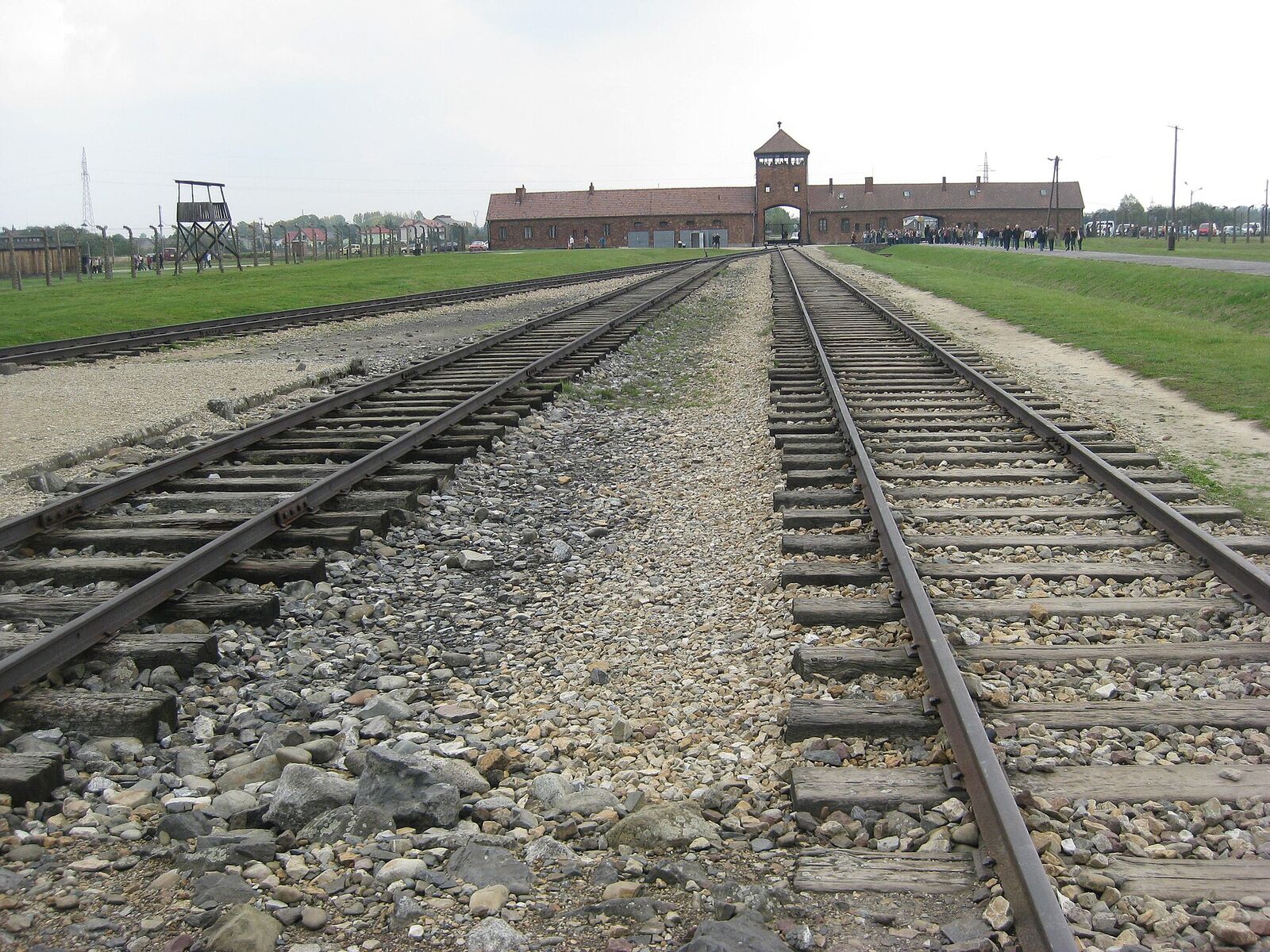
How could ordinary people take part? Bauman said big organisations can make people stop feeling responsible, in several ways.
First, work is split into small pieces. One person plans trains, another fills in forms, another adds up costs. Nobody sees the final result. Second, people ask "Did I do my job well?" instead of "Is this right?" Third, the victims are far away and become just numbers. Fourth, polite-sounding words hide what's really happening. Fifth, everyone says "I was just following orders; someone above me decided."
Bauman said being good starts with closeness: seeing another person's face and feeling responsible for them. When there's a lot of distance, that feeling switches off.
The train planner plans trains; the clerk fills in forms; none of them feels like the one who did harm.
Distance in our own world
Bauman's warning matters everywhere. When a big dam is planned, engineers measure water, planners draw maps and officials write papers. Each does a good job. But far away, villages disappear under water. In 2004, the town of Harsud in Madhya Pradesh, home to about twenty thousand people, was knocked down before a dam's lake covered it. Families watched their town flattened. Nobody meant to be cruel, but the distance between the planning table and the riverbank made people's pain seem like just a number in a report.
Targets can do this too: so many arrests, so many cases, so many forms filled. Targets can be useful. But when the number becomes the goal and people become just numbers, kindness can switch off. Bauman's message is: behind every file, there's a face. Doing something correctly isn't the same as doing the right thing.
Saving reason
Habermas agreed with much of what his teachers said, but he didn't give up hope. He said there's more than one kind of reason. One is calculating: working out the fastest way to a goal. But another kind is built into talking with each other.
He said there are two ways to deal with people. One is tricking or pushing them to get what you want. The other is talking honestly to reach an understanding together, by giving good reasons. When we speak seriously, we're promising to tell the truth, to be fair and to mean what we say, and to explain ourselves if asked.
He imagined a perfect conversation where everyone affected can join, anyone can ask questions, and nobody is bullied, bribed or tricked. Real talks are never perfect, but this helps us notice when a discussion is unfair. He said a rule is only fair if everyone affected could agree to it in an honest, free discussion.
Honest talking aims at agreeing because of the best reasons, not because of force.
Two parts of society
Habermas said society has two parts. The lifeworld is family, friends, community and everyday talk, where people understand each other. The system is money and government offices, which run on prices and rules. We need the system, because a big country can't be run by chatting! But the system can push into the lifeworld and take over.
Then school becomes just about marks and ranks, not understanding. Health care becomes about bills, not caring. People feel nobody is listening. Habermas hoped that public discussion, movements and democracy can push back.
Think of a gram sabha, a meeting of all the adults in a village. It's supposed to be a place where everyone can speak, ask questions and decide together. Sometimes it's faked, with decisions written beforehand. But sometimes it's real. In 2013, in the Niyamgiri hills of Odisha, twelve village meetings all said no to a mine on their holy mountain. Habermas helps us see the difference: is everyone free to speak, and are their reasons truly heard?
Some critics said Habermas expected too much agreement and forgot about power and differences. But he's still the great defender of the hope that free, equal people can run their lives by talking things through.
Behind every file, a face
This chapter looked at the darkest side of modern life. Clever planning, big offices and splitting work into pieces can be used for terrible things, and ordinary people may take part without feeling they're doing anything wrong.
The lesson is easy to say but hard to do. Whenever decisions about people are made from far away, through files, maps and targets, we must bring back closeness. Officials can visit the riverbank before signing an order, meet the families behind the numbers, and ask not only "Is it done properly?" but "Is it right?" And everyone affected should get a chance to speak and be heard.
Next we look at how countries are formed, how they're challenged, and why some uprisings become revolutions.