Part One · The Hunters
Chapter 5
The Wolf
The family that hunts together, the mother of Rome, the ancestor of the dog, and the monster of the fairy tale.
Assisted and Curated by Claude, Referenced and Collated by me

Canis lupus
For decades, everyone knew how a wolf pack worked. There was an alpha male and an alpha female, who had fought their way to the top and ruled by intimidation. Below them came a strict hierarchy of subordinates, each jostling for position, down to a bullied omega at the bottom. The idea came largely from studies of captive wolves in the 1940s, and it was popularized in a 1970 book by the American biologist L. David Mech, The Wolf, which became a classic. It spread far beyond biology, into business management, dog training, and popular psychology, where "alpha male" became a phrase for a certain kind of dominant man.
There was one problem. It was wrong, at least for wild wolves. The captive wolves in the early studies were unrelated adults thrown together in an enclosure, and they behaved as strangers forced to share a small space would behave. Mech himself spent years observing wild wolves on Ellesmere Island in the Canadian Arctic, where the wolves were so unused to humans that they tolerated his presence at close range. What he saw was a family. In 1999, he published a paper retracting the alpha model and explaining that a typical wild pack consists of a breeding pair, a mother and father, and their offspring of the past one to three years. The "alphas" are simply the parents. The "dominance" is the ordinary authority of parents over children. Mech has spent much of the rest of his career trying, with limited success, to get the old idea out of popular culture.
The "alphas" are simply the parents. A wolf pack is a family.
How wolves live
A wolf pack typically numbers between four and eight animals, though packs of twenty or more occur where prey is abundant. The parents lead the hunts, choose the den sites, and eat first at a kill, but they also feed the pups by regurgitating meat, and older siblings help raise the younger ones, babysitting, playing, and bringing them food. As young wolves mature, most leave the pack, usually between one and three years old, to find a mate and a territory of their own. Some travel remarkable distances; a young wolf fitted with a GPS collar in Europe was recorded travelling over a thousand kilometres.

Wolves hunt cooperatively, testing herds of deer, elk, moose, or bison by chasing them, looking for the weak, the young, the old, or the sick. Most chases fail. The famous howl is a form of long-distance communication, allowing pack members to locate one another and announcing the pack's presence to neighbours; a chorus of howls from several wolves, each at a slightly different pitch, can make a small pack sound larger than it is.
In 1995 and 1996, wolves were reintroduced to Yellowstone National Park in the United States, seventy years after they had been exterminated there. What followed became one of the most famous stories in ecology. Some researchers argued that the wolves, by hunting elk and making them more wary, allowed willows and aspens along the rivers to recover, which in turn brought back beavers and songbirds and even changed the course of streams, a phenomenon called a trophic cascade. Later studies have argued that the effects were real but more modest and complicated than the popular version suggests. But the story made a point that had been forgotten: that large predators are not just killers but shapers of whole ecosystems.

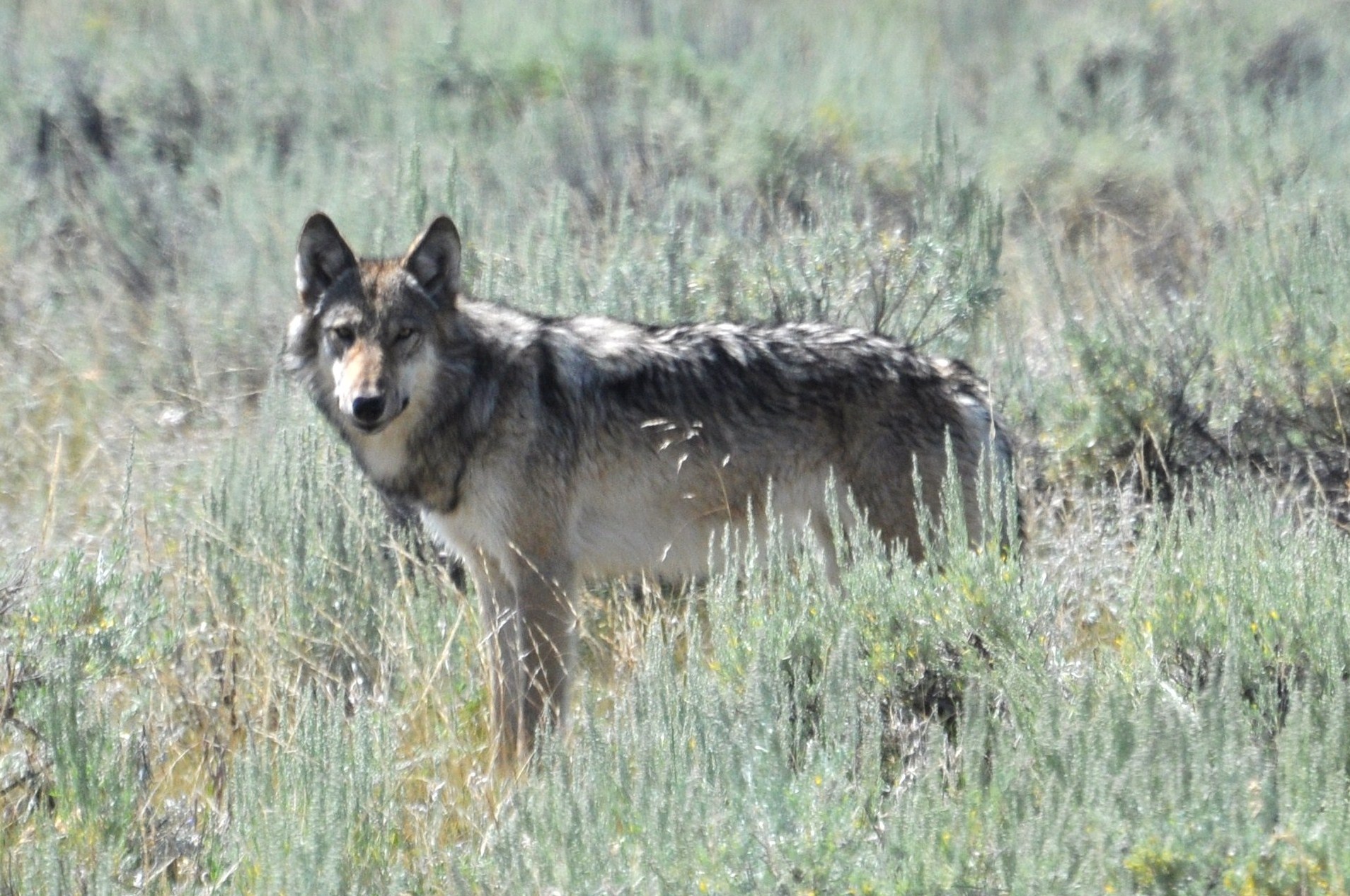
Scientists who study the Indian wolf, like Y. V. Jhala, who worked for years among the grasslands and blackbuck of Velavadar in Gujarat, have found the same family life among these smaller, heat-loving wolves. An Indian wolf pack is usually a breeding pair and their young of the last year or two. The parents hunt, the young ones learn by following, and older siblings help look after the newest pups, bringing them food and keeping watch at the den. In the hot plains, dens are often dug into the banks of dry streams, and the pups stay hidden there through the day. The picture that emerges is not of a gang ruled by a bully, but of a household where everyone has work to do.

David Mech's change of mind is worth telling in full, because it is one of the best examples of honesty in science. Mech, born in 1937, had studied the wolves and moose of Isle Royale, an island in Lake Superior, in the late 1950s and 1960s. His 1970 book The Wolf drew on earlier work, especially by the Swiss biologist Rudolph Schenkel, who in the 1940s had studied wolves in a zoo in Basel. Schenkel described the fights and postures of these captive wolves and used the terms "alpha" male and female. Mech repeated them, and the book sold widely. Then, from 1986, Mech spent many summers on Ellesmere Island in the high Arctic, where wolves had rarely seen people and let him watch their dens from a few metres away. He saw parents and offspring, not rival strongmen. In 1999 he published a paper titled "Alpha Status, Dominance, and Division of Labor in Wolf Packs", explaining the error. He even asked his publisher to stop printing The Wolf, because it kept spreading the outdated idea. Yet the word "alpha" had already escaped into self-help books and dog-training manuals, where it lives on. A scientific mistake can travel faster than its correction.

Wolves are also capable of extraordinary journeys. In 2011 a young wolf known as OR-7, fitted with a GPS collar in northeastern Oregon, left his pack and walked more than a thousand miles, crossing into California, the first wolf known in that state for nearly ninety years. He found a mate, raised pups and founded a new pack. His travels were followed by thousands of people online, and schoolchildren voted on his name, Journey. In Europe, wolves have returned on their own from refuges in Italy, Poland and the Balkans, spreading into Germany, France, the Netherlands and even Denmark, which had had no wolves for two centuries. Their return has brought fierce arguments with shepherds, and new ways of protecting flocks with guard dogs and electric fences, the same arguments Indian herders have lived with for centuries.
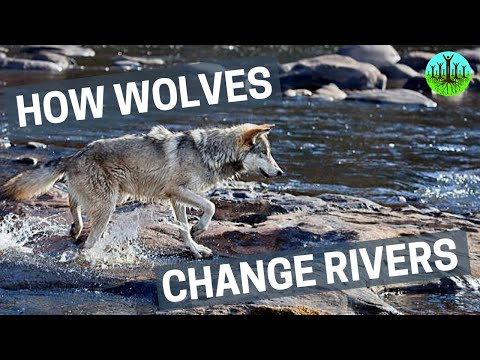
The Yellowstone story repays a careful look, because it has become a kind of modern myth itself. Wolves were wiped out in the park by the 1920s, as part of a government programme against predators. Without them, elk numbers rose, and the elk ate the young willows and aspens along the rivers. When thirty-one wolves from Canada were released in 1995 and 1996, many changes followed: elk numbers fell, willows grew back in some places, and beavers returned. The short film How Wolves Change Rivers (2014), narrated by the writer George Monbiot, made this story famous around the world. But later studies found that other things were happening at the same time: grizzly bears and cougars were also eating elk, human hunting increased outside the park, and a drought had its own effects. The truth seems to be that wolves helped, but they did not do it alone. The lesson is still powerful. It is just more complicated, and more honest.

Wolves are among the most widely distributed land mammals on earth, found across North America, Europe, the Middle East, Central Asia, India and China, in tundra, forest, mountain, desert and grassland. This adaptability comes partly from their social life. A pack can hunt animals much larger than a single wolf, like moose or bison, but wolves also live on hares, rodents, fish, berries and, around villages, rubbish and livestock. The Arctic wolves Mech watched on Ellesmere Island hunted musk oxen and Arctic hares across the bare rock and ice, raising pups in the same dens their ancestors may have used for centuries; one den Mech studied had bones that suggested use for hundreds of years. Ethiopian wolves, a separate species living on the high plateaus of Ethiopia, hunt rats alone but live in family packs; with only around five hundred left, they are Africa's most endangered carnivore. The wolf family, it seems, can fit itself into almost any landscape that people allow it to keep.
The howl has been studied more closely in recent years. Researchers found that wolves howl more to members of their pack with whom they have close bonds, and when a high-ranking member leaves, suggesting the howl carries feeling as well as information. Different wolf populations, and different species of canid, have distinct howling "dialects", which computer analysis can tell apart. When people howl into the night in wolf country, packs often answer, and researchers use this to count wolves in places where they are hard to see, including in India's grasslands.


The wolf that became the dog
Every dog on earth, from the Great Dane to the Chihuahua, descends from the wolf, or more precisely from an extinct population of wolves in Eurasia. The domestication of the dog was the first domestication of any animal, and it happened long before farming: genetic and archaeological evidence suggests it occurred at least fifteen thousand years ago, and possibly considerably earlier. How it happened is debated. One theory holds that wolves which were less fearful of humans began scavenging around hunters' camps, and gradually, over generations, became tamer and more dependent on people. We saw in the earlier book the Natufian burial at Ain Mallaha in which a person was laid to rest with a hand on a puppy, about twelve thousand years ago. The friendship between wolf-kind and humankind is among the oldest relationships we have.

The oldest evidence of the bond between people and dogs is touching. At Bonn-Oberkassel in Germany, workers in a quarry in 1914 found a grave about fourteen thousand years old. In it lay a man and a woman, and with them the bones of a dog. When scientists looked closely at the dog's teeth much later, they found it had been badly ill as a puppy, with a disease like canine distemper. A puppy that sick would have needed to be kept warm, cleaned and fed for weeks. It could not have been useful as a guard or a hunter at that time. It survived only because people chose to look after it. And when it died, they buried it beside them. Long before farms or cities, then, people already loved the descendants of wolves for their own sake.
The American writer Jack London explored both directions of the bond in two famous novels. In The Call of the Wild (1903), Buck, a big, comfortable pet dog in California, is stolen and sold as a sled dog in the frozen north of Canada. Through cold, cruelty and hard work, he slowly sheds the habits of a house dog, and at the end he answers the howl of the wolves and runs off to live as one of them. In White Fang (1906), it goes the other way. White Fang is a wolf-dog born in the wild, who learns the hard rules of survival, is treated savagely by some people, and is finally tamed by a man who is kind to him, until he becomes a loyal dog in a family home. Together the two books ask a deep question: how thin is the line between the wild and the tame? London's answer seems to be that it can be crossed either way, and that what decides it is mostly how we are treated.

The Bonn-Oberkassel burial was found in 1914 by quarry workers in Germany, who uncovered the skeletons of a man of about forty, a woman of about twenty-five, and the bones of a dog. For a century the dog bones were overlooked. In 2018, a team led by the archaeologist Luc Janssens re-examined them and found that the dog, about seven months old, had suffered from canine distemper, a serious disease, at around four months. Without warmth, water and food from people, it would almost certainly have died. Someone nursed it through weeks of illness, at a time when such a dog could not have been useful for hunting or guarding. The researchers argued that this was evidence of real emotional attachment: care for an animal for its own sake. Fourteen thousand years ago, someone loved a sick puppy.
Where and when wolves first became dogs is still argued over. Some genetic studies point to East Asia, others to Europe or Siberia, and some suggest that dogs were domesticated twice, in the east and the west, and the populations later mixed. A 2020 study of ancient dog DNA found that by eleven thousand years ago there were already at least five distinct dog lineages around the world, so domestication must have begun much earlier. What is clear is that dogs walked with people into every corner of the world, including the Americas, Australia, where they became the dingo, and India, where the Indian pariah dog, one of the oldest dog types on earth, still lives in every village and city.

Dogs changed in ways that tell us about ourselves. A study in 2019 found that dogs have a facial muscle, above the eye, that lets them raise their inner eyebrows and make the "puppy-dog eyes" humans find so moving. Wolves barely have this muscle. Over thousands of years, people seem to have favoured dogs that could make this expression, and dogs evolved to look at us in ways that trigger care. When a dog and its owner gaze at each other, both release oxytocin, the hormone of bonding between mothers and babies. The wolf became the dog partly by learning to speak to the human heart. Jack London's two novels about dogs and wolves catch this two-way pull: Buck, the pet dog stolen and sent to the Klondike in The Call of the Wild, slowly answers the call of his wild ancestors, while White Fang, part wolf, slowly learns to trust and love a human master.
The mother and the monster
In the founding legend of Rome, the twins Romulus and Remus, abandoned on the banks of the Tiber, were suckled by a she-wolf, the lupa, until a shepherd found them. The bronze Capitoline Wolf, long believed to be Etruscan but now thought by many to date from the Middle Ages, with the twins added in the Renaissance, remains the emblem of the city. Among the Turkic peoples, the legend of Asena tells of a she-wolf who nursed a wounded boy, the sole survivor of a massacre, and bore his children, who became the ancestors of the Göktürks. The Secret History of the Mongols, written in the thirteenth century, begins by tracing the ancestry of Genghis Khan to a blue-grey wolf and a fallow doe.

These are myths of the wolf as nurturing mother and noble ancestor, and they come from pastoral and warrior peoples who admired the wolf's courage, loyalty to its family, and skill in the hunt. Many Native American peoples regarded the wolf as a teacher and a brother; in some Ojibwe traditions, the first man walked the earth with the wolf as his companion, and was told that what happened to one would happen to the other.
But for settled farmers and herders, the wolf was the enemy that killed sheep, and in European folklore the wolf became a monster. In Norse myth, the gigantic wolf Fenrir, bound by the gods with a magical chain, will break free at the end of the world and swallow Odin. In the fairy tales collected in France and Germany, the wolf devours grandmothers and little girls in red hoods. In medieval Europe, the werewolf, a human being transformed into a wolf, embodied the fear that the wild beast lurks within the human. Wolves were exterminated from Britain by the eighteenth century, and from much of western Europe and the United States by the early twentieth. Japan's wolves, which had been worshipped at mountain shrines as Ōkami, "great god," protectors of crops against deer and boar, were extinct by about 1905.

The wolf has a large place in the history of the mind too. Sigmund Freud, the founder of psychoanalysis, had a patient, a young Russian aristocrat, who became known in his writings simply as the "Wolf Man", in a case published in 1918. At the centre of the case was a dream the man remembered from when he was about four. In it, the window of his bedroom opened by itself at night, and outside, in a big walnut tree, sat six or seven white wolves, quite still, staring at him. He woke up screaming, terrified that they would eat him. Freud spent years working out what the dream meant, and traced it back to something frightening the child had seen, and not understood, when he was very small. Whatever one thinks of Freud's answer, the case shows how naturally the wolf turns up when the mind needs a picture for fear: something wild, watching, waiting in the dark just outside.
The werewolf has long been read in the same way. A werewolf is an ordinary person by day who turns into a wolf at full moon and kills without knowing it. The story has frightened people in Europe for centuries, and its power lies in a simple idea: the beast is not out in the forest, it is inside us, just under the skin, and it can come out when we least expect it.
The German novelist Hermann Hesse turned that fear into a novel about a lonely man. In Steppenwolf (1927), Harry Haller is a middle-aged scholar who feels he is two beings at once: a polite, cultured man who loves Mozart and books, and a lonely, savage "wolf of the steppes" who despises all that. He is miserable because he thinks he must be one or the other. Through the strange adventures of the book, he begins to learn that a person is not two selves but many, and that the way out of his misery is not to kill the wolf or to become it, but to laugh, to accept all the parts of himself, and to stop taking his own suffering so seriously.
Late in the twentieth century, the Jungian analyst Clarissa Pinkola Estés turned the image around completely. In Women Who Run With the Wolves (1992), she argued that the wolf stands not for evil but for a wild, knowing instinct: the inner voice that senses danger, knows what it needs, protects its young and does not apologise for existing. She believed that many women are taught from childhood to bury this instinct, to be pleasant, quiet and obliging, and that much unhappiness comes from losing touch with it. For her, the wolf is something to recover, not to fear. Interestingly, this is closer to what many Native American and Siberian peoples believed than to the European fairy tales. Many of them had wolf clans that traced their descent from a wolf ancestor, and saw the wolf as a teacher and relative, a skilled hunter who looks after its family.
India's oldest texts know the wolf mainly as a danger to travellers and flocks. In the Rigveda, a hymn asks the god Pushan, protector of roads and herds, to drive the wolf away from the path. But the wolf is not only feared. In the Mahabharata, the mighty Bhima is called Vrikodara, "wolf-bellied", because of his huge appetite: a fond nickname for the strongest and hungriest of the five brothers, not a frightening one. And the Dhangar shepherds of the Deccan plateau have lived alongside wolves near their flocks for centuries, losing some animals, and putting up with it as part of the cost of life on the open grasslands.
Cinema has carried both sides of the wolf. In Dances with Wolves (1990), a lonely soldier on the American frontier makes friends with a lone wolf he names Two Socks, and through the wolf, and then the Lakota people, he finds a new home. The Irish animated film Wolfwalkers (2020) is about a girl whose father has been sent to kill the wolves in the forest, and who discovers that she herself turns into a wolf in her sleep. It shows the destruction of forests and wolves as the same act, done by people who fear what they do not understand. And Amar Kaushik's Hindi film Bhediya (2022), set in the forests of Arunachal Pradesh, turns the werewolf tale into a story about a man who comes to build a road through the forest, gets bitten, and finds himself becoming a wolf. The film uses the old horror story to ask who the real monster is: the wolf, or the people cutting down its home.

Freud's Wolf Man was a real person, Sergei Pankejeff, a wealthy young Russian who came to Freud in Vienna in 1910 suffering from deep depression. He told Freud a dream he had had at about four years old: the window of his bedroom opened by itself, and he saw six or seven white wolves sitting still in a walnut tree, staring at him. He woke screaming. Freud spent years interpreting the dream, and claimed it went back to a scene the boy had witnessed as a baby. Later critics doubted almost everything in Freud's reading, and Pankejeff himself, interviewed as an old man in the 1970s, said that he had never felt cured. But the case became one of the founding stories of psychoanalysis, and it shows how deeply a childhood image of wolves can lodge in the mind. Fairy tales, which the young Pankejeff had loved, were full of wolves, including "Little Red Riding Hood" and "The Wolf and the Seven Little Goats". The boy's nightmare was built from the stories adults told him.
Clarissa Pinkola Estés, a Jungian analyst of Mexican-American background who grew up in a Hungarian immigrant family, took the wolf in the opposite direction. Women Who Run With the Wolves (1992) retells folk tales from many cultures, including "Bluebeard" and "La Loba", the wolf-woman of the American Southwest who gathers the bones of wolves in the desert and sings them back to life. Estés argued that healthy wolves and healthy women share certain qualities: keen senses, playfulness, loyalty, fierce protection of their young, and a deep connection to instinct. Modern life, she said, cages both. The book spent more than a hundred weeks on bestseller lists and became a touchstone for women seeking a language for their inner lives. Here the wolf is not the monster in the forest but the wildness that has been lost.
The werewolf has an ancient history. In Greek myth, King Lycaon of Arcadia served human flesh to Zeus and was turned into a wolf, giving us the word "lycanthropy". In medieval and early modern Europe, people were actually tried and executed as werewolves, especially in France and Germany in the sixteenth century, during the same panic that produced the witch trials. Historians see these trials as a mixture of real crimes, mental illness, torture and fear of the forest. The modern werewolf of films, transformed by the full moon and killed by silver, is largely a twentieth-century creation, popularised by The Wolf Man (1941). In India, the shape-shifting animal is more often the serpent woman or the were-tiger. Bhediya (2022) brought the European werewolf into an Indian forest, with a story in which the wolf takes revenge on people who are destroying Arunachal's woods, a modern twist in which the beast is on nature's side.

Hermann Hesse's Steppenwolf is the most famous novel about the wolf inside a man. Its hero, Harry Haller, is a lonely, middle-aged intellectual who feels split in two: half a civilised, cultured man, half a savage "wolf of the steppes" who despises society. Over the novel, he discovers through jazz, dancing and a strange "Magic Theatre" that he is not just two selves but many. The book, published in 1927, was rediscovered by young readers in the 1960s, and a rock band, Steppenwolf, took its name. Hesse's insight is very Jungian: the inner wolf is not the enemy, but one voice among many that must be heard and given its place.
The story of Romulus and Remus is told by the Roman historian Livy, writing around the time of Augustus. The twins were the sons of the god Mars and Rhea Silvia, a Vestal Virgin, daughter of a deposed king. Their uncle, who had seized the throne, ordered them drowned in the Tiber, but the basket washed ashore, and a she-wolf who had lost her cubs came to drink, heard them crying, and suckled them, until the shepherd Faustulus found them and raised them with his wife, Acca Larentia. Livy himself noted a sceptical version: that Acca Larentia had been called lupa, "she-wolf", which in Latin slang also meant a prostitute, and that this had given rise to the legend. The twins grew up, overthrew their uncle, and founded Rome on the Palatine hill, where a cave called the Lupercal was honoured as the wolf's den; in 2007, archaeologists announced they might have found it, beneath the palace of Augustus. During the festival of the Lupercalia, young men ran through the city wearing goatskins, striking women to bring fertility. Rome, the greatest empire of the ancient West, told itself that it had begun at a wolf's breast.
The wolves of India
India has two kinds of wolf: the Himalayan wolf of the high mountains, and the Indian grey wolf of the plains and grasslands, a smaller, short-coated animal adapted to heat. Genetic studies suggest both belong to some of the oldest surviving wolf lineages in the world. The Indian wolf lives in the dry grasslands and scrublands of the Deccan, Rajasthan, Gujarat, and central India, in small packs, often in landscapes shared with farmers and herders. Unlike the forest-dwelling tiger, it is not protected by most of the network of reserves, and its grassland habitat is often treated as "wasteland" to be converted to farms or plantations. It is one of India's least-studied and most threatened large carnivores.

Wolves in India have also, on rare occasions, attacked children, and such episodes, as in eastern Uttar Pradesh in the 1990s and again around Bahraich in 2024, cause terror and intense efforts to capture the animals responsible. The fear is ancient. Stories of children raised by wolves haunted colonial India, and in 1920 a missionary in Bengal claimed to have rescued two "wolf girls," Amala and Kamala, from a wolves' den. The story became famous around the world, but modern researchers have concluded that it was almost certainly exaggerated or invented. Rudyard Kipling's The Jungle Book of 1894, set in the Seoni hills of central India, gave the world its most beloved version of the idea: Mowgli, the boy raised by a wolf pack, protected by the law of the jungle.
The stories of "wolf children" have fascinated people for a long time. The most famous Indian case is that of Amala and Kamala, two girls said to have been found living with wolves near Midnapore in Bengal in 1920 by a missionary, J. A. L. Singh. He wrote that they ran on all fours, ate raw meat and howled at night. Today many scholars doubt that the story happened as he told it, and some think the girls may simply have been abandoned children with disabilities. But stories like theirs, from India and from Europe, have been studied by anthropologists and psychologists for a different reason: as clues to what a human child needs from other humans to become fully human. Children raised without people around them, in whatever way, often never learn to speak properly, however much help they get later. Language, it seems, has to be given early, by others, or it does not take root. We are made human by being loved and spoken to.

Kipling set the Seeonee pack, with its old leader Akela and Mowgli's fierce wolf-mother Raksha, in the Seoni hills of Madhya Pradesh, now part of Pench Tiger Reserve. In his story, the wolves are wiser than people: they live by a law, protect the weak cub and keep their word. For many Indians, the pack is remembered through the Doordarshan Jungle Book cartoon (1989–90), with Gulzar's lyrics for "Jungle jungle baat chali hai".

The Indian wolf has been studied closely at Velavadar, now Blackbuck National Park in Gujarat, where wolves den in the grasslands among blackbuck. Researchers including Yadvendradev Jhala found that Indian wolves live in small packs, often of just a breeding pair and their young, and that their pups are born in dens dug into the earth during the hot months. Unlike forest predators, Indian wolves depend heavily on the open grasslands and scrub that many government policies have treated as "wastelands" fit only for plantations, solar farms or industry. In 2022 a national survey estimated India's grey wolf population at around three thousand, spread across several states, most of them outside protected areas. That makes their future depend on the attitudes of farmers and shepherds more than on forest guards.
Dhangar shepherds of Maharashtra and Karnataka, who take their flocks across the Deccan plateau in long seasonal migrations, have lived with wolves for generations. Studies in recent years have found that many Dhangars tolerate the occasional loss of a sheep, and even have stories and songs about the wolf. Their dogs guard the flocks at night, and shepherds often sleep out in the fields beside their animals. Some researchers argue that this pastoral tradition is one reason wolves have survived in the Deccan at all. When herders give up their way of life, or when grasslands are fenced and ploughed, the wolf loses its last protectors.

The Bahraich attacks of 2024, in which wolves were blamed for killing several children in villages near the Ghaghra river in Uttar Pradesh, show the other side. The state launched a large operation, "Operation Bhediya", using drones and thermal cameras, and captured several wolves. Scientists cautioned that such attacks are very rare, often linked to wolves that are injured, hybridised with dogs, or whose dens have been disturbed, and that killing wolves in panic can make things worse. The fear in those villages was real and the grief terrible. But the wider story, across India, is still that of a shy animal living on the margins, which people rarely see.

The Amala and Kamala story, mentioned earlier, came from the Reverend Joseph Singh, who ran an orphanage in Midnapore, Bengal. He claimed that in 1920 he found two girls living with wolves in a termite mound and took them in. Amala died within a year; Kamala lived until 1929, learning a few words but never fully adapting. Later investigators found many inconsistencies, including photographs that seem to have been staged, and some believe the girls were simply children with disabilities who had been abandoned. Yet the story fascinated psychologists for decades, because it seemed to answer a deep question: what does a human child become without other humans? The honest answer seems to be that a child raised alone or with animals cannot develop language or normal social life. We become human only among humans.
Where India's wolves roam
The Indian grey wolf lives in the open: the dry grasslands, thorn scrub and farmland of the peninsula and the northwest. In Maharashtra, wolves roam the grasslands around Saswad, Supe and Bhigwan near Pune, and the Great Indian Bustard Sanctuary at Nannaj near Solapur, on the plateau drained by the Bhima and Nira rivers. In Gujarat, Velavadar Blackbuck National Park, on flat grassland beside the Gulf of Khambhat, and the Banni grassland of Kutch, one of Asia's largest tropical grasslands, are wolf strongholds. In Rajasthan, wolves live in Tal Chhapar, in the Desert National Park near Jaisalmer, and around the Kumbhalgarh hills; in Karnataka, in the scrubland of Koppal and Bellary; in Andhra Pradesh, in the Rollapadu grasslands. Jharkhand's Mahuadanr Wolf Sanctuary, near Betla National Park in the Palamu hills, is India's only sanctuary created specially for wolves.


In the Gangetic plain, wolves survive in the ravines and riverbank scrub of Uttar Pradesh and Bihar, along rivers like the Ghaghra and Gomti, where the Bahraich attacks of 2024 took place. In the Chambal ravines, a maze of eroded gullies along the Chambal river, wolves den alongside foxes and hyenas. High in the Himalaya, the Himalayan wolf, a separate and very old lineage, lives on the cold plateaus of Ladakh's Changthang, around lakes like Tso Moriri and Tso Kar, in the Spiti valley, and on the high plateau of north Sikkim. There, herders still build shangdongs, stone funnel traps once used to catch wolves, and conservationists are working with villages to turn them into memorials, with small stupas, instead. From the bustard grasslands of the Deccan to the frozen lakes of Changthang, the wolf's India is the India of open country, the landscapes most easily lost to the plough and the factory.

What the wolf teaches
The wolf is the animal onto which human beings have projected their fears and their ideals of family, loyalty, and violence more than any other. It has been mother, ancestor, teacher, brother, devil, and werewolf. The science shows something both simpler and more moving: a family of animals raising their young together, hunting together, travelling vast distances, and calling to each other across the dark. The wolf became the dog because, somewhere, a wolf and a human recognized something of themselves in each other.

Farley Mowat's book Never Cry Wolf (1963), filmed in 1983, helped change how the public saw wolves. Mowat describes being sent alone into the Canadian Arctic to prove that wolves were killing too many caribou. Instead, he finds a wolf family that lives largely on mice through the summer, parents who are devoted to their pups, and an uncle wolf who helps raise them. Some of his story was later shown to be exaggerated, but its effect was real. Millions of readers began to see wolves not as villains but as families. It was the same change Mech made in science: from a picture of a cruel hierarchy to a picture of parents and children, trying to get through another winter together.
Farley Mowat's Never Cry Wolf is part memoir, part fiction. Mowat, a Canadian writer, claimed that in 1948 the government sent him to the Arctic to find out whether wolves were killing too many caribou. Instead, he says, he found wolves living largely on mice, and devoted parents. Critics later showed that he exaggerated and invented parts of the story. But the book, and the 1983 film made from it by Carroll Ballard, changed public feeling. In the Soviet Union, a translation is said to have helped end the government's bounty on wolves. Like the Yellowstone story, it is a case where a partly mythical account did real good, because it helped people see the animal as a family rather than a monster. Perhaps that is the oldest power of the wolf: whatever the facts, it has always been an animal people tell stories about, and the stories decide whether it lives or dies.
Kipling's law of the jungle, as the Seeonee wolves teach it to Mowgli, is a code of family loyalty and restraint: the strength of the pack is the wolf, and the strength of the wolf is the pack. The wolves hunt only what they need, do not kill man, and settle disputes by the council at Council Rock. Kipling, writing in the 1890s, used the wolf pack as a picture of a well-ordered society, and his words were later taken up by the Scout movement: Robert Baden-Powell based the Cub Scouts, founded in 1916, on The Jungle Book, with leaders called Akela and meetings that begin with a "grand howl". Millions of children around the world, including in India, have grown up chanting phrases from a fictional wolf pack set in the Seoni hills. That a book written by an Englishman about Indian wolves should shape the childhoods of so many is one more strange chapter in the long history of what the wolf has meant to us.