Part One · The Hunters
Chapter 4
The Snow Leopard
The grey ghost of the high Himalaya, the cat that cannot roar, the writer who never saw one, and the villages of Ladakh and Spiti that learned to live with it.
Assisted and Curated by Claude, Referenced and Collated by me

Panthera uncia
In the autumn of 1973, the American writer Peter Matthiessen set out on foot from Pokhara in Nepal with the zoologist George Schaller. They were heading north, across the Himalaya, to a remote region called Dolpo, near the border with Tibet. Schaller wanted to study the bharal, the blue sheep of the high mountains, during its mating season. Matthiessen, whose wife had died of cancer the year before, came partly to grieve, partly to study Zen Buddhism, which he had been practising, and partly in the hope of seeing one of the rarest and most elusive animals on earth: the snow leopard. Very few Westerners had ever seen one in the wild. Schaller himself had photographed one in Pakistan in 1970, among the first photographs of a wild snow leopard ever taken.

They walked for weeks, over high passes in the snow, to the Crystal Mountain and the Shey Gompa monastery in Dolpo. They saw bharal. They found the tracks of snow leopards in the snow, and their droppings, and the scrapes they made on the ground to mark their territory. Schaller glimpsed snow leopards more than once. Matthiessen, sitting for days on the cold mountainsides, never did. In his book, The Snow Leopard, published in 1978, he wrote about the journey, about his grief, about Buddhism and about the mountains. The snow leopard, which he never saw, became the centre of the book. Near the end, he asks himself whether he has seen it, and answers, in effect, that it does not matter; it is enough to know that it is there. The book won the National Book Award in the United States and became one of the most famous works of nature writing of the twentieth century.

The snow leopard is still one of the hardest animals in the world to see. It lives in some of the steepest and most remote terrain on earth, across twelve countries of Central and South Asia, and India holds a significant part of its world population, in Ladakh, Himachal Pradesh, Uttarakhand, Sikkim, Arunachal Pradesh and Jammu and Kashmir. This chapter is about the cat that people call the "ghost of the mountains", and about the people who share the mountains with it.
Built for the roof of the world
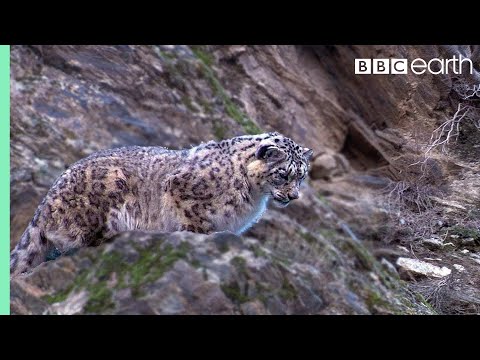
The snow leopard, Panthera uncia, is a big cat, a member of the same group as the tiger, lion, leopard and jaguar. But it is smaller than the others, weighing between about twenty-five and fifty-five kilograms, about the size of a large dog. Its coat is thick, soft and smoky grey, often with a yellowish tinge, marked with dark rosettes and spots that break up its outline against the rocks. Its belly fur can be twelve centimetres long. Against a background of grey rock and patchy snow, it is almost invisible. Visitors to Ladakh often spend days looking at a slope through a telescope, being told by a guide that a snow leopard is lying there, and seeing nothing at all until it moves.

Every part of its body is adapted to cold and to steep, rocky ground. Its nose is short, but its nasal cavity is large, warming the freezing air before it reaches the lungs. Its chest is broad and its lungs large, helping it breathe the thin air of high altitudes. Its legs are relatively short and powerful, and its hind legs especially long, letting it leap up to about ten times the length of its body; snow leopards have been seen jumping across gaps of six metres or more. Its paws are wide and furry underneath, working like snowshoes to spread its weight on snow and giving it grip on rock.
And then there is the tail. A snow leopard's tail is nearly as long as its body, up to a metre, thick and covered in dense fur. It is used for balance, helping the cat to turn and leap on narrow ledges and steep slopes, like a tightrope walker's pole. And when the snow leopard lies down to sleep, it wraps its tail around its body and over its face, like a scarf, to keep warm.
Unlike the tiger, lion, leopard and jaguar, the snow leopard cannot roar. The structure of its larynx and vocal cords is different, and instead it makes a range of other sounds: hisses, growls, mews, and a soft puffing call called a chuff, also made by tigers, which is used as a friendly greeting. For a long time, its inability to roar led some scientists to place it in a separate genus. But genetic studies have shown that the snow leopard belongs firmly within the big cats, and that its closest relative is the tiger. The two species separated perhaps two to three million years ago.
The hunter of cliffs
Snow leopards live at altitudes usually between about three thousand and five thousand five hundred metres, though they have been seen lower in winter and higher in summer. They live above the treeline, in a world of rock, cliffs, scree, alpine meadows and scrub. Their main prey are wild goats and sheep: in India, the bharal or blue sheep, and the Himalayan or Siberian ibex. They also eat marmots, pikas, hares, birds such as snowcocks and chukar partridges, and, when they can catch them, domestic livestock.


The snow leopard hunts by stalking. Using the broken ground for cover, it creeps close to a herd of bharal or ibex, then rushes or leaps downhill, often from above, knocking its prey off balance. Chases on steep slopes can be spectacular: both hunter and prey sometimes tumble down rock faces together. A snow leopard can kill an animal three times its own weight. It drags the carcass to a sheltered place and feeds on it over several days, guarding it from vultures, ravens, foxes and wolves. A single adult needs perhaps twenty to thirty large wild ungulates a year, along with many smaller animals.
Snow leopards are mostly solitary. Each adult has a home range, which may be very large, tens or even hundreds of square kilometres, depending on how much prey there is. Ranges of males overlap with those of several females. They communicate mostly by scent: they scrape the ground with their hind feet, spray urine on rocks, and leave droppings at prominent places along ridges, valley bottoms and paths. Researchers looking for snow leopards look first for these signs. Rocks along a well-used path may be marked by many different leopards over many years.
Females give birth, usually in spring or early summer, to two or three cubs in a den in a rocky cave or crevice, lined with fur from the mother's belly. The cubs stay with their mother for about eighteen months to two years, learning to hunt by following her. They then leave to find territories of their own, sometimes travelling long distances across mountains and valleys.
The world above the trees
The snow leopard does not live alone in the mountains. Its world is a community of animals and plants adapted to cold, wind, thin air and long winters. To understand the cat, it helps to look at its neighbours.
Its prey are mostly wild goats and sheep. The bharal, or blue sheep, is the most important in much of the Indian Himalaya, from Ladakh and Spiti to Sikkim. It is not really blue, but a grey-brown with a bluish sheen, and it lives in herds on steep, grassy slopes near cliffs, to which it flees when danger comes. The Himalayan ibex, with its long, curved, ridged horns, lives in the western Himalaya and Ladakh, on the steepest and rockiest ground of all. In Ladakh, there are also the Ladakh urial, a wild sheep of the lower valleys, and the great argali, the largest wild sheep in the world, with massive spiralling horns, which lives in the high plateau of eastern Ladakh. Marmots, large ground squirrels that hibernate through the winter, are important summer food, and pikas, small round relatives of rabbits, scurry among the rocks.


The snow leopard shares its prey with other hunters. The wolf is its main competitor in many places. In Ladakh and Spiti, wolves hunt the same wild sheep and goats, and the same livestock, and herders often fear wolves more than snow leopards, because wolves can kill more animals. The Himalayan wolf, which lives in Ladakh, Spiti and Tibet, is genetically distinct from other wolves, and some scientists consider it a separate species. Red foxes, Tibetan foxes, lynx, brown bears in parts of Ladakh and Kashmir, and Pallas's cat, a small, fluffy, flat-faced wild cat of the high plateau, are also part of this world. In the sky, lammergeiers, or bearded vultures, drop bones from a height onto rocks to break them and eat the marrow, and golden eagles hunt marmots and hares.

Plants matter too. The high pastures, green for only a few months each summer, feed both wild and domestic grazers. Where too many livestock graze, the pastures become thin, and wild sheep and goats have less to eat. Fewer wild prey means snow leopards are more likely to kill livestock, which leads to conflict with people. This is why conservation projects in Spiti and Ladakh have worked to set aside grazing-free areas for wild animals. Protecting the snow leopard begins, in a sense, with protecting the grass.
A year in the life of a snow leopard
The snow leopard's year follows the seasons of the mountains. In late winter, from about January to March, snow leopards mate. This is the time when they are most vocal, calling to each other across the valleys with loud, moaning cries, and when they leave more scent marks than at any other time. A male and female may stay together for a few days, hunting and resting together, before parting again.
About three and a half months later, in late spring or early summer, the female gives birth in a sheltered den. The cubs, usually two or three, are born blind and helpless, with thick fur. They begin to leave the den after about two months, and by autumn they are following their mother on her hunts, learning to stalk and pounce, and practising on each other in play. Through their first winter, the family stays together, and observers in Ladakh have often seen mothers with two or three nearly grown cubs, moving together along a ridge or feeding at a kill.

In winter, many snow leopards move lower, following their prey down into the valleys, where the snow is less deep and the grazing better. This is when they come closest to villages, and when most attacks on livestock happen. It is also the season when tourists come to Ladakh to look for them, because the cats are easier to find at lower altitudes and against the snow.
In their second winter, young snow leopards leave their mothers and set out to find territories of their own. This is the most dangerous time of their lives. Young animals with little experience may starve, be killed by other snow leopards, or be driven by hunger into villages, where they may be killed by people. Those that survive may travel long distances. Radio-collared young snow leopards in Mongolia have been tracked crossing wide valleys and open plains between mountain ranges, showing that the cats need connected landscapes, not just isolated mountains.
Those who grow up near people sometimes learn bad habits. A young snow leopard that finds an easy meal in a poorly built corral may return again and again, until it is trapped or killed. Conservationists say that protecting corrals helps not only the herders but also young snow leopards, which otherwise might learn to depend on livestock.
In the wild, snow leopards may live for ten to fifteen years; in zoos, they have lived for over twenty. Over its lifetime, a female may raise several litters, and each surviving cub carries the species a little further into the future.
Counting ghosts
Because snow leopards are so hard to see, counting them is extremely difficult. For many years, estimates of the world population were little better than guesses, ranging from about three thousand to more than seven thousand. Researchers now use camera traps, which photograph animals automatically when they pass, and genetic analysis of droppings, which can identify individual animals from the DNA in their scat. Each snow leopard has a unique pattern of spots, especially on its forehead and tail, so animals in camera-trap photos can be told apart.

In 2019, India began its first national effort to count snow leopards, the Snow Leopard Population Assessment in India, led by the Wildlife Institute of India with the state forest departments and the conservation groups Nature Conservation Foundation and WWF India. Teams walked thousands of kilometres of trails, set camera traps at more than a thousand locations across the Himalaya, and analysed the results. In January 2024, the government announced the result: an estimated 718 snow leopards in India. Ladakh had the largest number, about 477. Uttarakhand had about 124, Himachal Pradesh about 51, Arunachal Pradesh about 36, Sikkim about 21, and Jammu and Kashmir about 9.
These numbers mean that India holds perhaps a tenth of the world's snow leopards, with Ladakh as one of the most important regions for the species anywhere. They also showed that snow leopards occupy only part of the area that seems suitable for them, and that large regions remain poorly surveyed. In 2021 the Ladakh administration declared the snow leopard the territory’s state animal. Himachal Pradesh had already done so years earlier.
The quiet cat
Of all the big cats, the snow leopard is the least dangerous to people. Tigers, lions and leopards have all killed and eaten humans, sometimes in large numbers. Attacks by snow leopards on people are almost unknown. Only a handful of cases have ever been recorded, and in the few that have been documented, the animal was sick, injured, or cornered. Herders in Ladakh and Spiti who have come face to face with a snow leopard on a mountain path usually describe it slipping away, or simply watching them with its pale eyes before turning aside.
This shyness may be part of why the snow leopard has been easier for mountain communities to tolerate than the wolf. Wolves can be bold around people and livestock, and in Ladakh, herders traditionally built large stone traps called shangdong, funnel-shaped pits into which wolves were driven and then stoned to death. Snow leopards were rarely persecuted with such intensity, though they were killed when they raided corrals.

Many herders in Ladakh describe the snow leopard as a beautiful animal, even when they resent the damage it does. In surveys of attitudes, researchers have found that people's feelings about the cat are often mixed: anger at losses, pride in a famous animal, religious reluctance to kill, and growing awareness of the income it can bring through tourism. In recent years, some villages in Ladakh have even converted old wolf traps into stupas, as a sign of a new relationship with predators, an idea promoted by conservation groups working with Buddhist communities.
The snow leopard's quietness is also a matter of numbers and space. It lives in landscapes with very few people, and it has plenty of wild prey in good areas. Where conflict does happen, it is almost always over livestock, not over human safety. That makes the problem easier to solve: protect the livestock, and the conflict shrinks.
The cat and the herders
In the high Himalaya, snow leopards share the mountains with people. In Ladakh, Spiti, Lahaul, Kinnaur, the upper valleys of Uttarakhand and Sikkim, and the high pastures of Arunachal Pradesh, Buddhist and other mountain communities live by herding sheep, goats, yaks, cattle and horses, and by farming barley, peas and other crops in the short summer. Their animals graze on the same slopes as the bharal and ibex, and sometimes the snow leopard kills them.

The worst damage happens at night, when a snow leopard gets into a stone corral where sheep and goats are kept. Trapped animals panic, and the leopard, in a frenzy, may kill dozens of them in a single night, far more than it can eat. For a herding family, such a loss can be a disaster, wiping out much of its wealth in a single night. In the past, herders sometimes responded by killing snow leopards, trapping them, or poisoning carcasses.

Conservationists have worked with herders to find other answers. One of the simplest and most effective has been to make corrals predator-proof. In Ladakh, the Snow Leopard Conservancy India Trust, founded by Rinchen Wangchuk, a Ladakhi mountaineer and conservationist, worked with villagers to cover the tops of their stone corrals with wire mesh and to strengthen their doors, so that snow leopards could not get in. Villages that made these changes saw losses fall dramatically. Similar efforts have been made in Nepal, Mongolia and Pakistan.
Another idea was to give herders a reason to want snow leopards around. In the early 2000s, Rinchen Wangchuk and others started Himalayan Homestays in Ladakh. Families in remote villages in and around Hemis National Park were trained to host visitors in their homes, offering them meals and a warm room, and guiding them to look for snow leopards and other wildlife. Income from tourism, which goes directly to the families, began to make up for the losses caused by snow leopards. Over time, in villages such as Rumbak, Ulley and others, the snow leopard became not a pest but an attraction. Winter, when snow leopards come down to lower valleys and are easier to see, became a busy tourist season.
In villages like Rumbak, the snow leopard became not a pest but a guest worth waiting for.
In Spiti, in Himachal Pradesh, the ecologist Charudutt Mishra and colleagues at the Nature Conservation Foundation and the Snow Leopard Trust started a different kind of programme in the 1990s and 2000s. In the village of Kibber, they worked with the community to set aside part of the grazing land as a reserve where livestock would not graze, so that bharal and ibex could thrive. They also helped villagers create a livestock insurance scheme, in which families paid a small premium for each animal, matched by the conservation groups, and were compensated when snow leopards or wolves killed their livestock. The community, not outsiders, managed the scheme and checked the claims. Over time, the bharal population in the reserve increased, snow leopard numbers appear to have risen, and the community's attitude towards predators softened.

Looking for shan
To look for a snow leopard in Ladakh in winter is an experience unlike any other wildlife watching in India. There are no jeeps driving through forest, no guides following tiger pugmarks on dusty roads. Instead, visitors stay in a village guesthouse or homestay, rising before dawn in the bitter cold, sometimes thirty degrees below zero. A team of local spotters, often young men from the village who have grown up on these slopes, has already gone out at first light, climbing to vantage points and scanning the mountainsides with telescopes. When one of them finds a snow leopard, he radios the others, and visitors hurry across the snow, often climbing steeply, to the spot where a telescope is trained on a distant ridge.
Often, the cat is a kilometre or more away, a small grey shape among grey rocks, visible only in the telescope. Sometimes it is lying on a ledge, asleep, its tail wrapped around its face. Sometimes it is feeding on a kill, or walking slowly along a ridge, or sitting upright, watching the valley. Occasionally, when luck is extraordinary, a snow leopard walks close by, crossing the valley floor or climbing a slope a few hundred metres away. Visitors who have seen this describe it as one of the most moving moments of their lives.

The spotters read the mountains in ways that visitors cannot. They notice a herd of bharal suddenly staring in one direction, or running uphill. They watch the choughs and ravens, which gather over a fresh kill. They know the ridges and ledges where snow leopards like to rest, and the paths along which they travel. They find fresh tracks in the snow and follow them with their eyes along the slope. Their skill has turned snow leopard watching into an important source of income for villages in Hemis, Ulley, Rumbak and elsewhere.
Tourism brings its own problems. In the best areas, dozens of visitors may gather at a single sighting, with telescopes and cameras lined up along a ridge. Vehicles and people can disturb the cats and their prey. In some places, there have been concerns about guides baiting snow leopards with meat or livestock to make them easier to see, a practice that conservationists strongly oppose. The challenge, as in many places in India, is to make sure that tourism benefits local people and protects the animals, without loving them to death.
Buddhism and the mountain cat
The high Himalaya is largely Buddhist country, from Ladakh and Spiti to Sikkim, Bhutan and Arunachal Pradesh. Buddhist teachings against killing animals have been part of what has protected wildlife in these regions. Monasteries in Ladakh and Spiti, such as Hemis, Thiksey, Ki and Tabo, have supported conservation efforts, and many lamas have spoken in favour of protecting snow leopards and other wildlife.


In Tibetan tradition, the snow leopard is associated with the great yogi Milarepa, who lived in the eleventh and twelfth centuries and is one of the most loved figures of Tibetan Buddhism. According to his biography, Milarepa spent years meditating alone in caves in the high mountains. Once, during a heavy snowfall, he was trapped in a cave for months, and his followers believed he must have died. When they finally reached the cave, they saw a snow leopard on a rock outside. As they approached, it disappeared, and they found Milarepa alive and well, singing. He told them that he had taken the form of a snow leopard to watch them coming. Some versions of the story say that the snow leopard's footprints led to the cave and turned into human footprints. The tale links the snow leopard with the power of meditation and with the hidden life of the mountains.

In Kyrgyzstan and Kazakhstan, where the snow leopard is called ilbirs or irbis, it is a national symbol, linked with strength and nobility. The city of Almaty in Kazakhstan has used it as an emblem, and Kyrgyzstan has promoted it in its national identity. In the mountains of Central Asia, legends tell of a snow leopard that helped the ancestors of the people, or of heroes who could take the form of a snow leopard. In Pakistan's northern areas, the cat appears in local folklore as a mountain spirit.
Many mountain communities in India and Nepal have their own beliefs. In parts of Ladakh, the snow leopard is called shan, and some herders believe that harming it brings misfortune. In Spiti and Kinnaur, mountain deities are thought to protect the high pastures and the animals that live there. These beliefs vary from place to place, and they did not always prevent conflict, but they have been one of the foundations on which modern conservation has been built.
Seeing the unseen
For most of history, almost no one outside the mountains had seen a snow leopard alive. Mountain people knew it from its tracks, from its kills, and from rare glimpses, but even they seldom saw it close. The first photographs of a wild snow leopard, taken by George Schaller in Chitral in 1970, were grainy and distant. For the next thirty years, wild snow leopards remained almost entirely unfilmed.
That changed in the early 2000s. For the BBC series Planet Earth, broadcast in 2006, a film crew spent many weeks in the mountains of Chitral in northern Pakistan, where snow leopards hunt markhor, a wild goat with spectacular corkscrew horns. After long waits in freezing conditions, they filmed a snow leopard stalking markhor and chasing one down a steep cliff in a breathtaking descent. The sequence, narrated by David Attenborough, was watched by many millions of people around the world, and for most of them it was the first time they had ever seen a snow leopard hunt.

Since then, camera traps have transformed what we know. Small, weatherproof cameras, triggered by heat and movement, are strapped to rocks along ridges and trails where snow leopards are likely to pass. They work day and night for months. In Ladakh, Spiti, Uttarakhand, Sikkim and Arunachal Pradesh, researchers and forest departments have placed thousands of them, and they have recorded snow leopards in places where no one knew they lived, including in areas of Arunachal Pradesh where the species had never been photographed before. Camera traps have also caught snow leopards in surprising moments: a mother and cubs playing, a male marking a rock, a snow leopard and a wolf passing the same spot within minutes of each other.
Some of the most remarkable images have come from ordinary people. In Spiti and Ladakh, villagers with mobile phones have filmed snow leopards walking past their houses at night, sitting on the walls of their villages, or chasing bharal on the slopes above. These videos, shared widely online, have helped to make the snow leopard a familiar and loved animal across India, not just a distant legend of the high mountains.
Hemis National Park, in Ladakh, is the most famous place in India to see snow leopards. Established in 1981, it covers about four and a half thousand square kilometres of mountains, gorges and high valleys south of the Indus, and takes its name from the Hemis monastery, one of the largest and richest in Ladakh. It is home not only to snow leopards but to bharal, Ladakh urial, wolves, red foxes, golden eagles and lammergeiers, and the villages inside it, such as Rumbak, have become centres of community-based tourism. A winter visit to Hemis, with its frozen streams, silent valleys and the faint hope of a grey shape on a distant ridge, has become one of the great wildlife experiences of India.
The writers and the watchers
After Matthiessen, the snow leopard continued to draw writers and photographers. In 2019, the French writer Sylvain Tesson published La Panthère des neiges, an account of a winter journey to the Tibetan plateau with the wildlife photographer Vincent Munier, who had been trying to photograph snow leopards for years. Tesson writes about the art of waiting: of lying for hours in the cold, watching a slope, learning patience, and about the strange joy of seeing an animal that does not know you are there. The book won France's prestigious Prix Renaudot and was made into a documentary film, released in 2021, which won a César award.

In India, a new generation of wildlife photographers, guides and researchers has made Ladakh, especially Hemis National Park and the Ulley valley, one of the best places in the world to see snow leopards. Local Ladakhi guides, many of them from herding families, have become experts at spotting them, scanning distant slopes through telescopes and reading the alarm calls of bharal and the movements of choughs and ravens. A snow leopard sighting in Ladakh is no longer as impossible as it was in Matthiessen's day, but it still requires patience, cold, and luck.
Twelve countries, one cat
The snow leopard lives in twelve countries: India, Nepal, Bhutan, China, Pakistan, Afghanistan, Tajikistan, Kyrgyzstan, Kazakhstan, Uzbekistan, Mongolia and Russia. China holds by far the largest area of snow leopard habitat, mostly on the Tibetan plateau and the mountains around it, and probably the largest number of snow leopards. Mongolia, with its vast mountain ranges, is another stronghold.
Some of the most detailed research on snow leopards has been done in Mongolia. In the South Gobi, in the Tost mountains, the Snow Leopard Trust and the Snow Leopard Conservation Foundation of Mongolia began a long-term study in 2008, fitting snow leopards with GPS collars that recorded their positions several times a day. The study revealed how large their home ranges can be, how males and females share space, how mothers raise their cubs, and how young animals disperse. In 2016, partly as a result of this research and campaigning by local herders, the Tost mountains were declared a nature reserve, protecting them from mining.

In China, on the Tibetan plateau, a study published in 2014 by Chinese scientists, led by Li Juan of Peking University and Shan Shui Conservation Center, found that more than three hundred Tibetan Buddhist monasteries lay within snow leopard habitat, and that monks often patrolled the land around them, discouraged hunting and protected wildlife. The researchers suggested that the monasteries protected more snow leopard habitat than official nature reserves in some areas. In the Sanjiangyuan region, the source of the Yangtze, Yellow and Mekong rivers, monks and herders have worked with scientists to set camera traps and monitor snow leopards.
In Pakistan, in the Karakoram and Hindu Kush, communities in Gilgit-Baltistan and Chitral have taken part in programmes similar to those in Ladakh, with predator-proof corrals and livestock insurance. In Afghanistan, in the Wakhan Corridor, a narrow strip of mountains between Tajikistan and Pakistan, snow leopards survive in one of the most remote places on earth, and the Wildlife Conservation Society has worked with Wakhi and Kyrgyz herders to protect them. In Kyrgyzstan and Kazakhstan, snow leopards were heavily poached for their skins after the collapse of the Soviet Union in 1991, but have been protected more effectively in recent years.
Across their range, the snow leopard's survival depends on cooperation across borders. A cat in Ladakh may share its mountains with cats in Tibet and Gilgit-Baltistan. The Global Snow Leopard and Ecosystem Protection Programme, launched by the twelve countries in 2013, set a goal of securing at least twenty key snow leopard landscapes. India named several of its own, including Hemis and the Changthang in Ladakh, the Lahaul, Spiti and Kinnaur region in Himachal Pradesh, the Gangotri and Nanda Devi areas in Uttarakhand, and the Kangchenjunga region in Sikkim.
Skins and bones
Like the tiger and the leopard, the snow leopard has been killed for its fur. Its thick, soft, grey pelt was highly valued in the fur trade of the nineteenth and twentieth centuries, and coats made of snow leopard fur were sold in Europe and America until the 1970s. In 1975, the snow leopard was listed in Appendix I of CITES, banning international trade, and in India it was given the highest protection under the Wildlife (Protection) Act of 1972.
Poaching did not end with the ban. Snow leopard skins and bones continued to be traded illegally, often along the same routes as tiger and leopard parts, with bones used as substitutes for tiger bones in traditional medicine. A study by TRAFFIC, the wildlife trade monitoring network, published in 2016, estimated that between about two hundred and twenty and four hundred and fifty snow leopards had been poached every year across the species' range since 2008, though the true number is hard to know. Many of these were killed in retaliation for attacks on livestock, and then their parts were sold.
In India, poaching of snow leopards appears to be lower than in some other countries, partly because of community conservation and Buddhist attitudes. But seizures of snow leopard skins have been made in India, and the risk remains. Conservationists argue that the most effective protection against poaching is the same as the most effective protection against retaliatory killing: making sure that herders do not suffer from the snow leopard's presence, and benefit from it instead.
A warming world
The greatest long-term threat to the snow leopard may be climate change. The Himalaya and the mountains of Central Asia are warming faster than the global average. As temperatures rise, the treeline is expected to move uphill, and the alpine zone, the open land above the trees where snow leopards and their prey live, may shrink. Some studies have estimated that a significant part of snow leopard habitat could be lost or become unsuitable by the end of this century if warming continues at the current pace. Glaciers are retreating, rivers are changing, and the grazing land of herders is under pressure.

Other threats are closer at hand. Roads are being built into remote mountain valleys for military, tourist and development purposes, bringing more people and traffic into snow leopard habitat. Feral dogs, which follow people into the mountains, have become a serious problem in parts of Ladakh and Spiti, where packs of dogs attack livestock, wildlife and even snow leopard cubs. Poaching for skins and bones, though much reduced in India, still affects snow leopards in parts of their range. And as more tourists come to see snow leopards, there is concern about disturbance, with too many vehicles and people crowding around sightings.
The future of the snow leopard depends on the same things that have helped it so far: the support of mountain communities, protection of wild prey, management of tourism, and cooperation across the many countries where it lives. In 2013, the twelve countries in the snow leopard's range, including India, signed the Bishkek Declaration and launched the Global Snow Leopard and Ecosystem Protection Programme, aiming to protect key landscapes. Snow leopards do not recognise borders; a cat born in Ladakh may wander into Tibet or Pakistan. Their protection must be shared.
What the snow leopard teaches
The snow leopard teaches the value of patience. Matthiessen never saw it, and Tesson and Munier waited for weeks. The snow leopard does not perform for anyone. It reveals itself, if at all, to those who are willing to sit still in the cold and look.

It teaches that people and predators can share the same land, if they find ways to do it fairly. In Ladakh and Spiti, the snow leopard was once seen mainly as a killer of livestock. Through predator-proof corrals, insurance, homestays and the support of monasteries and villagers, it has become, for many people, a source of income and of pride. The change did not come from fences or laws alone, but from listening to the people who live with the cat.
And it teaches, as Matthiessen understood, that some things are valuable even if we never see them. Most people will never see a snow leopard in the wild. But it matters that the snow leopard exists: that somewhere above the clouds, on a ridge of grey rock, a grey cat is lying with its tail wrapped around its face, watching the valley below. The mountains are wilder, and richer, because it is there.