Coda
The Twenty-Four Teachers
On the hidden beauty of other nations, what we have lost, and what we might still learn.
Assisted and Curated by Claude, Referenced and Collated by me

In the eleventh book of the Bhagavata Purana, King Yadu meets a wandering ascetic, an avadhuta, radiant, carefree, and happy despite owning nothing. The king asks him where he found such wisdom. The ascetic, who is identified with the sage Dattatreya, answers that he had twenty-four teachers, and lists them. Among them are the earth, which taught him patience; the wind, which taught him to move among things without being attached to them; the sky, the water, fire, the moon, and the sun. And among them are animals: the python, which lies still and accepts whatever food comes to it; the moth, which flies into the flame, and taught him the danger of being seduced by appearances; the honeybee, which takes a little nectar from many flowers without harming them; the elephant, which is captured by being lured with a female, and taught him the danger of desire; the deer, which is trapped by its love of music; the fish, caught by its greed for bait; the osprey, which was attacked by other birds as long as it carried a piece of meat, and found peace when it dropped it; and the spider, which spins its web from its own body and then draws it back, as the divine creates the universe and withdraws it.

The ascetic's lesson is that the whole world is a teacher, if one knows how to learn from it, and that animals, above all, embody truths about how to live. It is a very old idea, and it is found in the traditions of nearly every culture we have encountered in this book: in the Panchatantra's jackals and the Jataka's golden deer, in Aesop's fox and Coyote's misadventures, in the Ojibwe wolf who walked beside the first man, and in the bear, the owl, the serpent, and the whale.
India had already gone further than most. The idea that every living being has a soul, a jiva, is at the heart of Jainism. For Jains, not only humans and animals but even the smallest insects and the tiny creatures in water and soil are living souls, each able to feel pain, and the first duty of a good life is ahimsa, not to harm any of them. Jain monks and nuns carry a soft brush made of feathers or wool, and sweep the ground gently in front of them before they sit or walk, so as not to crush any insect. Some cover their mouths with cloth so as not to breathe in and kill tiny flying things. To an outsider it can look extreme. But it rests on a simple, serious idea: that every life matters to the one living it.

In the third century BCE, the emperor Ashoka, who had turned towards the Buddha's teaching after the horror of the Kalinga war, had his messages carved on stone pillars across his empire. In the fifth of his pillar edicts, he listed many kinds of animals that were not to be killed: parrots, wild ducks, bats, ants, tortoises, certain fish, and others, and forbade the burning of forests "uselessly" or to destroy living things. He also set aside days on which no fish could be caught and no animals killed. This is one of the world's earliest wildlife laws, made more than two thousand years ago by a ruler who had learned, through his own cruelty, the value of life.
The hidden beauty
What the science of the last sixty years has added to this ancient wisdom is, above all, a sense of the depth of animal lives. We now know that elephants speak in voices below our hearing, and that the oldest females carry the memory of the family. That whales sing songs that sweep across oceans and orcas grieve their dead. That chimpanzees have cultures and orangutans treat their wounds with medicinal plants. That wolves are families, lions are sisterhoods, and crocodiles are tender mothers. That owls see with their ears, snakes see heat, and bats and dolphins see with sound. That the salmon forests of the Pacific are fertilized by bears, and the health of India's villages depended on vultures.

Each of these discoveries revealed a hidden beauty: an intricacy, an intelligence, and a strangeness that had been there all along, unrecognized because we had not known how to look or listen. The German biologist Jakob von Uexküll, early in the twentieth century, called each animal's perceptual world its Umwelt, its own bubble of experience, shaped by its particular senses. A tick lives in a world of warmth and the smell of butyric acid; a bat in a world of echoes; a dog in a world of scents we cannot imagine. To learn about another animal is to glimpse, however dimly, another world. The myths did this through imagination. Science does it through patience and measurement. Both are forms of reverence.
To learn about another animal is to glimpse, however dimly, another world.
The American biologist E. O. Wilson, who spent his life studying ants, gave this feeling a name in 1984: "biophilia", meaning "love of life". His idea was that humans have an inborn need to connect with other living things: to be near plants and animals, to watch them, to care for them. We evolved, after all, for hundreds of thousands of years among forests, rivers and animals, not among concrete and screens. Wilson thought that something in us still needs that world, and suffers without it.
Psychologists have since found evidence that he was onto something. Time spent in nature, or with animals, lowers stress, slows the heartbeat and improves attention. Hospital patients with a view of trees from their window have been found to recover faster than those facing a brick wall. Even a short walk in a park can calm a busy mind. In other words, the hidden beauty of other nations is not only something to admire. We need it, the way we need sleep and friends.

Film has spread that hidden beauty further than any book. David Attenborough's Planet Earth (2006) and its sequels showed wild animals, from snow leopards on Himalayan cliffs to birds of paradise dancing in New Guinea, to hundreds of millions of people who will never see them in the wild. My Octopus Teacher (2020) is about a South African diver, Craig Foster, who, worn out and depressed, starts diving every day in a cold kelp forest near his home and gets to know a single octopus over a year: her cleverness, her curiosity, her hunting tricks, how she survives a shark attack, and finally how she dies after laying her eggs. Through watching her, he slowly heals. It is a modern version of the old sage's lesson: an animal as teacher.
Two recent Indian documentaries, The Elephant Whisperers and All That Breathes (both 2022), won world acclaim for showing ordinary Indians, a tribal couple raising an orphaned elephant, and two brothers in Delhi rescuing injured kites, caring for other creatures without fuss, as part of everyday life. That may be the deepest message of all: that care for animals is not only for scientists and saints, but for anyone.

What we have lost
There is no way to end this book honestly without saying what is happening to the other nations. In 2024, the World Wide Fund for Nature's Living Planet Report estimated that the monitored populations of wild vertebrates had declined by an average of seventy-three percent since 1970. That does not mean that three quarters of all wild animals have vanished, but it does mean that, across thousands of populations of mammals, birds, reptiles, amphibians, and fish, numbers have fallen steeply within a single human lifetime. The causes are well understood: the destruction of habitat, overhunting and overfishing, pollution, invasive species, disease, and a changing climate.

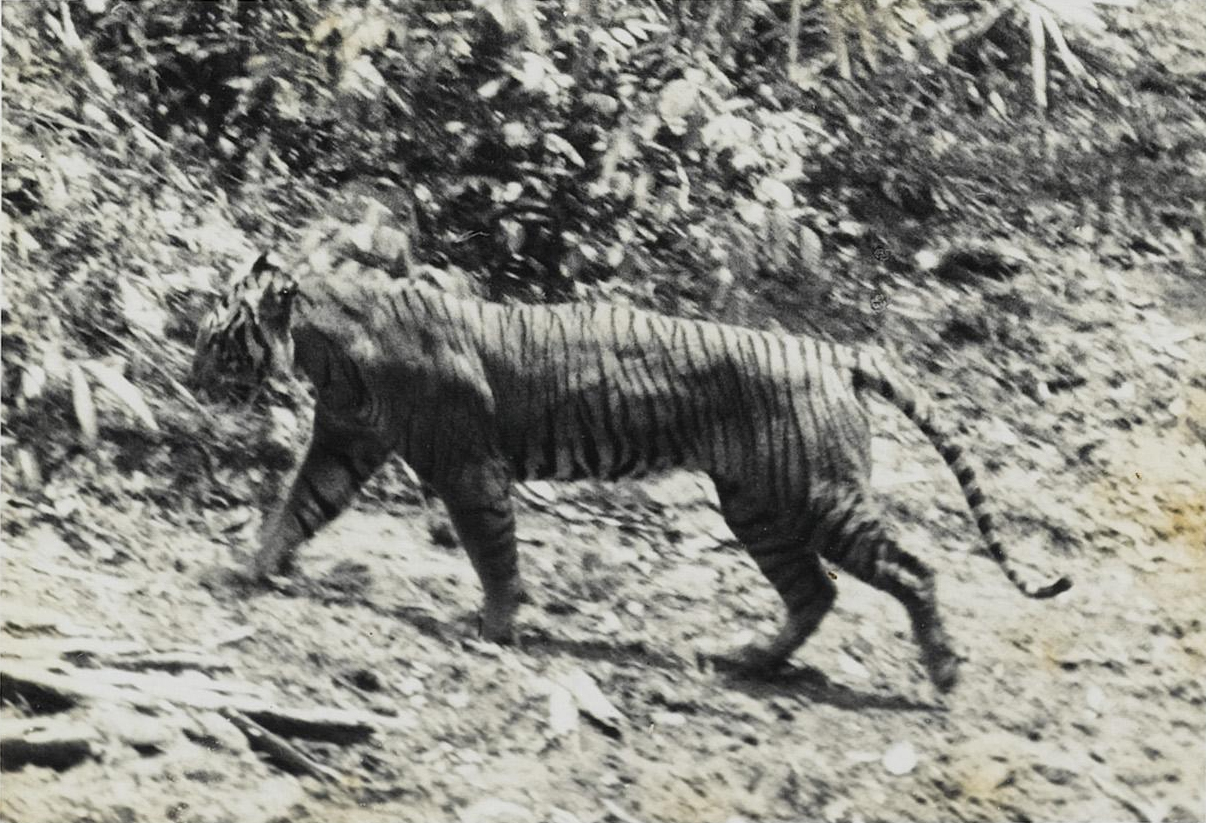
We have seen, in these pages, how close some of the great nations came to the end: the tiger, the Asiatic lion, the bison, the wisent, the gharial, the vultures, the saiga, the whales. We have seen the aurochs vanish, the Japanese wolf, the Caspian and Javan and Bali tigers, the Yangtze river dolphin. But we have also seen something else: how often a species has been pulled back from the brink by the decisions of human beings. A nawab who banned lion hunting. A community that died for its trees. A biologist who listened to whales. Villagers who learned to live with leopards. Governments that created reserves, banned a painkiller, or protected a river. The fate of the other nations is, in large part, a matter of human choice.

Books have sounded this alarm before. In 1962 the American biologist Rachel Carson published Silent Spring. Its title came from a picture she painted at the start: a town where, one spring, no birds sing, because the pesticides sprayed on fields and trees have poisoned them. She showed, carefully and clearly, how chemicals like DDT were moving through the food chain, from insects to fish to birds, thinning eggshells so that eagles and falcons could not raise chicks. The chemical companies attacked her fiercely. But the book started the modern environmental movement, and led in time to DDT being banned in many countries. The vulture story did the same for India decades later, when a single painkiller given to cattle was found to be killing millions of vultures.
Elizabeth Kolbert's The Sixth Extinction (2014) describes the present wave of loss. Five times in the history of life on earth, she explains, huge numbers of species have died out in a short time, the last of them when the dinosaurs vanished sixty-six million years ago. Many scientists now believe a sixth such event is under way, and that this time the cause is not an asteroid or volcanoes, but us. Kolbert travels to see frogs, corals, bats and rhinos disappearing, and tells it simply and without despair: as a fact we need to face.
In India, Salim Ali's The Book of Indian Birds (1941), still in print, opened many eyes to the life around them. For the first time, an ordinary person with a pair of binoculars could look up at a bird in the garden and find its name, its call and its habits. Many of India's naturalists and bird-watchers began with that book. And the songs of the Chipko movement, sung by village women and men in the Himalaya as they stood between the trees and the axes, carried the Bishnoi lesson of Amrita Devi into the mountains: that people who depend on the forest will, if it comes to it, stand up for it.


The alarm call, again
We began in a forest at dawn, with a langur's alarm call and a herd of chital raising their tails. The whole forest had become a network of sentinels, every creature listening to every other, each species reading the signals of the others in a shared language of danger. It is a moving image of what the natural world is: not a collection of separate species, but a web of relationships, of calls and responses, of dependence and exchange, in which the fate of each is bound up with the fate of the others.

Human beings are part of that web, and have been since the first hunters learned to read the alarm calls of monkeys and the flight of birds. The storytellers who made the tiger the mount of the goddess, who made the serpent the bed of Vishnu and the owl the companion of Lakshmi, knew this. So did the Bishnoi women who nursed orphaned fawns, and the Sundarbans honey collectors who prayed to Bonbibi before entering the forest. And so, in their own way, do the scientists who spend their lives watching a single troop of monkeys or a single family of elephants, listening for what they have to teach.
The forest is sounding its alarm now, and the call is meant for us. The question is whether we will hear it, as the chital heard the langur, and understand that the danger it warns of is our own.