Part One · The Hunters
Chapter 3
The Leopard and the Jaguar
The spotted ghosts: one lives among us unseen, the other became a god of the night.
Assisted and Curated by Claude, Referenced and Collated by me

Panthera pardus · Panthera onca
Mumbai is one of the most densely populated cities on earth, home to more than twenty million people. At its northern edge lies the Sanjay Gandhi National Park, about a hundred square kilometres of forest surrounded on almost every side by apartment blocks, slums, and highways. In that park, and in the fringes of the city around it, live around fifty leopards. They hunt in the forest, but they also walk at night through housing colonies, along the edges of roads, and past the doors of homes, and some of them hunt the city's stray dogs. Camera traps have photographed them strolling past parked cars. For the most part, the people of Mumbai and the leopards of Mumbai have learned to live together, and most residents never see one.
That is the genius of the leopard. It is the most adaptable of all the big cats, the most widely distributed, and the most secretive. It lives in rainforests, deserts, mountains, savannas, and cities, from South Africa to the Russian Far East, from Sri Lanka to the Caucasus. And it lives, very often, right beside us, without our knowing.
The leopards of Mumbai have been studied more closely than almost any urban big cat in the world. In 2011, the forest department and the researcher Vidya Athreya began a project called "Mumbaikars for SGNP", which brought together residents, police, journalists and forest officers. Camera traps showed that the leopards were living on a diet in which stray dogs made up a large share, along with deer, pigs and monkeys. In fact, some researchers have argued that by eating stray dogs, Mumbai's leopards may reduce dog bites and rabies around the park, the same kind of hidden service vultures once provided. Attacks on people around the park fell sharply after the project began, as people learned simple rules: keep children indoors at dusk, keep garbage, which draws dogs, away from homes, and use lights at night. The lesson is that fear shrinks when understanding grows.
The leopard's craft
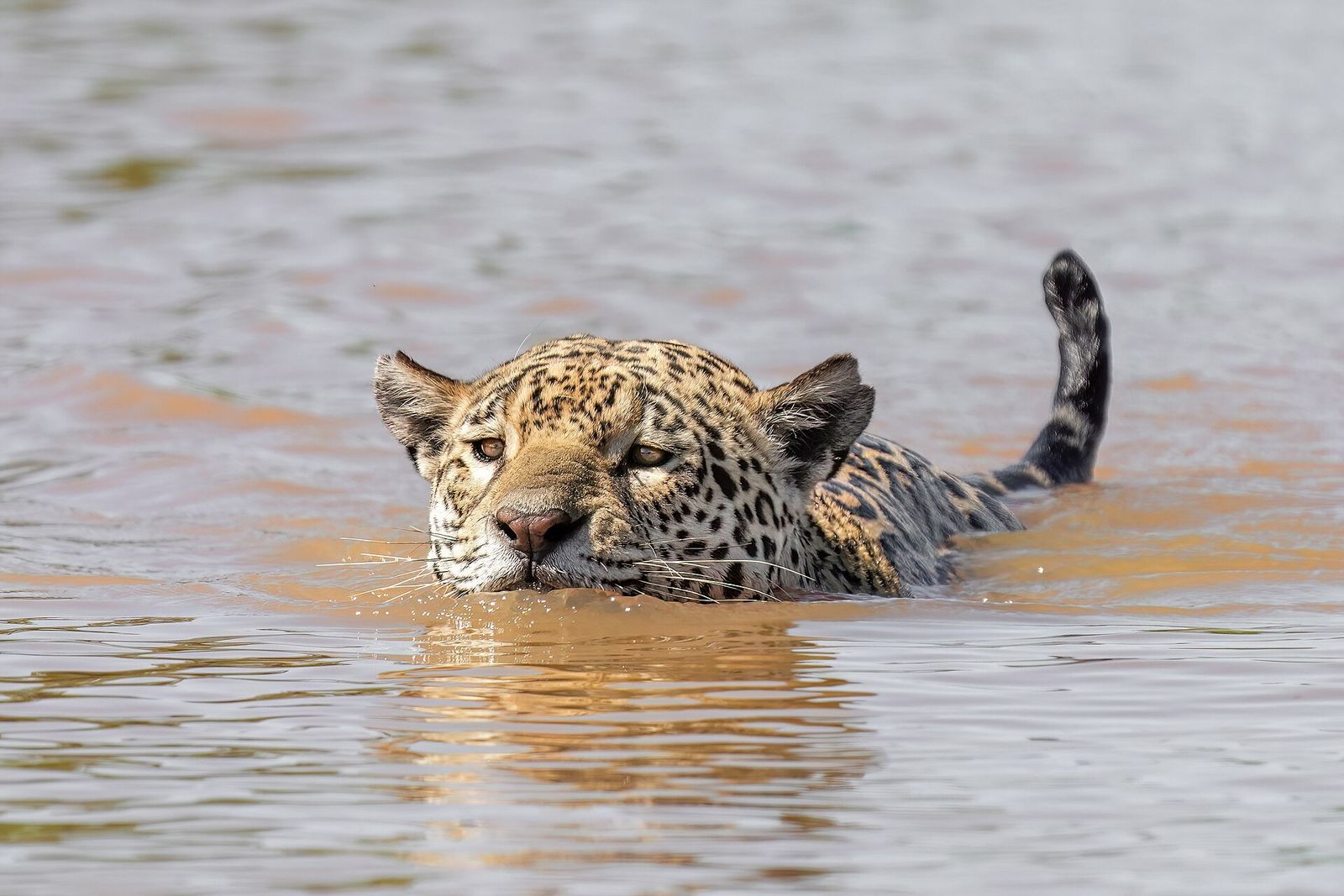
A leopard is smaller than a tiger or lion, with males typically weighing around fifty to seventy kilograms, but it is extraordinarily strong for its size. It can haul the carcass of an antelope heavier than itself up the trunk of a tree and wedge it in a fork, out of reach of lions and hyenas. It eats almost anything, from insects and fish to monkeys, deer, wild pigs, porcupines, and domestic dogs and goats. Its coat is marked with rosettes, clusters of spots that break up its outline in dappled light; the jaguar's rosettes are larger and often have a spot in the centre, which is a quick way to tell them apart.

The famous "black panther" is not a separate species. It is a leopard (or, in the Americas, a jaguar) with a genetic variation called melanism, which produces an excess of dark pigment; in the right light, the rosettes can still be seen beneath the black. Black leopards are most common in dense, humid forests, such as those of the Western Ghats and Southeast Asia, where a dark coat may be an advantage in the shadows.
Writers have always felt the leopard's quickness, the way it is there and then not there. One of the most famous leopards in literature appears in the very first lines of Dante's Inferno, written in Italy in the early 1300s. The poet says that halfway through his life he found himself lost in a dark wood, having strayed from the right path. He sees a sunlit hill and tries to climb towards it, but three beasts block his way: first a light, quick, spotted beast, usually translated as a leopard, then a lion, then a starving she-wolf.
Readers have long taken these three animals as pictures of the inner forces that stop us from becoming better people. The lion is usually read as pride and violence, the she-wolf as greed that is never satisfied. The leopard, quick, playful and changeable, is often read as restless desire: the part of us that keeps slipping sideways towards whatever pleases us in the moment. It does not attack Dante. It simply keeps getting in his way, dancing in front of him, so that he keeps turning back. Most people know this beast. It is what makes us check the phone instead of finishing the work, or break the promise we made to ourselves only this morning. It is not a monster, which is exactly what makes it hard to escape. Dante cannot get past the three beasts on his own. He needs a guide, the poet Virgil, who leads him the long way round, down through hell itself. The poem suggests there is no shortcut past our own nature. We have to go through it and understand it.
Kipling gave the leopard a lighter touch. In his Just So Stories, written for his own children, he explained "How the Leopard Got His Spots": the leopard and an Ethiopian man find that the animals they hunt have learned to hide in the shadowy forest, so the man paints dark spots on the leopard with his fingertips so that it can hide too. It is a joke, but a wise one, because camouflage really is the leopard's great craft.
Kipling also gave the world its most famous black leopard: Bagheera in The Jungle Book. When the wolf pack argues over whether to keep the human baby Mowgli, Bagheera buys the child's life by offering the pack a freshly killed bull. Later he tells Mowgli a secret. He was born among men, in the king's cages at Udaipur (Kipling's "Oodeypore"), and one night he broke the lock with his paw and escaped into the jungle. Because he once lived among people, he understands that Mowgli must one day go back to them. Bagheera is the one who knows both worlds. He is a picture of something many people feel: having been shaped by one life, and having made yourself a new one, and belonging fully to neither.
The leopard's range is the widest of any wild cat in the world. It is found across most of Africa south of the Sahara, in Arabia in tiny numbers, in Iran and the Caucasus, across South and Southeast Asia, and in a small, desperately endangered population of Amur leopards in the Russian Far East and northeast China, which numbers only around a hundred animals. Its secret is flexibility. A leopard can live on rats and birds where nothing larger survives, or on antelope where they are plentiful. It hunts by day or by night, in rainforest or in desert, at sea level or at five thousand metres. Biologists call such animals "generalists", and generalists are the great survivors of a world changed by humans.

The leopard's habit of hauling its prey up trees has been studied in detail in Africa. Leopards in areas with many lions and hyenas cache their kills in trees far more often than leopards where those competitors are scarce. A leopard can carry a carcass up to twice its own weight, gripping it by the neck and climbing straight up a trunk. In some places, a leopard returns to its tree larder for several days, guarding it from vultures in the branches. These kills in trees were once mistaken for the work of mysterious tree-dwelling killers, and gave rise to local legends.
Black leopards are among the most photographed animals in India today. In the Kabini forests of Karnataka, a melanistic male nicknamed Saya, "shadow", became famous on social media around 2019 for his life alongside a normal spotted female. Studies have found that black leopards are especially common in dense, wet forests such as those of Malaysia, where in some areas nearly all leopards are black. A dark coat seems to help in deep shade. In India, they are found mostly in the Western Ghats, the northeast and parts of Odisha. Kipling's Bagheera, who tells Mowgli that he was born among the king's cages at Udaipur, was imagined long before scientists understood why such leopards occur where they do.
How do leopards survive alongside tigers? In forests like Nagarahole, Kanha and Kaziranga, studies have found that leopards avoid tigers in many ways: they hunt smaller prey, such as chital fawns, monkeys and pigs, while tigers take sambar and gaur; they are active at different times; and they use the edges of the forest, near villages and plantations, more than the tiger-dominated core. Where tigers increase, leopards often move outwards, closer to people, which may be one reason for rising leopard conflict around some reserves. In places where tigers have vanished, leopards become the top predator. The two cats, sharing the same forests, divide the world between them in ways that are only now being understood.
Leopards are also remarkable climbers and swimmers, and some have lived astonishingly close to people for years without being noticed. Leopards have been filmed inside the grounds of Mumbai's Film City, photographed at night walking past apartment blocks in Aarey Colony, and occasionally found wandering into the edges of Bengaluru's technology parks. Each of these events reminds city people that the line between "wild" and "urban" in India is thinner than they think.

Leopards and people
India has more leopards than any other country in Asia, with the most recent national estimate putting the population at over thirteen thousand, and many of them live outside protected areas, in farmland, sugarcane fields, tea gardens, and the edges of towns. In the Jawai hills of Rajasthan, leopards live among granite outcrops dotted with temples, and the Rabari herders who graze their flocks there have coexisted with them for generations; leopards are sometimes seen sitting on the steps of shrines. The Rabaris tolerate the occasional loss of a goat, and attacks on people in the area are rare.

Elsewhere, the relationship is more fraught. In the early twentieth century, the Leopard of Rudraprayag, in the Garhwal Himalaya, killed more than a hundred people over eight years, many of them pilgrims on the road to the shrines of Kedarnath and Badrinath, before Jim Corbett shot it in 1926. Today, leopard attacks on people occur in several parts of India, often when leopards living in sugarcane fields encounter children or people working at dawn and dusk. Studies by the Indian biologist Vidya Athreya and others found that capturing and moving "problem" leopards often made the situation worse, because the relocated animals, stressed and in unfamiliar territory, were more likely to attack people. Her work helped shift the approach in Maharashtra toward coexistence: teaching people how to reduce risks, rather than removing the cats.
The leopard's genius is to live beside us, and very often, without our knowing it.

In rural Maharashtra, villagers worship Waghoba, a big-cat god often shown as a leopard, sometimes as a tiger, at small roadside shrines and in sacred groves. Researchers working with the wildlife biologist Vidya Athreya have studied these shrines. What they found is that the worship is not only about fear. It is part of how farmers make peace with the leopards that live among their sugarcane fields. When a goat is taken, people may make an offering to Waghoba rather than go out to kill the leopard. The god gives them a way to explain the loss, accept it and carry on, and it keeps alive an old agreement: we share this land, and each side must keep to its part.
This kind of study, looking closely at how people and predators actually share a landscape, what they believe, what they fear, what they do when things go wrong, has become a new kind of anthropology. It asks not only "how many leopards are there?" but "what does it take for people to live beside them?" In a crowded country like India, the second question may matter more.
The older writing of fear is still read too. Jim Corbett's The Man-Eating Leopard of Rudraprayag (1947) tells of a leopard that killed well over a hundred people along the pilgrim road to Kedarnath and Badrinath in the 1910s and 1920s, until Corbett finally shot it in 1926 after a long, exhausting hunt. Kenneth Anderson's "The Black Panther of Sivanipalli" is a classic of the same kind from south India. These stories are frightening, but they are also careful about why such leopards turned to killing people: usually an old wound, an injury, or a body that could no longer catch its normal prey.

For Indian children of the late 1980s and 1990s, though, the black leopard was a friend. A Japanese-made cartoon of The Jungle Book was shown on Doordarshan on Sunday mornings, with a Hindi theme song, "Jungle jungle baat chali hai", written by the poet Gulzar. In it Bagheera was cool, calm and wise, the elder brother everyone wished they had. A whole generation grew up thinking of the leopard not as a man-eater but as a protector, which shows how much a single story can change the way people see an animal.
Jawai deserves a fuller picture, because it is often held up as a model. The area lies in Pali district of Rajasthan, among granite hills that rise out of farmland around the Jawai dam, built in the 1950s. The hills are full of caves where leopards rest by day, and temples sit on many of the rocks. The Rabaris, a semi-nomadic herding community known for their red turbans, graze goats and sheep across the area. Many Rabaris say the leopards are protected by the goddess and by Shiva, whose shrines dot the hills, and that a herder who loses an animal should accept it. Leopards here have been photographed walking past temple priests at dawn. The peace is not perfect. Since about 2015, a boom in luxury safari camps has brought jeeps, crowds and money, and some herders complain that tourism benefits outsiders more than locals. But Jawai shows that a big cat, a farming community and a religious landscape can share the same few square kilometres for generations, something many people would have thought impossible.

India's leopard numbers have been counted only recently with any care. The national estimate of 2018 put them at about 12,800, and the 2022 count at about 13,900, with the largest numbers in Madhya Pradesh, Maharashtra and Karnataka. These figures come mostly from camera traps set for tigers, so they miss many leopards living outside forests. The true number may be considerably higher. Leopards are also among the most poached animals in India: wildlife-trade studies have estimated that, on average, at least one leopard a day was killed for its skin and bones in the first decade of this century.
Vidya Athreya's research story is one of the most important in modern Indian conservation. In the early 2000s, in the Junnar region of Maharashtra, near Pune, leopards were living among sugarcane fields and attacking people, sometimes children. The forest department's response had been to capture leopards and release them far away in forests. Athreya, then a young researcher, tracked what happened. She found that the number of attacks actually rose after leopards were relocated. Moved leopards often tried to walk home, crossing unfamiliar villages, or turned to people in their stress. Meanwhile, new leopards moved into the empty territories in Junnar. Her findings, published in 2011, persuaded Maharashtra to change its policy towards helping people live safely with leopards rather than removing them. She later used the same approach in Himachal Pradesh and Mumbai. Her work showed that the answer to conflict was not always more force, but better knowledge.
The worship of Waghoba ties into this story in a way the scientists did not expect. In recent years, researchers working with Athreya have documented many Waghoba shrines across Maharashtra, some of them centuries old. Many villagers said that they prayed to Waghoba for protection, and that if a leopard took a goat, it was Waghoba's share. Some held festivals, the Waghbaras, in which offerings are made to the big-cat god. The researchers argued that this old religion was a living form of tolerance, a cultural tool that helped people accept some losses without turning to revenge. Conservation, they concluded, should work with such beliefs, not ignore them.

The Leopard of Rudraprayag remains the most famous man-eating leopard in history. Between 1918 and 1926, it was blamed for more than a hundred and twenty-five deaths along the pilgrim road to Kedarnath and Badrinath. People stayed indoors from dusk till dawn, and the British government debated the leopard in Parliament. Jim Corbett spent months hunting it, sitting up night after night in trees and on haystacks, and finally shot it in May 1926. His book about it, published in 1947, is less a hunting story than a portrait of fear: of how one animal could change the life of a whole region. Corbett noted that the leopard had probably started eating people during the influenza epidemic of 1918, when many bodies were left unburied or poorly cremated. Once again, a man-eater seemed to be a creature of human disaster. Kenneth Anderson's stories of the forests around Bangalore, including "The Black Panther of Sivanipalli", told of similar hunts in the south, and were loved by generations of Indian schoolchildren.

Where India's spotted cats live
The Indian leopard lives almost everywhere in the country except the high, cold desert and the heart of the Thar. It is found in the Shivalik hills, in the central Indian forests, in the Western and Eastern Ghats, in the Northeast, and in landscapes no one would call wild: the sugarcane fields of the Junnar region near Pune, the tea gardens of north Bengal's Dooars, the rocky hills of Jawai in Pali district of Rajasthan, and the Aravalli hills on the edge of Delhi, where leopards have been photographed in the Asola Bhatti sanctuary. Jaipur's Jhalana forest, a small patch of hills inside the city, has been made a leopard reserve and is home to over thirty leopards. Mumbai's Sanjay Gandhi National Park, with its Tulsi and Vihar lakes and the ancient Buddhist caves of Kanheri, holds one of the densest leopard populations recorded anywhere.

Black leopards are found mostly in the dense, wet forests of the Western Ghats, especially in Kabini and Nagarahole along the Kabini river, in the Dandeli-Anshi (Kali) Tiger Reserve along the Kali river in Karnataka, in the forests of Goa, and in parts of Odisha's Similipal and the Northeast. The Northeast is also home to the clouded leopard, a smaller, tree-loving cat with cloud-shaped blotches and the longest canine teeth for its size of any living cat. It lives in the forests of Namdapha in Arunachal, Manas and Kaziranga in Assam, Dampa in Mizoram and the hills of Meghalaya, Nagaland and Sikkim; Meghalaya has made it the state animal.


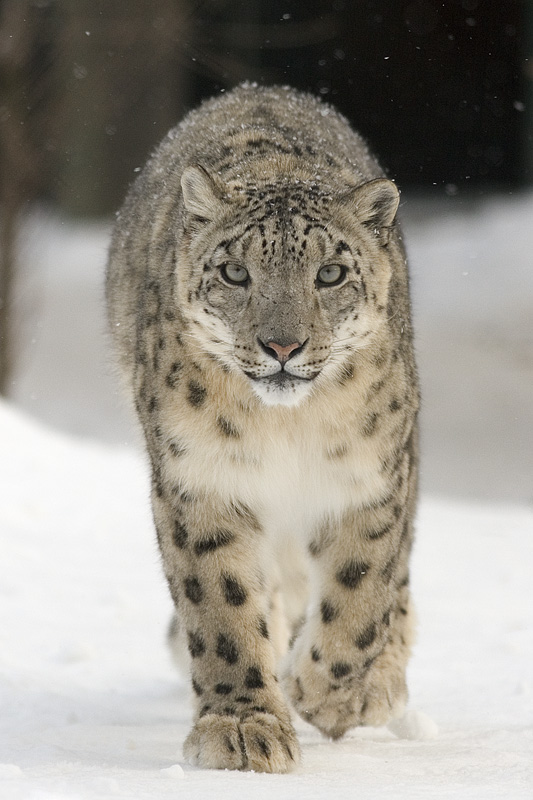
High in the Himalaya, the snow leopard lives above the treeline across Ladakh, Himachal Pradesh, Uttarakhand, Sikkim and Arunachal Pradesh. Hemis National Park in Ladakh, along the Indus and its tributary valleys of Rumbak and Markha, is the most famous place to see one; in winter, snow leopards follow blue sheep down to the villages. In Spiti, the villages of Kibber and Kaza, above the Spiti river, have become a centre for snow leopard watching, and the Kibber Wildlife Sanctuary protects the slopes. Further east, the Gangotri National Park at the source of the Bhagirathi, the Nanda Devi Biosphere Reserve and Sikkim's Khangchendzonga National Park, a World Heritage Site around India's highest mountain, all shelter the grey ghost. India's three spotted cats thus span every level of the country, from the mangrove edge to the glacier.


The spotted god
The leopard was sacred to Dionysus, the Greek god of wine, ecstasy, and wildness, whose chariot was drawn by leopards or panthers and whose followers wore spotted skins. The leopard, beautiful and ferocious, unpredictable and untameable, expressed the god's nature perfectly. In ancient Egypt, a class of priests known as sem priests wore leopard skins while performing funerary rites, including the "Opening of the Mouth," which restored the senses of the dead. Among many peoples of West and Central Africa, leopard skins were the prerogative of chiefs and kings, and "leopard societies" of initiates were powerful in some regions. We met the leopards of Çatalhöyük, modelled in plaster in pairs on the walls of houses nine thousand years ago, in the earlier book. It is one of the oldest recorded relationships between humans and a great cat.

Leopards have been sacred for a very long time. At Çatalhöyük in Turkey, one of the world's first towns, about nine thousand years ago, people moulded two leopards in plaster on the walls of their houses, facing each other, and repainted their spots again and again, perhaps dozens of times over the years. No one knows exactly what they meant, but we can guess at the feeling. In a village surrounded by wild country, the leopard was the most dangerous neighbour, and by bringing it onto the wall of the home, people may have been trying to make its power their own, or to keep it on their side.
In parts of West and Central Africa, in the nineteenth and early twentieth centuries, there were secret leopard societies. Their members wore leopard skins and fitted their hands with iron claws, and carried out justice, and sometimes terror, in the name of the leopard spirit, so that a killing would look like the work of an animal. The leopard was a picture of hidden power: it strikes from cover, at night, and is gone. That is just what such societies wanted to be.

Dionysus's leopards carried a deeper meaning in Greek religion. Dionysus was the god of the vine and of ecstasy, of masks and the theatre, and of the breaking-down of everyday order. His female followers, the maenads, were said to roam the mountains in wild dances, wearing fawn skins and handling snakes. Leopards and panthers, sleek and dangerous, pulled his chariot in Greek and Roman art, and in some myths he took the form of a leopard himself. In the god's train, the big cat stands for the wild energy that civilisation can never fully contain, and that, honoured once a year at a festival, keeps human life from going stale. The Greek tragedies, from Aeschylus to Euripides, were performed at the festivals of Dionysus. In a sense, the theatre itself was born under the sign of the leopard.
The leopard-skin priests of Egypt add another layer. The sem priest who wore the skin led the funeral rites and performed the "Opening of the Mouth", touching the mummy's face with ritual tools so that the dead person could eat, breathe and speak in the afterlife. Tutankhamun's tomb shows his successor, Ay, performing this rite wearing a leopard skin. The animal that hunts at night, moving between the seen and unseen, was a fitting robe for the priest who guided the dead across the threshold. Leopards also appear on the walls of houses at Çatalhöyük, as noted, where pairs of leopards in relief were plastered over and repainted dozens of times across generations, as if renewing them were part of the life of the household.

The leopard societies of West Africa are often told about in sensational ways, so the history deserves care. In Sierra Leone, Liberia and neighbouring regions, groups known as "leopard men" were reported from the late nineteenth century until the mid-twentieth century. Members wore leopard skins and used metal claws, and some carried out killings, which colonial authorities prosecuted in famous trials. Historians now see these societies in different ways: partly as criminal or ritual groups, partly as forms of local justice and resistance at a time when colonial rule was destroying older institutions. In other parts of Africa, such as among the Igbo and in the kingdom of Benin, the leopard was the king's animal, and only rulers could wear or own its skin. The leopard stood for the power to judge and punish, a power that could protect or terrify.
The jaguar
In the Americas, the place of the leopard is taken by the jaguar, the largest cat of the New World. It is stockier and more powerfully built than a leopard, with a large head and the most powerful bite, relative to its size, of any big cat. Where lions and tigers usually kill by strangling or severing the spine, the jaguar often kills by biting straight through the skull of its prey, or through the shell of a turtle. It is a strong swimmer and hunts in rivers and swamps, taking fish, turtles, capybaras, and even caimans, which it seizes from the water.

No animal occupied a more central place in the religions of Mesoamerica and South America. Among the Olmec, the earliest great civilization of Mexico, from about 1200 BCE, sculptures and carvings depict a being part human and part jaguar, often a baby with a snarling mouth, which archaeologists call the were-jaguar. Among the Maya, the jaguar was associated with the night, the underworld, and the sun in its nightly journey beneath the earth; the Jaguar God of the Underworld was the sun at night. Maya kings wore jaguar skins, sat on jaguar-skin thrones, and took jaguar names. Among the Aztecs, the elite warriors of the jaguar order wore jaguar skins in battle, and the god Tezcatlipoca, lord of the night, sorcery, and fate, took the form of a jaguar.
In the Amazon, as we saw in the earlier book, the jaguar is at the centre of perspectivism: a being who sees itself as a person, drinks what we see as blood as if it were manioc beer, and regards humans as prey. Shamans were believed to be able to transform into jaguars, and in many Amazonian languages the words for jaguar and shaman are related. To become a jaguar was to acquire the most formidable perspective in the forest.
In Mesoamerica, the Olmec people of the Gulf coast of Mexico, about three thousand years ago, carved strange figures that scholars call "were-jaguars": baby-like faces with snarling cat mouths and fangs, half human and half jaguar. They are among the oldest religious art of the Americas. They seem to show the idea that a ruler or a priest could cross the line between the human and the animal, and draw on the jaguar's power. It is an idea we have already met in India in Narasimha, who is neither man nor lion.
The jaguar's place in Maya religion is written on their monuments. At Yaxchilan, in Mexico, kings took names like Shield Jaguar and Bird Jaguar, and carved stone lintels show them wearing jaguar skins in rituals. In the Maya story of the Hero Twins, told in the Popol Vuh, the twins must pass through a series of deadly houses in the underworld, one of which is the House of Jaguars. They survive by throwing bones to the jaguars to eat. Aztec Jaguar Warriors, the ocelotl, were one of the two great elite military orders, along with the Eagle Warriors, and fought wearing jaguar skins with their faces looking out from the cat's open jaws.
Today, the jaguar faces many of the same threats as the tiger. Ranching and soy farming have cleared huge areas of its forest in Brazil, and in 2020 vast fires in the Pantanal, the world's largest tropical wetland, burned more than a quarter of the region and injured or killed hundreds of jaguars. At the same time, ecotourism has given jaguars a new value: in parts of the Pantanal, ranchers who once shot jaguars now earn more from visitors who come to see them. A live jaguar, like a live tiger in Ranthambore, is now worth more than a dead one. Economics, in the right setting, can become a form of protection.

The Amazon's jaguar shamans are one of the most studied subjects in modern anthropology. The Brazilian anthropologist Eduardo Viveiros de Castro, working with peoples such as the Araweté, developed the idea of "perspectivism" in the 1990s. In many Amazonian worldviews, he argued, every kind of being sees itself as a person, living in houses, drinking beer and following customs. What differs is the body, and the body decides what the world looks like. So a jaguar sees the blood it drinks as manioc beer, and sees humans as peccaries, its prey. A shaman is someone who can cross between these perspectives, put on another body and see the world as a jaguar does, and come back. This is a very different idea from the Western one, in which humans and animals share the same world but only humans have culture. In the Amazonian view, all beings share culture, and differ in nature. Some anthropologists think this way of thinking helps explain why hunters in such societies take so much care over how they kill and treat animals: the prey is also a person, with relatives who may take revenge.
The idea has spread far beyond anthropology. Writers on climate and ecology have used it to ask whether people in industrial societies could learn to see other animals as "persons" in some sense, with their own points of view. The Colombian film Embrace of the Serpent (2015), set in the Amazon, gave many viewers their first sense of this way of seeing, with its shamans, its jaguars glimpsed in the forest, and its warnings about what is lost when a culture's knowledge dies.

What the spotted cats teach
The leopard and the jaguar are the great cats of the shadows. The leopard, above all, shows that a large predator can survive alongside human beings, if the humans will let it, and if they understand how it lives. The jaguar shows how completely an animal can be absorbed into a civilization's idea of power, night, and the underworld. Both are masters of concealment, and both ask the same question of us: how much of the wild can we tolerate, living, unseen, at the edges of our lives?

Writers and film-makers have kept finding new meanings in these cats. Ernest Hemingway's story "The Snows of Kilimanjaro" (1936) begins with a short, strange note. Near the snowy western summit of Kilimanjaro, it says, lies the dried and frozen body of a leopard, and no one has explained what the leopard was looking for at that height. Then the story turns to a dying writer in a camp below the mountain, thinking of all the books he never wrote because he chose comfort and money instead. The leopard is never explained. But it hangs over the story as a picture of the opposite choice: a creature that climbed far beyond where it needed to go, towards something it could not name, and died reaching for it. Readers still argue about what it means, which is part of its power.
Giuseppe Tomasi di Lampedusa's novel The Leopard (1958), filmed by Luchino Visconti in 1963, is about an old Sicilian prince whose family badge is a leopard. As Italy is being united in the 1860s, he watches his noble world fade and new, money-minded men take its place. His clever nephew says the famous line that, if they want things to stay as they are, things will have to change. The leopard there is a badge of an old, proud order that knows it is dying. In the 1938 comedy Bringing Up Baby, by contrast, a tame leopard named Baby causes chaos in the life of a stiff, serious scientist, and the wild animal becomes a joke about how much life we lose by being too careful. And Marvel's Black Panther (2018) took the dark big cat as a symbol of African royalty, strength and pride, a picture that meant a great deal to audiences who had rarely seen Africa shown as powerful on screen.
The snow leopard deserves more than a note. It lives across twelve countries of Central and South Asia, from Afghanistan to Mongolia, and India has several hundred, mostly in Ladakh, Himachal Pradesh, Uttarakhand, Sikkim and Arunachal Pradesh. A 2024 national estimate put India's number at about seven hundred. Its main prey are blue sheep and ibex, and it often clashes with herders whose livestock it takes. In Ladakh, the Snow Leopard Conservancy and local partners have helped villagers build predator-proof corrals for their sheep and set up homestays, so that tourists who come hoping to see a snow leopard pay the families directly. Hemis National Park has become one of the best places in the world to see one. Peter Matthiessen's The Snow Leopard (1978), the book in which he never sees the animal, comes to suggest that not seeing it was itself a kind of gift. The search mattered more than the sighting. For the herders of Ladakh, the meaning is more practical: the snow leopard is now a neighbour that can help pay for their children's schooling.

Hemingway's frozen leopard has puzzled readers for nearly a century. The story begins with a short note: close to the western summit of Kilimanjaro, there is the dried and frozen carcass of a leopard, and no one has explained what it was seeking at that altitude. The story itself is about a dying writer, Harry, who has wasted his talent on comfort and money, and lies in a camp below the mountain reflecting on all the stories he never wrote. The leopard becomes a symbol of the opposite choice: a creature that climbed higher than it needed to, towards something it could not name, and died there. Hemingway took the detail from a real leopard found frozen on the mountain in the 1920s. He turned it into one of the most famous images in modern writing about ambition and failure.

Lampedusa's novel uses the leopard as the coat of arms of the Salina family, Sicilian princes facing the end of their world as Italy is unified in the 1860s. The prince's nephew, Tancredi, gives the novel its most quoted line: "If we want things to stay as they are, things will have to change." The leopard here is old nobility, proud and doomed, watching the jackals and hyenas, as the prince calls the new rich, take its place. Visconti's film, with Burt Lancaster as the prince, won the top prize at Cannes in 1963 and is famous for its long ballroom scene. Both the novel and the film show how an animal can become the emblem of an entire social class, and how the decline of the animal's meaning can mirror the decline of the class.
There is a quiet lesson in how often the leopard escapes our notice. Of all the great cats, it is the one most likely to be living near any given village in India, and the one least likely to be seen. In a sense, it is the perfect symbol for the hidden lives of animals that this whole book is about: always nearer than we think, and always more than we know.
