Part Four · Wings
Chapter 16
The Owl
Silent wings, ears that can 'see' in the dark, and why the owl is a bird of wisdom in one place and of fear in another.
Assisted and Curated by Claude, Referenced and Collated by me

Scientific name: Order Strigiformes
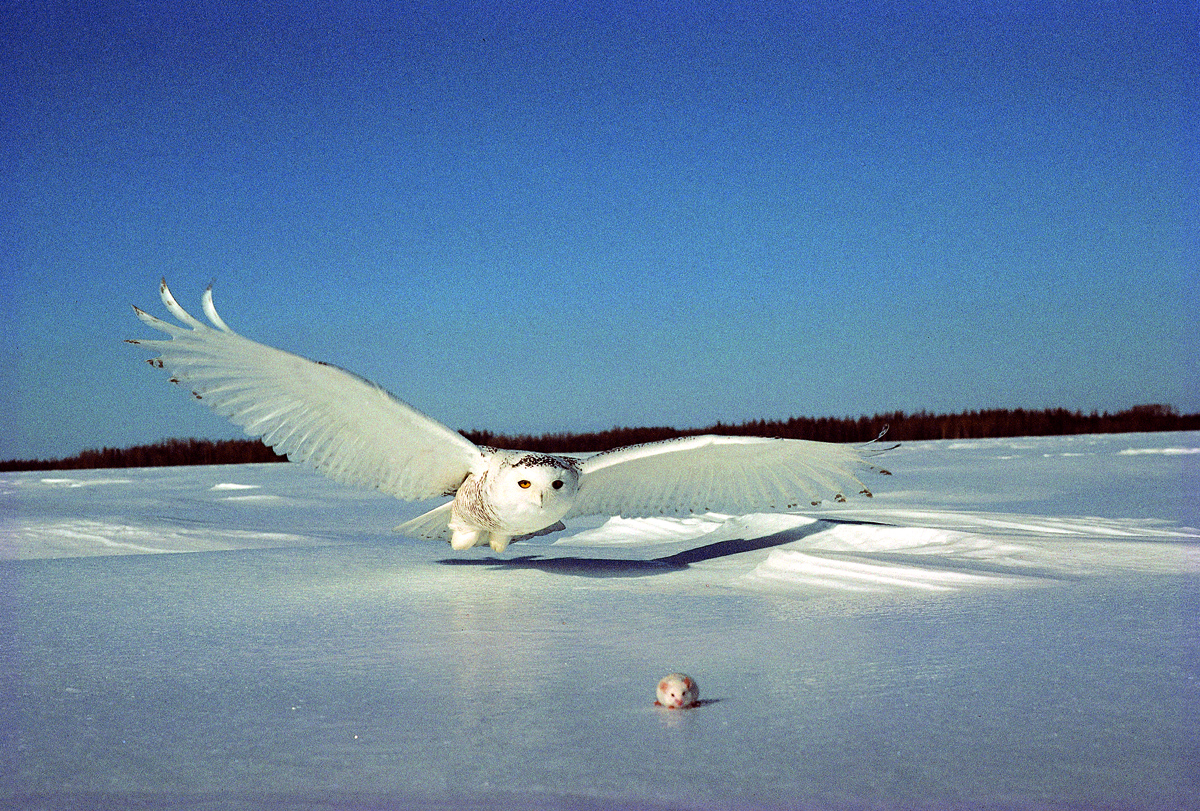
In the 1970s, two scientists put barn owls in a completely dark room and let mice run across the floor. The owls could not see anything at all. Yet they caught the mice again and again, just by listening to the tiny rustling sounds! When the scientists dragged a crumpled paper ball across the floor, the owls pounced on that too.
How? A barn owl's ears are at slightly different heights on its head, one a little higher than the other. Its flat face works like a satellite dish, collecting sound. The owl's brain uses the tiny differences between its two ears to work out exactly where a sound is coming from. It sees with its ears!

The silent hunter
Owls have huge eyes shaped like tubes. They cannot move their eyes, so instead they turn their heads, about three-quarters of the way around!

Owls fly almost without a sound. The edges of their feathers are like a soft comb that breaks up the noisy air. Engineers have copied owl feathers to make quieter fans and wind turbines.

There are about 250 kinds of owl. India has around thirty-five, like the little spotted owlet that lives even in cities, the barn owl, and the big Indian eagle-owl. The forest owlet of Maharashtra was thought to be extinct for over a hundred years, until it was found again in 1997!
More than thirty thousand years ago, someone scratched a picture of an owl turning its head on a cave wall in France.


The bird of wisdom
In ancient Athens, the little owl was the bird of Athena, goddess of wisdom. Athenian coins had owls on them and were simply called 'owls'. That is why, in many countries, owls stand for being wise.


The bird of death
But in many other places, people were afraid of owls because they come out at night and make spooky calls. Romans thought an owl's hoot meant something bad was coming. Some Native American peoples link owls with spirits.

Not everyone feared them. The Ainu people of Japan honoured a big fish-eating owl as the god who protects the village.

Lakshmi's owl
In India, the goddess of wealth, Lakshmi, often rides an owl, called uluka. Some say this is because the owl sees clearly in the dark. Others say it is a reminder that money can make people foolish, like an owl sleeping through the day. Funnily, calling someone an 'ullu' in Hindi means calling them silly!

Sadly, some people still believe silly superstitions about owls and catch them illegally, especially around Diwali. All of India's owls are protected by law. Harming them is wrong and does not bring anyone good luck.

Read the Panchatantra story of the war between the crows and the owls. In Bengal, the barn owl is called Lakshmi's owl.

The farmer's friend
One family of barn owls can eat thousands of rats and mice in a year. In some countries, farmers put up nest boxes for owls so they need less rat poison. In the Middle East, farmers from communities that do not get along have worked together to help owls. The bird some people fear actually protects our food!


What the owl teaches
The owl knows the night. It notices what others miss and moves without a sound. It reminds us that things we fear are often things we simply do not understand yet.

Read Edward Lear's 'The Owl and the Pussy-cat', and look out for Owl in Winnie-the-Pooh and Hedwig in Harry Potter.
