Part Four · Wings
Chapter 15
The Eagle and the Vulture
The eagle that carries the gods, the vulture that cleans up nature, and how India almost lost its vultures.
Assisted and Curated by Claude, Referenced and Collated by me

Scientific name: Accipitridae
In the Ramayana, when Ravana carries Sita away in his flying chariot, an old vulture named Jatayu hears her cry. Jatayu is the king of vultures and an old friend of Rama's father. He knows he is too old to win, but he fights Ravana bravely in the sky. Ravana wins, and Jatayu falls. But before he dies, he tells Rama which way Ravana went. Rama honours him like his own father.
Many people think vultures are ugly or scary. But India's oldest stories made a vulture a hero. And as we will see, real vultures are heroes too.

The eye of the eagle
Eagles see far better than we do. A golden eagle may spot a rabbit more than three kilometres away! Eagles can even see ultraviolet colours that we cannot.

In Mongolia, Kazakh eagle hunters train golden eagles to hunt foxes, and after about ten years they set the eagles free. The harpy eagle of South America has claws as long as a bear's!


Read Tennyson's poem 'The Eagle', and watch The Eagle Huntress (2016), about a thirteen-year-old girl in Mongolia who trains a golden eagle.


The eagle of the gods
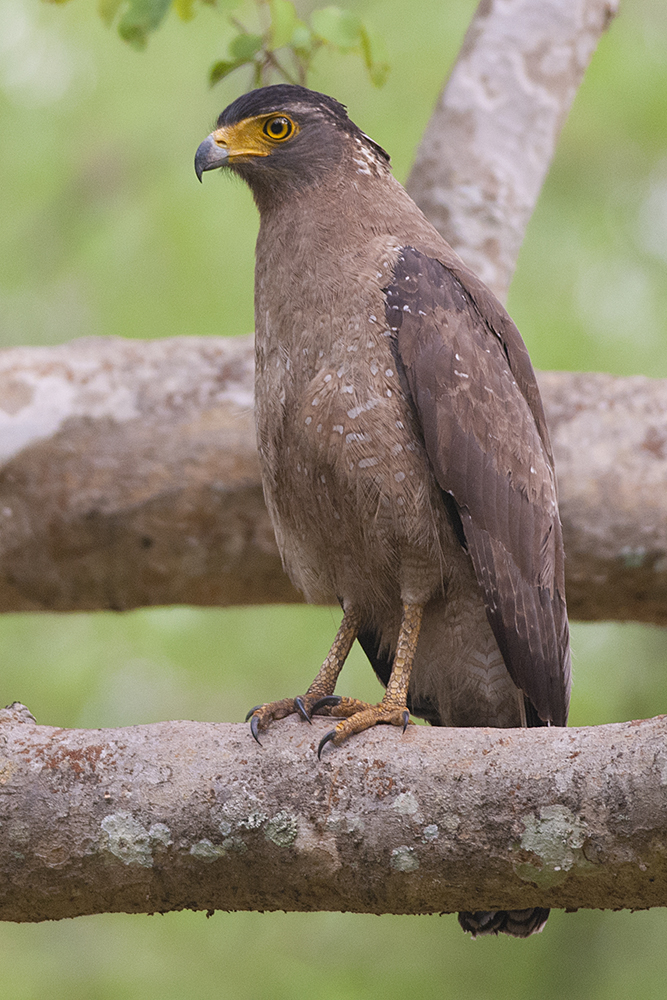
Almost everywhere, the eagle was the bird of the sky god. In Greece it carried Zeus's thunderbolts. Roman soldiers marched behind a golden eagle. Mexico's flag shows an eagle on a cactus eating a snake.
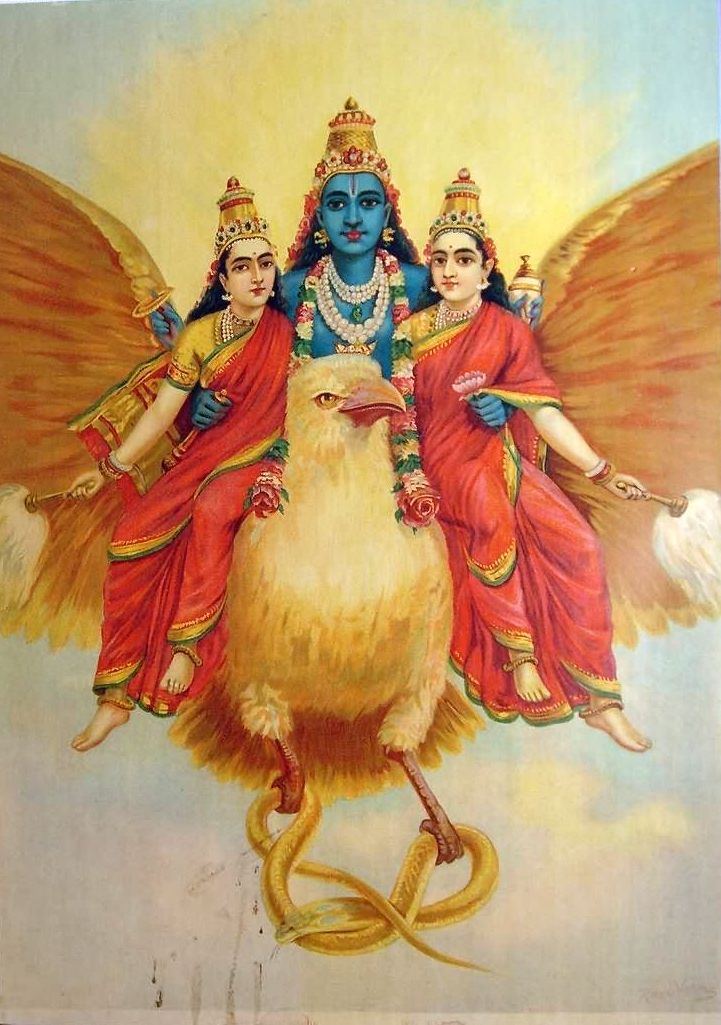


In India, the great bird is Garuda, part eagle and part man, who carries Vishnu. In the story, Garuda's mother was tricked and made a servant. To free her, Garuda flew to the gods and took the nectar of immortality. Garuda is also the symbol of Indonesia and Thailand. And did you know? Some eagles really do hunt snakes, just like Garuda!


The vulture's work
Vultures eat dead animals. That sounds gross, but it is a very important job. They clean up the land before germs can spread. Their stomachs are so strong they can kill the germs that make other animals sick.

Vultures fly for hours on rising warm air, barely flapping. When one spots food and flies down, others from far away follow.


The bearded vulture of the Himalaya eats bones! It drops them on rocks to break them. It also bathes in red, iron-rich mud to colour its chest feathers orange, a bit like wearing make-up.


The vultures and the dead
In some traditions, vultures had a special role when people died. The Parsis of India placed their dead on stone towers called towers of silence, where vultures took care of the body. In Tibet, offering the body to vultures is seen as a last gift to other living beings. In ancient Egypt, the vulture was a symbol of motherhood.




The silent collapse
Forty years ago, India had tens of millions of vultures. Then, in the 1990s, they started dying. Within about fifteen years, almost all were gone. One kind lost more than ninety-nine out of every hundred birds!

No one knew why. Then, in 2004, scientists found the answer: diclofenac, a painkiller given to cows. When vultures ate a dead cow that had taken this medicine, their kidneys stopped working. India banned the medicine for animals in 2006.


Without vultures, dead animals lay rotting, stray dogs increased, and more people got sick. We learned how important vultures are only after we lost them. Now people are breeding vultures and setting them free again.


What the eagle and the vulture teach
The eagle flies up towards the sun; the vulture comes down to clean up. Both are needed. Jatayu, the brave old vulture, reminds us that some of the most important work is quiet work that nobody thanks you for.

Jatayu had a brother, Sampati, who used his sharp eyes to spot Sita in faraway Lanka. And watch All That Breathes, about two brothers in Delhi who save hurt kites.