Part One · The Hunters
Chapter 2
The Lion
The only cat that lives in a family group, the symbol of kings, and the last lions of Asia in Gujarat.
Assisted and Curated by Claude, Referenced and Collated by me

Scientific name: Panthera leo
Look at an Indian coin or note and you will see four lions standing back to back. This is India's national emblem. It was carved more than two thousand years ago for the emperor Ashoka, at Sarnath, where the Buddha gave his first talk.
The Buddha's teaching was called 'the lion's roar', because it was strong enough to quieten every other voice, just like a lion's roar quietens a forest.
The pride
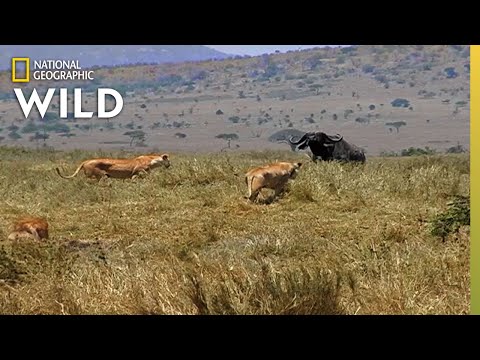
A lion family is called a pride. At its heart are sisters, mothers, aunts and cousins who stay together all their lives. They hunt as a team: some lionesses chase the prey towards others who are hiding and waiting.

One or more adult males, often brothers, live with the pride and guard it. But they usually stay for only a few years before younger males push them out.
The male's big mane is like a crown. Scientists found that lionesses like males with darker manes, because a dark mane shows a lion is healthy and strong.

The roar and the rest
A lion's roar can be heard eight kilometres away! It means: 'This land is ours.'

Lions are champion nappers. They can rest for up to twenty hours a day, saving their energy for hunting.
The lion and the king
Long ago, lions lived in Africa, the Middle East, Europe and much of India. Kings loved the lion. In ancient Assyria, kings hunted lions to show they were strong enough to protect their people. Their stone carvings are now in the British Museum.

Egypt's Sphinx has a lion's body and a king's head. In Greek stories, the hero Heracles fought a lion whose skin no weapon could cut. In China, where lions never lived, pairs of stone lions guard palace gates.


More than thirty thousand years ago, people painted a whole family of lions on the wall of Chauvet Cave in France. Aesop's fable 'The Lion and the Mouse' and the Panchatantra tale of the clever hare who tricked a lion are still told today. In India, look for Ashoka's lions at Sarnath, and read the tales of Simhasan Battisi, about King Vikramaditya's magic lion throne.


The man-lion and the lion people
In a Hindu story, a demon king could not be killed by man or beast, by day or by night, inside or outside. So Vishnu came as Narasimha, half man and half lion, at twilight, on a doorstep. Clever!

The Sinhala people of Sri Lanka take their name from simha, the lion, and a lion is on their flag. The Sikh name Singh also means lion.

The last lions of Asia
Lions once lived across north and west India, but hunters killed almost all of them. By about 1900, only a few dozen were left, in the Gir forest of Gujarat. The Nawab of Junagadh banned lion hunting, and that saved them.


Today Gir has more than six hundred lions, and they are spreading out. They share the land with the Maldhari herders and their buffaloes. People and lions living side by side is rare and special.


But all of Asia's lions live in one place. If a disease came, many could die at once. Scientists think some should be given a second home.


What the lion teaches
The lion was a symbol of kings, but real lions teach us about family: sisters who stick together are stronger than any king. And the lions of Gir survive because their human neighbours are kind enough to share.

In C. S. Lewis's Narnia books, a great lion named Aslan is the hero. Watch The Lion King (1994) and Born Free (1966).