Part Two · Minds Like Ours
Chapter 8
The Elephant
Grandmothers who remember, voices too low for us to hear, and the elephant-headed god Ganesha.
Assisted and Curated by Claude, Referenced and Collated by me

Scientific name: Elephas maximus · Loxodonta
In 1984, a scientist named Katy Payne was standing near some elephants at a zoo when she felt a strange throbbing in the air. She could feel it on her skin but could not quite hear it. It reminded her of the deepest notes of a church organ.
She came back with special recording machines and found that the elephants were talking in sounds too low for human ears! These deep rumbles can travel several kilometres. Elephants may even feel them through the ground with their feet. The biggest land animals had been chatting all along, in a voice we could not hear.
The matriarch
There are three kinds of elephant: two in Africa and one in Asia. Asian elephants are smaller, with smaller ears, and only some males have tusks.

An elephant family is led by the oldest female, the matriarch. The family is made of her daughters, granddaughters and their babies. Young males leave when they are teenagers.


The matriarch is like the family's library. She remembers where to find water in a drought and which animals are dangerous. Once, during a terrible drought, families with old matriarchs found water and kept their babies alive. That is why it is so sad when poachers kill old elephants for their tusks.

The mind of the elephant
An elephant's trunk is its nose and upper lip joined together. It has no bones but tens of thousands of muscle parts. It can pick up a single blade of grass, pull up a tree, or give another elephant a gentle hug.
Elephants can recognise themselves in a mirror. An elephant named Happy kept touching a mark painted on her head while looking in a big mirror. She knew it was her!
When elephants find the bones of another elephant, they go quiet and touch the bones gently with their trunks. Families stay near a dying member and come back for days. We cannot know exactly what they feel, but they clearly care.
There is an old Indian story about some blind men and an elephant. Each man touched one part and thought the elephant was a rope, a wall or a pillar. It teaches that truth has many sides.


The elephant in India
People in India have lived with elephants for more than four thousand years. Elephants appear on seals from the Indus Valley. In old times, kings used them in battle, and Indian sages wrote whole books on how to care for elephants.


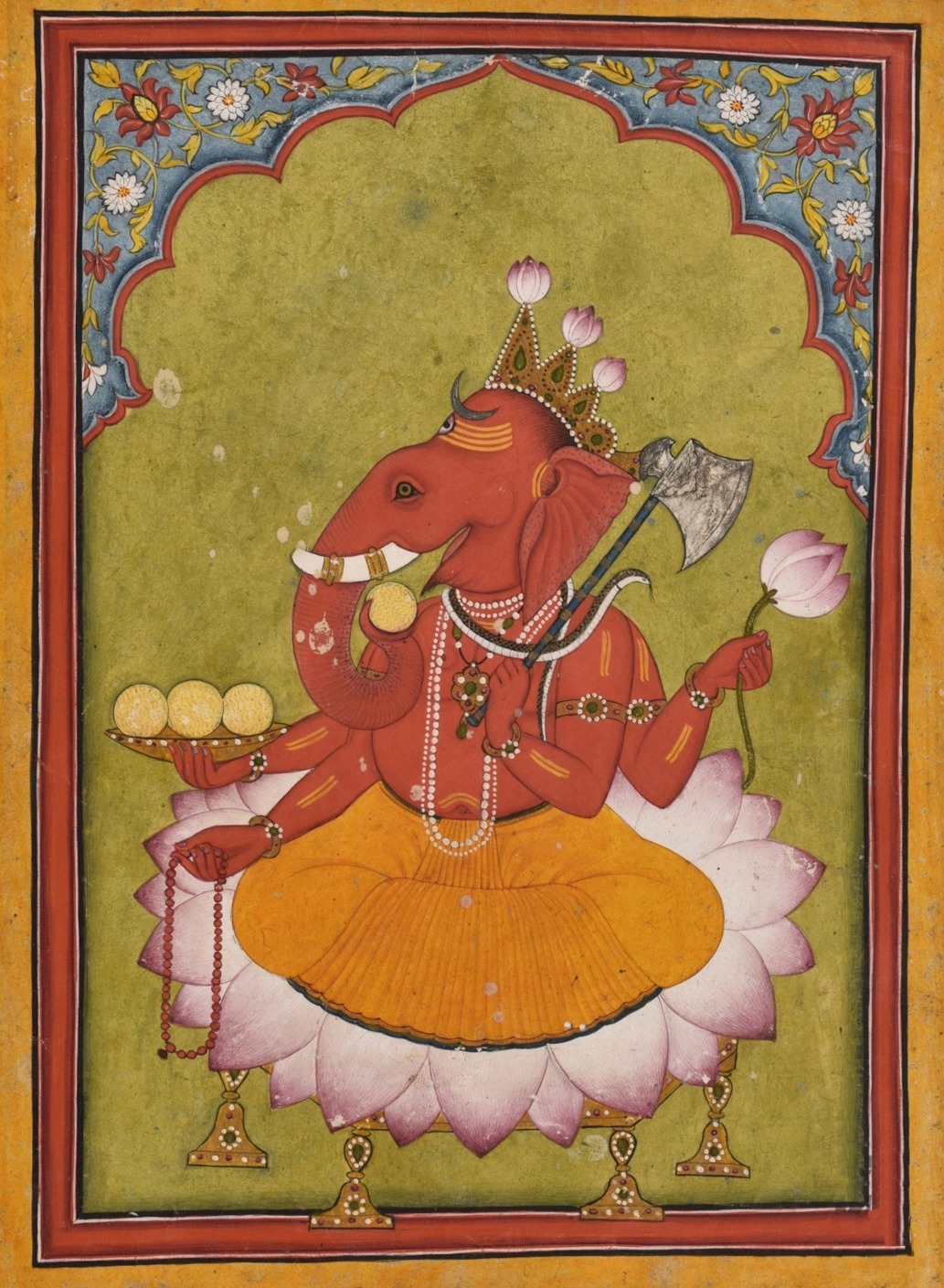
The Buddha's mother dreamed of a white elephant before he was born. Lord Ganesha, the elephant-headed god, removes obstacles, so people pray to him before starting anything new. Indra, king of the gods, rides the white elephant Airavata. And the goddess Lakshmi is often shown with two elephants pouring water over her. An old story even says elephants once had wings and flew like clouds!



Fifteen thousand years ago, people in Ukraine built huts out of mammoth bones. In Odisha, at Dhauli, an elephant is carved coming out of a rock, more than two thousand years ago.

The living temple elephants
In Kerala, elephants are part of temple festivals. At Thrissur Pooram, rows of elephants wear golden decorations and carry colourful umbrellas while drummers play. People love them. But life in captivity can be hard for elephants, with long hours in chains and in the heat. Loving elephants also means caring for them kindly.


The conflict
India has about thirty thousand wild elephants. They need lots of space, but forests have been cut up by farms, roads and railway lines. So elephants walk through villages and fields and sometimes eat crops or damage houses. This is dangerous for both people and elephants. Finding ways to share the land is one of India's big challenges.


What the elephant teaches
Elephants show us how precious grandmothers and old people are, because they remember things the young do not. Ganesha sits at the beginning of everything. Perhaps that is the right place for an animal with such a long memory.

Read Basheer's funny Malayalam story 'Me Grandad 'ad an Elephant'. Watch Haathi Mere Saathi, Dumbo (1941), and The Elephant Whisperers (2022), about a couple in Mudumalai raising a baby elephant. It won an Oscar!