Part Two · Minds Like Ours
Chapter 9
The Apes and Monkeys
Our closest animal cousins make tools, have their own customs and even use medicine. Plus Hanuman, the monkey god.
Assisted and Curated by Claude, Referenced and Collated by me

Scientific name: Order Primates
In 1960, a young woman named Jane Goodall sat on a hillside in Tanzania, watching a chimpanzee she called David Greybeard. He picked a grass stem, pulled off the leaves, poked it into a termite mound and pulled it out covered with termites. Snack time! Then he did it again.
Back then, people thought only humans made tools. Jane's teacher said that now we must either change what we mean by 'tool', change what we mean by 'human', or accept chimpanzees as humans!
The great apes
Apes are our closest relatives. Chimpanzees and bonobos share almost all of their DNA with us. Gorillas and orangutans are apes too. Apes have no tails, and big, clever brains.

Chimpanzees live in big communities and make friends and alliances, a bit like politics. They hunt together and share food. Sadly, they can also fight wars with neighbouring groups.


Bonobos look like chimps but are much more peaceful. Their groups are led by females who work together to keep the calm.


A scientist found that baby monkeys need hugs and comfort, not just food. That is true for children too. Chimpanzees also know themselves in a mirror.

Culture among the apes
Different chimpanzee groups do things in different ways, and the young learn by watching. Some groups crack nuts with stone hammers; others never do. In West Africa, scientists dug up chimp stone tools more than four thousand years old!

In 2024, an orangutan named Rakus hurt his face. He chewed the leaves of a medicine plant and put the juice and leaves on his wound. It healed in weeks. This was the first time a wild animal was seen treating a wound with a medicine plant.
Gorillas live in families led by a big male called a silverback. A scientist named Dian Fossey showed that gorillas are gentle plant-eaters, not monsters like in films. Her work helped mountain gorillas grow from a few hundred to more than a thousand.


The monkeys of India
India's only ape is the hoolock gibbon of the northeast. Its singing duets ring through the forest at dawn.


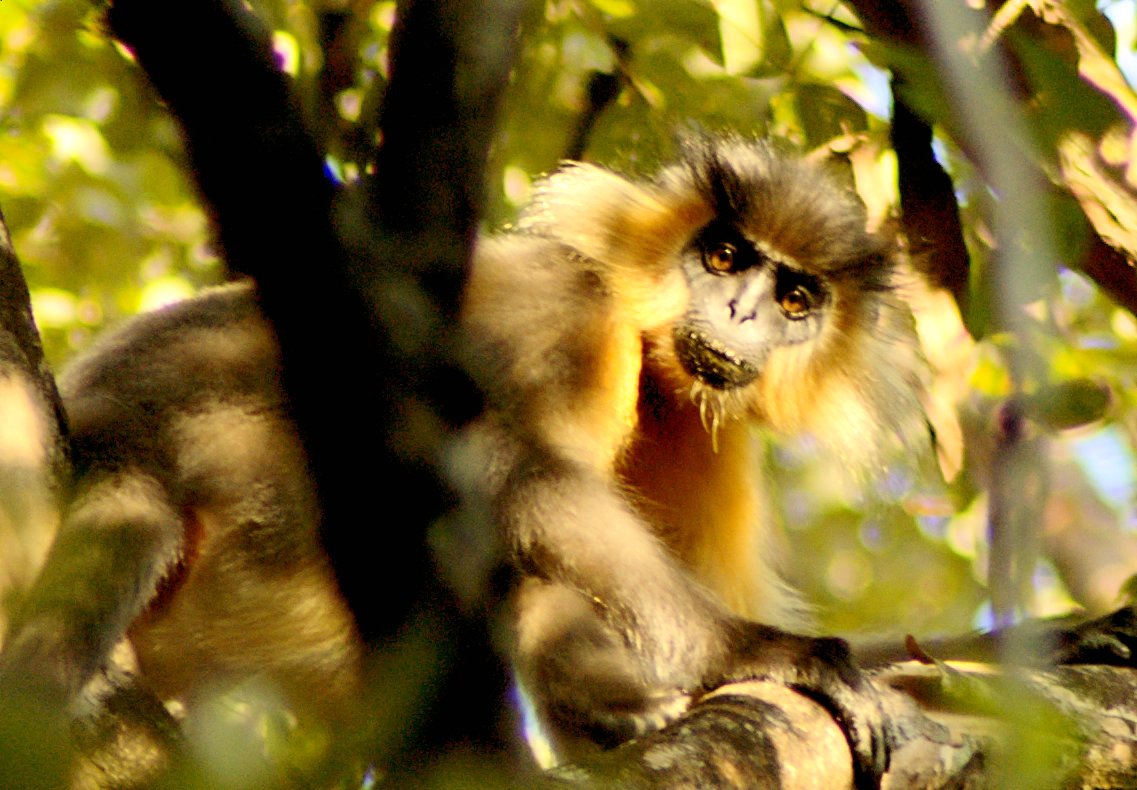
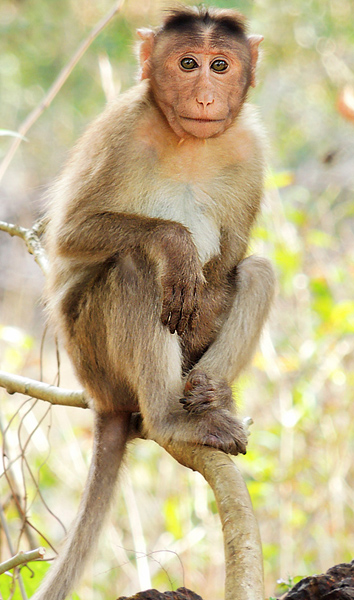
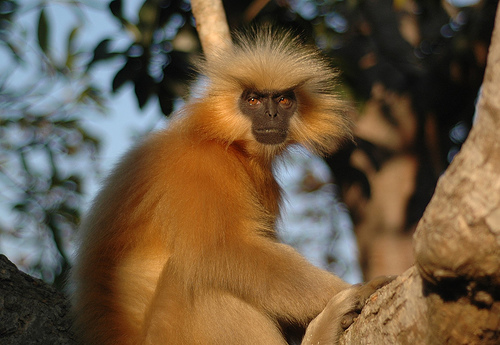
India has many monkeys. Bold rhesus macaques live in cities and temples and sometimes snatch your snacks! The grey Hanuman langur with its black face is found across India, and its alarm calls warn the forest of tigers. The lion-tailed macaque, with a silver mane, lives only in the Western Ghats and is endangered.




The monkey god
Hanuman is one of the most loved figures in India. In the Ramayana, he is the son of the wind god. He leaps across the ocean to Lanka to find Sita and carries a whole mountain to bring a healing herb for Lakshmana. He stands for strength, loyalty and courage.


In China, the famous Monkey King, Sun Wukong, is born from a stone and goes on a long journey to India to bring back Buddhist books. In ancient Egypt, baboons were linked with Thoth, the god of wisdom and writing.

The Sundara Kanda tells of Hanuman's great leap, and the film Hanuman (2005) is a fun animated version.

What the apes teach
When we look at apes, it is like looking in a mirror. We see where our tools, friendships, fights, kindness and even medicine began. Hanuman, who leapt across the sea out of love, and David Greybeard, the chimp with his grass stem, belong to the same big family. So do we.

Watch King Kong (1933) and Gorillas in the Mist (1988), about Dian Fossey.