Kid Mode · Eleven films
Nature Invented It First
Ants that farm, trees with bodyguards, a fish that cleans inside a shark’s mouth. Eleven true stories of nature’s clever ideas, and what they teach us.
Featuring Darwin · D’Arcy Thompson · Popper · Dennett
Assisted and Curated by Claude, Referenced and Collated by me
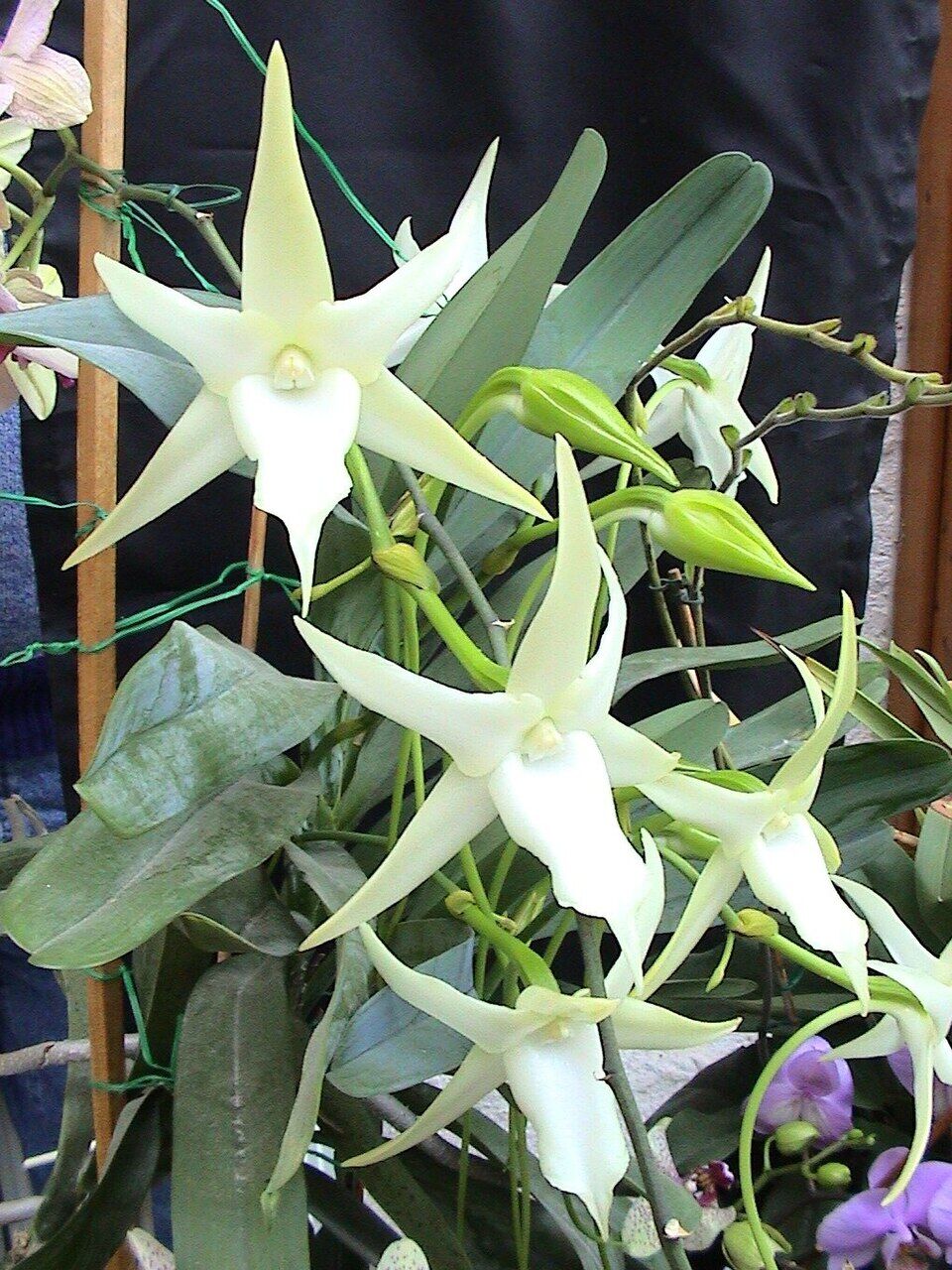
A long time ago, in 1862, a box of flowers arrived at the home of a scientist named Charles Darwin in England. Inside was a beautiful white orchid shaped like a star. It came from Madagascar, a big island near Africa. Behind the flower hung a thin green tube, almost as long as a school ruler. And the sweet juice that insects like, called nectar, was hidden right at the very bottom of that tube.
Darwin was puzzled. "What insect could ever reach that?" he wondered. Then he had a clever idea. A flower would not grow such a long tube for nothing. So somewhere in Madagascar there must be a moth with a super-long tongue, long enough to reach the bottom! When the moth drank, it would get pollen stuck on its head and carry it to the next flower. That is how the flower makes seeds.
People laughed. A moth with a tongue as long as a ruler? Darwin never got to see it. But about 40 years later, scientists found the moth. They named it praedicta, which means "the predicted one." And in 1992 someone finally caught it with the orchid's pollen on its tongue. Darwin had solved a mystery just by looking carefully at a flower!


This page has eleven short films. Each one shows a plant or animal doing something so smart that people only learned to do it much, much later. Tap a film to play it. Here are all the stories:
IDarwin's guessing game
How did the orchid's tube get so long? Bit by bit. Long ago, moths with slightly longer tongues got more nectar. Flowers with slightly longer tubes made the moths push in deeper, so more pollen got carried. So the tongues got longer, then the tubes got longer, then the tongues again, like two friends in a race that never ends.
Today the moth's tongue fits the flower's tube perfectly, like a key fits a lock. Each one carries the shape of the other. That is why Darwin could guess the moth just by measuring the flower. The flower was like a clue in a detective story.
The moth's tongue fits the flower's tube like a key fits a lock.
IIDeals without money

The acacia and its ants
In Central America there is a thorny tree called the bullhorn acacia. Its thorns are big and hollow, and ants live inside them like tiny apartments. The tree also feeds the ants. It grows little golden snacks on the tips of its leaves and drips sweet juice for them to drink.
What does the tree get back? Bodyguards! The ants march up and down every branch. If an animal tries to eat the leaves, the ants sting it. They chase away caterpillars and bugs, and they even chew down other plants that grow too close. A scientist once took the ants away from some of these trees. Without their guards, the trees got eaten and crowded out. So the deal is simple: the tree gives a home and food, and the ants keep it safe. Kings and cities have made the very same kind of deal with soldiers!

The fig and its wasp
Here is a fun fact: a fig is not really a fruit like a mango. It is a little round room with hundreds of tiny flowers hidden inside, and only one tiny door at the top. Bees can't get in. Only one special visitor can: a fig wasp, smaller than a grain of rice.
The mother wasp squeezes through the tiny door. It is such a tight fit that her wings come off! Inside, she lays her eggs and spreads the pollen she brought from her old fig. Her babies grow up inside the fig. Then the young female wasps fly out, covered in pollen, to find a new fig. The fig needs the wasp, and the wasp needs the fig. They have been partners for about 75 million years. That is even older than the last dinosaurs!
The peepal and the banyan trees you see in India are both kinds of fig trees. The Bodhi tree, where the Buddha sat and thought, is a fig too. So every one of these big, famous trees is here because of a tiny wasp.
IIITiny farmers
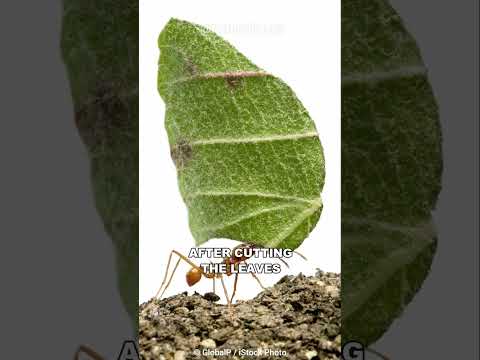
The leafcutter ants
In the rainforest, you might see a line of ants each carrying a piece of green leaf, like a tiny flag. These are leafcutter ants. But here is the surprise: they don't eat the leaves! They carry them into their underground home, chew them up, and use them to grow a kind of mushroom, called a fungus. The fungus is their food. The ants are farmers!
They even look after their farm like real farmers. Some ants cut leaves, some carry, some chew, and some pull out weeds. When a bad mould tries to spoil their fungus, the ants have medicine for it. Tiny germs living on the ants' bodies make a natural medicine that stops the mould. That's like the antibiotic medicine a doctor gives you!
Now get ready for the big number. These ants started farming about 50 million years ago. People only started farming about 12,000 years ago. The ants were farmers millions of years before there were any people at all.
The aphids
Some ants keep tiny green bugs called aphids, the way a farmer keeps cows. Aphids drink juice from plants and make a sweet sticky drop called honeydew. The ants tickle the aphids with their feelers, and the aphids give them a drop. In return, the ants protect the aphids from ladybirds. It's like milking a cow!
Aphids have a strange trick of their own. In summer, a mother aphid can have babies without a dad. And her babies are born with even tinier babies already growing inside them, like a set of nesting dolls! That is how aphids can cover a whole rose plant in just a few days.

IVBest friends under the sea
The goby and the pistol shrimp
On the sandy sea floor lives a small shrimp that loves to dig. All day it builds and cleans its burrow. But it has a problem: it can hardly see! Outside its home, a hungry fish could gobble it up.
So the shrimp shares its home with a little fish called a goby, which has great eyesight. When the shrimp comes out to dig, it keeps one long feeler touching the goby, like holding a friend's hand. The goby keeps watch. If danger comes, the goby flicks its tail. The shrimp feels it and zooms back inside, and the goby follows. The shrimp gives the house. The goby gives the eyes. Together they are a perfect team.


This shrimp has one more amazing power. It is called a pistol shrimp because it has one huge claw that snaps shut super fast. The snap makes a bubble that pops with a BANG loud enough to knock out a small fish, and it even makes a tiny flash of light! For a split second, the inside of that bubble gets hotter than an oven, nearly as hot as the surface of the Sun. Scientists only worked out how it happens in the year 2000.
VThe cleaner and the cheat

The cleaner wrasse
On coral reefs there are little "cleaning shops." A small striped fish called the cleaner wrasse waits in one spot and does a little dance that means "open for business!" Big fish, even sharks, line up and wait their turn. They open their mouths wide, and the tiny cleaner swims right inside to eat the bugs and dirt stuck on them. The big fish could swallow it in one gulp, but it doesn't. The big fish gets clean, and the cleaner gets lunch.
The cleaners care about being trusted. Sometimes a cleaner sneaks a bite of the big fish's skin instead of just eating the bugs. If that happens, the big fish swims away. And cleaners behave better when other fish are watching, just like kids behave better when the teacher is looking!

The false cleanerfish
But there is a trickster on the reef. The false cleanerfish looks almost exactly like the real cleaner. It has the same stripe and even does the same dance. A big fish thinks, "Great, time to get cleaned!" and holds still. Then the trickster darts in, takes a bite out of its fin, and swims away! It's a fish that pretends to be something it isn't.
Here is the lesson: whenever people trust something, someone may try to fake it. A fake fish needs real cleaners to fool anyone. In the same way, fake money only works because people trust real money. Old Indian stories like the Panchatantra are full of clever animals, honest ones and tricky ones, and they teach us the same thing.
Whenever there is trust, someone may try to fake it. So it's smart to be kind, and smart to be careful.
VIThe bird that helps people

The honeyguide
In Africa lives a little brown bird called the honeyguide. It loves to eat beeswax. It can find bee nests hidden inside trees, but it can't open them. People can open them, but they can't always find them. So the bird and the people work together!
The bird chirps and flies ahead, tree to tree, leading the honey hunters to the nest. The people open the nest and take the honey, and they leave the wax for the bird. And here's the coolest part: the people call the bird with special sounds. In one place they whistle. In another place they go "brrr-hm!" Scientists found that the birds learn the call of their own local people, the way you learn the language spoken at home. A wild bird and people talking to each other!
VIIAre they clever?
Does a tree really "hire" guards? Do ants know they are farmers? No, not the way you know things. They didn't sit and plan. Instead, over millions of years, nature kept trying tiny changes. The changes that helped survived, and the ones that didn't work disappeared. Slowly, slowly, the clever designs were built. Scientists call this evolution.
Now think about how people invent things. We try an idea. If it doesn't work, we throw it away and try another one. That's the same trick nature uses! The difference is that we do it in our heads, and super fast. Nature needed millions of years to make the orchid's tube the right length. An engineer could draw a hundred designs in one afternoon.
Inventions copied from nature
- Velcro: A man saw sticky seed burrs caught in his dog's fur and invented the stick-together strips on your shoes and bags.
- Bullet trains: Engineers in Japan shaped a fast train's nose like a kingfisher's beak, a bird that dives into water with hardly a splash. The train became quieter.
- A cool building: An architect copied how termites keep their mounds cool, and built an office that stays cool without much air conditioning.
- Computer maps: Computer programs copy how ants find the shortest path to food, to find the quickest routes.
VIIINothing grows alone
Did you notice something about all these stories? Nobody does it alone. The orchid needs its moth. The fig needs its wasp. The ants need their fungus. The shrimp needs its goby. Even you are a team: tiny helpful germs in your tummy help you digest your food!
Living things get their shapes from their friendships. The orchid's long tube is shaped by the moth. The acacia's hollow thorns are shaped by its ants. And our clever human brains were shaped by millions of years of living together, sharing, and working as teams.
So the next time you see ants in a line, a fig, a flower, or a bird in a tree, look closely, like Darwin did. Nature may already have solved a problem that nobody has even thought of yet. Maybe you will be the one who spots it!
Things to think about
- Which story in this page surprised you the most? Why?
- The goby and the shrimp each have something the other needs. Can you think of two people you know who help each other like that?
- Look around your home or garden. Can you find one thing that looks like it was copied from nature?
- If you could invent something by copying an animal or a plant, what would you choose?