An essay in eleven films
The Inventions Before Us
An orchid helped Darwin predict a moth. Ants were farming 50 million years before people. How nature solved problems long before we did, and how the human mind carries that work on.
Featuring Darwin · D’Arcy Thompson · Popper · Dennett
Assisted and Curated by Claude, Referenced and Collated by me
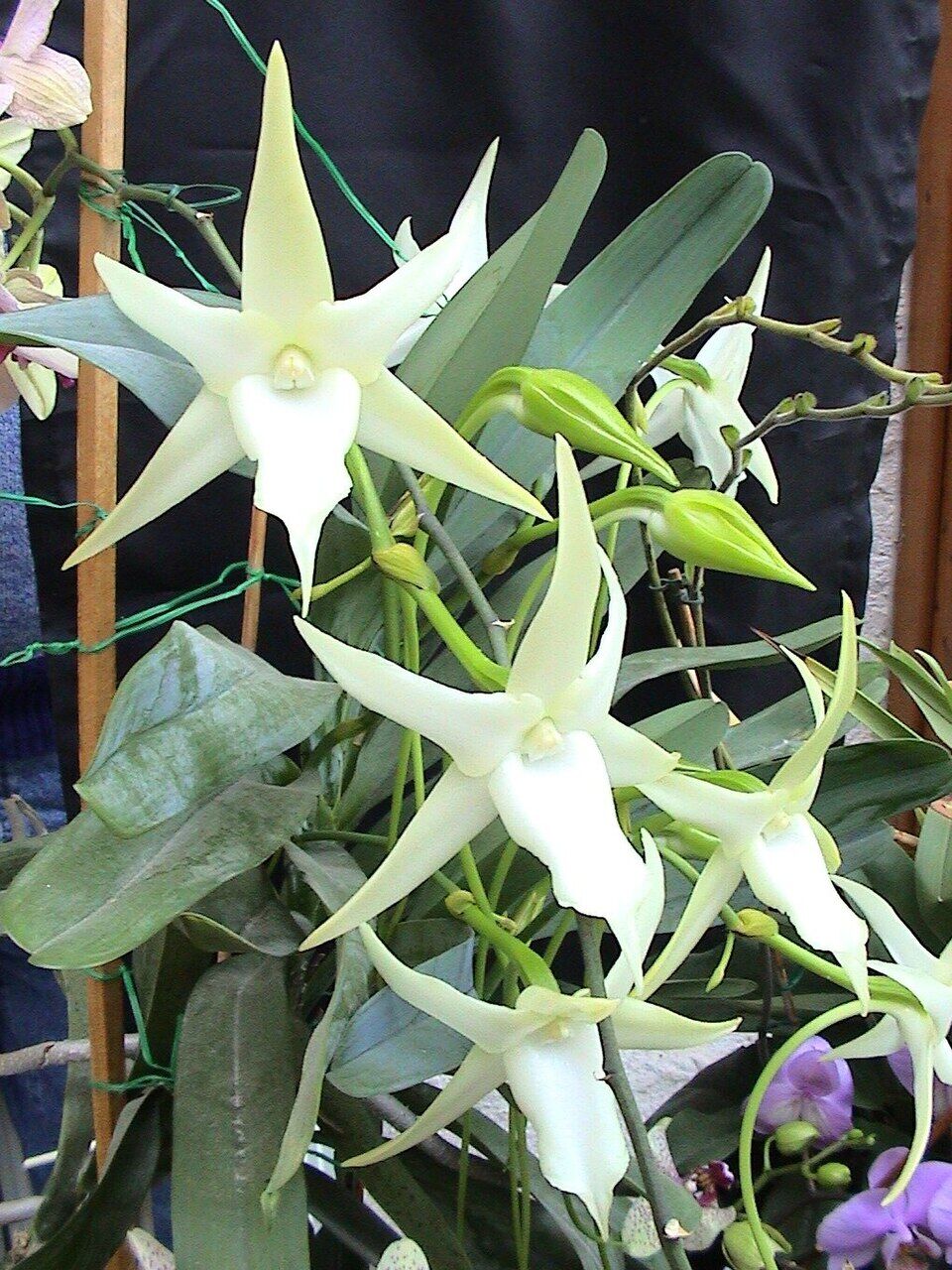
On 25 January 1862, a box of orchids reached Charles Darwin's home in Kent, England. A grower named James Bateman had sent it. Inside was a white, star-shaped flower from Madagascar. Hanging from the back of the flower was a thin green tube, almost a foot long. The flower's nectar sat only at the very bottom of that tube. Darwin wrote to a friend: "Good Heavens what insect can suck it."
Then he made a bold guess. A flower would not grow a foot-long tube for no reason, he said. So somewhere in Madagascar there must be a moth with a tongue ten or eleven inches long. When that moth pushed its head into the flower to drink, it would pick up pollen and carry it to the next flower. Nobody had ever seen such a moth. Many experts laughed at the idea. Darwin died in 1882 without seeing it either.
In 1903, two scientists, Walter Rothschild and Karl Jordan, described a moth from Madagascar with a tongue long enough. They named it praedicta, which means "the predicted one." And in 1992, 130 years after Darwin opened that box, the German biologist Lutz Wasserthal finally caught the moth with the orchid's pollen stuck to its tongue. Later he photographed it feeding on the flower. Darwin had read the flower like a clue and worked out the rest.


The essay starts with this story because it sums up everything that follows. Eleven short films sit inside these pages. They show a tree that keeps an army, a fruit that is really a closed garden, ants that farm, insects born already pregnant, a nearly blind shrimp and the fish that keeps watch for it, a fish that runs a cleaning service, another fish that fakes being that cleaner, and a wild bird that works with people. Each one is amazing on its own. Seen together, they make one point. Long before any creature could think things through, living things were already coming up with deals, farms, medicine, alarm systems, services and even frauds. Human inventiveness is not a complete break from nature. It is the newest and fastest part of something much older.
IA flower that predicted a moth
Look again at the orchid. The length of its tube is not an accident. Over many generations, moths with slightly longer tongues got more nectar. Flowers with slightly longer tubes made those moths push in deeper, so they picked up more pollen. Tongue and tube kept growing, each pushing the other. The result is two living things that each carry the shape of the other. The tube matches the moth's tongue. The tongue matches the tube.
Scientists call this co-evolution: two species shaping each other over time. What makes it remarkable is that neither one planned anything. Neither one knew the other existed in any way we would understand. Yet the flower holds such exact information about the moth that a scientist on another continent could work out the length of a moth he had never seen. In a sense, the orchid is a message. Nobody wrote it. It was built up slowly by countless small successes and failures. But it can be read.
The tube matches the moth's tongue. The tongue matches the tube. Each carries the other's shape in its own body.
There is a link here with some of the earliest human art. In caves from Spain to Indonesia, people pressed a hand against the rock and blew paint around it. When they lifted the hand, its outline stayed behind as a blank shape ringed with colour. The orchid's tube is a bit like that outline. Its shape comes from something that is not there most of the time: a moth that visits only at night, for a moment, and then leaves. Again and again, living things take the shape of what they need.
This is the first idea to keep in mind. We usually think of a plant or an animal as a separate thing with a clear inside and outside. The orchid shows something else. A living thing is also the result of its relationships: the shape left behind by a long give-and-take with everything around it.
IIDeals without words

The acacia and its ants
In the dry forests of Central America grows a thorny tree called the bullhorn acacia. Its thorns swell into hollow horns about the size of a thumb, and ants live inside them. The tree does more than put up with the ants. It feeds them. The tips of its leaves grow tiny golden beads full of protein and fat, and glands at the base of its leaves give off sugary nectar. So the ants get a home, food and drink, all from the tree.
In return, the tree gets an army. The ants patrol every branch. They sting animals that try to eat the leaves, kill caterpillars and beetles, and chew away any vine or young plant growing too close. In the 1960s the scientist Daniel Janzen removed the ants from a group of these trees to see what would happen. Without their guards, the trees were eaten, crowded out and overgrown. The ants are not a nice extra. The tree cannot survive without them.
Anyone who knows some history will recognise this deal. Someone rich who cannot move or fight pays a mobile, aggressive group to protect them, in exchange for food and shelter. Cities have hired soldiers this way. Kingdoms have kept guards on their borders. Every state pays for its police. The acacia arrived at the same deal without money, without a treaty and without a single thought.

The fig and its wasp
The fig and its wasp have an even stranger deal. A fig is not really a fruit in the usual sense. It is a hollow ball with hundreds of tiny flowers on the inside and one very narrow opening at the tip. No bee can reach those flowers. Only one creature can: a female fig wasp, about two millimetres long. She squeezes in through the opening and loses her wings doing it. Inside, she lays her eggs in some of the flowers, and while moving around she spreads pollen she brought from the fig where she was born. Then she dies inside.
Her young hatch in the dark. The males have no wings and never leave the fig. They mate with the females and chew a tunnel out. The females fly off, covered in pollen, to find another fig of the same kind and start again. Almost every kind of fig has its own kind of wasp, and each wasp depends on its fig. Scientists think this partnership is about 75 million years old. It is older than the end of the dinosaurs.
In India the fig is a sacred tree. The peepal and the banyan are both figs. The tree at Bodh Gaya, where the Buddha is said to have found enlightenment, is a fig. That means it exists only because a wasp smaller than a grain of rice kept crawling into the dark, generation after generation, and dying there. The Bhagavad Gita, in its fifteenth chapter, describes the world as a peepal tree growing upside down, with its roots above and its branches below. It is a nice coincidence that the real tree keeps its flowers hidden on the inside. Both ask us to look at things the other way round.
What do these two deals teach us? Something about where trade comes from. Since Adam Smith, economists have described trade as a human invention. But the acacia and the fig were trading for tens of millions of years before anyone used a coin. Dividing up work, paying for services, even punishing cheats (some fig trees drop young figs whose wasps arrived without pollen, so cheating wasps leave no young) were all worked out by nature first. People did not invent the deal. We found it again.
IIIThe first farmers
The leafcutter ants
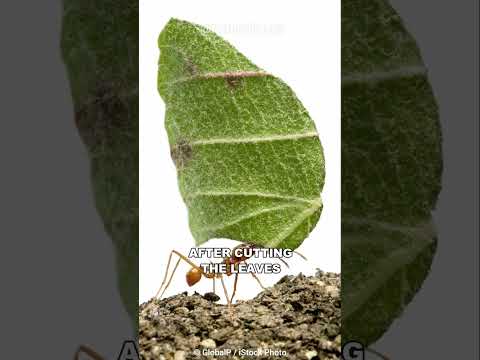
Watch a line of leafcutter ants crossing a rainforest floor and you will see what looks like a parade of tiny green sails. Each ant carries a piece of leaf many times heavier than itself. The ants do not eat the leaves. They take them underground, into nests that can hold millions of ants, chew them into a paste, and use the paste to grow a fungus. The fungus is what they eat. It grows small, food-rich tips that the ants pick and feed to their young. The fungus now depends so much on the ants that it does not grow anywhere else.
This is farming in every way that matters. There is a crop, a field, fertiliser, and workers who split the jobs of cutting, carrying, chewing, weeding and harvesting. There are even pests. A harmful mould attacks the fungus gardens, and the ants have an answer. They carry bacteria on their bodies that make chemicals which hold the mould back. In other words, they use antibiotics on their crops.
The time spans are striking. These ants started farming fungus about 50 to 60 million years ago. People started farming about 12,000 years ago. Alexander Fleming noticed that a mould could kill bacteria in 1928. The bacteria the ants use belong to the same broad group that gave us most of our modern antibiotics. When we went looking for medicines in the soil, we were walking into a pharmacy the ants had been running for millions of years.
The aphids
Ants have a second kind of farm too, and it is even stranger. Many ants keep aphids. These are small, soft insects that suck sap from plants and give off the extra sugar as a sticky liquid called honeydew. The ants stroke the aphids with their feelers to get a drop, drink it, and in return protect the aphids from ladybirds and wasps. Some ants even carry aphids to fresh shoots or keep their eggs safe through winter. It is like keeping cattle: one animal looking after another animal for its milk.
Aphids themselves show how freely life can change its own rules. In spring and summer, an aphid colony is almost all female, and the females have young without mating. They give birth to live babies, and those babies are born with babies already growing inside them. One aphid can carry her daughter, and inside the daughter, the start of a granddaughter, like a set of nesting dolls. This is how aphids can cover a rose stem in a few days. In autumn, the colony starts producing males, the aphids mate, and tough eggs carry the family through the cold. The same insect switches between two completely different ways of having young, depending on the season.

The aphid is worth a moment, because it spoils any easy story about the "wisdom of nature." The aphid is not wise. It is relentless. Its plan is to use up a short-lived supply of food as fast as it can, and it wins by sheer numbers. Not everything in nature is a beautiful partnership. A lot of it is brute force, and some of it is cruel. What we are looking at is not goodness. It is fit: how closely what a creature does matches what its situation needs.
IVThe digger and the lookout
The goby and the pistol shrimp
On sandy sea floors from the Red Sea to the Pacific, a small shrimp spends its life digging. It works all day, moving sand with its claws, propping up the walls of its burrow and clearing out whatever falls in. But it has a big problem. It can barely see, and outside its burrow it is easy prey for fish.
So it takes in a lodger. A goby, a small fish with very good eyesight, shares the burrow. When the shrimp comes out to work, it keeps one of its long feelers resting on the goby. The goby keeps watch. If a predator comes close, the goby flicks its tail. The shrimp feels it through its feeler and dashes back inside, and the goby follows. The shrimp provides the home. The goby provides the eyes. Neither could live there without the other.


This is the idea behind a guard, an alarm and a warning signal, worked out in living bodies. It is the same idea as a watchtower or a guard ringing a bell. It also shows something bigger: two incomplete creatures joining to make one complete team. Neither is enough alone. Together they can see, dig, hide and survive. We usually think of intelligence as something inside one head. The goby and the shrimp suggest that some intelligence lives between creatures, in the touch of a feeler on a fin.
The shrimp has one more surprise. Many of these digging shrimps are snapping shrimps, also called pistol shrimps, with one oversized claw. When the claw snaps shut, it shoots out water so fast that a bubble forms. When the bubble collapses, it makes a crack loud enough to stun small prey, and even a tiny flash of light. Scientists who studied this in 2001 worked out that, for a split second, the inside of the bubble gets at least as hot as about 5,000 degrees.
Scientists only found out in the 1930s that collapsing bubbles can give off light, and they are still working out exactly how. Engineers spend a lot of money stopping bubbles like these from damaging ship propellers. The shrimp turned the same force into a weapon long before we knew it existed. Here, as with the ants and their antibiotics, nature got there first in an area we are still learning about.
VTrust, and the fakes

The cleaner wrasse
Coral reefs have places that work like clinics. A small striped fish called the cleaner wrasse sets up a "cleaning station" in one spot and does a little dance to show it is open for business. Big fish, including groupers, eels and even sharks, come and wait their turn. They hold still, open their mouths and spread their gills, and the wrasse swims right inside to pick off parasites and dead skin. A hunter that could swallow the cleaner in a second lets it into its mouth. The big fish gets cleaned. The cleaner gets a meal.
This is a service business, with customers, a reputation to keep and checks on quality. Studies show that cleaners sometimes cheat by taking a bite of the customer's protective slime, which they like better than parasites. Customers who get cheated swim away or chase the cleaner. And cleaners behave better when other customers are watching. In other words, reputation keeps them honest. In 2019, researchers reported that cleaner wrasse seem to pass a version of the mirror test: they tried to scrape off a mark they could see only in a mirror. Whatever that result means, these fish are not simple machines.

The false cleanerfish
Wherever there is trust, someone will learn to fake it. On the same reefs lives the false cleanerfish. It has evolved to look almost exactly like the cleaner wrasse: the same thin body, the same blue and black stripe, even a version of the same dance. A customer fish comes up expecting to be cleaned and holds still. The fake darts in, bites a chunk out of its fin or skin, and swims off. It is a con artist. It does not steal by force. It steals by dressing up as an honest worker.
These two films, side by side, carry the main lesson of the whole collection. Once a system of trust exists, someone will take advantage of it. The fake needs the real cleaner: without a reef full of trusted cleaners, its disguise would be useless. Fake money depends on real money. A scam call pretending to be from your bank works only because people trust their bank. The false cleanerfish shows that cheating is not the opposite of cooperation. It is its shadow. They appear together, and the cheat lives off the same trust.
Indian storytellers understood this long before marine biologists did. The Panchatantra, put together more than two thousand years ago to teach young princes how to rule, is a book of animal stories: jackals who flatter lions, crows who trick owls, a monkey who talks his way out of a crocodile's jaws. Its idea is that animals are a school of strategy, and a ruler who understands how animals cooperate, deceive and survive will understand his own court. The reef, with its honest cleaners and its smiling fakes, is a Panchatantra written in fins.
Cheating is not the opposite of cooperation. It is its shadow, and it lives off the same trust.
VIThe bird that talks with people

The honeyguide
So far, every partnership in this essay has been between other creatures. There is one, in the dry woodlands of eastern and southern Africa, that includes us. A small brown bird called the greater honeyguide eats something almost nothing else can digest: beeswax. It can find wild bee nests hidden in hollow trees, but it cannot break into them. People can break into them, with axes and smoke, but they find it hard to locate them. So the bird finds the nest and the people open it. The honeyguide flies ahead in short, chattering hops, waits, flies on again, and leads the honey hunters to the tree. The people take the honey and leave the wax and young bees for the bird.
What makes this partnership special is that it uses calls, and the calls are local. The Hadza people of Tanzania call the bird with a whistle. The Yao honey hunters of northern Mozambique call it with a rolling trill followed by a grunt, something like brrr-hm. In 2023, the scientists Claire Spottiswoode and Brian Wood played recordings of both calls in both places. Honeyguides near the Hadza were more than three times as likely to start guiding when they heard the Hadza whistle than the Yao call. Honeyguides in Yao country preferred the Yao trill. The birds had learned the calls of their own local people. The researchers say the birds and the people have shaped each other's habits.
No one knows exactly how old this partnership is. It may go back to our early ancestors, who learned to use fire and smoke to raid bee nests. If so, it is one of the oldest working relationships between people and a wild animal, possibly older than our bond with dogs. And it is not always fair. Researchers report that some honey hunters destroy the wax on purpose, so the bird stays hungry and keeps finding nests. Even here, between people and the rest of nature, the same pattern shows up: a deal, a shared language, and the temptation to cheat.
The honeyguide is the turning point of this essay. The goby and the shrimp, and the cleaner and its customers, did not need us. With the honeyguide, we see ourselves inside the same web. We are not inventors standing outside nature. We are one more partner, learning a call, keeping a deal, and sometimes breaking it. The line between "nature's intelligence" and "human culture" does not run between the bird and the hunter. It runs through the conversation between them.
The line between nature's intelligence and human culture does not run between the bird and the hunter. It runs through the conversation between them.
VIIIs this intelligence?
A careful reader may object here. A tree does not "hire" anyone. An orchid does not "ask" a question. Ants do not "know" they are farming. Isn't all this talk of deals and clinics and con artists just us seeing ourselves in things that are not thinking at all?
That objection is correct, and it is also where things get interesting. The philosopher Daniel Dennett had a phrase for what we see in these films: competence without comprehension. In simple words, being good at something without understanding it. The acacia's deal works very well, but nothing in the acacia understands it. The design came from natural selection: a process that tries endless small changes, keeps what works and drops what does not, over huge stretches of time. No one is in charge. If there is intelligence here, it is in the process, not in the plant or animal.
Now comes the turn these films invite us to make. What is human invention, if not the same process, running faster and inside a head? The philosopher Karl Popper argued that from the simplest single-celled creature to Einstein, knowledge grows the same way: try something, test it against the world, get rid of what fails. The difference is what pays the price for a mistake. When a creature's "guess" about the world is wrong, the creature dies. When a scientist's guess is wrong, only the idea dies. That, Popper said, is what the mind does for us: it lets our ideas die in our place.
Seen like this, the human mind is not a break from nature's way of solving problems. It is a sped-up version of it. Natural selection needs millions of years and millions of deaths to get an orchid's tube to the right length. A human engineer can imagine a hundred tube designs, test them on paper and throw out ninety-nine before lunch. The method is the same: try many versions and keep the best. Only the material has changed, from bodies to ideas, and the speed has gone up enormously.
When we copied nature on purpose
For most of history, people rediscovered nature's inventions by accident. In the last hundred years we have started copying them on purpose. In the 1940s a Swiss engineer, George de Mestral, looked closely at the burrs stuck to his dog's fur after a walk and invented Velcro. Japanese engineers redesigned the nose of a bullet train after the beak of the kingfisher, a bird that dives into water with hardly a splash, and made the train quieter and more efficient. An architect in Zimbabwe, Mick Pearce, cooled a large office building using air vents modelled on termite mounds. From the early 1990s, computer scientists, starting with Marco Dorigo, wrote programs that find the shortest routes by copying how ants find the shortest path to food. Each time, a person read nature the way Darwin read the orchid.
There is another way our thinking comes from the things in these films. The human brain was itself shaped by the same slow process. Our ability to work with strangers, to remember who cheated us, to spot a disguise, to make deals and keep them, was shaped by hundreds of thousands of years of living in groups where those skills meant staying alive. The cleaner wrasse cares about its reputation; so do we. These are separate answers to the same problem. When people invented laws, money, contracts and police, we were putting into formal rules instincts that evolution had already roughly built.
So is this intelligence? Not in the usual sense, but more than we usually admit. It is not intelligence as something one mind owns. It is intelligence as something a whole system has: a process that learns over many generations and stores what it learns in the shapes of living things. Human thinking is that same thing, now inside one creature that can run the process in its imagination. In a way, we are how life learned to think about itself.
VIIILife makes its own shape
In 1917, a Scottish scientist named D'Arcy Wentworth Thompson published a big and unusual book called On Growth and Form. His point was that the shapes of living things are not random. A shell curls, a bone branches and a cell divides according to the forces acting on them: pulling, pressing and flowing. He said the shape of a living thing is "a diagram of forces." Look at a shape, and you can read the pressures that made it.
The films in this essay add another force to Thompson's list: relationships. The acacia's hollow thorns are shaped by its deal with the ants. The fig's closed ball is shaped by its partnership with the wasp. The goby's watchfulness and the shrimp's long feeler are two halves of one design, spread across two bodies. The honeyguide's ear for a Yao trill or a Hadza whistle is a design spread across two species, one of them our own. Living things do not just get their shape from outside. They create their own shape through the relationships they form, and those shapes then make new relationships possible. The orchid shaped the moth, and the moth shaped the orchid. Nothing living is made alone.
This may be the most important idea in these short films, and it goes beyond biology. The lines we draw around individuals are real, but they are not the whole story. Leafcutter ants without their fungus would starve; the fungus without the ants could not survive. A fig without its wasp has no seeds. Even our own bodies are partnerships. The tiny power units inside our cells came from bacteria that moved into the cells of our distant ancestors long ago, and the microbes in our gut help us digest food. Being alive means being part of a deal.
Think of a clay pot standing in a river. The pot gives the water inside it a shape, but it is the same water on both sides of the wall. That is the picture these films leave us with. Every living thing has a real boundary, and that boundary gives it a form it can act from. But the same current runs through the orchid and the moth, the ant and its fungus, the hunter and the bird. The human mind, with its labs, machines and computer programs, is one more turn in that current. It is newer and faster than the others, and it can look back and understand the patterns that made it. But it is not separate. Our inventions are life's inventions, carried on in a new way.
CodaThe waiting flower
Let us go back, one last time, to Madagascar and the orchid. For 130 years after Darwin's prediction, the flower bloomed in the forest every season while people waited to see the moth they had only guessed at. The flower did not need us to see it. The moth came anyway, every night, as it had since long before there were people. The orchid was not waiting. Our understanding was.
That is the attitude these films ask of us. Not the pride of an inventor who thinks he made something from nothing. And not the sentimental idea that nature is a kind teacher. Just careful, humble attention. All around us, in every hedge, reef and forest floor, nature has already solved problems that we have not even named yet. Each one is a question shaped like an answer, a flower tube waiting for its moth. At its best, human inventiveness is simply being willing to look closely enough, and long enough, to read what is already there.
In short
- Darwin looked at an orchid with a foot-long tube and predicted a moth no one had seen. The moth was named in 1903 and seen feeding on the orchid in 1992. Living things carry information about their partners.
- The acacia that keeps ants as guards, and the fig that lives with its wasp, show that trading, paying for services and punishing cheats existed millions of years before human economies.
- Ants were farming fungus, using antibiotics and keeping aphids long before people farmed or discovered penicillin.
- The goby and the shrimp show intelligence that lives between two creatures. The cleaner wrasse and its fake show that trust and cheating appear together.
- Honeyguide birds learn the local calls of the people they lead to honey. People are part of the same web, not outside it.
- Human invention works like evolution: try many things and keep what works. The difference is that we do it in our heads, and much faster.
- Living things get their shape from their relationships. Nothing living is made alone.
The reel
- The orchid that helped inspire Charles Darwin · Royal Botanic Gardens, Kew
- Morgan's sphinx moth and Darwin's orchid · FACTgenics
- This tree hires an army of ants · Wild-Grapy
- Nature's perfect partners: figs and wasps · Nature's Untold Stories
- Leafcutter ant: the farmer ant · Nature Lens
- Born pregnant: aphids invade with an onslaught of clones · Deep Look
- Goby fish and pistol shrimp · Wildlife Depths
- Unlikely allies: pistol shrimp and gobies · The Nature Figures
- Cleaner wrasse: a shark's best friend · PET & WILD
- False cleanerfish: the ocean's ultimate con artist · Animal Enigmas
- Best teamwork: honey in Africa · Jungle Journey
For further reading
Charles Darwin, On the Various Contrivances by which British and Foreign Orchids are Fertilised by Insects (1862) · D'Arcy Wentworth Thompson, On Growth and Form (1917) · Bert Hölldobler and E. O. Wilson, The Leafcutter Ants (2011) · Merlin Sheldrake, Entangled Life (2020) · Daniel Dennett, From Bacteria to Bach and Back (2017) · Karl Popper, Objective Knowledge (1972) · Janine Benyus, Biomimicry (1997) · Arditti, Elliott, Kitching and Wasserthal, "'Good Heavens what insect can suck it': Charles Darwin, Angraecum sesquipedale and Xanthopan morganii praedicta," Botanical Journal of the Linnean Society (2012) · Lohse, Schmitz and Versluis, "Snapping shrimp make flashing bubbles," Nature (2001) · Spottiswoode and Wood, "Culturally determined interspecies communication between humans and honeyguides," Science (2023)