Part Three · Meaning and the Self
Chapter 9
What Things Mean to Us
People act according to what things mean to them. The same tree can be food, a god, wood to sell or a line in a government rule book.
Featuring Weber · Martineau · Schutz · Berger & Luckmann · Blumer
Assisted and Curated by Claude, Referenced and Collated by me
One tree, many trees
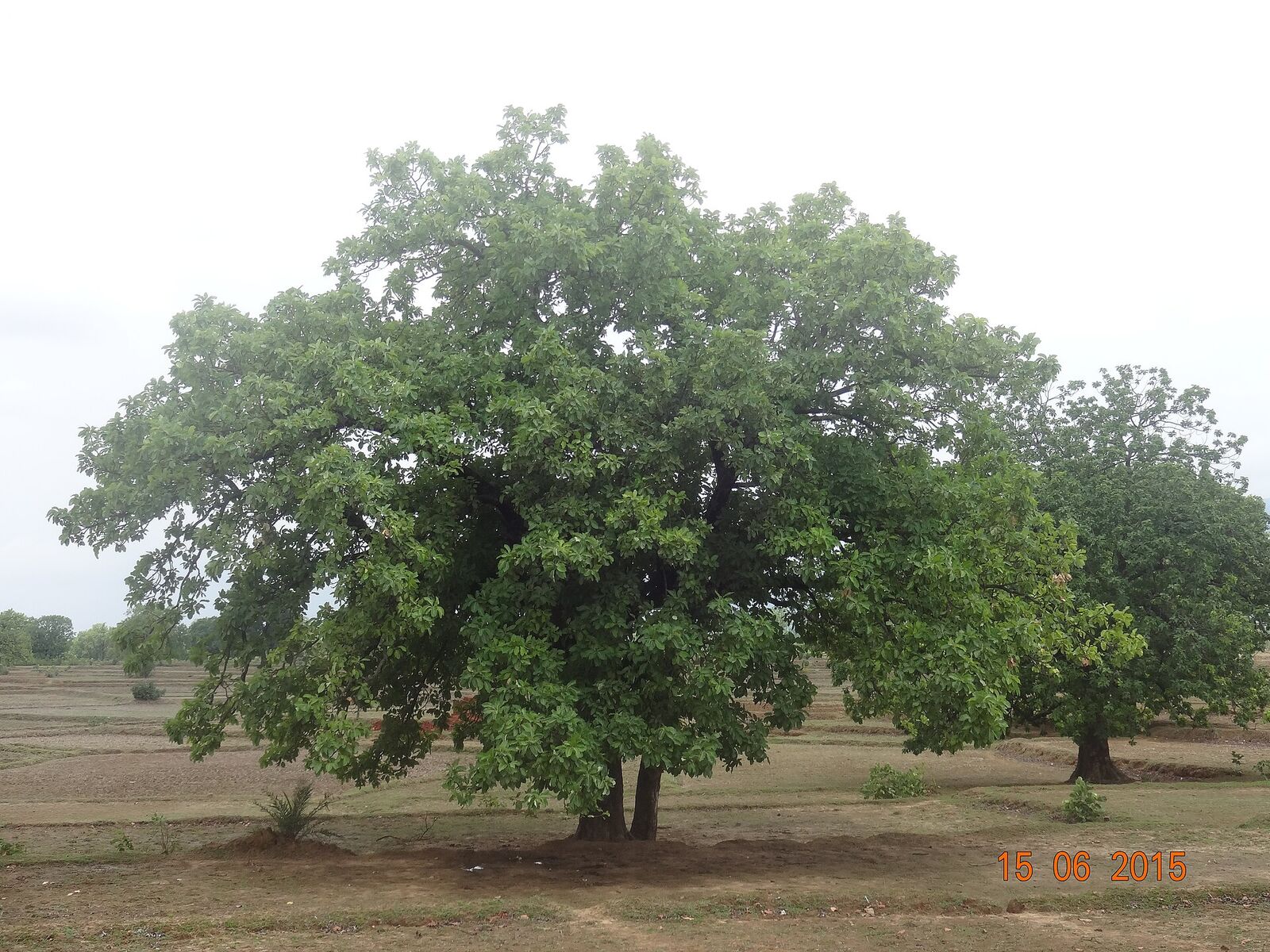
Think of the mahua trees where the Thursday market meets. What is a mahua tree?
To a scientist, it's a tree that grows in the dry forests of central India and drops soft, cream-coloured flowers at night in spring. To a forest family, it's much more! Before dawn, women and children sweep under the trees and gather the flowers. They eat them fresh or dried, store them for hard months and sell them at the market. They also make a drink from them that is offered to ancestors and gods at festivals and weddings. The seeds give oil for cooking and lamps. Some trees are home to spirits and are honoured at festivals. Families know which trees they may gather under, even though it's not written in any register.

To the forest department, the same tree is a species in a plan, and its flowers are a "forest product" with rules. To a tax inspector, the drink might be illegal. To a timber dealer, it's wood to sell. To a health officer, the drink causes problems in families. To an activist, banning it is an attack on tribal culture. To a company, it's a new ingredient for a fancy drink to sell in cities!
Everyone looks at the same tree but sees something different, and acts differently: gathers it, worships it, makes rules about it, cuts it down or bottles it. The tree itself doesn't decide any of this. What decides it is what the tree means to each person. To understand what people do, we must understand what things mean to them.
Understanding from the inside
Max Weber said society is made of people's actions, and what makes an action social is the meaning behind it. He said sociology should try to understand actions from the inside. The German word for this is Verstehen (say "fer-SHTAY-en").
A scientist studying falling rocks doesn't need to ask what the rocks want. But imagine a man chopping wood. Is he earning money? Getting firewood for winter? Letting out anger after a fight? Exercising? It looks the same, but it means something different each time! Or think of a blink and a wink. They look almost the same, but a wink is a secret message. To understand people, we have to interpret.
Weber said interpreting isn't just guessing; it must be checked against evidence. He described four kinds of action. Some actions are about getting results, like a trader comparing prices. Some are about doing what's right, whatever the cost, like an official refusing a bribe even if it costs him. Some come from feelings, like a hug at a reunion. And some come from tradition, done because it's always been done, like an offering at a festival.
How faith built the counting house
Weber's most famous example was about where modern business came from. It shows how meanings, not just money, can change the world.
Weber noticed that trading and wanting money existed everywhere in history. What was special about modern business in northwest Europe was a strict, careful, never-ending way of making money and putting it back into the business, with careful accounts. He saw it in the sayings of Benjamin Franklin, like "Time is money". For Franklin, making money wasn't for fun; it was a duty. Weber said that in most of history, this attitude would have seemed very strange!
Weber found its roots in a Christian movement called Protestantism, especially groups called Calvinists and Puritans. They believed hard work was a calling from God. Calvin taught that God had already decided who would be saved, and nothing a person did could change it. Imagine how worried you'd feel, never knowing!
Weber said preachers then taught that working hard and living simply could be a sign that you were saved. If hard work made money, you couldn't spend it on fun, because that was a sin. So you saved it and reinvested it. This careful, saving lifestyle was exactly what modern business needed! The Puritans didn't plan to create modern business. It happened by accident, out of their religious worries.
The Puritan wanted to work hard; we are forced to.
Weber didn't say religion was the only cause. He said money and resources mattered too. People still argue about his idea, but his method lasts: the meanings people give their actions can change whole economies.
India's merchants
Weber thought Hindu ideas about karma and caste made people accept things as they were and discouraged business. Many people disagree, because India has had brilliant merchant communities for centuries: Marwaris, Chettiars, Jains, Gujarati traders, Parsis and Bohras. They had clever systems of credit, accounts and long-distance trade, and lived by saving, simple living and reinvesting, very like Weber's Puritans! Jain merchants, who follow strict rules of non-violence and simple living, mixed religion and business success. Marwari families spread from Rajasthan to trading towns all over India.
This actually supports Weber's method: religious and moral meanings do shape how people do business. Weber's mistake was reading old religious books instead of watching how India's merchants actually lived.
The iron cage
Weber ended with a sad picture. The Puritans chose their hard-working life freely, out of faith. But once modern business was set up, it didn't need religion anymore. It became a machine that forces everyone to keep up. Weber said worrying about money should be like a light cloak you can take off anytime. Instead, it had become an iron cage.
Anyone who feels they can never rest without feeling guilty, who checks messages at midnight, or who treats every hour as a step toward a future that never arrives, knows the iron cage. They work not because they think it's a sign of God's favour, but because the system leaves them no other way to live.
How to study a society
In 1838, Martineau wrote what was really the first guide to studying society. Her advice still sounds modern!
She said: don't just talk to a few important people, and don't judge everything by how things are done at home. Try to imagine others' lives with sympathy. But also, don't only listen to what people say; look at what they actually do. Look at prisons, hospitals, graveyards, servants, songs and festivals. Above all, look at how women and the weakest people are treated.
To understand what a society means by justice, don't just read its laws; visit its jails and see who is there. To understand equality, see who sits where at a village feast, who draws water from which well and which children go to which schools. Martineau judged America by its own promises of freedom and equality, and found it falling short: it had slavery, and women couldn't vote or own property. Her lesson: judge a society by its own promises, and notice who is left out.
The world we take for granted
Schutz asked: how do ordinary people make sense of their everyday world?
He said that most of the time we take the world for granted. We assume the sun will rise, the shop will open and money will work. We don't question everything, because then we'd never get anything done! We use mental "recipes" for familiar situations: we know what a postman, a shop or a government office is like. When you walk into a new office, you already expect a counter, a queue and forms. Schutz called this our "stock of knowledge". A doctor knows things a farmer doesn't, and a farmer knows things a doctor doesn't.
Imagine a woman from a forest village visiting the district office for the first time to get a certificate for her son. The clerks know everything without thinking: which window, which form, which papers. She has to figure it all out, nervously. Her knowledge, so rich and exact in the forest, doesn't work here. The clerks might think she's slow, but really she's just entered a world whose recipes nobody taught her.
Schutz wrote about the stranger when he was a refugee himself. A newcomer finds that nothing is obvious. He has to learn on purpose what locals learned without noticing. That's hard, but it also lets him see how odd some local customs are, which locals can't see. Think of a tribal student in a city hostel discovering a hundred unspoken rules about dressing, eating and talking to teachers, or a new officer posted somewhere with a strange language and customs.
Schutz said everyday life is just one "world of meaning". There are others: dreams, play, prayer, art and science. Moving between them gives a little shock, like waking from a dream or leaving a cinema. His own life, switching between banking and philosophy every day, was just like that!
How reality is built
They asked: how does the world we live in come to feel so solid and real that we forget people made it? They described three steps. First, people create their world through actions, words, tools and rules. Second, what they create starts to stand on its own, like a rule that seems to exist by itself. Third, each new generation absorbs it and thinks, "That's just how things are."
They gave a great example. Imagine two people stranded on an island. At first, they make everything up as they go. Soon they form habits: one fishes in the morning, the other collects firewood, and they eat at a set time. Habits save effort. Soon each expects the other to do their part: "He's the fisher; she looks after the fire."
Now imagine they have children. The parents remember making up the arrangements and could change them. But to the children, it's just how things are! When the children ask why, the parents invent reasons: "This is how we do it." Later the reasons get bigger: "Our ancestors did it", "The gods commanded it" or "It's human nature." That's how traditions and big systems of belief grow.
People make society; society becomes real; and society makes people.
Forgetting we made it
Berger and Luckmann warned about forgetting that people made these things, and treating them as laws of nature or the will of God. When we forget we made the world, we forget we can change it! A caste order called divine, a market called a force nobody can resist, boys' and girls' roles called pure biology, or an office rule treated as if it always existed: each is something people made. Remembering that is freeing.
They also said our beliefs feel true when everyone around us shares them. They called this a plausibility structure. If you move away from that group, say to a city hostel full of people who think differently, your old beliefs may start to feel less certain, not because someone proved them wrong, but because nobody around you shares them anymore. Online bubbles, where apps only show us what we already agree with, work the same way.
Meanings on the move
Blumer had three simple ideas. One: we act toward things based on what they mean to us. Two: those meanings come from interacting with others, since nobody invents the meaning of a mahua tree alone. Three: we keep interpreting and changing meanings as we go. A young forest guard might first see the mahua drink at the market as a crime. After a year living among the villagers, he may see it as part of their religion, and act differently.
Blumer said society isn't moved by things like "income" or "class" acting by themselves. People act, based on how they interpret things. So researchers should get close to people, watch them in real life and see the world from their point of view.
He also explained prejudice in an interesting way. He said it isn't mainly about one person's hatred. It's a group's feeling about where it stands compared with another group. Prejudice gets worse when the group on top feels its position is threatened, when the other group starts claiming rights or doing well. That's why caste violence sometimes happens not where Dalits are most oppressed, but where they've started to stand up for themselves: when a Dalit groom rides a horse to his wedding, or when Dalit families buy land or stand for election. Blumer showed it's about defending a group's position.
The tree, once more
Stand under the mahua tree one last time. Weber teaches us to ask what the tree means to each person. Martineau teaches us to look at what people do, and how the woman gathering flowers before dawn is treated. Schutz shows that everyone brings their own taken-for-granted knowledge. Berger and Luckmann remind us that the forest department's rules were made by people and can be changed, and new laws have started recognising forest dwellers' rights. Blumer shows that the forest guard and the villager can change each other's understanding of the same tree.
But all these thinkers take one thing for granted: the person doing the interpreting. Where does a "self" come from? Some American thinkers said the self isn't born. It's made in the mirror of other people's faces.