Part Two · Who Owns, Who Works
Chapter 8
The World as One Big Machine
Rich and poor places aren't just "ahead" and "behind". They're parts of one big machine that moves riches in one direction.
Featuring Tawney · Desai · R. Mukherjee · Wallerstein · Arrighi · Harvey
Assisted and Curated by Claude, Referenced and Collated by me
Muslin and iron
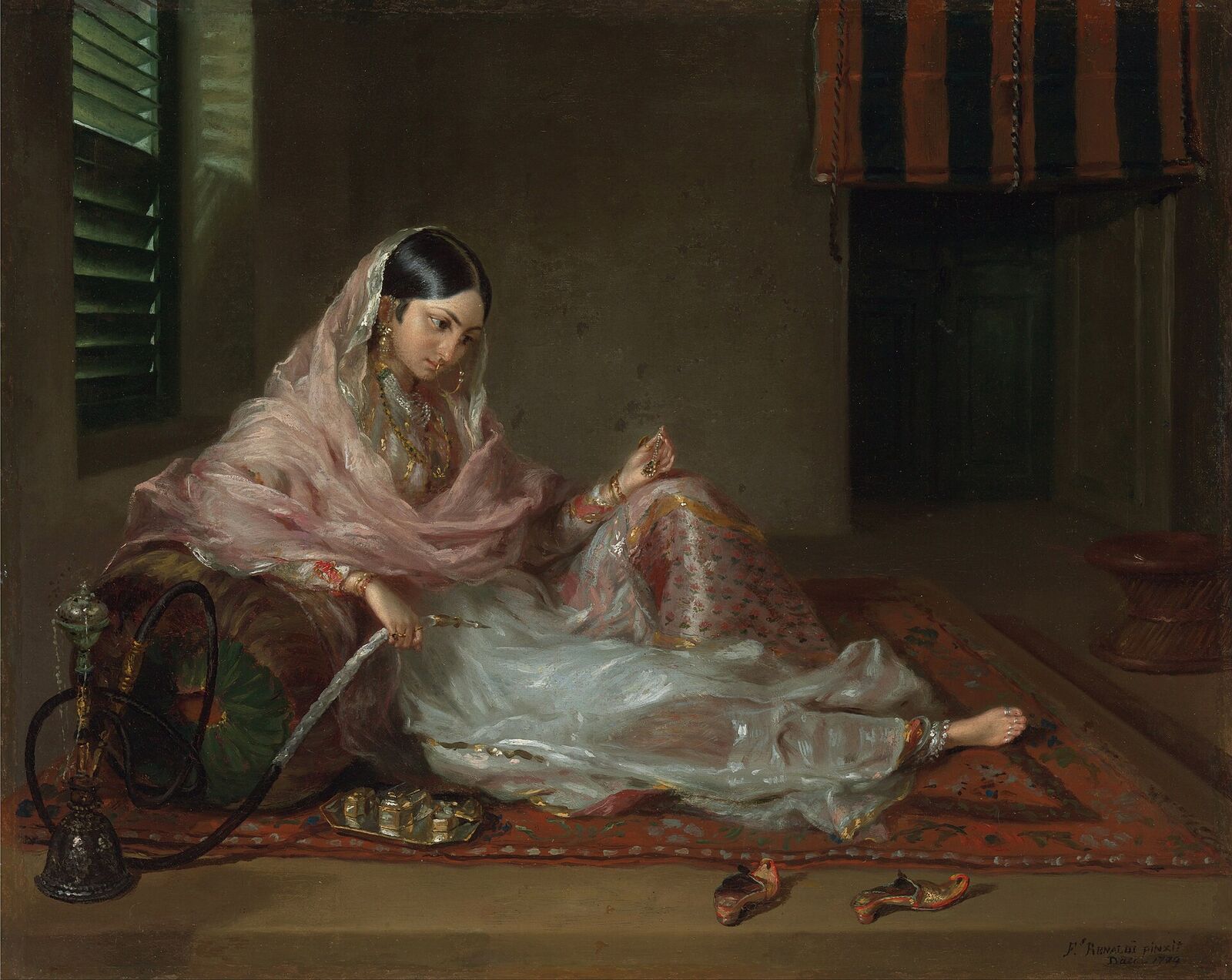
About four hundred years ago, weavers in Dhaka made cotton cloth called muslin that was so fine people called it "woven air". A long piece could pass through a finger ring! India was one of the world's great makers of things. Its cloth was sold from Southeast Asia to Africa and in the shops of London. It was so popular that English wool makers got their government to ban it!
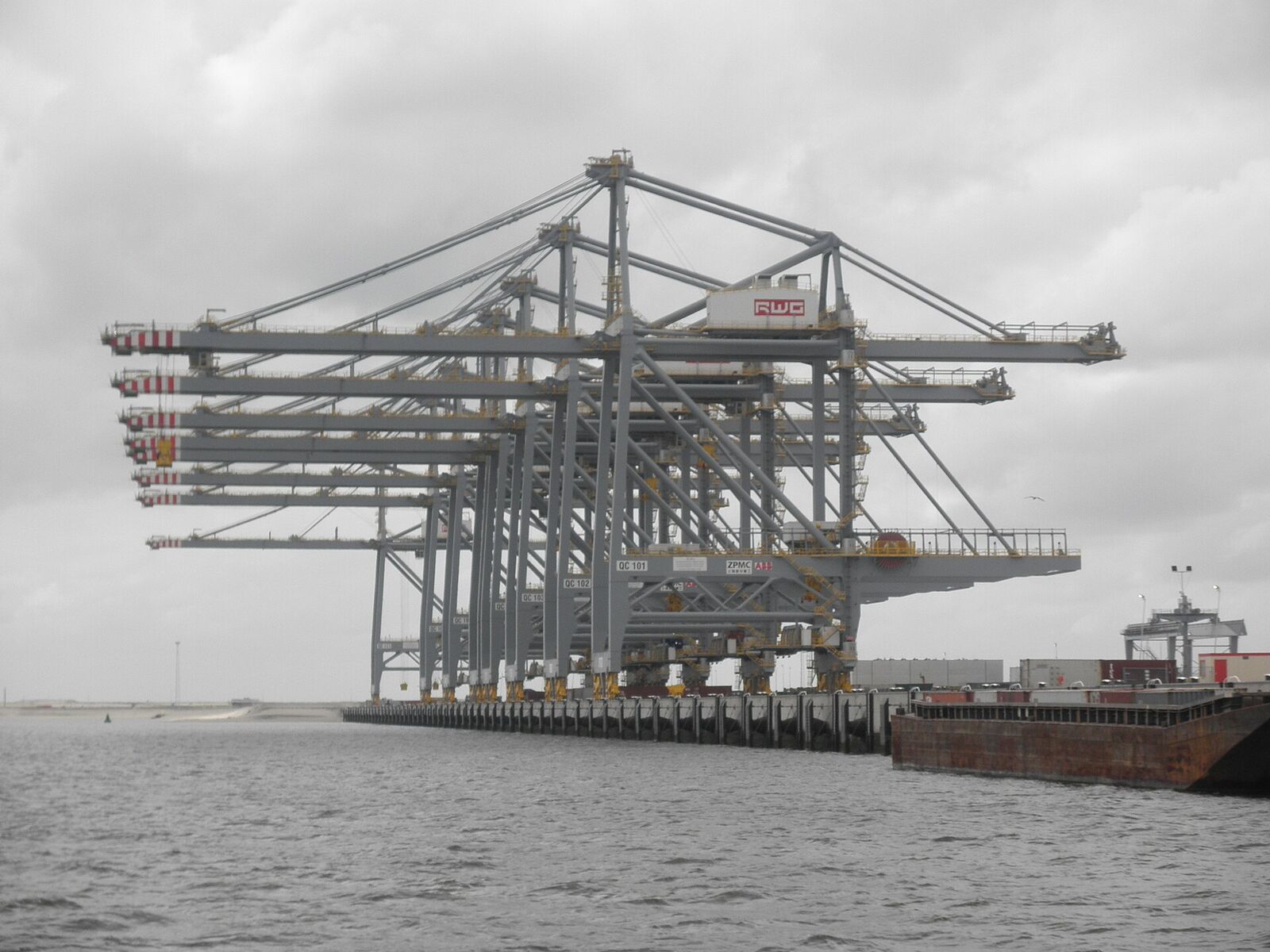
A hundred and fifty years later, everything had flipped. Factories in England made cheap cloth from cotton grown in India, and sold it back in India more cheaply than hand-weavers could. Weaving towns fell into poverty. India was turned from a maker of fine goods into a supplier of raw materials like cotton, indigo, jute and tea, and a market for British factory goods.
Now jump to the Bailadila hills in Bastar. Some of Asia's best iron ore lies there, under forests that are sacred to the Gond and other Adivasi people. Since the 1960s, a special railway has carried the ore to the port of Visakhapatnam, to feed steel plants in Japan and across India. Yet the villages around the mines have stayed among the poorest in the country, without enough roads, schools or hospitals.
Muslin and iron are two parts of one story. They raise a big question: why are some places rich and others poor, even when the poor places have lots of resources and skilled people? Many people used to say poor places are just "behind" and will catch up. The thinkers in this chapter disagreed. They said rich and poor places are parts of the same machine, built over hundreds of years to move riches in certain directions.
Is the economy fair?
Tawney said the economy should be judged by whether it's fair. Long ago in Europe, religion taught that prices should be fair and that the rich had duties to the poor. Slowly, people started saying the economy had its own rules and shouldn't be questioned. Tawney thought that was wrong.
He said owning things should come with duties. A landlord who collects rent from land he never visits or improves, or a shareholder who profits from a mine where workers are unsafe, is taking without giving back. He laughed at the idea that inequality is fine because a lucky few can climb out of it. He wanted everyone to have good schools, health care, homes and meaningful work.
Tawney's ideas echo in Gandhi's idea that the rich should act as caretakers of their wealth, and in India's Constitution, which asks the government to stop wealth from piling up in just a few hands. He reminds us that the economy isn't a force of nature. People made it, and it can be made fairer.
What made Indian nationalism
In 1948, Desai wrote that the freedom movement didn't just come from a timeless national spirit or from great leaders alone. British rule had changed India: railways connected the country, English schools spread, and new groups appeared, like factory owners, lawyers, teachers, factory workers and poor farmers in debt. Desai said nationalism was these new groups speaking up.
He traced how the movement grew: from polite requests by educated people, to boycotts of British goods after 1905, to Gandhi's huge movements that brought in farmers and workers. Desai thought the leaders were mostly from wealthy and middle-class backgrounds and kept the movement from becoming too radical. You don't have to agree with all of it to see his main point: a country isn't just an idea. It's built on real groups of people, and their interests shape its politics.
The company that became a ruler
Mukherjee studied how the East India Company, set up in 1600 to buy spices and cloth, ended up ruling most of India. After it won the right to collect taxes in Bengal in 1765, it used Indian money to buy Indian goods! He also studied the terrible Bengal famine of 1943, when about three million people died. He showed that a famine can happen even when there's enough food overall, because poor people can no longer afford to buy it. The economist Amartya Sen, who saw that famine as a child, later became famous for the same idea.
The world system
Wallerstein showed how, starting about five hundred years ago, a world economy centred on northwest Europe grew until it covered the whole planet. He said the world is divided into zones.
The core is the rich centre, first the Netherlands and England, later America, Western Europe and Japan. It makes high-value things and has strong governments. The periphery is the edge: places that supply raw materials and cheap labour, often with weak or colonial governments. The semi-periphery is in between. Riches flow from the edge to the centre. So the centre getting rich and the edge staying poor aren't two separate stories. They're one story!
The centre getting rich and the edge staying poor are two sides of one story.
Wallerstein's idea explains muslin and iron. India wasn't always at the edge; its cloth once beat Europe's. But through conquest, taxes and Britain's factories, India was pushed to the edge. In 1901, Dadabhai Naoroji calculated the drain: every year, money flowed from India to Britain, like salaries and pensions of British officers, and India got nothing back. Indian workers were shipped to sugar farms in Fiji, Trinidad and Mauritius, and tribal families were lured to tea gardens in Assam with false promises.
After 1947, India tried to move closer to the centre, first by building its own factories and later, after 1991, by joining world markets. Today it sells software and medicines around the world, yet many people still live very poor lives. Inside India, the same pattern repeats. The forest belt of central and eastern India, home to many Adivasi communities, sends iron, coal and timber to cities and factories elsewhere, but stays among the poorest regions. It's like an edge inside the country.
Critics said Wallerstein ignored culture and couldn't explain how countries like South Korea grew rich so quickly. But he changed how we think. After him, you can't explain why a district is poor without asking where it fits in the bigger system.
Empires rise and fall
Arrighi found that world leadership has passed through four great powers: first Genoa (in Italy), then the Dutch, then the British, then the Americans. Each time, a similar pattern happened. First the leader grew by trading and building things like ships and factories. Later, when that got harder, its money moved into banking and lending. That brought a last golden period, but it was a sign of autumn: the leader was about to be replaced.
In the 1990s, Arrighi said America's banking boom was a sign that its time at the top was ending. The big financial crash of 2008 seemed to prove him right to many people. He thought China might lead the next cycle. Whether or not he's right, he taught that the economy isn't timeless. It has seasons of rising and falling.
Money and concrete
Harvey showed how money shapes places: cities, roads, ports and whole landscapes. Sometimes there's so much money piling up that it can't find a use. One answer is to build: highways, towers, ports and new cities. China built so much so fast that it used more cement in three years than America used in a hundred! But building is only a temporary fix. Some buildings end up empty. Near many Indian cities stand rows of unfinished flats, and their buyers are still paying loans for homes they can't live in.
Harvey's most important idea is accumulation by dispossession: getting rich by taking things away from others. Long ago in England, shared village land was fenced off and farmers were pushed out. Harvey said this never really stopped. Land is still taken for mines, dams and factories, shared resources are made private, and forest people are moved away.
India has many examples. Around 2007, farmers fought plans to take their land for a car factory at Singur and a chemical hub at Nandigram in West Bengal. There were violent clashes, and the car factory moved to Gujarat. In Odisha, fishing and farming communities resisted a big steel plant for years until it was dropped. Each time, the language of "jobs and growth" met the language of "our land and our way of life". Harvey doesn't say who's right each time, because new projects can bring real benefits. But he says we must always ask: who gains, and who loses?
"Jobs and growth" and "our land and our life" have been talking past each other for two hundred years.
From the forest to the port
Stand at the edge of the forest near the iron hills and look again. The railway taking ore to the coast links the edge to the centre. The mines turned a forest that people saw as sacred into a company's property. The poverty of the villages isn't because they're "backward"; it's because riches flow outward, to ports and cities. And Tawney's question hangs over it all: whom does this serve?
But seeing only machines and systems is risky. People aren't just parts of a machine. They make meanings, understand their lives in their own ways, and sometimes say no. So next we swap the telescope for a microscope and look at what actions mean to the people doing them.