Part Two · Who Owns, Who Works
Chapter 4
The Secret Life of Things
Everything we buy carries the hidden work of people we never see. Thinkers asked why we see only the price, and not the people.
Featuring Marx · Simmel · Lukács
Assisted and Curated by Claude, Referenced and Collated by me
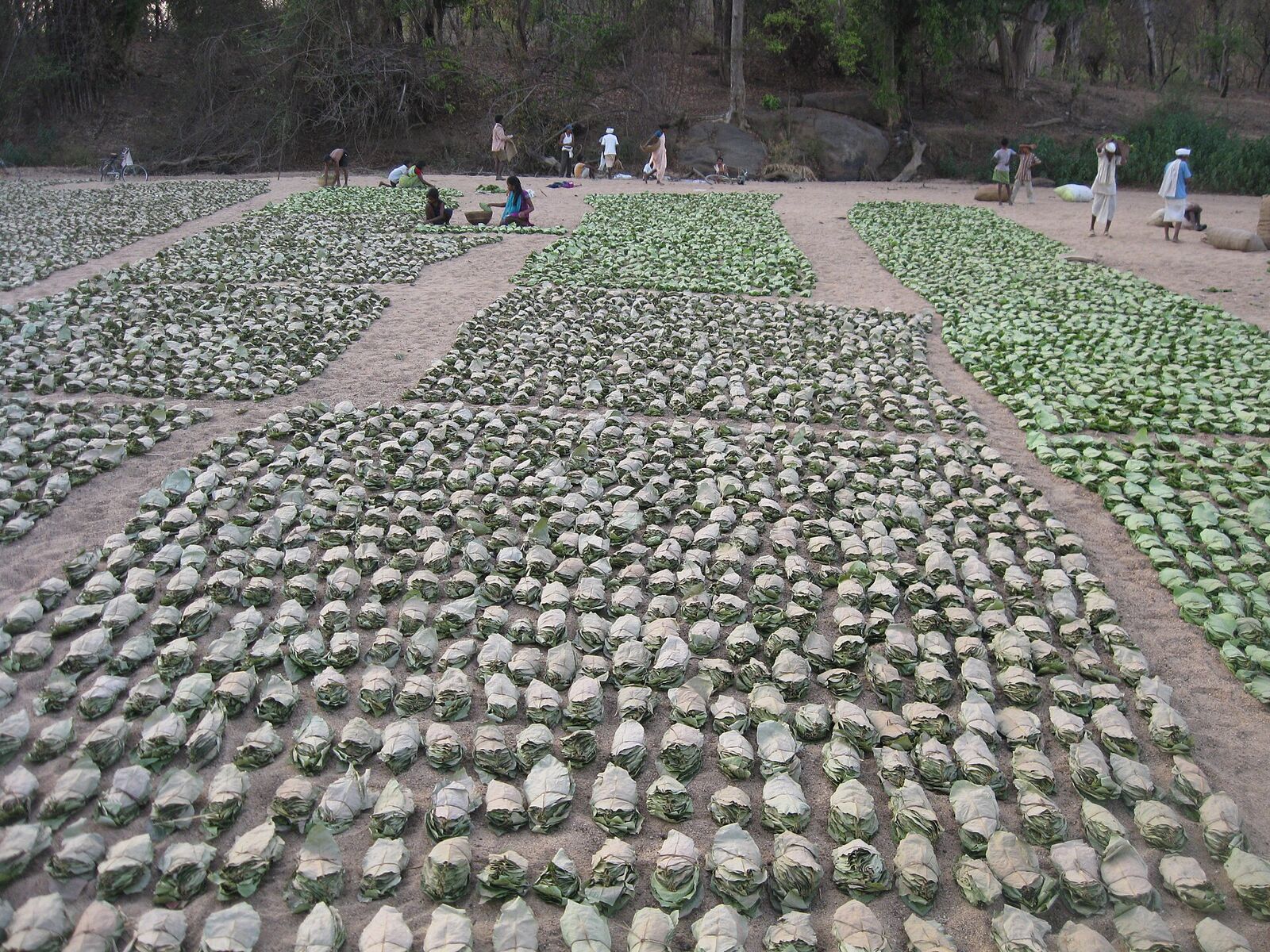
A bundle of leaves
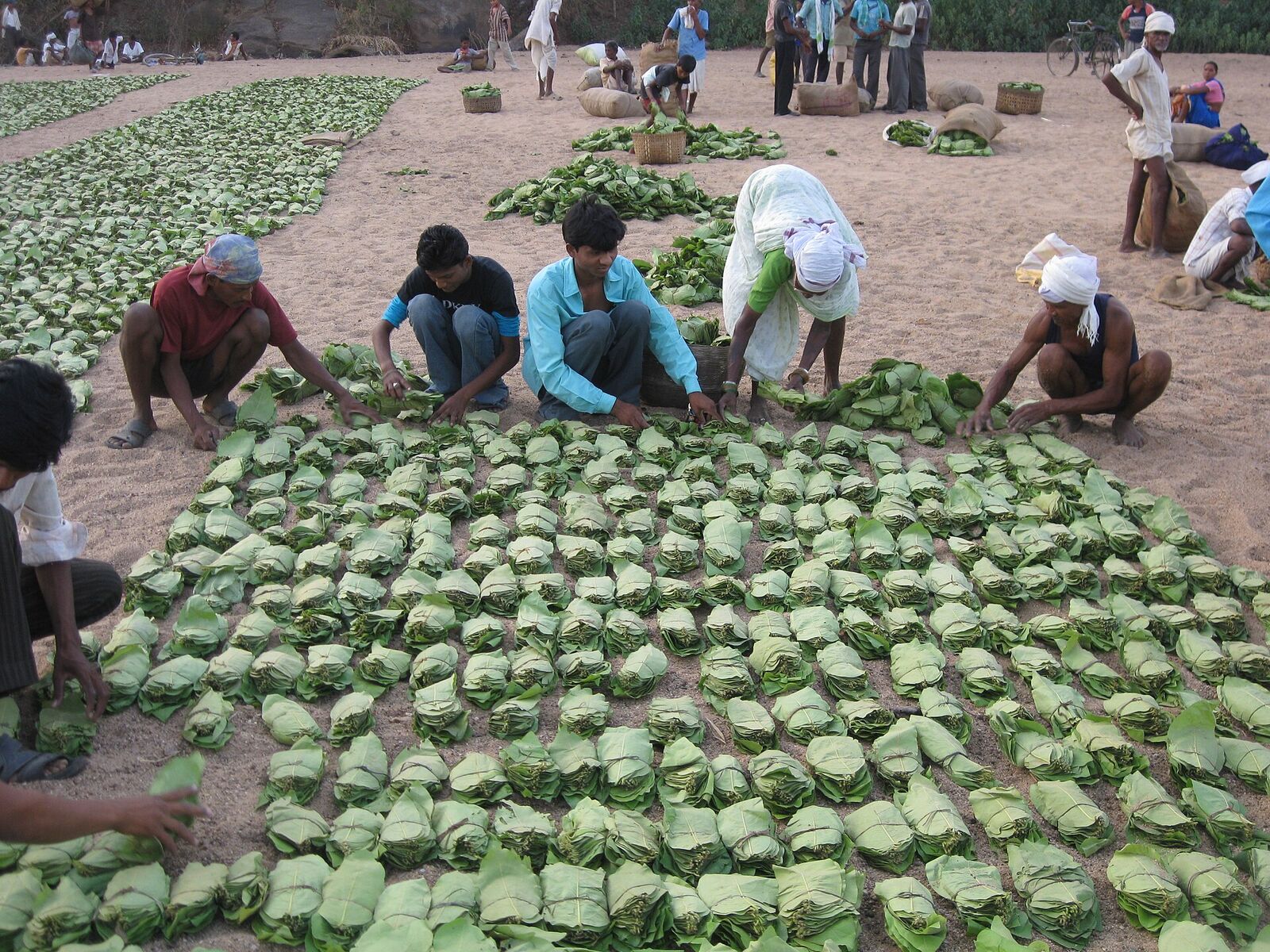
In the hottest weeks of summer, whole families in forest villages of central India wake before dawn to pick leaves from the tendu tree. They work fast before it gets too hot, filling cloth bags. By late morning they're home, sorting the leaves and tying them into bundles of fifty. In the afternoon they carry the bundles to a collection point, where an agent counts them and writes them in a register. Later they're paid a fixed rate. For many families, these few weeks bring some of the most important money of the whole year.
The leaves are dried, packed and trucked far away. There, other workers, mostly women and girls, roll the leaves around a pinch of tobacco to make bidis, cheap hand-rolled cigarettes. They're paid for every thousand they roll, often working from dawn to dusk with stained fingers and tobacco dust in the air. (Smoking is very harmful to health!) The bidis get a brand label and are sold at shops all over India.
When someone buys a bundle of bidis, what do they see? Just a small object and a price. They don't see the family in the forest at dawn, the women rolling in a courtyard in another state, the agent, the warehouse, the traders or the brand owner. All those people and all their hours are folded invisibly into that little bundle. The price seems to belong to the thing itself, like its weight or colour. The people behind it have vanished.
This "vanishing" is one of the most important ideas in social thought. The man who named it spent his life poor in London, trying to explain it.
The man in the reading room
Marx said that before people can pray, think, make laws or write poems, they must eat, have shelter and clothes. How they organise this, especially who owns the land, tools and factories, and who has to work for them, shapes everything else. He famously said that how people live shapes how they think.
That's a big claim, and many thinkers in this book argue with it. But Marx's sharpest ideas are about how buying and selling work, and they reveal what's normally hidden. The first is about ordinary things we buy.
Why things seem magical
Marx's famous book, Capital, starts with something simple: a commodity, which means anything made to be sold. It seems ordinary, he said, but it's actually very strange!
Why strange? In a market, very different things are swapped as if they're equal: a coat for some cloth, tendu leaves for rice, bidis for money. What makes them comparable? Marx said it's the human work that went into making them. Behind every price is a certain amount of people's labour.
But in the market, the people disappear. We don't see people swapping their work; we see things swapping with things, and prices going up and down as if they had a life of their own. "Tamarind is up this week! Cotton prices crashed!" We talk about the market like the weather. Marx called this fetishism, like believing an idol made by people has magic powers. We forget that prices are really people's work and relationships, frozen into objects.
A relationship between people looks like a relationship between things.
Think of a smartphone. It's shiny, with a price and a brand. But inside it is metal dug by hand, sometimes by children, in Congo in Africa; minerals refined in China; chips designed in America and made in Taiwan; and parts put together by young workers in huge factories in China or India, working long shifts. The phone carries all their lives and hours. But when you hold it, you see none of them, just a product and a price.
This isn't just because people don't know. It's built into how markets work. The woman tying tendu bundles can't see the woman rolling bidis, and neither can see the buyer. They're deeply connected, because their earnings depend on each other, but they only feel it as a price that seems to come from nowhere. And because the relationships are hidden, the power is hidden too. Who sets the rate? Who owns the brand? Who keeps most of the money?
Where profit comes from
Here's a puzzle. If everything is sold for what it's worth, how does anyone make a profit? If I buy something for its value and sell it for its value, I gain nothing! Yet business owners clearly do. Marx thought he'd solved this.
He said owners buy something special: a worker's ability to work for a day. They pay a wage that covers what the worker needs to live: food, clothes and a home. But here's the trick: a worker can produce more value than his wage. Imagine the worker earns his day's wage in the first five hours of work, but works ten. The value from the other five hours goes to the owner. Marx called this surplus value, and said it's where profit comes from.
Marx didn't mean owners are simply cheats. He meant this unfairness is built into a normal, legal, "fair-looking" job deal. Nobody forces the worker. He agrees to the wage, but only because he owns nothing except his ability to work, while the owner owns the factory, tools and products.
Think of a young man delivering food for an app in an Indian city. He owns his motorbike and is called a "partner", not an employee. He chooses his hours, in theory. But the app sets the price of each delivery, how far he must go, how much time he has, the fines for being late, and the bonuses that push him into twelve-hour days. It can even switch him off without explanation. He keeps a share; the company and its investors keep the rest. Is that fair? He might not complain, since this job pays better than others. Marx's lens doesn't settle the question, but it helps us see it.
When work hurts
When Marx was young, he wrote notebooks about his most human idea: alienation, which means feeling cut off from something that should be yours.
Marx said humans are naturally creative. We shape the world according to our ideas. He said a bee builds amazing honeycomb, but even the worst human builder is different from the best bee in one way: he imagines the building first. Work should be how we express ourselves. A carpenter sees himself in the table he makes; a potter holds a piece of her own skill when the pot is finished.
But in many jobs, Marx said, work makes people feel cut off. What they make belongs to someone else. The work itself is repetitive and meaningless to them, so they only feel like themselves when they're not working. They feel like a part of a machine instead of creative people. And other workers become rivals instead of friends.
Think of a weaving family in Varanasi or Andhra. The weaver once designed patterns, chose colours, worked at his own pace and watched the whole sari take shape. Then cheap machine-made cloth ruined his business, and he took a job in a noisy factory, minding several machines on twelve-hour shifts, making cloth he didn't design. He might earn more regularly, but the cloth isn't his anymore. He watches the clock and feels at home only when he's not working.
The worst builder differs from the best bee: he imagines his building before he builds it.
Or think of a young woman in a clothes factory stitching the same seam on the same collar hundreds of times a day, for a shirt she'll never wear, sold under a brand she can't afford. Her hands are skilled, but her mind is idle. Alienation isn't just a bad feeling. It's being separated from the purpose and control of your own work.
Money: a key and a chain
Marx looked at money from the side of work and unfairness. Simmel looked at how money changes the feel of life and relationships. His answer had two sides.
Simmel said money can be swapped for anything, so it turns every quality into a number. It makes everything comparable: a doctor's hour, a kilo of rice, a piece of land, a night in a hotel.
Money can free people. Long ago, a tenant might owe his landlord all sorts of personal duties: days of work, part of his crop, gifts, respect and even his vote. With money, he just owes rent and nothing more. A worker owes so many hours, not his loyalty or his daughter's work. In India, the long fight against bonded labour, where a debt tied whole families to a master for generations, was partly a fight for the right to be paid in money and free to leave. For a bonded worker at a brick kiln, getting cash wages and being able to leave is real freedom!
But money can also make things feel empty. When everything has a price, things can lose their special value. Simmel described two types: the cynic, who thinks everything, even love and honour, can be bought; and the blasé person, who can't feel the difference between things anymore because everything is measured in the same coins. Money can even become like a god that people worship.
Think of how villages used to help each other. Neighbours came to help sow, harvest or build a house, shared a meal, sang, and expected the same help in return. As paid work spreads, these work parties give way to hired workers paid a fixed daily wage. That's clearer and maybe fairer, but the shared meal, songs and togetherness disappear. Simmel would say money bought freedom but cost some warmth, and both the freedom and the loss are real.
When the whole world seems like a machine
Lukács combined Marx's and Simmel's ideas into one: reification, which means "turning into a thing". He said the market's habit of hiding people spreads into every part of life. Arrangements made by people start to look so solid and automatic that nobody remembers people made them.
In a factory, a worker's job is broken into tiny, timed steps until he's like a cog in a machine that ran before he came and will run after he leaves. Office workers and experts each handle just one small piece, without seeing the whole. And society as a whole starts to look like it runs on natural laws, like the "laws of the market", which nobody made and nobody can change.
Listen to how people talk about the economy: "The markets reacted badly." "The rupee fell." "Inflation is eating savings." These describe millions of human decisions as if they were the weather! And so we feel they just happen to us. When a government says "the markets demand it", or a company blames job cuts on "global conditions", human choices are being presented as if nobody could help them.
Computer programs do this too. When a delivery rider's account is switched off because his numbers dropped, it feels like nobody decided; "the system" did. When a social media feed shows angry posts and hides calm ones, nobody seems to have chosen it; the program just learned what keeps people scrolling. Lukács would say: these are things people made that now seem to control us. The first step to changing them is to remember that people made them.
The first step to changing something that seems natural is to see that people made it.
Lukács hoped workers would be first to see this, since they feel most directly what it's like to be sold by the hour. That hope was too simple, and his support for a party that claimed to know what workers wanted better than they did led to bad results. But his idea lasted, and other thinkers used it to show how human institutions come to feel like facts of nature.
The leaves again
Go back to the tendu leaves. With Marx's glasses, you see a long chain of work from forest to shop, where the people who pick and roll the leaves create most of the value but get a small share. With Simmel's glasses, you see that tendu money frees families from moneylenders, but also turns their forest into a price. With Lukács's glasses, you see how the whole thing seems natural: rates are announced, markets go up and down, and nobody seems responsible.
And there's something else. The tendu trade has also been a place of struggle. Governments took over the trade to stop greedy contractors, raised the rates, added bonuses, insurance and scholarships from tendu money, and passed laws recognising forest people's rights. Armed groups in the forests have also made higher rates a demand. So the price of a bundle of leaves isn't just a number. It's something many groups argue over, each trying to decide what a fair rate is and who gets to set it.
That leads to the next question. If markets hide power inside fair-looking deals, why do people on the losing side accept it? To answer, we need to understand how societies rank people.