Part Two · Who Owns, Who Works
Chapter 5
Many Ladders, Not One
Who is "higher" in society? It depends on which ladder you look at: money, respect or power.
Featuring Weber · Béteille · Dahrendorf · Wright · Davis
Assisted and Curated by Claude, Referenced and Collated by me
Three people in one village
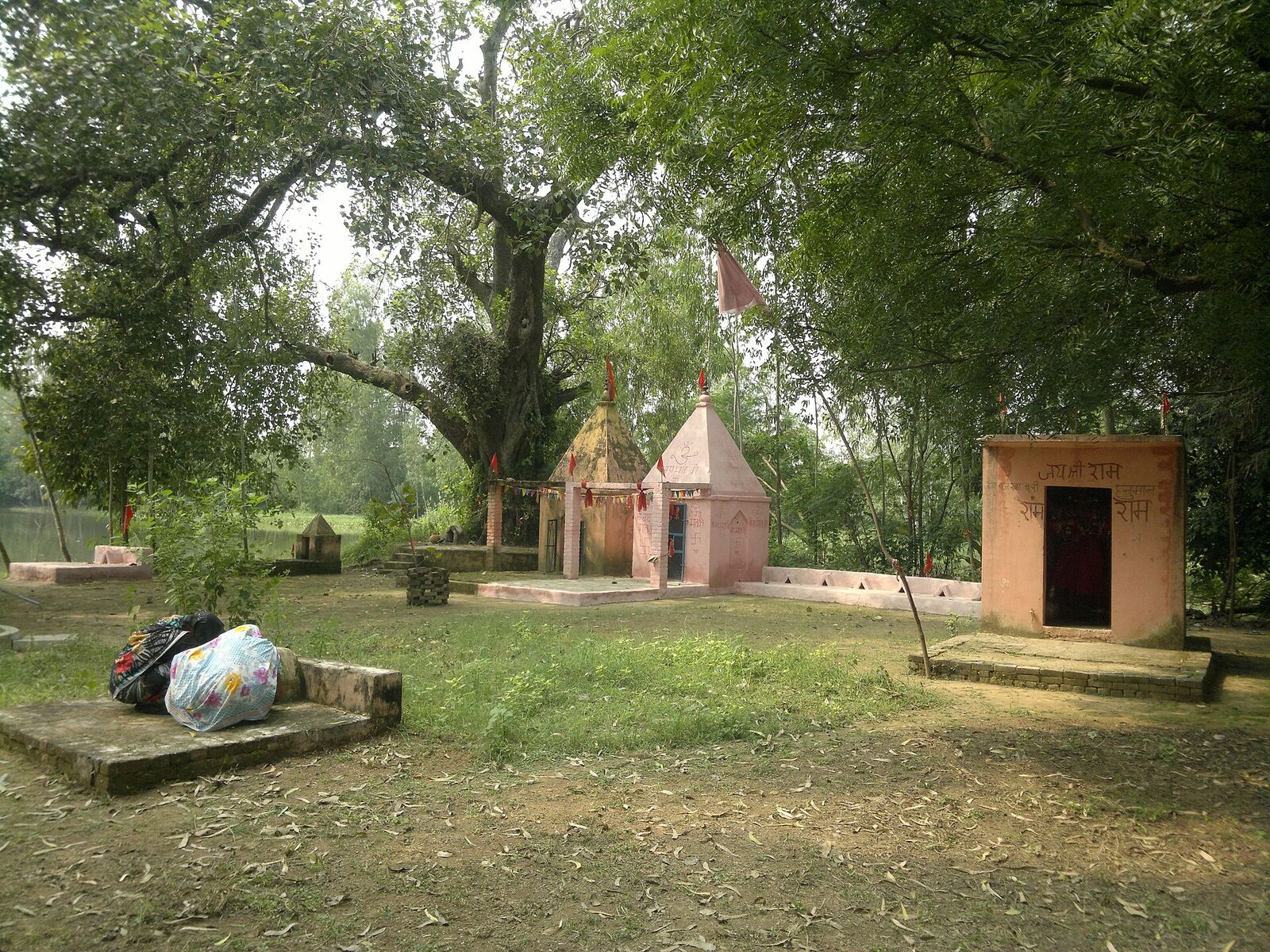
Imagine three people in one village in north India.
The first is the priest of the old temple. His family has served there for generations. He's poor, with a little land and small earnings from ceremonies, and his house is crumbling. Yet when he walks through the village, people touch his feet. He's seated first at feasts, and no ceremony is complete without him.
The second is a contractor from a caste that two generations ago was looked down on, whose members worked in others' fields. He started by supplying sand to building sites, then won government contracts, bought land and trucks, and is now the richest man around. He drives a big SUV and lives in a three-storey marble-fronted house. Yet some families still won't eat in his home, and whisper rudely about his origins.
The third is a woman from a Dalit family who passed a tough exam and is now a senior government officer in another district. In her office, everyone stands when she enters, and her signature can approve a road or transfer a teacher. But when she visits her parents' village, some upper-caste men who would salute her in the office feel awkward and avoid her.
So who is "highest"? There's no single answer, and that's the point! The priest has respect but no money. The contractor has money but not respect. The officer has power that some villagers won't fully accept. To understand inequality, we need more than one measuring stick. Max Weber gave us several.
Class, status and party
Karl Marx said inequality is about one thing: who owns the farms and factories. Weber said Marx saw something real, but squashed several different things into one. He described three.
Class is about money and chances in the market: what property you own or skills you can sell. A landowner, a factory owner, an engineer and a labourer are in different classes. Class can be measured in rupees.
Status is about respect: how highly others think of you. Status groups share a way of life, marry within their group, eat together and keep outsiders away. A poor nobleman might be welcomed in grand homes while a rich trader isn't! Weber saw caste as the strongest kind of status group: closed, entered by birth, and guarded by ideas of purity.
Party is about power: influence over decisions, through political parties and groups. People without money or respect can gain power this way, and then use it to get both.
Inequality isn't one ladder but several, and the most interesting moments come when someone is high on one and low on another.
Now the three villagers make sense. The priest is high in respect but low in money. The contractor is high in money and trying to turn it into respect, which the old order resists. The officer has gained power through education and government, but it sits uneasily with how some villagers see her. Much of Indian life is about turning one kind of rank into another: money trying to buy respect, power trying to command it, and old respect defending itself against new money.
Swapping one kind of rank for another
Watch the contractor over ten years. He sends his children to an English-medium school and a big-city college, where they pick up polished manners. He gives money to the temple, sponsors the festival and gets his name carved on the new gate. He adopts some upper-caste customs. He wins a local election and becomes important in a political party. His grandchildren may marry into families that once looked down on his! Slowly, his family's respect may catch up with its money.
But it's never smooth. Old families with respect may mock the new rich as showy and hold on to things money can't buy fast, like old family names. Weber understood that this resentment causes some of the fiercest conflicts, often bitterer than arguments about money alone. Many of India's big debates, about temple entry, marriage between castes and reservations, are struggles where respect, money and power pull against each other.
When caste, money and power separate
In 1961, Béteille lived in a village in Tamil Nadu he called Sripuram. At its heart was the Brahmin street around the temple. Beyond it lived other castes, and beyond them, in a separate area, Dalit families who worked as farm labourers.
He found that in the past, land, respect and power were all in the same hands. The Brahmins owned most of the land, had the highest ritual rank and ran village affairs. Dalits were at the bottom of all three: no land, no respect and no voice.
But by the time he arrived, things were coming apart! Many Brahmins were selling land and moving to cities for government jobs. Other castes who had prospered were buying their land. With elections, political power had moved to the more numerous non-Brahmin castes. And Dalits were starting to organise, helped by reserved seats. Béteille called this the disjunction (separation) of caste, class and power.
Béteille said this was the key to change in India. When all advantages are in the same hands, the person at the bottom has nothing to challenge the top with. When they separate, new paths open: power can win land and education, education can win jobs and money, and money can win respect. The ladders cross, and people can climb from one to another. But it also causes tension, as groups high on one ladder and low on another struggle.
Bosses and workers
Dahrendorf noticed something Marx's ideas couldn't explain. In big companies, shareholders own the company, but managers run it. In communist countries, nobody owned private businesses, but party leaders still gave orders. So Dahrendorf said class is really about authority: the right to give orders. In every organisation, some command and others obey, and their interests clash.
You can see this in any workplace with a ladder of bosses. In a police station, the officer in charge commands sub-inspectors, who command head constables, who command constables. Their interests differ about duty hours, postings, leave and who gets the risky jobs or the credit. Constables in some states have asked for weekly days off and an end to being made to do housework in senior officers' homes. Teachers, clerks, nurses and engineers have their own associations too. Dahrendorf said conflict is built into authority itself, even where nobody owns anything.
He said conflict isn't always bad. In democracies, conflict is handled through negotiations, elections, courts and complaint systems. A strike settled by talks, or an election lost and accepted, lets people's interests be heard and adjusted peacefully. But conflict that's banned and bottled up builds up and can turn violent.
Banning disagreement doesn't make it go away. It pushes it underground, where it grows worse.
In-between places
Marx's idea of two classes, owners and workers, leaves many people hard to place. Think of a team leader at a computer company in Pune. She doesn't own the company and earns a salary, like a worker. But she manages twelve people, assigns their work and judges their performance, like a boss. And she has special skills and degrees that give her bargaining power. Wright called this a contradictory class location: a position that belongs to more than one class.
Or think of a farmer in western Uttar Pradesh with fifteen acres, a tractor and a tube well, who hires labourers at harvest. He works his own land like a farmer, employs others like a small businessman, and may owe money to traders. So he might join a farmers' protest against the government, but oppose higher wages for his own labourers! Shopkeepers, electricians, teachers and doctors all mix ownership, authority and skill in different amounts.
Wright said there are three kinds of advantages: owning businesses, having authority, and having rare skills or degrees. Later, he studied real places that already work more fairly. In Porto Alegre in Brazil, citizens decide how to spend part of the city budget. The Mondragon companies in Spain are owned by their workers. Wikipedia is made by volunteers without bosses! An Indian reader might add Gujarat's milk cooperatives or Kerala's women's groups. Wright's point: better ways aren't just dreams. They already exist in the cracks.
Is inequality necessary?
In 1945, Davis and Wilbert Moore asked why every society has inequality. Their answer: some jobs are more important and need rare talent and long training. A surgeon studies for years and carries huge responsibility. To get the most capable people to do such jobs, societies give them bigger rewards: more money and respect. So, they said, inequality helps put the best people in the most important jobs.
This sounds sensible, and many people believe it. But another sociologist, Melvin Tumin, disagreed strongly. He pointed out that rich children get training whether or not they're talented, while talented poor children often never get the chance. So inequality doesn't just reward talent; it passes down advantages. He also asked: who decides which jobs are "important"? Powerful people often decide their own jobs are!
The Covid pandemic in 2020 tested this idea. Governments had to decide which workers were essential, meaning society couldn't survive without them during lockdowns. The list was eye-opening: cleaners, nurses, hospital helpers, delivery riders, grocery workers, truck drivers, police constables and farm workers. Many of the most essential jobs were among the lowest paid and least respected! Meanwhile, many highly paid jobs could stop or move home without society collapsing. It suggested rewards depend on power, degrees and inherited advantage at least as much as on importance.
Ladders that move, and ladders that don't
One more question: how easily can people climb? In 1967, Peter Blau and Otis Dudley Duncan studied this in America. They found that education was the main way family background passed on advantages: children of educated parents got more education and better jobs. But education was also the main ladder for poor children to climb up.
In India, studies have found that it's harder than in many countries for children to move up from their parents' position, and caste and gender play a big part. But there are also inspiring stories of people moving up, especially through education, reservations and moving to cities. The officer from the Dalit family is one such story. Her success is real and changed her family's life, but it's still rare enough to be noticed, celebrated and sometimes resented.
All these ideas lead to one puzzling question. If inequality is so deep, and benefits a few at the cost of many, why do so many people accept it? An Italian thinker found a powerful answer while locked in prison. He comes next.