Part Five · Lines of Exclusion
Chapter 21
Who Gets to Tell the Story?
For a long time, Europeans described the rest of the world, and their descriptions turned into laws, rules and even how people saw themselves.
Featuring Said · Quijano · Hall
Assisted and Curated by Claude, Referenced and Collated by me
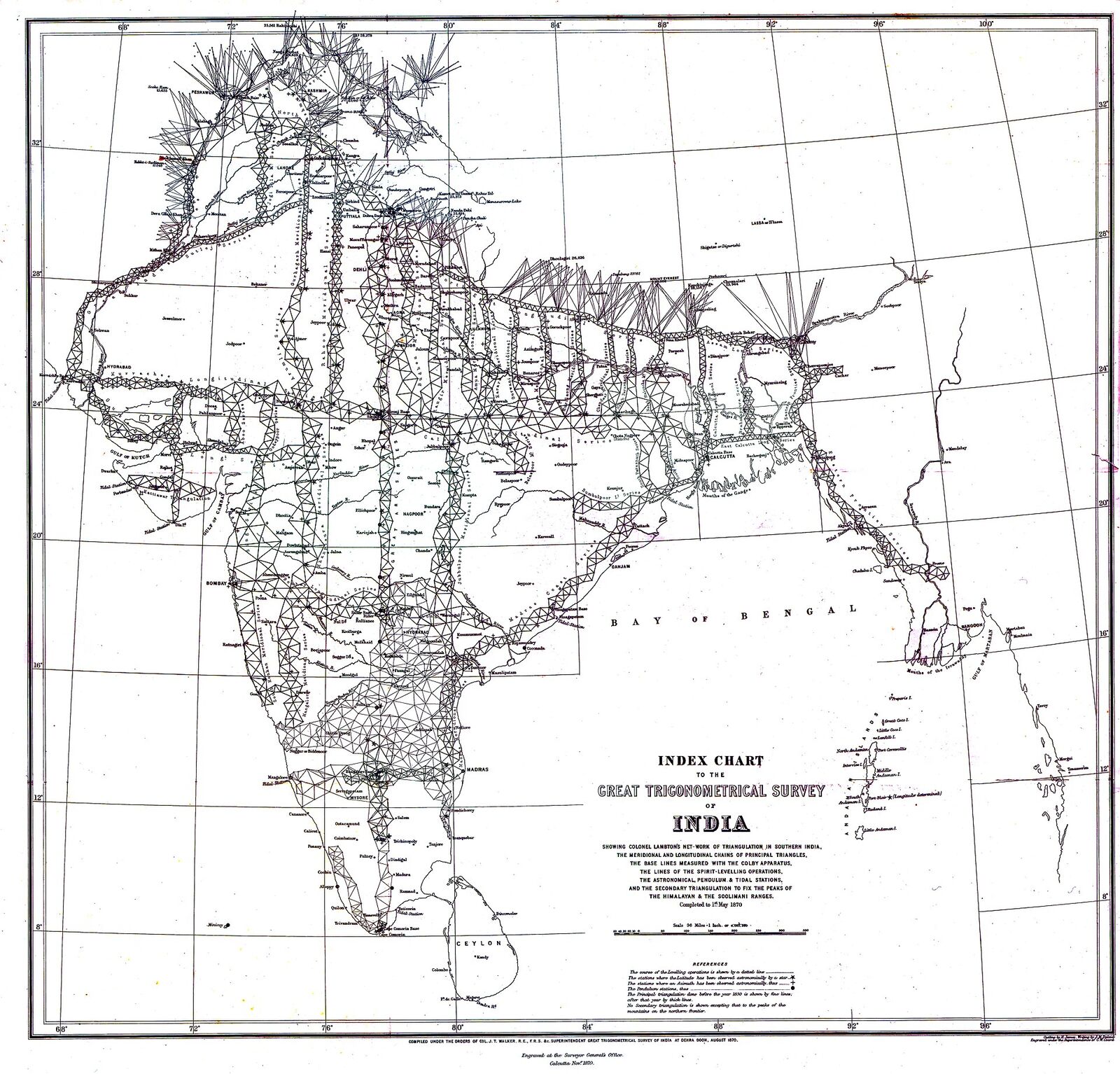
The village that never changed
In 1830, a British official named Charles Metcalfe wrote that Indian villages were like "little republics", which had almost everything they needed and stayed the same forever. Kings and empires came and went: Mughals, Marathas, Sikhs, British. But the villages, he said, never changed.
This idea spread everywhere. Karl Marx used it. Many officials, scholars and even Indian leaders like Gandhi thought the unchanging village was the true heart of India.
But it was mostly wrong! Historians found that Indian villages were never cut off or frozen. They traded with markets near and far, paid taxes, sent soldiers to armies and pilgrims to temples, and kept changing with migration, wars, new crops and new rulers. The "timeless village" was a picture painted by outsiders who wanted India to seem ancient and in need of their guidance. And later, many Indians believed the picture too.
That's the problem in this chapter. For two hundred years, Europeans wrote about the rest of the world in travel books, studies, census reports, novels, paintings and laws. These weren't neutral. They were written by rulers, for ruling. And they shaped how people were governed, and how they saw themselves. What happens when one group has the power to describe another?
Orientalism
In 1978 Said wrote a book called Orientalism that changed how people think. He said "the Orient" (the East) isn't just a place on a map. It's an idea created by European scholars, writers, artists and rulers. And it was a way for the West to have power over the East.
In this way of thinking, the West was shown as sensible, free, modern and strong, and the East as the opposite: irrational, ruled by tyrants, stuck in the past, mysterious and exotic. The East was said to be unable to describe itself, so Western experts had to do it. It was seen as having a glorious ancient past but a poor present, which was used to justify Western rule.
Said said this wasn't just a set of lies that better facts could fix. It was a whole system of knowledge tied up with power. A British ruler of Egypt, Lord Cromer, claimed that the "Eastern mind" couldn't think logically, and that he understood Egyptians better than they understood themselves! Knowledge gave power, and power made "knowledge".
To describe a people, and have that description believed, is a kind of power.
India in the mirror
In India, Orientalism could be admiring as well as insulting. In 1784, William Jones, a British judge in Kolkata, started the Asiatic Society. He learned Sanskrit, translated Kalidasa's play Shakuntala, and discovered that Sanskrit, Greek and Latin come from the same ancient language. He loved ancient India! But this love froze India in one image: an ancient, spiritual land whose true self lay in old Sanskrit books. The British then wrote down Hindu and Muslim law from selected old texts. Customs that had been flexible and different from place to place became rigid rules enforced by courts.
Others were insulting. James Mill wrote a history of India without ever visiting it, calling Indian civilisation backward. In 1835, Thomas Macaulay said one shelf of European books was worth all of India's and Arabia's literature, and wanted English schools to create Indians "Indian in blood and colour, but English in taste". That group was created, and it later led the fight for freedom, but its members often felt the double consciousness Du Bois and Fanon described.
British rulers also created categories of people. They ran a big campaign against "thugs", said to be a secret group of robbers, and historians still argue how much of that story was real. The census sorted every Indian into castes and tribes and ranked them. One census officer, Herbert Risley, even measured people's noses to support his theory of caste! A law of 1871 labelled whole communities "criminal", and forest peoples were called "primitive".
These labels didn't just describe; they acted. Communities fought to change their census label, people started believing the labels, and governments made rules based on them. Said teaches us to always ask: who is describing whom, with what power, for what purpose, and with what results?
After the empires
Orientalism didn't end with empires. In 1927, an American journalist, Katherine Mayo, wrote Mother India, which described India as dirty and unfit to rule itself. Gandhi called it a "drain inspector's report"! Later, foreign media often showed India as a land of snake charmers, mystics and slums. And sometimes powerful groups inside a country describe their own minorities or tribal people in the same unfair way: as backward and needing to be "civilised".
Said also showed that famous European novels quietly depended on empire. In Jane Austen's Mansfield Park, a story about English country life, the family's wealth comes from a sugar farm in the Caribbean worked by enslaved Africans, though the book barely mentions it! Said suggested reading great Western books while also thinking about the colonised people behind them, hearing both voices at once, like two tunes played together.
Critics said Said made Western scholars sound all the same, and forgot that colonised people also used and fought these ideas. Indian reformers, for example, used stories of India's glorious past to build national pride. But Said changed forever how we think about knowledge and power.
Colonial habits that stay
Quijano's big idea is the coloniality of power. Colonialism, meaning one country directly ruling another, mostly ended. But coloniality, he said, didn't end. It's a deeper pattern of unfairness that began when Europeans conquered the Americas in 1492, and it still shapes the world today.
Coloniality rests on two pillars. First, sorting people by race. Quijano said the modern idea of race was invented during the conquest of America, when the Spanish created categories and ranked them. Second, dividing up work by race: Indigenous people forced into hard labour, Africans enslaved, and only Europeans paid wages and allowed to own land.
It also affects knowledge. European science and philosophy came to be treated as the only real knowledge, while other knowledge, like Indigenous understanding of nature, local farming wisdom and other medicine and philosophies, was dismissed as superstition.
In India, many debates are about this. Should Adivasi knowledge of forests, seeds and medicinal plants count as real knowledge? How should regional languages be valued compared with English? It's complicated: not every traditional practice is wise, and some false claims are made in the name of tradition. But Quijano helps explain why, long after independence, rankings of skin colour, language and knowledge still live on, as if the rulers left but their categories stayed behind.
The rulers left, but their categories stayed in every mind and office.
Imagine a forest officer visiting a village with a scientific plan for which trees to cut and where cattle can't graze. The villagers have their own knowledge from generations: which trees fruit when, which plants heal, where the animals move and which groves are sacred. In the meeting, the officer's knowledge is called "science" and the villagers' is called "custom". Sometimes the officer is right. Sometimes the villagers' knowledge, if heard, would have prevented a disaster, as forest scientists now increasingly agree. The point isn't that one is always right. It's that the ranking between them came from colonial power and continues out of habit.
Who we are keeps changing
Hall described two ways of thinking about identity. The first says each people has one true, unchanging self, hidden underneath, waiting to be rediscovered. This idea gave pride to peoples whose history had been ignored, and Hall respected it. But he also said identity is about becoming, not just being. It's never finished. It keeps being made through memory, stories and mixing with others.
Hall's own Caribbean mixed African, European, Indian, Chinese and Indigenous cultures so completely that there was no single "pure" origin. Think of the descendants of Indian workers taken across the British empire between 1838 and 1917 to work on sugar farms in Trinidad, Guyana, Fiji and Mauritius. In Trinidad, a music called chutney mixes Bhojpuri folk songs with Caribbean rhythms! When their descendants visit the villages in Bihar or Uttar Pradesh that their ancestors left, they often feel like strangers. Their identity isn't something lost to be found again; it's something new, made and remade.
The same is true for every Indian who moves from a village to a city, from one state to another, or abroad. Each carries something from where they came from and picks up something new, becoming someone neither place fully recognises. Hall's idea frees us from two traps: being defined by the rulers' descriptions, or being expected to stay pure and unchanging.
Speaking back
These thinkers show that knowledge is never free from power. Descriptions of one people by another, in books, census tables, novels, paintings, laws and news, shape how people are ruled and how they see themselves. The timeless village, the "criminal tribe" and the "primitive" forest dweller were pictures painted by rulers, and they became real through the rules built on them. To undo them, the people who were described must speak back: tell their own stories, recover hidden histories and see that who they are is something they can make and remake.
One kind of ranking is older than colonialism and caste, and found in every society: the one that divides people into women and men. That's next.