Part Five · Lines of Exclusion
Chapter 20
The Ladder of Caste
Caste has lasted through empires, religions and constitutions. Thinkers asked how it works, why it lasts so long, and how it can end.
Featuring Ambedkar · Ghurye · Srinivas · Karve · D. P. Mukerji · Ilaiah Shepherd
Assisted and Curated by Claude, Referenced and Collated by me
The water of Chavdar Tank
On 20 March 1927, in the town of Mahad in Maharashtra, thousands of people walked together to a public water tank called Chavdar Tale. The town had already said the tank was open to everyone, including people then called "Untouchable". But nobody had dared to use it, because others guarded it. The marchers were led by a young lawyer with degrees from America and London: Dr B. R. Ambedkar. At the tank, he bent down, cupped water in his hands and drank. Thousands followed him.
Some people became angry and attacked the marchers as they went home. Then priests held a ceremony to "purify" the tank, pouring cow's milk, curd, ghee, dung and urine into the water! Later that year, Ambedkar and his followers publicly burned a copy of the Manusmriti, an old law book that said some castes were born to serve others. Many people still remember that day, 25 December.
Think about what this shows. The law said the water was for everyone, but in practice it was forbidden. When Dalits drank, people believed the water became "polluted", even though nothing in it had changed! The "pollution" was an idea about people's bodies, given by birth and impossible to change by learning, money or goodness. And old books were used to say this was holy. The law said one thing, but society said another, until people were brave enough to march, drink and be beaten.
How does a system like this work, and how has it lasted so long? Several remarkable thinkers spent their lives on these questions. Nobody answered more deeply than the man who drank at Mahad.
How caste works
The key: marrying within the group
In 1916, when he was just twenty-five, Ambedkar gave a talk at Columbia University. Others had said caste was about jobs, food rules or ideas of purity. Ambedkar said the one special thing about caste is endogamy (say "en-DOG-a-mee"): the rule that people must marry only within their own group. He called a caste an "enclosed class", like a group with its doors shut. Everything else, like rules about eating together, follows from keeping the doors shut.
Then he asked a clever question. In any small group, there won't always be exactly the right number of men and women to marry each other. So how do you keep everyone marrying inside? Ambedkar said society made harsh rules, especially for women. Widows were often forbidden to marry again and treated very badly, and girls were married very young, so they couldn't choose someone from outside.
So the cruel customs that reformers fought against weren't random. Ambedkar showed they were needed to keep caste going. Controlling women was part of how caste worked. This was a very important idea, far ahead of its time. Even today, when families harshly punish young people for marrying someone from another caste, it shows that caste survives by controlling whom people marry.
Marrying within the group is the key to caste, and controlling women is the lock.
How did caste spread? Ambedkar said one group closed its doors first, and others copied it, each closing its own doors. He said caste wasn't invented by one person like Manu, who only wrote down what already existed. And he proved with evidence that caste isn't about race.
Graded inequality
Ambedkar's most important idea is graded inequality. Many unfair systems have just two sides: those on top and those below, and those below want to change it together. But caste is a ladder with many rungs. Almost every caste is above some and below others. Each looks down on those below and is looked down on by those above.
Ambedkar said this makes caste very hard to break. Because almost everyone has someone below them, they don't want to give up their spot. So people at the bottom rarely unite. In a village, a farmer looked down on by a landlord may feel better because he's above the Dalit worker, and even Dalit groups can have their own ladders. That's why caste has lasted so long, and why movements against it have often split.
Annihilation of caste
In 1936, a group in Lahore invited Ambedkar to give a speech about ending caste. When they read his speech in advance, they were alarmed and asked him to remove parts criticising the holy books. He refused, and they cancelled the event! So he printed the speech himself as Annihilation of Caste. It's one of the most powerful pieces of writing in India's history.
Ambedkar said caste isn't just dividing up jobs. It divides up people into closed boxes, by birth, not by talent, and stacks them one above another. It makes people care only about their own caste, so there's no kindness for those outside it.
He disagreed with people who wanted to remove untouchability but keep caste. He strongly disagreed with Gandhi, who wanted to keep the old four groups (varna). In 1932, the British gave Dalits their own separate voting groups. Gandhi began a fast in jail, risking his life. Ambedkar felt great pressure, and agreed instead to reserved seats in shared elections, called the Poona Pact. It hurt him for the rest of his life.
Ambedkar said people follow caste not because they're cruel, but because they believe the holy books tell them to. So the real problem is the authority of those books. And the best cure, he said, is marrying across castes, because only that can create the feeling of being one family.
Democracy as a way of living together
Ambedkar learned from his teacher John Dewey that democracy isn't only about voting. It's a way of living together, sharing experiences and respecting each other. A society where groups won't eat together or marry each other can't truly be a democracy, whatever its laws say.
On 25 November 1949, the day before the Constitution was adopted, Ambedkar gave a famous speech. He said that from 26 January 1950, India would live a life of contradictions. In voting, everyone would be equal: one person, one vote. But in daily life and money matters, there would still be inequality. He warned that this couldn't go on forever without putting democracy in danger. He also warned against worshipping political leaders like heroes. And he said liberty, equality and fraternity (brotherhood) go together, with fraternity being the hardest in a land of thousands of castes.
In voting we will have equality, but in daily life we will have inequality. How long can we live with this contradiction?
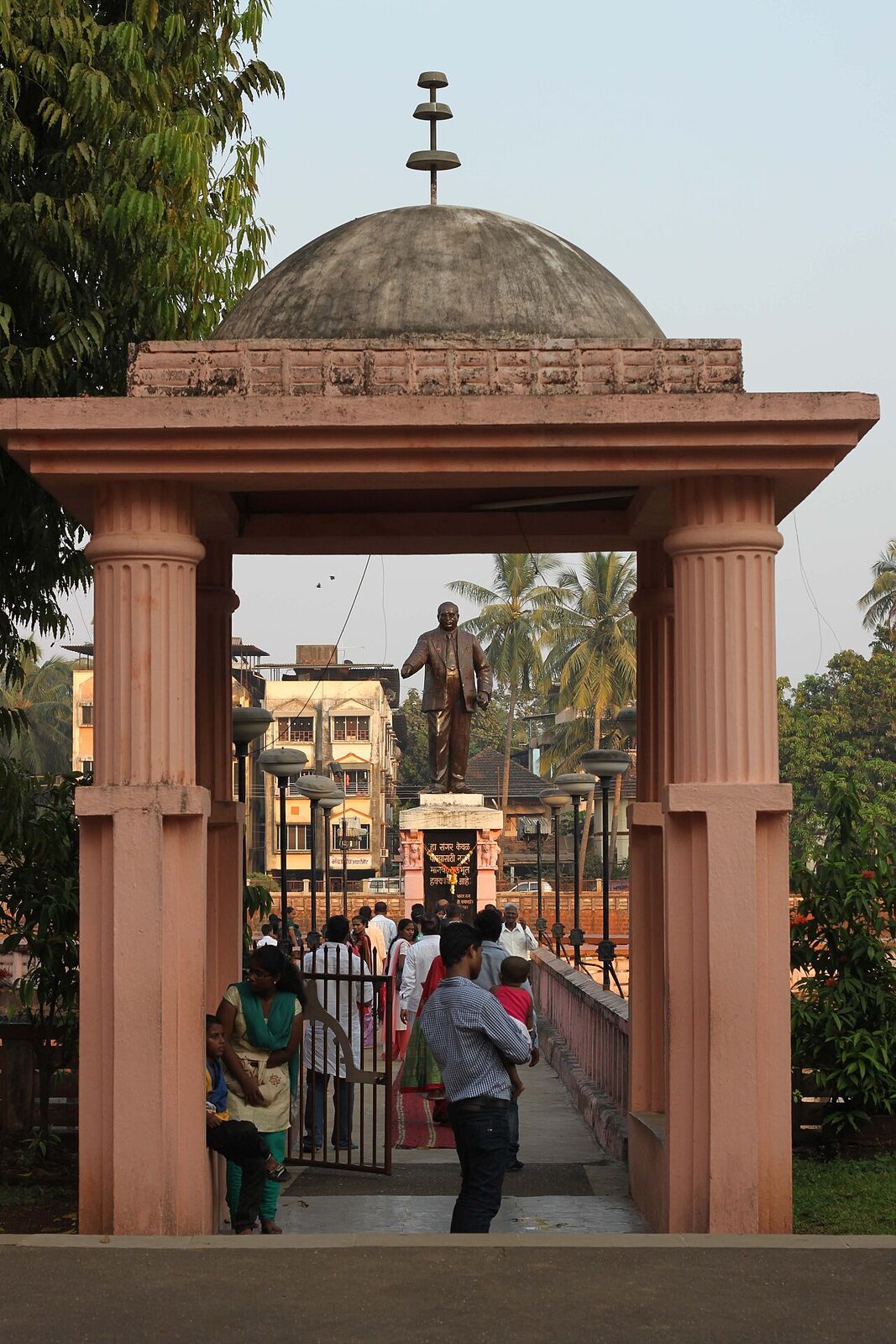
In 1935 Ambedkar said he was born a Hindu without choosing, but would not die one. On 14 October 1956, in Nagpur, he became a Buddhist, and hundreds of thousands of people joined him in a single day! He saw Buddhism as a path of reason, kindness and equality, without caste. He died seven weeks later. His statues stand in countless villages, often inside iron cages to protect them, which tells the whole story of his struggle.
Describing the system
Ghurye listed the main features of caste: groups fixed by birth, a ranking with Brahmins usually at the top, rules about eating together, different rights for different castes, limited choice of jobs and marrying within the group. He also noticed that the British census made caste stricter by writing it down and ranking it.
The forest and its future
Ghurye had a famous debate with Verrier Elwin, an Englishman who lived for years among the Gond and Muria people of central India, including Bastar, and married a Gond woman. Elwin loved their art, myths and songs, and the ghotul, where young people lived, worked and danced together. He wanted to protect tribal people from outside moneylenders, traders and officials. Critics said he wanted to keep tribes like museum pieces.
Ghurye disagreed. He said tribal people were part of Hindu society and should join the "mainstream". Elwin replied that "joining" had often meant losing land, falling into debt and losing their culture.
This debate shaped India's policies. Nehru took a middle path: development that respects tribal people's own ways, their rights to land and forests, and self-government. The Constitution gives special protections to tribal areas. But many people were still moved for dams and mines, and lost forest rights. The question of how forest peoples should live with the rest of India, and who decides, is still argued about today, including in laws like the Forest Rights Act of 2006.
Caste on the move
Srinivas showed that caste isn't frozen. He noticed that castes in the middle and lower levels often tried to rise by copying the customs of higher castes: becoming vegetarian, giving up alcohol, wearing the sacred thread, hiring Brahmin priests and claiming ancient royal ancestors. He called this Sanskritisation. If the group also got richer or more powerful, it might rise over a generation or two.
This was a big discovery: caste had always had movement, not of single people, but of whole groups. Many groups rewrote their histories and asked the census to record them with higher names. But there was a sad twist. Groups trying to look "respectable" often put stricter rules on their women, because controlling women was seen as a sign of high status, just as Ambedkar said.
Srinivas also noticed Westernisation: copying Western clothes, language and education. While middle castes were becoming vegetarian, many city Brahmins were eating in restaurants, wearing trousers, speaking English and studying abroad, staying one step ahead!
The dominant caste
From his village studies, Srinivas came up with the idea of the dominant caste: a caste that is large in a village, owns lots of land and has money and political power. Often these weren't Brahmins, but farming castes like the Vokkaligas and Lingayats of Karnataka, the Jats of north India, the Marathas, the Reddys and the Patidars. He also invented a phrase everyone uses today: vote bank!
This explains something important. In many villages, the people Dalits most often have disputes with over land, wages and water aren't Brahmins, but powerful farming castes. Graded inequality works at every level.
Families, north and south
Karve studied families across India and showed there's no single "Indian family". In the north, people couldn't marry anyone related within a wide circle, so brides often came from faraway villages and arrived in their new homes as strangers. In the south, people often married cousins, so a bride might marry into a family she already knew.
This shaped women's lives deeply. A northern bride left her village and lived among strangers, rarely seeing her family. That's why so many north Indian folk songs are about missing home, and the brother who comes to fetch his sister for a festival. A southern bride often stayed closer to her own family. These differences may help explain why women's lives and health differ between north and south.
Karve said castes are like big extended families, each with its own customs, loosely arranged in a ranking, like a patchwork quilt held together by a loose thread. Her most loved book, Yuganta, retold the Mahabharata's characters, like Kunti, Draupadi, Gandhari and Karna, as real human beings caught in the family rules of their time. It's a kind and thoughtful reading of the great epic.
Change from inside tradition
Mukerji said India can't be understood just by using Western ideas. Indians live within strong traditions, families and groups. But he said traditions aren't frozen. They contain the seeds of change, especially through people's lived experience. He pointed to the bhakti poets who rejected caste in the name of devotion: Kabir the weaver, who teased both pandits and mullahs; Ravidas the leatherworker, who sang of a city without sorrow where nobody was high or low; and Tukaram, whose poems, the story says, were thrown into the river and rose again.
He worried about a middle class cut off from its roots, copying the West and unable to lead ordinary people. He believed real change would come from mixing old and new in a creative Indian way.
The view from the workers
In his book Why I Am Not a Hindu, Ilaiah described his childhood. His family worshipped village goddesses like Pochamma and Maisamma, ate meat, and celebrated with dance and song. Women worked in the fields beside men and could remarry. Their knowledge was practical: raising sheep, ploughing, making pots, weaving, building houses and healing with herbs.
Ilaiah said the upper-caste system looked down on hard physical work, calling it "polluting" and giving it to castes it called "low", while keeping books, temples and schools for itself. He said history should be rewritten from the view of those who feed, clothe and build the country. He celebrated the hard-working buffalo of the farmer, and argued strongly for English-medium schools for Dalit and backward-caste children, to open doors to opportunity.
Some people strongly criticise his ideas, and some scholars say he oversimplifies. But like Phule and Ambedkar before him, he makes us look at society from the bottom up, and see that respecting work is an important moral question.
History should be rewritten from the view of those who fed, clothed and built the nation.
The tank, again
Go back to Mahad. Ambedkar shows us how caste works: closed groups, marriage rules and a ladder where each rung looks down on the next. Ghurye describes it. Srinivas shows groups climbing. Karve shows the families and the women living between two homes. Mukerji shows the saints who challenged it. Ilaiah shows it from the fields and pastures.
Caste has changed a lot since 1927. Untouchability is against the law. Reservations have opened schools, universities, parliament and government jobs to millions of Dalits, Adivasis and backward castes. Dalit leaders have run big states. City life has loosened many old rules. But caste still continues: most people still marry within their caste, cleaning sewers is still mostly done by Dalits, and violence still happens when Dalits stand up for themselves. Ambedkar's "life of contradictions" hasn't ended yet.
Caste was shaped partly by how British rulers described it. That raises a bigger question: what happens when one people describes another, and the description becomes real? That's next.