Part One · The Glue
Chapter 2
The Power of Being Together
Why do we feel so excited at a festival, a big match or a parade? It is the feeling of a whole group becoming one.
Featuring Durkheim · Comte · Bellah · Collins · Alexander
Assisted and Curated by Claude, Referenced and Collated by me
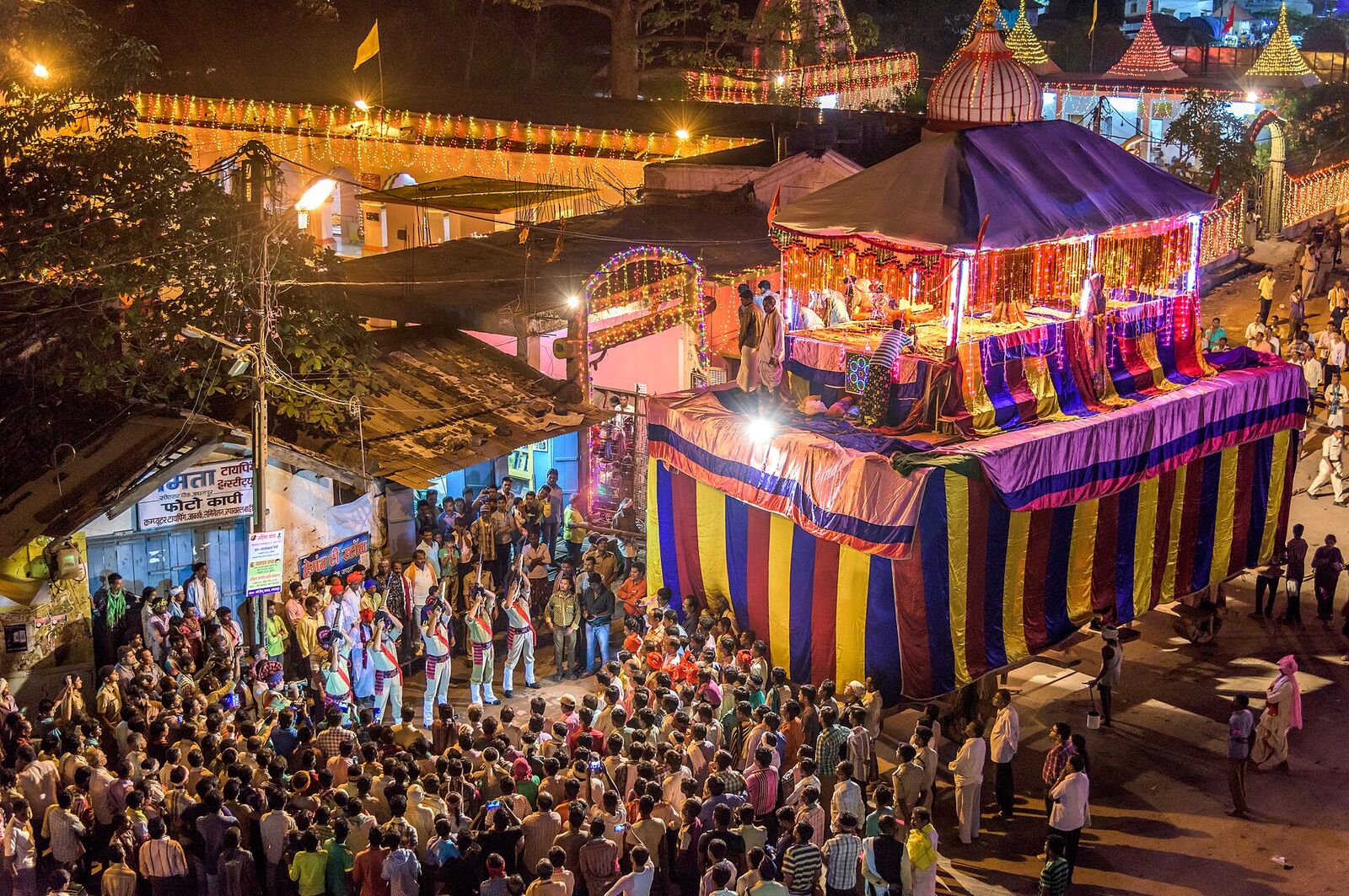
The chariot at Jagdalpur
Every autumn, the town of Jagdalpur in Bastar holds a festival that lasts seventy-five days! It is not like the Dussehra most people know: nobody burns Ravana. Instead, it celebrates the goddess Danteshwari, and hundreds of village gods are brought in to visit her. A young girl sits on a swing made of thorns and gives permission for the festival to begin. Special villages cut special wood, special carpenters build a giant wooden chariot many metres tall, and special villagers pull it through the streets with ropes while huge crowds shout and cheer. At the end, village leaders meet the royal family and government officials and talk about their problems.
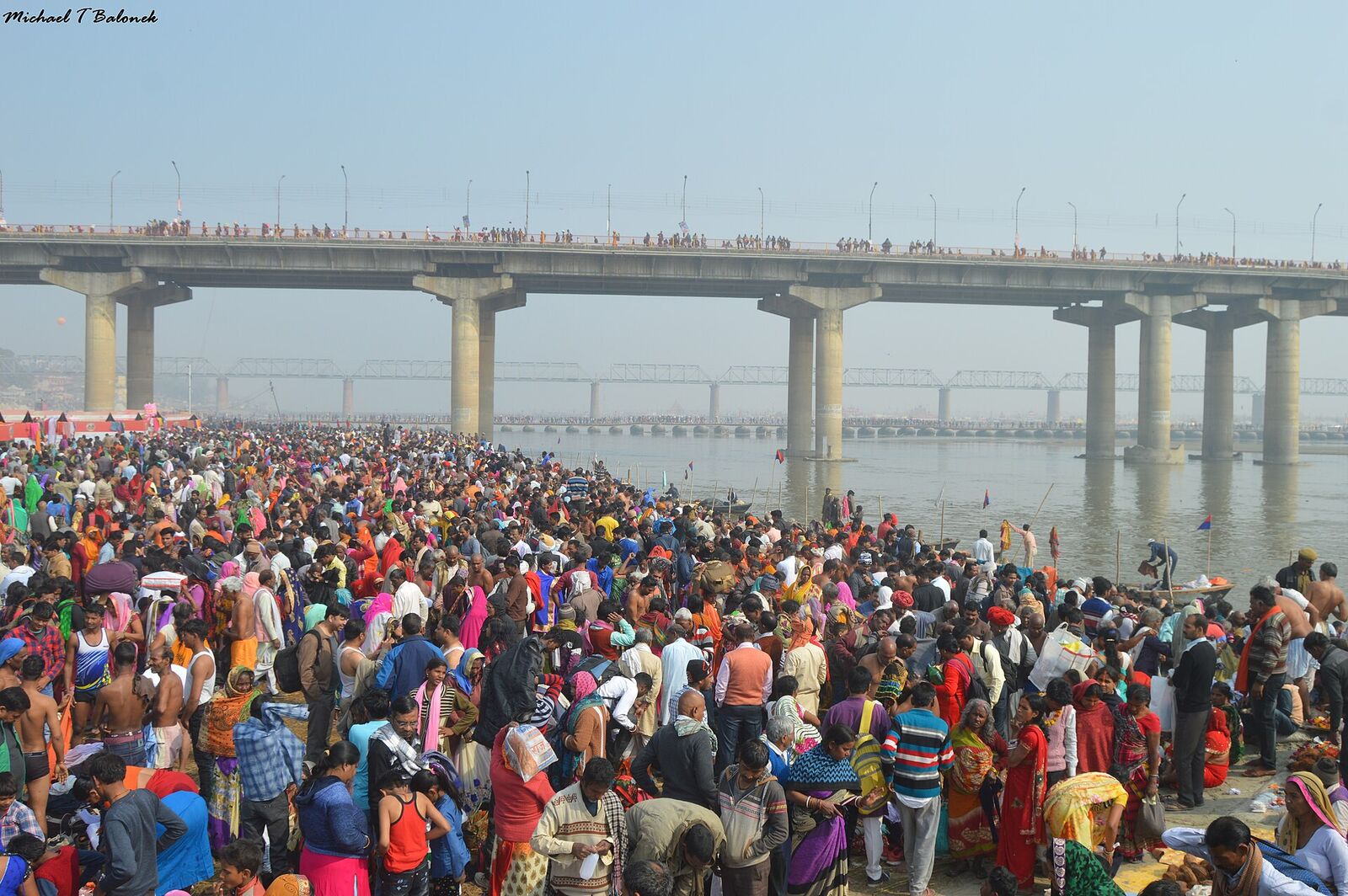
Imagine standing in that crowd. The drums are loud. Thousands of people pull together. The huge chariot sways above you. Something happens inside you. You feel like you're part of something much bigger than yourself. You stop feeling tired. Strangers smile at you. Hours later, you still feel warm inside when you remember it.
What is that feeling? A religious person might say: you felt the goddess. Someone else might say: you just got excited in a crowd. A thinker named Émile Durkheim gave a more interesting answer over a hundred years ago.
What religion does for a group
Durkheim wrote a famous book in 1912 about religion. He studied the beliefs of Aboriginal people in Australia, using what other researchers had written. He never went to Australia himself, but his ideas became very important.
Durkheim said religion is not mainly about gods. Some religions don't even have a creator god! What every religion has is a line between two worlds. One is the everyday world: work, food, shopping. The other is the sacred world: special things that must be treated with great respect. You take off your shoes before going into a temple. You wash your hands before touching holy things. The two worlds must not get mixed up.
Durkheim's big point: religion is the thing that makes a group feel like one group.
Fizzing together
Where does the special feeling come from? Durkheim noticed that the Aboriginal clans spent most of the year in small family groups, doing ordinary things. But sometimes they all came together for big ceremonies, with singing and dancing all night, painted bodies and music. Everyone moved together. People felt full of energy, like they were in another world. Durkheim called this collective effervescence. "Effervescence" means fizzing, like a fizzy drink! It's the buzzy feeling when lots of people do and feel the same thing together.
Durkheim said the power people felt was real. It was the power of the group itself. But people didn't think "I'm feeling the group". They thought "something holy is here". So they connected the feeling to the group's symbol, called a totem: an animal or plant painted on their bodies. The totem became sacred because it was the group's flag. When they honoured the totem, they were really honouring their own group, without knowing it.
When the clan honoured its totem, it was really honouring itself.
Does this mean religion is fake? Durkheim said no! There really is a power bigger than each person. It helps us in hard times, asks us to share and sacrifice, and goes on after we are gone. That power is our society. When someone comes home from a great festival feeling stronger and braver, that's real. The group has recharged them, like a battery.
Back to the chariot
Now look at the Jagdalpur chariot with Durkheim's eyes. People from villages spread across a huge forest come together. Each village brings its own god, so every village feels honoured. Each group has a special job: cutting wood, building, pulling, guarding. So the whole region becomes one big team where everyone has a place. And when everyone pulls together, they feel that fizzing. They go home recharged, and the friendship between villages is recharged too. Festivals like this aren't just decoration. They're how a society keeps itself together.
That's also why festivals matter to governments. When the government helps a festival respectfully, people feel good about it. But if a festival is stopped or mocked, people feel deeply hurt, as if something holy had been insulted.
Sacred things without gods
Here is Durkheim's biggest idea: the sacred doesn't disappear when people become less religious. It just moves to new things.
Think about when the national anthem plays in a cinema hall. A moment ago, people were chatting and eating popcorn. Suddenly hundreds of strangers stand up and stay still. For fifty-two seconds, they feel like one group. If someone stays sitting, others may get very angry. Why so angry? Because, Durkheim would say, something sacred has been disrespected.
Countries are full of sacred things. The flag must never touch the ground. At war memorials, people speak quietly. On Police Commemoration Day, the names of police officers who died on duty are read out, with a slow march and a bugle. The Constitution is treated like a holy book. Pictures of Gandhi hang in offices. A statue of Dr Ambedkar is garlanded with flowers, and if someone damages it, people are deeply upset, because it stands for a whole community's dignity.
Or think about sport. When India won the Cricket World Cup in 2011, the whole country stopped to watch. When M. S. Dhoni hit the winning six, it felt like the whole of India cheered at once. Strangers hugged in the streets and danced all night. Cricket isn't holy. But for a few hours, the team became the whole country's totem, and the players became like heroes in a legend.
Comte worried: if people stop believing in old religions, what will hold them together? So he invented a new religion called the Religion of Humanity, where people would honour great humans from history, like Aristotle and Shakespeare. It had its own calendar, ceremonies and temples. His followers in Brazil even put his motto, "Order and Progress", on the Brazilian flag, where it still is today!
It sounds funny to invent a religion in an office. But Comte had a good point: people need shared feelings and celebrations, not just facts. His new religion didn't work because, as Durkheim understood, you can't just design the sacred. It has to grow from people really gathering and feeling things together.
A country's special things
In 1967, Bellah said that countries have a kind of religion of their own, which he called civil religion. In America, it has holy books (the Declaration of Independence and the Constitution), heroes (like George Washington and Abraham Lincoln), holy days (like the Fourth of July) and holy places (like the Lincoln Memorial). People of all religions share it.
Bellah said civil religion can be used in two ways. In a bad way, it can make people think their country is always right, even in wars. In a good way, it can remind a country of its best promises. Martin Luther King Jr. stood at the Lincoln Memorial and reminded America that its own founding words promised equality to everyone, including Black Americans, and that America had not kept that promise.
India has a civil religion too: the Constitution, the tricolour, the national anthem, Independence Day, the Republic Day parade, memorials to freedom fighters and soldiers, and Gandhi. People sometimes argue about which heroes and which stories should be part of it. Those arguments are really about what kind of country India should be.
Small everyday rituals
Durkheim talked about big festivals. But later thinkers noticed that the same thing happens in tiny ways, many times a day.
Collins said every time people meet, it's like a mini-festival. When friends chat, laugh together, nod and finish each other's sentences, they get "in sync". A good conversation gives you emotional energy: you feel happy, confident and warm. A bad conversation, where nobody is really paying attention, makes you feel tired and flat.
This explains lots of things! It explains why friends love meeting at the same tea stall every day. It explains why people go to a political rally even when they already know what the speaker will say: they go for the exciting feeling. It explains why online classes during the pandemic felt so tiring: without eye contact and laughing together, the mini-festival didn't work. It explains why families like eating together. Collins said we keep going back to the meetings that charge us up, and we avoid the ones that drain us.
We go back to the meetings that charge us up and avoid the ones that drain us.
Collins also explained why some people seem to have a special glow that makes others want to follow them. Some people are always at the centre of the group. They soak up energy and give it back. The more people they attract, the more energy they get. A great team captain, a popular leader, an inspiring teacher: people like being near them because it recharges their own battery.
Clean, unclean and showing
Alexander said modern politics also splits things into sacred and unclean. A "good" citizen is honest, open and fair. A "bad" one is sneaky, secretive and dishonest. In every election, each side tries to look honest and open, and tries to make the other side look sneaky and dishonest.
He studied a famous scandal in America called Watergate. In 1972, some burglars broke into an office. At first it was a small news story. But over two years, people found out that the President, Richard Nixon, had broken the country's most important rules. When Nixon resigned in 1974, it felt to Americans like their country had been cleaned and made fresh again.
Alexander also asked: why do some terrible events become things a whole country remembers forever, while others are forgotten? He said it depends on whether people like survivors, writers and leaders keep telling the story. In India, people have argued about how to remember events like the Partition, the Bhopal gas disaster and the Mumbai attacks. Whose sadness gets remembered is something society decides.
He also said leaders must "perform", like actors, and people must believe them. When the police stay calm and kind during a tense protest, people trust them more. When an officer stands in the rain at the funeral of a policeman who died on duty, it means a lot. But one video of cruelty can destroy years of trust.
Is the sacred going away?
Another thinker, Max Weber, said the modern world is losing its magic, as science and offices replace mystery. A thinker called Peter Berger once said religion is like a big roof that protects people from fear and confusion, and he thought modern life would tear the roof down. Thirty years later, he changed his mind! Most of the world was still very religious. What changed, he said, is that now people can choose what to believe, instead of just being born into it.
Durkheim helps us see why. The sacred isn't something science can use up. It's the feeling of being part of a group, and as long as people gather, sing, cheer and remember together, they'll keep making it. It just attaches to different things: gods, countries, teams, leaders, causes.
But sometimes the opposite happens: a person can feel so cut off from others that nothing recharges them at all. Durkheim studied that lonely feeling too, and that is what the next chapter is about.