Part Five · Lines of Exclusion
Chapter 23
The Work Nobody Counts
Cooking, cleaning, caring and comforting keep every family and country going. So why is so much of it not counted as work?
Featuring Oakley · Smith · Hochschild · Illouz · Fraser
Assisted and Curated by Claude, Referenced and Collated by me
Does she work?
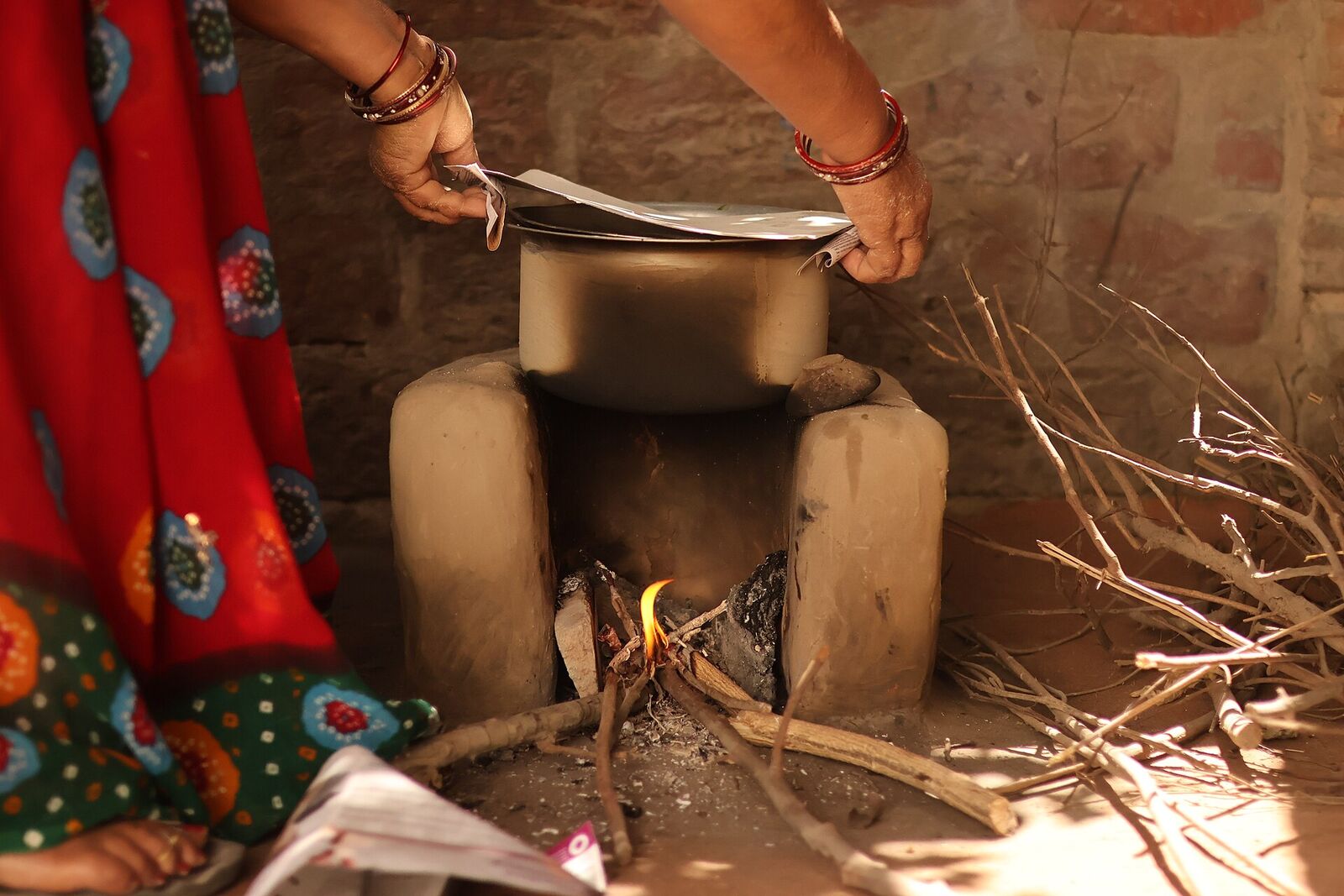
In a village in Jharkhand, a woman wakes before dawn. She sweeps the courtyard, walks two kilometres to a hand pump and carries water home on her head, twice! She lights the clay stove and cooks rice and dal for six, gets the children ready for school, washes pots, takes the goats out, and collects firewood almost as heavy as she is. In planting season she works in the fields. She cares for her sick mother-in-law. In the evening she cooks again, serves everyone else first, eats last and goes to sleep last. When a survey worker asks whether the women of the family work, the man of the house might honestly say: "No, she's a housewife. She doesn't work."
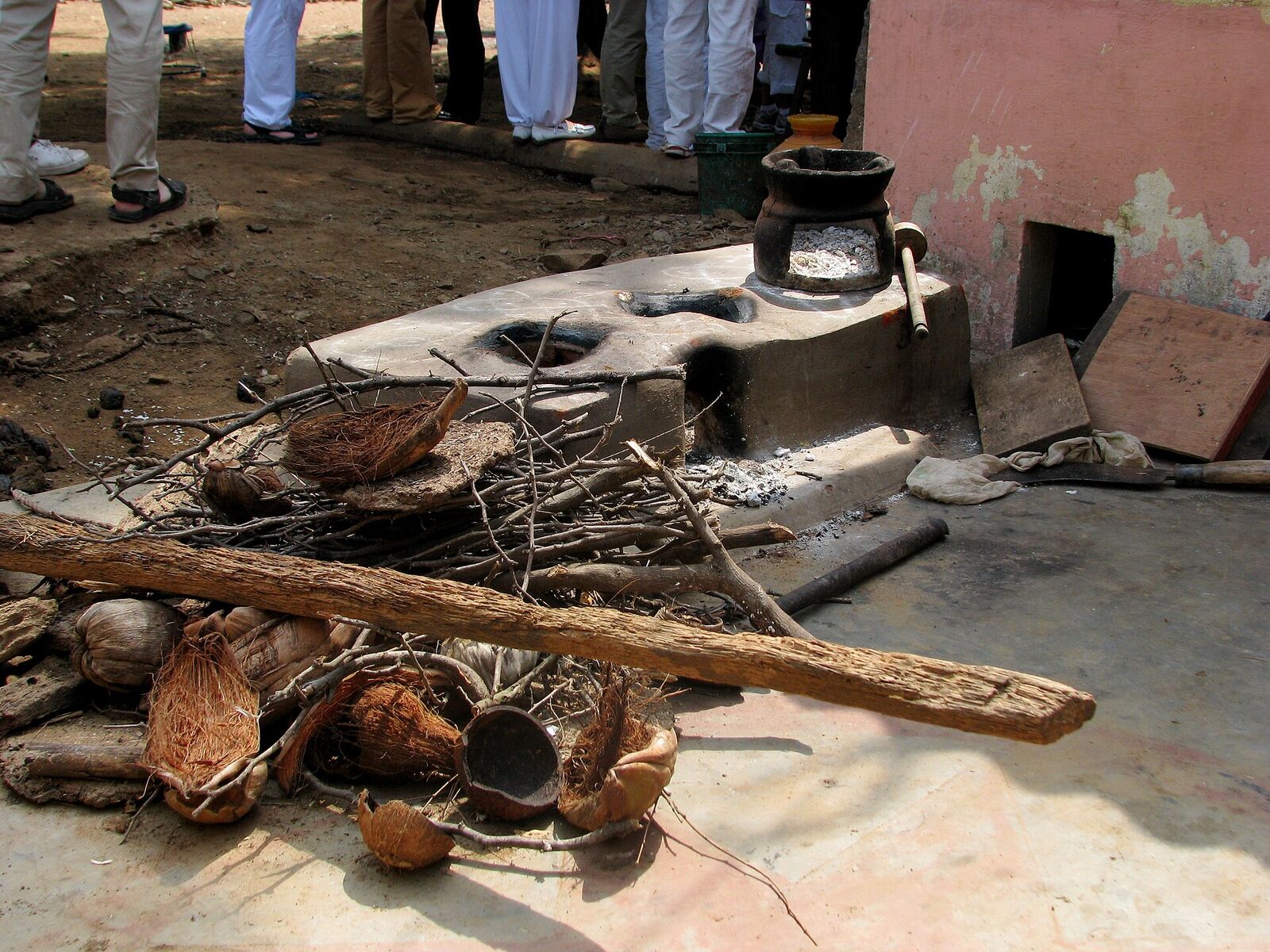
That's not a joke. For a long time, official numbers only counted work that made money. Cooking, cleaning, fetching water and caring for children and old people were called "household duties", not work. India's first big survey of how people spend their time, in 2019, found that women spend about five hours a day on unpaid housework and care, while men spend about an hour and a half. If women were paid for it, it would add up to a huge amount of money! It keeps everything else going, yet it's been almost invisible.
The thinkers in this chapter set out to make this work visible.
Housework is work
Ann Oakley, whom we met in the last chapter, wrote a book in 1974 that nobody had written before: a study of housework. Sociologists studied factories and offices, and studied families, but housework fell in between and was ignored.
Oakley interviewed forty housewives in London, just like researchers interviewed factory workers. She found they worked about seventy-seven hours a week, longer than almost any factory worker! Many found the work boring, broken into small pieces and lonely, even more than people working on factory assembly lines. Oakley said housework isn't just a woman's "nature" or a labour of love. It's real work, and every worker who goes to a job each morning depends on someone who cooked his breakfast, washed his clothes and cared for his children.
Oakley also changed how research is done. She said that when a woman interviews another woman about something personal, like having a baby, she shouldn't act cold and distant. When the women asked her questions back, she answered! She also studied how childbirth changed from something surrounded by women into a medical event run mostly by male doctors.
Seeing from the kitchen
Smith lived in two worlds every day. At university, she dealt with big ideas and books. At home, she dealt with children, meals, laundry and illness. She noticed that sociology's ideas all came from the first world. They were created by men whose wives did the housework for them, so women's everyday experience was missing.
So Smith said all knowledge comes from somewhere. The official knowledge of universities, governments and companies comes from the view of people in charge, and pretends to be neutral. But it depends on the hidden work of others, mostly women. A boss can think about big plans because someone else is cooking and caring for his children! Smith wanted a sociology that starts from women's real everyday lives. It's like Du Bois's "second sight": people doing hidden work see things others don't.
Ruling through paperwork
Smith noticed that modern societies are run through documents: forms, files, reports, rules and registers. These papers organise what people do, often without them noticing.
Think of an ASHA worker, one of about a million women health workers in Indian villages. She helps mothers and babies, takes women to the health centre to give birth, persuades families to vaccinate children and gives advice on healthy food. But she must also fill in registers and phone apps about births, vaccinations and visits. Her small payments depend on finishing the right tasks in the right format. What she actually does to comfort a frightened young mother at midnight is invisible unless it fits a box on the form! Smith would start from the ASHA worker's experience and trace how forms made in faraway offices shape her day.
Smith didn't say documents are bad; modern government can't work without them. But she showed how much of people's real lives gets changed, or even lost, when it's squeezed into forms.
Things that don't fit the form become invisible.
The managed heart
That question led to a famous book. Hochschild studied airline flight attendants. Their job needed physical work, like serving food, and mental work, like knowing safety rules. But it also needed a third kind she named emotional labour: managing your feelings to show the right face. Flight attendants were trained to smile and stay calm and warm, however rude the passengers or bumpy the flight. They were told to imagine a rude passenger as a scared child. The smile was part of what the airline sold!
Hochschild said there are two ways to do it. In surface acting, you pretend, like wearing a mask. In deep acting, you try to actually change how you feel inside. Deep acting is more convincing but can be harmful, because the job reaches into your feelings. Some flight attendants said they felt numb and couldn't tell which of their feelings were real anymore.
Emotional labour is everywhere today. Think of young people in call centres in Gurugram, Bengaluru, Pune and Hyderabad, answering calls from America and Britain at night. They were trained to use Western names, change their accents and stay polite even when angry callers shouted at them. Their calls were recorded and their tone was scored. Many said the hardest part was constantly managing their own feelings. Nurses, teachers, shop staff and delivery workers who depend on star ratings do emotional labour too.
Hochschild also described feeling rules: what society says we should feel. We should feel happy at a wedding, sad at a funeral and grateful for a gift. A bride at a north Indian wedding is expected to cry when leaving her parents' home, whatever she really feels! Feelings aren't just natural. Managing them is work, and much of it is done by women.
The smile no longer belongs to the worker; it belongs to the company.
The second shift and the care chain
Hochschild studied couples where both worked full-time jobs. She found that women still did most of the housework and childcare when they got home, like working a second shift! Women had joined the workplace, but men hadn't joined the housework in the same way.
She also described the global care chain. A nurse from Kerala goes to work in a hospital in the Gulf, or a nanny from the Philippines goes to Singapore. She leaves her own children with her mother or sister, cares lovingly for other people's patients or children, and sends money home for her own children's schooling. Her children get her money but not her company. In India, young women from Jharkhand, Odisha and Chhattisgarh sometimes move to big cities to care for other families' children and elders, while their own families manage without them. Hochschild said care and love flow from poorer places to richer ones, and this is rarely noticed.
Love and shopping
Illouz showed that romance became mixed up with spending money: candlelit dinners, films, holidays, flowers and jewellery. Ads and films sold pictures of love you could buy. Yet love was also described as the opposite of money: pure and natural. Valentine's Day came to Indian cities in the 1990s with cards, roses and chocolates, a new romantic ritual that arrived as a shopping package!
She said modern life teaches people to treat feelings like things to study, discuss and improve, and love as a matter of finding the best "match". Dating apps turn people into profiles to compare and rank, like products in a catalogue, so people may find it hard to commit, in case someone "better" is one swipe away.
She said heartbreak isn't only about personal problems. It's also shaped by how society organises choosing a partner.
Many young Indians are caught between two worlds: the dream of romantic love from films and songs, and arranged marriage within caste and family. Think of matrimonial websites where families search for brides and grooms by caste, religion, income, height, skin colour, horoscope and diet. It's a strange mix of the oldest family rules and the newest technology: love arranged by computer! A young woman may be told she's free to choose, as long as she picks from a list her parents have already filtered.
Fair shares and fair respect
Fraser said there are two kinds of unfairness. One is about money and resources: who gets a fair share. The other is about respect: whether people are valued or looked down on. Some groups suffer mostly from one kind, but many suffer from both at once, and fixing just one won't be enough.
Women are a clear example. They're often paid less and do most of the unpaid care work (unfair shares), and their work is also treated as less important (unfair respect). The ASHA worker suffers from both: the health system depends on her, but she gets small, irregular payments instead of a proper salary, and her work is called "voluntary" instead of skilled. Dalits in India also face both: being poor and landless, and being looked down on because of caste. Reservations try to fix both at once, which may be why people argue about them so strongly.
Fraser later added a third part: whether everyone gets a say in decisions. Real fairness, she said, means everyone can take part as equals. She also argued that the economy depends on things it doesn't pay for: the care work that raises people, mostly done by women, and the natural world, treated as free. That's why problems with care, nature and democracy often come together.
Counting what matters
These thinkers take the most private things, cooking, cleaning, caring, smiling and loving, and show that they're work: organised by society, shared unfairly and needed by everyone. They show how much of it has been invisible, how feelings are managed and sold, how care flows around the world, and how fairness needs both fair shares and respect.
The woman in the Jharkhand village who "doesn't work", according to the survey, holds up her family, her village and, in a small way, the whole country. Making her work visible isn't just about getting the numbers right. It's about truly seeing her.
Now the book turns to change: whether societies make progress, the fast-changing world we live in, cities and journeys, and a strange new idea: that things, too, can act.