Prologue
A Hand on the Wall
Tens of thousands of years ago, people pressed their hands to cave walls and blew paint around them. What were they trying to say?
Assisted and Curated by Claude, Referenced and Collated by me
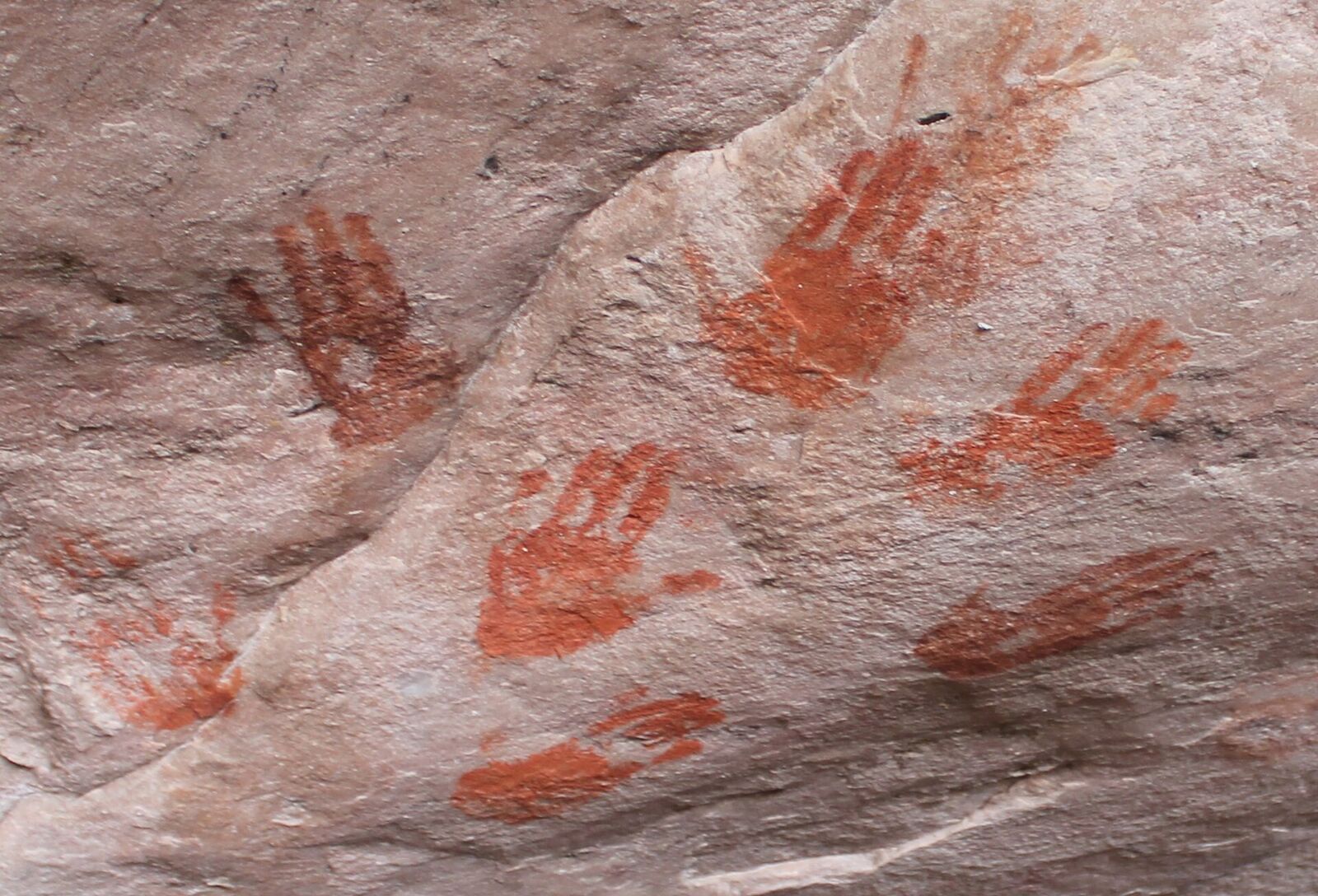
Imagine this. Deep inside a cold limestone cave, far from daylight, a person stands next to a little stone lamp burning animal fat. Its flickering light barely pushes back the dark. She has ground red earth, called ochre, into a powder. She puts some in her mouth, spreads her hand flat on the wall, and blows hard. When she lifts her hand away, its outline stays on the rock, a pale hand surrounded by red.
Hand prints like this are found on almost every continent! In the Cave of Hands in Argentina, there are hundreds, mostly left hands, as if a whole community came to sign their names. In Sulawesi, in Indonesia, some are about forty thousand years old. In a French cave called Gargas, many fingers seem to be missing parts. Nobody knows whether that was from cold, from a ritual, or from folding fingers to make signs. In northern Australia, people kept making hand stencils until recent times, so some elders can even say whose hand it was!
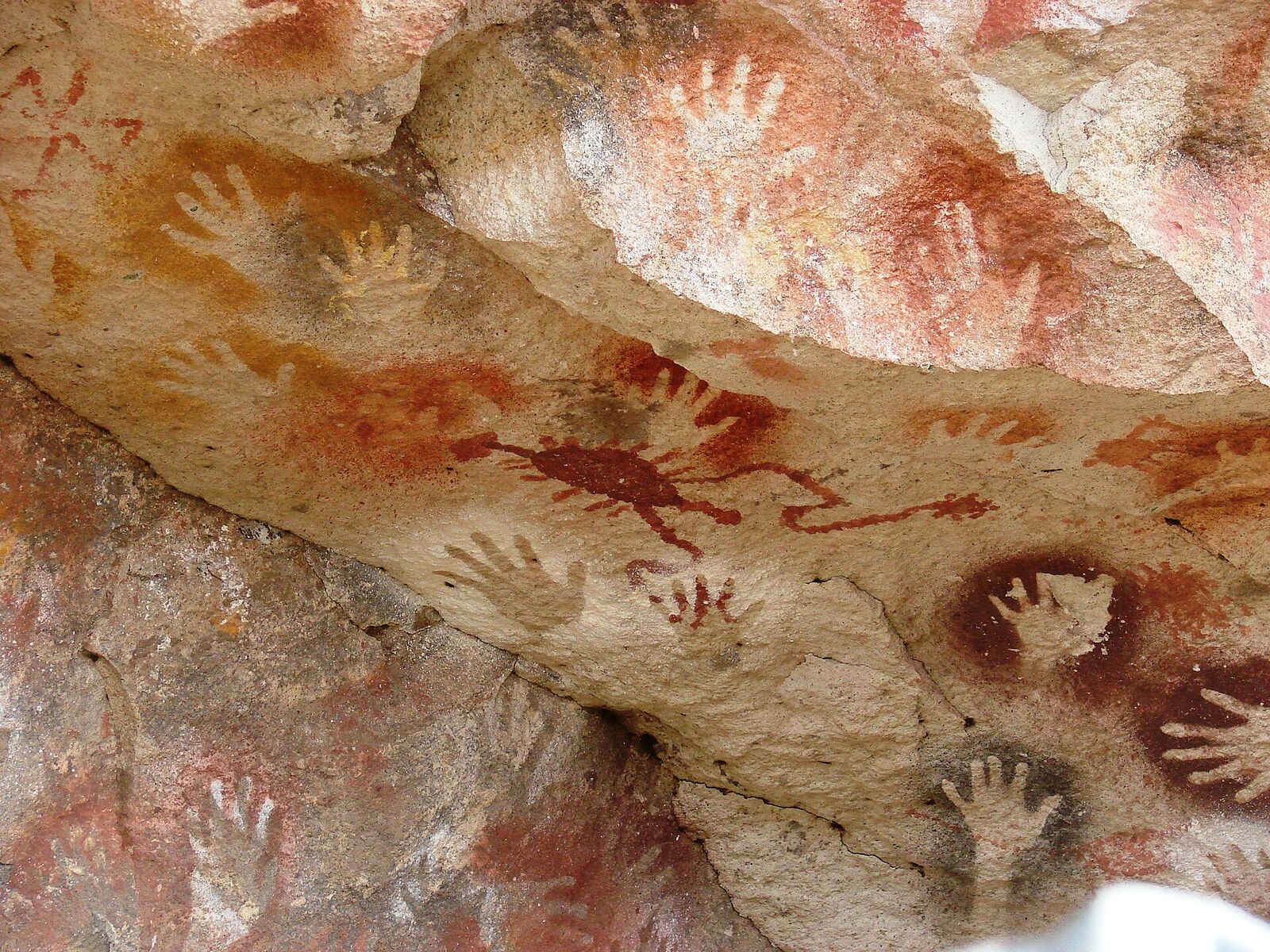
A hand print is the most personal thing the ancient past has left us, and also the most mysterious. It clearly says, "I was here." But it doesn't tell us what the person meant. Was the wall just a surface? Or was it like a curtain between our world and another? Some people in Australia and southern Africa have described the rock face as a veil, with ancestors, animals and spirits moving behind it. If the woman in the cave believed something like that, her hand print wasn't decoration. It was a way of reaching through.
A hand print says "I was here", but not what "I" or "here" meant.
This book follows that hand backwards and forwards in time: back to when our ancestors first buried their dead, painted in the dark, carved amazing creatures and gathered at special places, and forward to when all these feelings about animals, ancestors and spirits slowly turned into the idea of a god. Long ago, the group, the self and the spirit world were all mixed together. The world was full of "persons", and only some of them were human!
Here's an important warning. Almost everything we'd love to know about ancient minds has disappeared. Songs, dances, dreams, prayers, jokes, names and bedtime stories don't turn into fossils! What's left is hard stuff: paint, bone, stone and ivory, and where they were placed. From these clues, scientists have worked out a lot. Some of their ideas are solid as rock; some are more like guesses on sand. This book tries to show which is which.
The story also doesn't have just one hero or one homeland. People used to tell it only from the painted caves of France and Spain. But now we know the oldest paintings of animals are in Indonesia, the oldest beads and decorated ochre are in Africa, the oldest living religious traditions are probably in Australia, and India's Bhimbetka rock shelters have one of the biggest collections of rock art on Earth. The ancient mind wasn't European; it was human, and it appeared wherever people lived.
So we begin not with gods, but with silence, and with the question: what can we honestly say about minds that left behind no words?