Chapter IV
A World Full of Persons
For most of human history, people saw animals, rocks, rivers and storms not as things, but as beings you could have a relationship with.
Assisted and Curated by Claude, Referenced and Collated by me
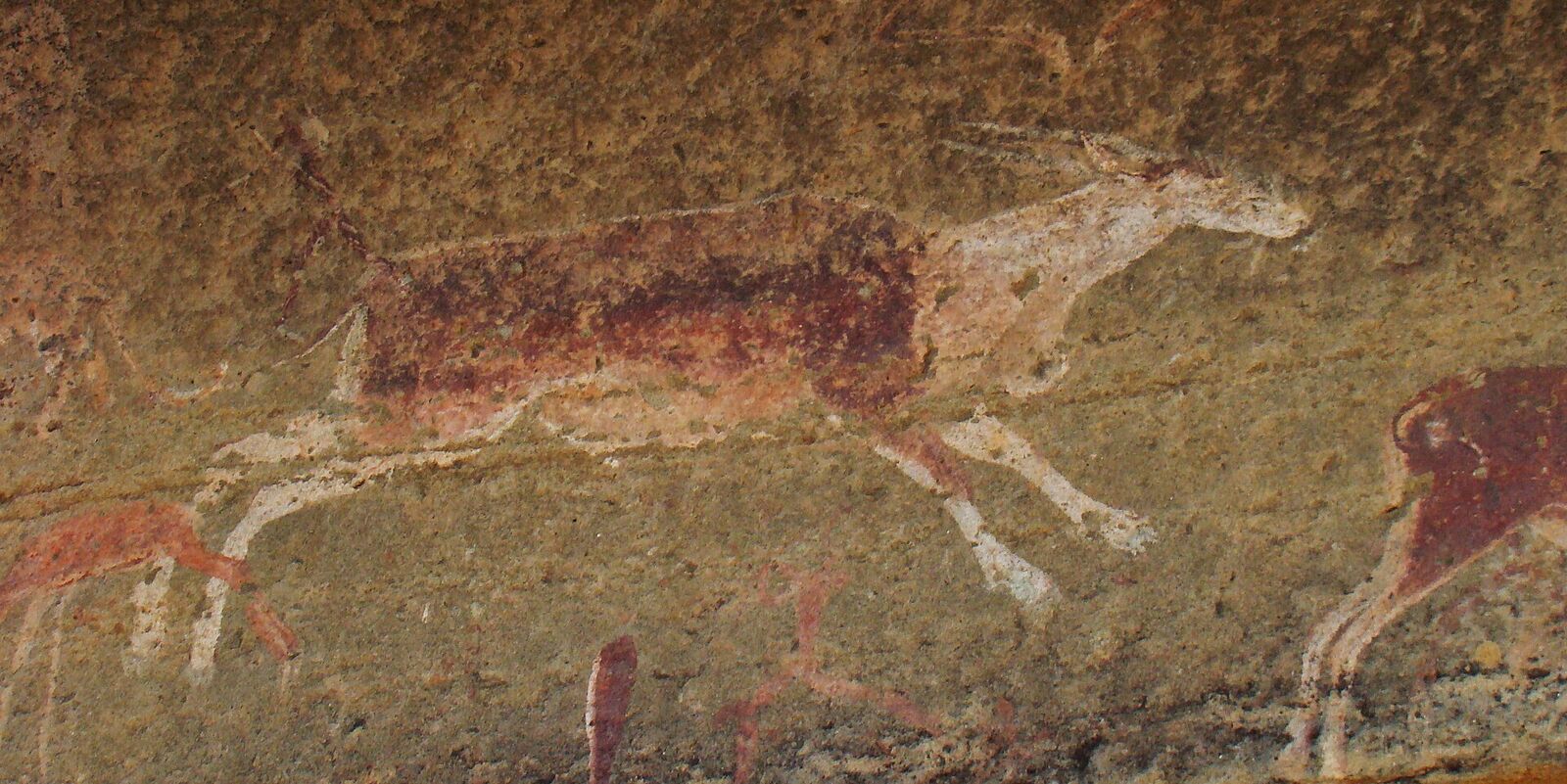
In the 1930s, an American anthropologist named Irving Hallowell spent summers with the Ojibwe people in Canada. One day he asked an old man a question: "Are all the stones around us alive?" The old man thought for a long time. Then he answered: "No, but some are."
Hallowell realised this was important. The old man wasn't confused. Some stones had been seen to move, or had "spoken", or had responded when someone talked to them. Those stones had shown themselves to be persons. Others hadn't. For the Ojibwe, being a person didn't depend on what kind of thing you were, but on how you behaved in a relationship. A stone could be a person. So could a thunderstorm, a bear, a grandfather or a visitor in a dream. A human was a person too, but not always the most important one!
Hallowell's essay became the start of a new way of understanding hunter-gatherer religions. It describes a world where, as one scholar put it, the universe is full of persons, and only some of them are human.
No, the old man said, not all stones are alive. But some are.
The old idea: a mistake
We met Edward Tylor earlier. He called the belief that things have souls animism, and thought it was the earliest, simplest kind of religion, a mistake that early people made when trying to explain dreams and death. He thought it would later grow into many gods, then one God, and finally be replaced by science.
That view put living peoples on a ladder, with Europeans at the top, and treated their beliefs as old leftovers. It also made animism just an idea in people's heads. The new view turned this upside down.
The new idea: a way of relating
In 1999, Nurit Bird-David wrote about the Nayaka, forest people in the Nilgiri hills of South India. The Nayaka speak of devaru, beings with whom you share a relationship, like an elephant you meet again and again on a path, a hill or a special rock. The Nayaka don't first decide something has a soul and then relate to it. They relate to it, and through that relationship, it becomes a person to them. An elephant that looks you in the eye and walks by peacefully is a devaru. An elephant you've never met is just an elephant.
She said this is a way of knowing by getting to know, rather than standing back and sorting. Science knows a tree by measuring its parts. The Nayaka know a tree by talking to it, watching how it changes through the seasons and remembering what happened near it. Neither is wrong; they're different ways of living in the world. And for almost all of human history, the Nayaka way was the normal human way.
So the new animism isn't about souls. It's about good manners toward the world. The world isn't a pile of objects; it's a community. And the right way to treat a community is with greetings, gifts, respect, give-and-take and, when needed, saying sorry.
Four ways of seeing the world
A French anthropologist, Philippe Descola, lived with the Achuar people in the Amazon. He said human societies understand the world in four main ways, depending on two questions: do other beings have an inner life like ours? And do they have a body like ours?
Animism says other beings have inner lives like ours but different bodies: a jaguar has a soul like a person, but lives in a jaguar's body. Naturalism, the modern Western view, says everything is made of the same atoms, but only humans have real minds. Totemism says some human groups and some animals share both inner and outer qualities, because they come from the same ancestor. Analogism, found in old China, India and Europe, sees the world as countless things linked by a huge web of connections between small and big, body and universe.
Descola said these aren't steps on a ladder. Modern "naturalism" isn't more grown-up; it's just one of four options, and an unusual one. The modern habit of seeing animals as objects without inner lives is not the normal human view. It's a very recent change!
Seeing animals as objects isn't the normal human view. It's a recent change.
The jaguar drinks beer
A Brazilian anthropologist, Eduardo Viveiros de Castro, described an amazing idea from the Amazon. In many traditions there, every kind of being sees itself as human! Jaguars see themselves as people living in villages and drinking a drink made from cassava. What we see as blood, the jaguar sees as its drink. What we see as a muddy waterhole, the tapir sees as a grand ceremonial house! The world is the same for everyone; what changes is the body you see it through.
This is a deep idea. It's a bit like modern science, which knows that different animals experience the world through very different senses. But for a hunter, it's dizzying: every animal you hunt is, from its own point of view, a person.
The hunter's puzzle
This leads to a big moral puzzle. If animals are persons, then hunting means taking the lives of persons. How can people live by hunting beings who are their relatives and neighbours?
In the 1920s, an explorer named Knud Rasmussen travelled among the Inuit of the Arctic. A shaman named Ivaluardjuk told him that the greatest danger in life is that people's food is made of souls. The animals' souls don't die with their bodies, so they must be respected so they don't take revenge. Many Inuit rules about how to treat animals, share meat and behave after a hunt were ways of handling this danger.
In Siberia, an anthropologist named Rane Willerslev lived with Yukaghir hunters. An elk hunter would dress in elk skin and move like an elk to attract the animal, almost like courting it. But there was a risk: if a hunter became too good at being an elk, he might lose himself and become an elk forever! He had to stay "not animal, but not not-animal". That in-between space is exactly where the part-human, part-animal figures of the cave paintings seem to live.
Across the Arctic, hunters developed rules for killing: say sorry to the animal, thank it, treat its bones properly so it can be reborn, never boast and never waste meat. In this world, the animal isn't simply taken. It gives itself, and it will only give itself again if it's treated with respect.
The Master of Animals
If animals give themselves, who decides when? In many hunting cultures, from Siberia to the Americas to Africa, there's a Master or Mistress of Animals: a being who owns, protects and releases the animals.
The most famous is Sedna, of the Inuit, who lives at the bottom of the sea. In one story, her fingers became seals, walruses and whales. She keeps the sea animals in her home. When people break the rules, their wrongs pile up in her hair as tangles and dirt, and in pain and anger she keeps the animals away. Then people go hungry. Only the shaman can help: in a trance, he travels to the bottom of the sea, comforts her and combs her hair, since she has no fingers to do it herself. Then she lets the animals go again.
This story explains where animals come from, why they sometimes disappear, what people must do and why a shaman is needed. And it shows something important: the Master of Animals isn't quite a god, but is more than a spirit. She rules a whole part of nature and responds to how people behave. She's a bridge between the old world of animal persons and the powerful gods of later religions. Some scholars even wonder about a link to a famous seal from Mohenjo-daro in the Indus Valley, showing a figure surrounded by animals, which we'll meet later.
The Master of Animals isn't quite a god, but more than a spirit: a bridge to the gods to come.
The bear who is sent home
No animal got more respect in the northern world than the bear. From Scandinavia to Siberia to North America, hunters avoided saying the bear's name, calling it "grandfather" or "the old man". They said sorry to the bear before hunting it and arranged its skull and bones carefully afterwards, sometimes placing the skull in a tree. Bears stand upright, walk on the soles of their feet and eat many of the same foods as humans. To many northern peoples, the bear is the animal most like a person.
The Ainu people of northern Japan held a special bear festival. A bear cub was raised in the village like an honoured guest for a year or two. Then, at a great festival, it was ritually killed and its spirit was sent home with gifts and prayers to the spirit world, where it would tell other bears how well it had been treated and encourage them to visit. The bear was seen as a spirit visiting in a bear's body, bringing the gift of its meat and fur.
It's tempting to link this to the bear skull placed on a rock at Chauvet. But here's a warning. In the 1920s, an archaeologist claimed to have found a Neanderthal "bear cult" in a Swiss cave, with bear skulls arranged in stone boxes. It became famous, but later studies found the "boxes" were probably just fallen rocks, and the story had been exaggerated. The Chauvet skull is still a real puzzle. The difference between them is the difference between evidence and wishful thinking, and this subject has plenty of both!
Totems and the Dreaming
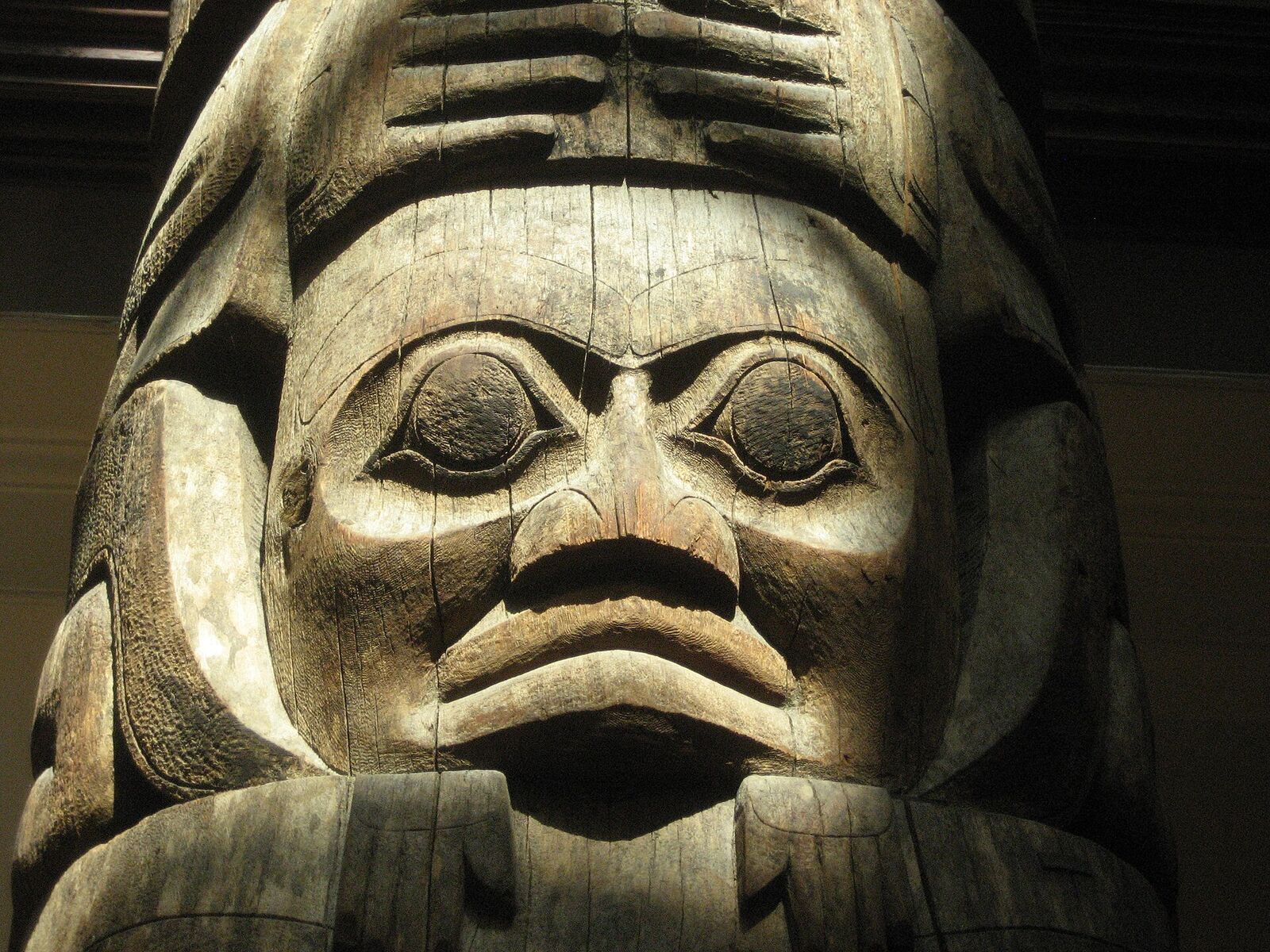
Another kind of relationship is totemism. The word comes from the Ojibwe word for clan. It means a group of people is linked to a particular animal, plant or part of nature, their totem, with whom they share a special kinship. Members of a kangaroo clan are, in a sense, kangaroos! They might not be allowed to eat kangaroo, or only at special times.
In 1912, the French thinker Émile Durkheim wrote a famous book about the Arrernte people of central Australia. He said the totem is both a sacred symbol and the symbol of the clan. When people honour the totem, they're really honouring their own group, which they feel as a power bigger than themselves.
How does a group become sacred? Durkheim pointed to big gatherings where scattered bands came together for ceremonies. In the noise, dancing and firelight, people felt lifted out of themselves into something bigger. He called it collective effervescence, a shared fizzing feeling. Anyone who has felt a stadium roar or a crowd singing as one has felt it!
Some of Durkheim's specific claims didn't hold up. Another thinker, Claude Lévi-Strauss, said totem animals were chosen not because they were tasty but because they were "good to think with": differences between animals helped people think about differences between groups. But Durkheim's big idea, that religion is tied to the feeling of the group, is still one of the most powerful ideas in the study of religion.
In Australia, totems are part of a much bigger vision called the Dreaming. It tells of ancestral beings who travelled across an empty earth, creating the land, animals, plants, laws and people as they went. Their journeys left tracks called songlines that cross the continent and can be followed by singing the songs about them. A rock is where an ancestor sat down. A waterhole is where one dug for water. A ridge is the body of a sleeping serpent!
An anthropologist named W. E. H. Stanner called the Dreaming "everywhen". It isn't just the past. It's a sacred time that exists alongside now, and people can enter it through ceremony, song and dance. When they perform them, they're not just remembering; they're taking part. The ancestors are present, the land is alive, and the laws are renewed.
The Dreaming isn't the past. It's "everywhen", a sacred time alongside now.
The shaman
The person who moves between the human and animal worlds, talks with animals, rescues lost souls and travels to the Master of Animals is called a shaman. The word comes from the Evenki people of Siberia. In 1951, a scholar named Mircea Eliade wrote a huge book describing shamans as experts in the soul's journey.
Eliade noticed shared patterns. The universe has three levels, an upper world, a middle world and a lower world, joined by a central tree, mountain or pillar. A shaman is often "called" by a serious illness in youth. In visions, new shamans may feel taken apart by spirits and put back together with new powers. They use drums and songs to enter trance, and have helping spirits, often animals, to guide them.
Some critics said Eliade lumped too many different practices together. But the evidence that trance was important in hunter-gatherer religions is strong. A 2016 study of thirty-three hunter-gatherer societies found that all had animism, most had shamans, many believed in an afterlife, but few worshipped ancestors or a high god. We'll come back to this later, because it suggests an order in which beliefs developed.
A shaman in the grave?
Can we find shamans in ancient graves? In a small cave in Israel, archaeologists found the grave of a woman who died about twelve thousand years ago. She was small and walked with a limp. She was buried with about fifty tortoise shells, the tail of a wild cow, an eagle's wing tip, a leopard's bone, a marten's skull and more. Archaeologists think she may have been a shaman. Her grave gathered animal parts from earth, sky and forest, as if she had a special relationship with all of them.
In Germany, a woman buried about nine thousand years ago with a baby wore a headdress made of deer antlers and animal teeth. Scientists found she had an unusual condition in her neck that might have caused unusual eye movements, which many societies would have seen as a sign of spiritual gifts. At Star Carr in England, about eleven thousand years ago, people made headdresses from deer skulls and antlers, hollowed out to be worn. More than twenty have been found! They may have been hunting disguises, ceremony costumes or both.
Why do minds see persons everywhere?
Why do people all over the world see the world as full of persons? Scientists who study the mind have some answers.
One scientist, Stewart Guthrie, said it helps us survive. In a world full of dangers, it's better to mistake a rustling bush for a leopard than to mistake a leopard for a bush! The first mistake just gives you a fright; the second could cost your life. So our minds are built to spot "someone" even when nobody is there. When the wind slams a door at night and your heart jumps, that's this part of your mind at work!
Another ability is imagining what others think and feel. Humans are amazing at this, and it easily stretches to animals, the dead and even the weather. And a scientist named Pascal Boyer said ideas that are mostly normal but strange in one way, like a tree that listens or a lion that stands like a man, are especially easy to remember and share. The Lion-Man is a perfect example!
These ideas explain why animism comes easily to the human mind, but they don't make it silly. Seeing the world as full of persons also helps people live wisely: taking only what they need, giving back and paying attention. Many scientists who protect nature now admire traditions that treat forests, rivers and animals as relatives. The ancient mind wasn't simply wrong. It understood something modern people often forget: we live among other lives, and our survival depends on how we treat them.