“The root of man’s problems is memory. Without a past, every day would be a new beginning. Wouldn’t that be great?”
Ashes of Time (1994)
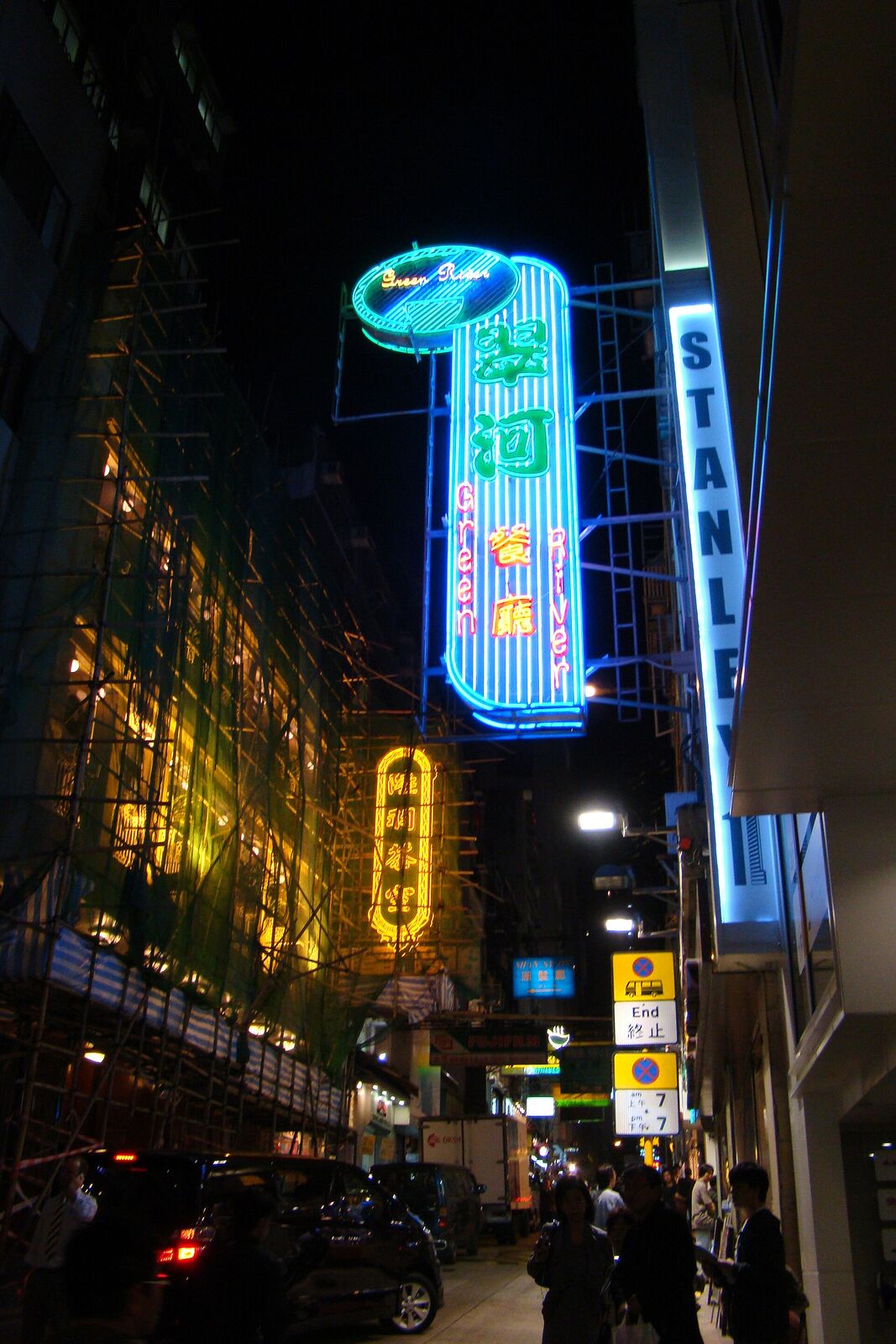
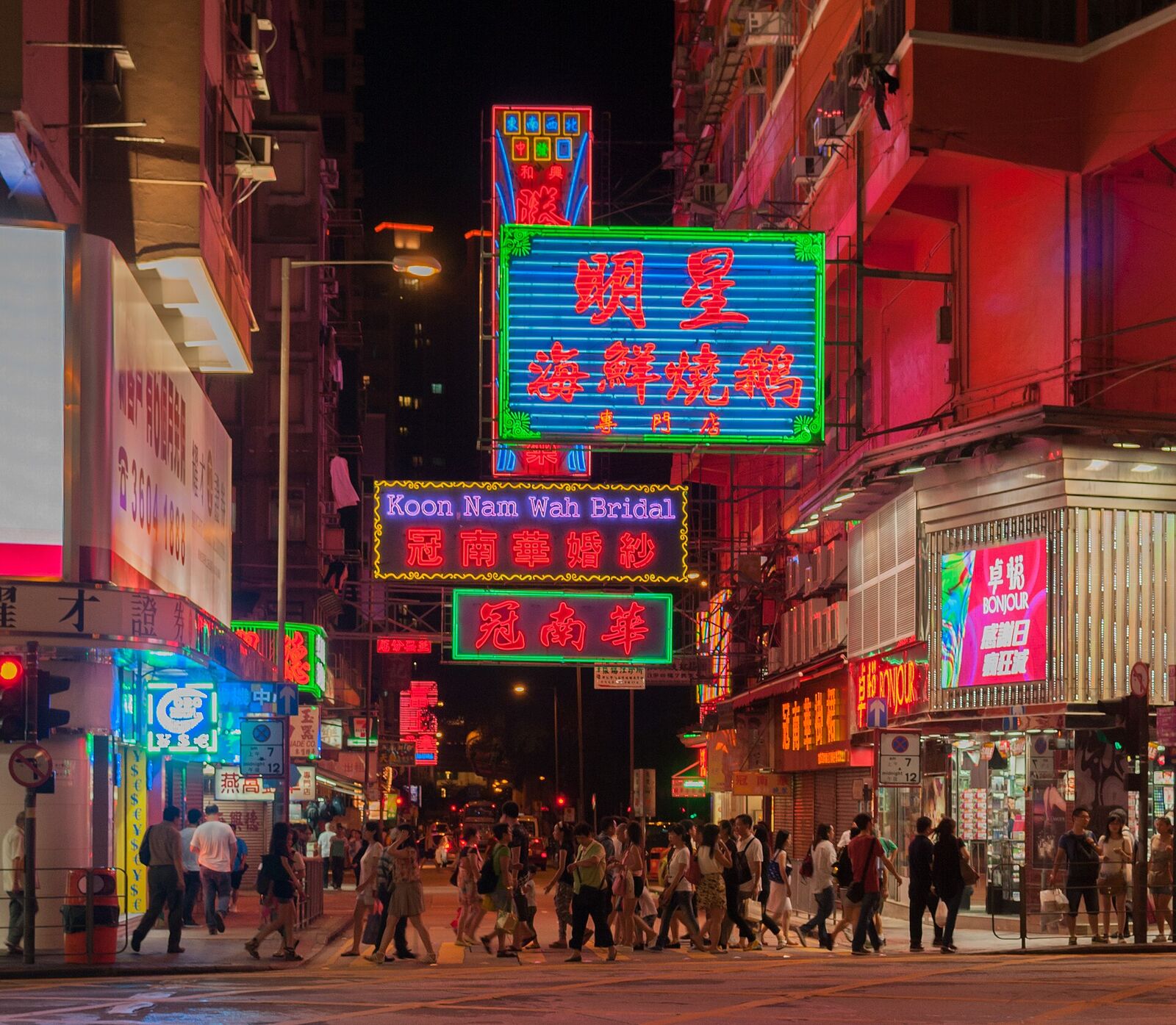
Imagine a surreal universe bathed in neon yellow and emerald green, where lonely characters wander aimlessly, revisiting their pasts as though they were earlier lifetimes. With vivid memories woven deep into the fabric of the present, they are forever caught between what was, what might have been and what can never be. No one captures this haunting curse of remembrance more intimately, or more beautifully, than Wong Kar-wai, for whom every frame is an elegy to moments lost in time.

A film I never meant to watch
My tryst with Hong Kong cinema in general, and with Wong Kar-wai (WKW from here on) in particular, isn’t an old one. It began in 2024, when I was in the Nilgiris on a trekking expedition with a group of batchmates. Like most aspiring cinephiles, I had collected a long list of downloaded films on my device, most of which I had no intention of ever watching. The Japanese have a word for the same habit with books: tsundoku, buying books and letting them pile up unread. I sometimes wish they would coin one for films.
On one of those fateful evenings, for reasons I can no longer recall, I decided to give one of them a chance. It was In the Mood for Love.
Watching it amid all that chaos wasn’t easy. With so much commotion around me, I struggled to concentrate, and it took me three sittings across two days to finish it. The plot was nothing extraordinary; unrequited love is, after all, a familiar subject in cinema. Yet something about it held me captive throughout. Little did I know it was only the beginning.
The next morning I found myself replaying its images in my head, as though I had dreamt them rather than watched them. I don’t often think about a film long after its credits have rolled, but this one refused to leave. It lingered like a fever dream, growing more vivid each day. Perhaps it was the compositions, the colours, the silences, or the way emotions seemed to live in the spaces between the characters rather than in their words.
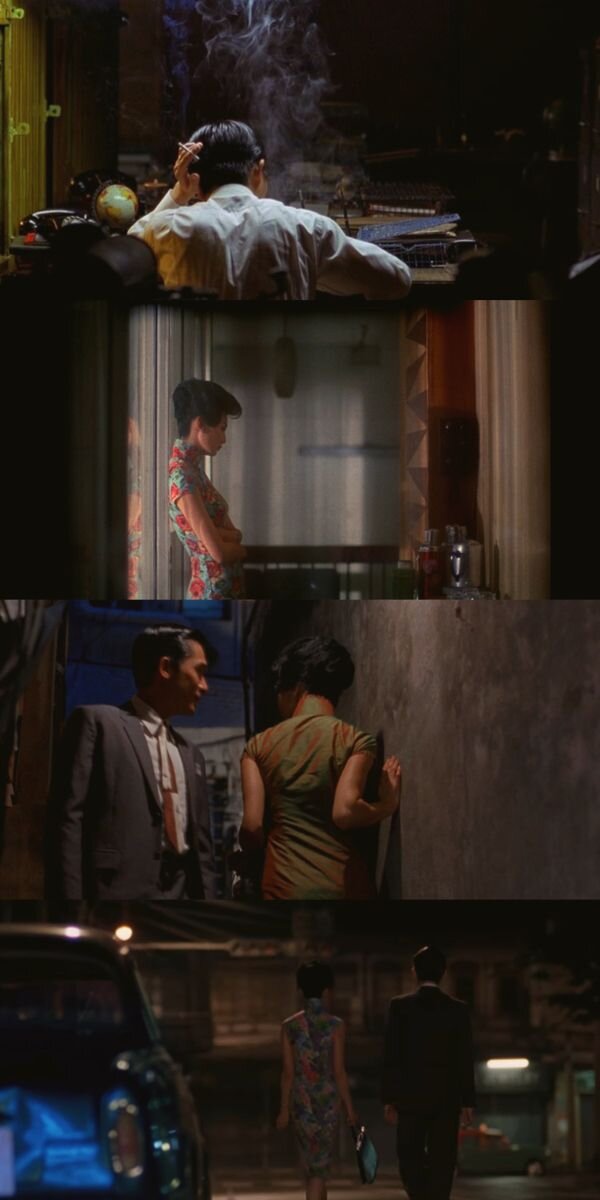
Yumeji’s Theme, the film’s recurring background score, became such an earworm that I eventually had to find a place with an internet connection just to download it and listen to it, to get it out of my head. That helped for a while, but I soon realised that what I really wanted was to see the film again. I had never felt such an urge about any film before. When I did watch it again, this time on TV, I was once more completely mesmerised by the world WKW had created.
I knew I was experiencing something unusual, but I couldn’t put a name to it. Kafka once observed that all language is but a poor translation. Thoughts are the only originals we have; words, spoken or written, are at best copies, which is why words sometimes fail us and lose their meaning the moment they are spoken. I found myself agreeing with him. It wasn’t simply admiration for a beautiful film, nor the usual satisfaction of having watched a good story. It was a strange, almost inexplicable ache: a wish to return to something that had already passed, a pull towards something I could neither fully possess nor explain.
Naturally, I went on to another film by the same director: Chungking Express. Once again the magic worked. It stayed with me like a drug whose effects refused to wear off, a strange kind of high that I didn’t particularly want to come down from.
A ritual in the jungle
After my training, I was posted to a Naxal-affected region which, somewhat ironically, offered me the luxury of solitude amid vast stretches of calm, beautiful jungle. Away from the noise and routine of the city, I kept returning to WKW: In the Mood for Love and Chungking Express again, and then As Tears Go By, Happy Together, Days of Being Wild and Ashes of Time. I deliberately left one of his films unwatched, so that I would always have something of his to look forward to. (I watched Fallen Angels only this year.) Soon, going back to his films every few months became a ritual. There was something deeply comforting in knowing exactly what awaited me, and still returning to an experience whose emotional contours I already knew by heart.
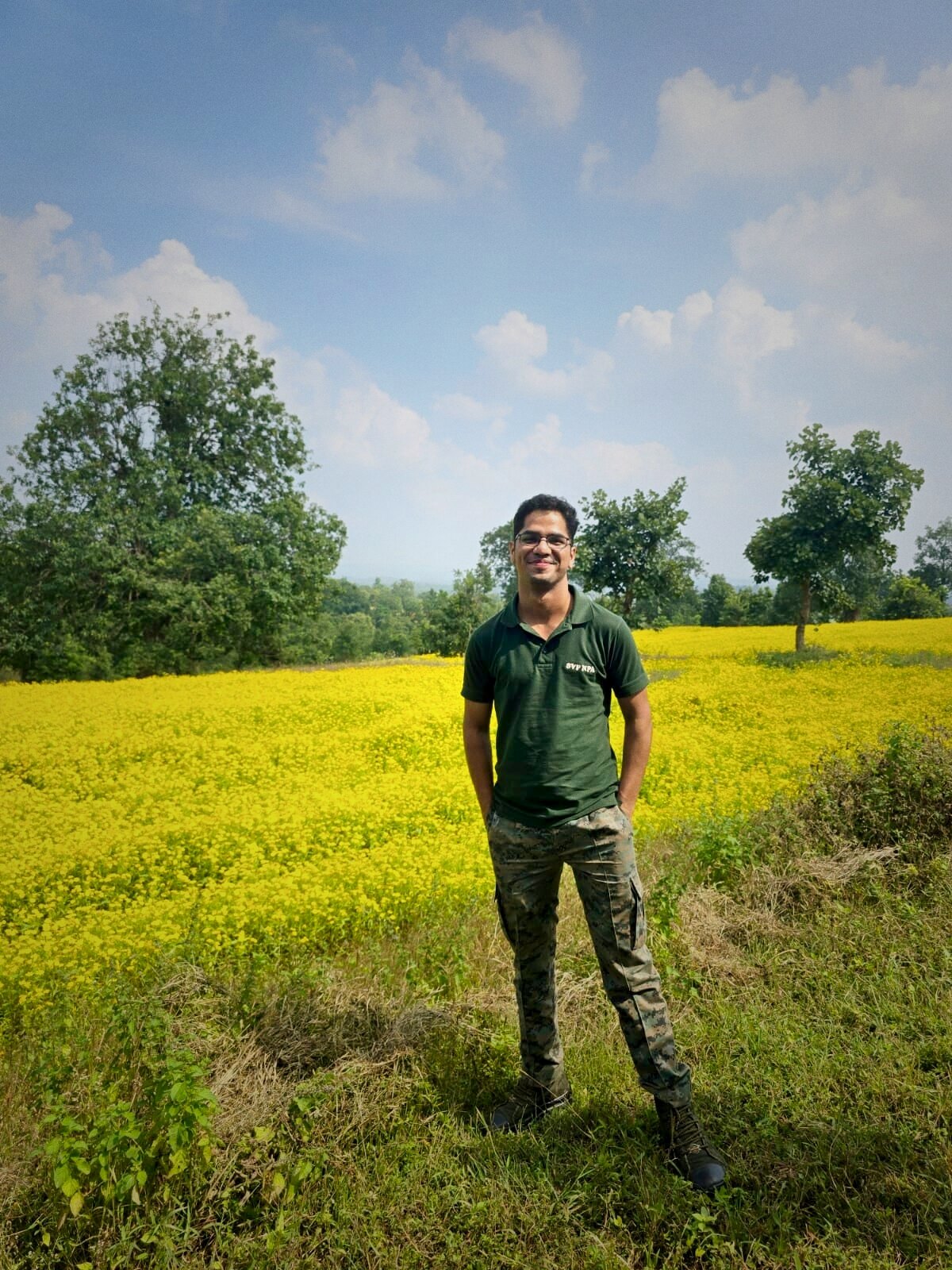
I spent hours on YouTube watching interviews, listening to his collaborators and talking to my (certified) cinephile friends, trying to understand what made his films so hard to forget. I had to look past the stories, at the craft itself. I think the answer lies in three things.
One: the way he sees
The first is his extraordinary visual language. His cinematography plays with slow shutter speeds, step-printing and the deliberate repetition of frames, which smear movement into a peculiar blur. The world rushes past his characters while they stay trapped in their own small pockets of time. It is a lovely contrast: the city keeps moving, people come and go, trains arrive and depart, yet the characters remain suspended in their private emotional worlds.
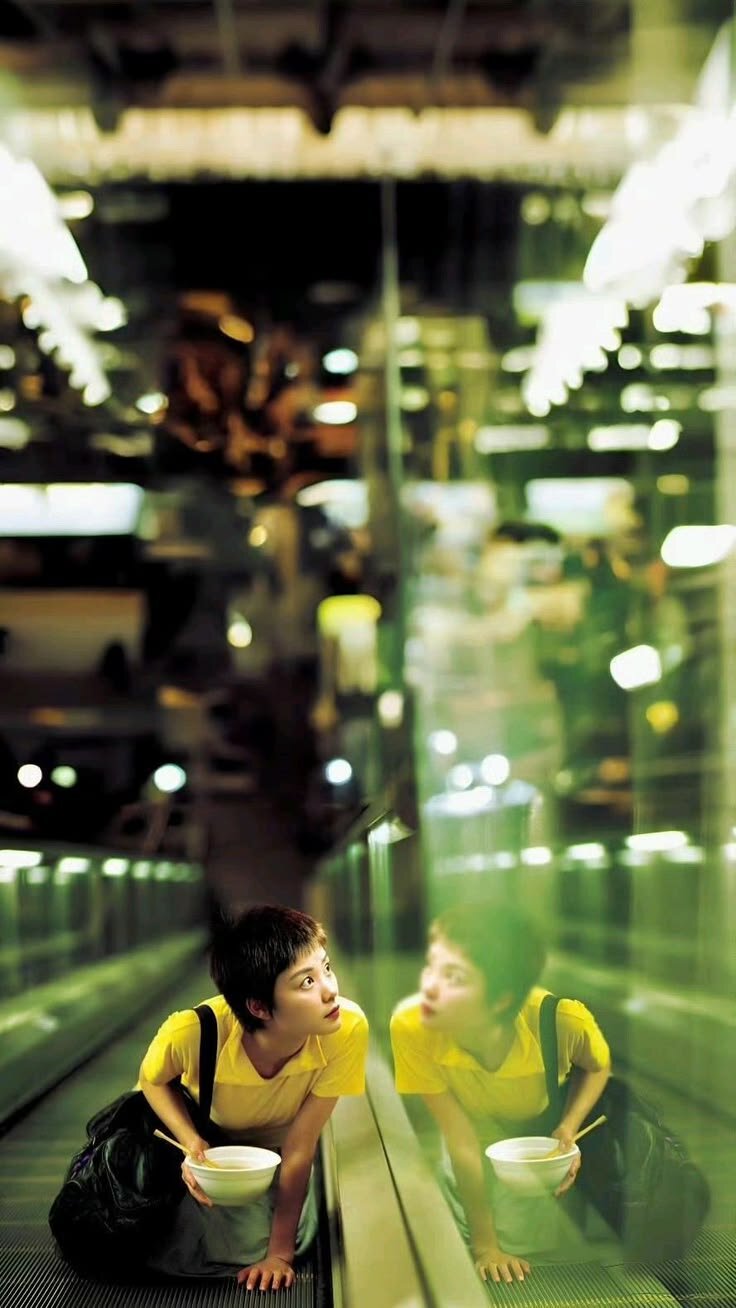
His colours and settings are just as memorable: the striking green dress in In the Mood for Love as the two lovers pass each other in narrow alleys; the yellow shirt, cramped rooms and corridors of Chungking Express; the green, neon-lit tunnels of Fallen Angels. These shots are frozen in my memory for ever.


He often places the camera behind walls, chairs, doorways and other obstructions, as though we are intruding on someone’s private world. A cigarette burns, smoke rises, rain trickles down a window, and we watch from a distance, as if eavesdropping on an intimate conversation never meant for us. His blurred frames have the quality of half-remembered photographs, holding on to something that has already disappeared.
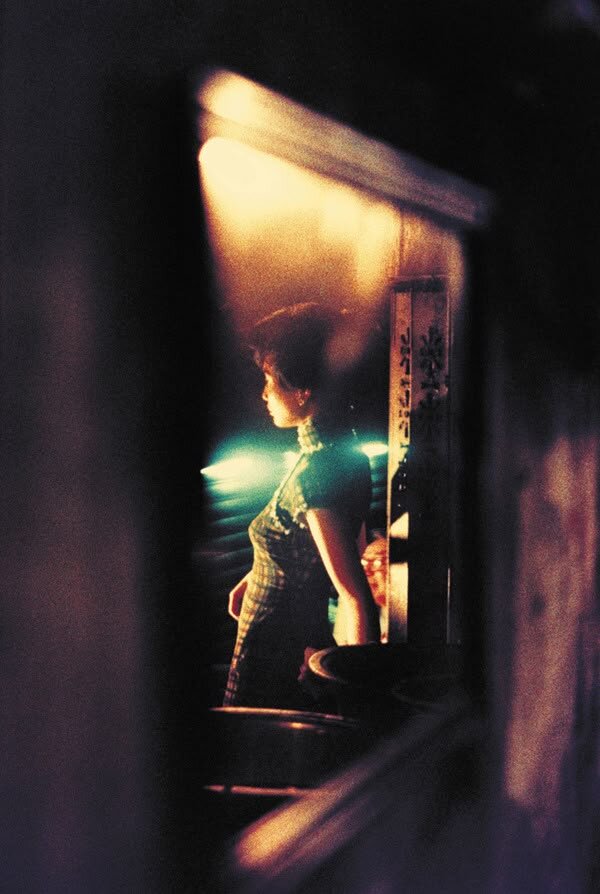
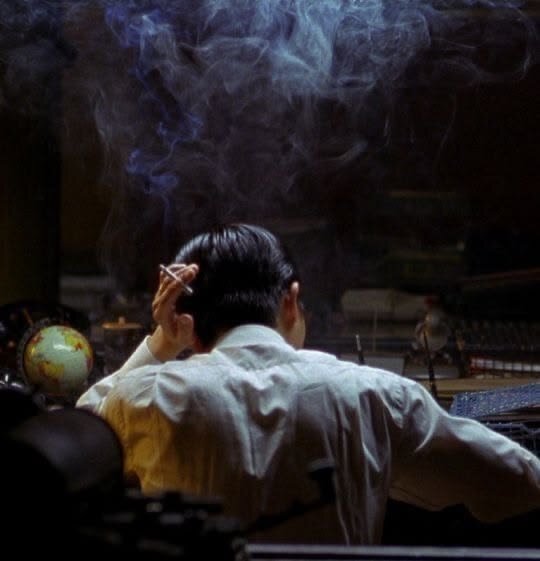
While reading about his cinema, I often came across the argument that much of its visual magic is owed to Christopher Doyle, his long-time cinematographer. There is real merit in this. Doyle’s instincts—his unconventional framing, his use of available light and colour—have clearly shaped the distinctive look of these films. Yet I don’t think this alone explains their hold on me.
Having watched other films shot by Doyle, I realised that the same techniques, placed in a different emotional and narrative setting, do not produce the same experience. The recurring corridors in In the Mood for Love become spaces of anticipation, missed encounters and suppressed desire. The camera doesn’t merely record the characters moving through them; it seems to remember them. Likewise, the step-printing in Chungking Express would have remained a brilliant but soulless technique had WKW not used it to show the stubbornly suspended lives of Cop 223 and Cop 663.
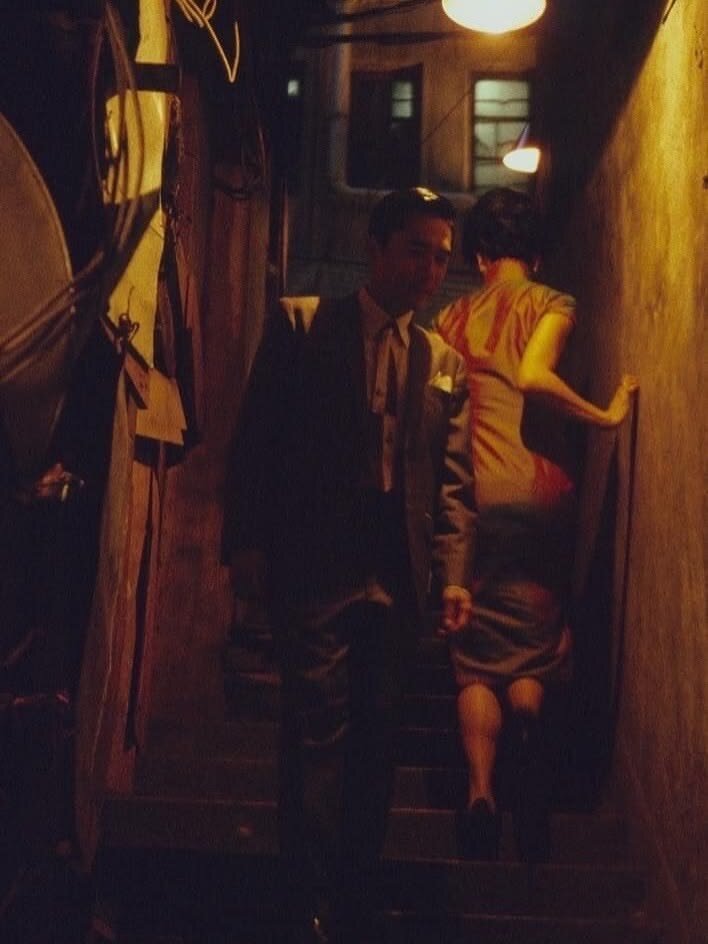
Perhaps the magic lies not in any one collaborator but in the particular alchemy between them.
Doyle gives these films their visual language, but Wong seems to know precisely what that language must remember.
Two: the music
The second is his relationship with music. In WKW’s world, soundtracks are hypnotic and repetitive, with certain pieces returning so often that they begin to feel like memories themselves. They don’t simply accompany the images; they become inseparable from them.
Yumeji’s Theme carries the intimacy and restrained longing of In the Mood for Love. The Spanish boleros, especially Nat King Cole’s “Quizás, Quizás, Quizás,” lend the film an almost operatic quality, before giving way to the cathartic Angkor Wat Theme at the end.

In Chungking Express, the ever-adorable Faye Wong rummaging through Cop 663’s apartment while “California Dreamin’” plays is simply impossible to forget. The song becomes an extension of her eccentric little universe: her fantasies and her unspoken affection.
In the same way, “Only You” playing as a motorcycle sways through the tunnel in Fallen Angels creates an almost surreal experience, as if the tunnel were a passage through time.
Even away from the films, hearing these pieces carries me back to a particular frame, a particular corridor, a particular expression on someone’s face. The music has become a window to memory.
Three: time, and the people trapped in it
The last, and perhaps the most important, is his treatment of time and of his characters. Time in WKW’s cinema is not just a matter of chronology; it is emotional, backward-looking and deeply personal. His characters do not simply remember the past. They seem to live in it, returning to certain moments with an almost obsessive attachment.
The expired cans of pineapple in Chungking Express become a motif of time, loss and the very human urge to hold on to things long after their moment has passed. Cop 223 measures time by the expiry dates on the cans, as though the expiry of an object could somehow explain the end of a relationship. There is something both absurd and deeply moving about this. Perhaps we all do something similar, giving arbitrary meaning to objects and dates because we cannot quite accept that something meaningful has ended.
It reminds me of a beautiful couplet by Ahmed Faraz:
शायद कोई ख़्वाहिश रोती रहती है
मेरे अन्दर बारिश होती रहती है
Perhaps the incessant rain I feel inside me is the tears of some unfulfilled wish buried deep within.
Another thing I have noticed, especially about the men in his films, is their peculiar clumsiness. They are often solitary, introspective men, far more at ease in their own thoughts than in the world outside. In this they sometimes remind me of the characters in Haruki Murakami’s novels; WKW has spoken of Murakami’s influence on his work. This inability to speak in love is echoed by Alain de Botton in Essays in Love.
De Botton suggests that silence and clumsiness can be the most genuine expressions of desire. It is fairly easy to seduce someone towards whom one feels indifferent; the truly overwhelmed lover may struggle to find even the simplest words. He recalls the Marquise de Merteuil’s criticism of Valmont in Les Liaisons Dangereuses: his love letters are too polished, too logical and too perfectly put together to be the work of someone genuinely in love. Real desire, de Botton suggests, is inarticulate. Thoughts come out in pieces, the right phrases stay out of reach, and silence often says what words cannot.
This seemed to explain something I had sensed in WKW’s characters. Chow Mo-wan and Su Li-zhen in In the Mood for Love are not people without feelings; they are people who cannot express them without compromising something they hold dear. Their silences are not an absence of communication. They are the communication.
Orpheus looks back
There is an old Greek myth, of Orpheus and Eurydice, that I often think about. Having lost his beloved Eurydice, Orpheus travels to the underworld to bring her back. Moved by his music, the gods allow him to lead her back to the world of the living on one condition: he must not turn around to look at her until they have both reached the surface. But just as they are about to emerge, overcome by the need to see whether she is really following him, Orpheus turns around—and loses her a second time.
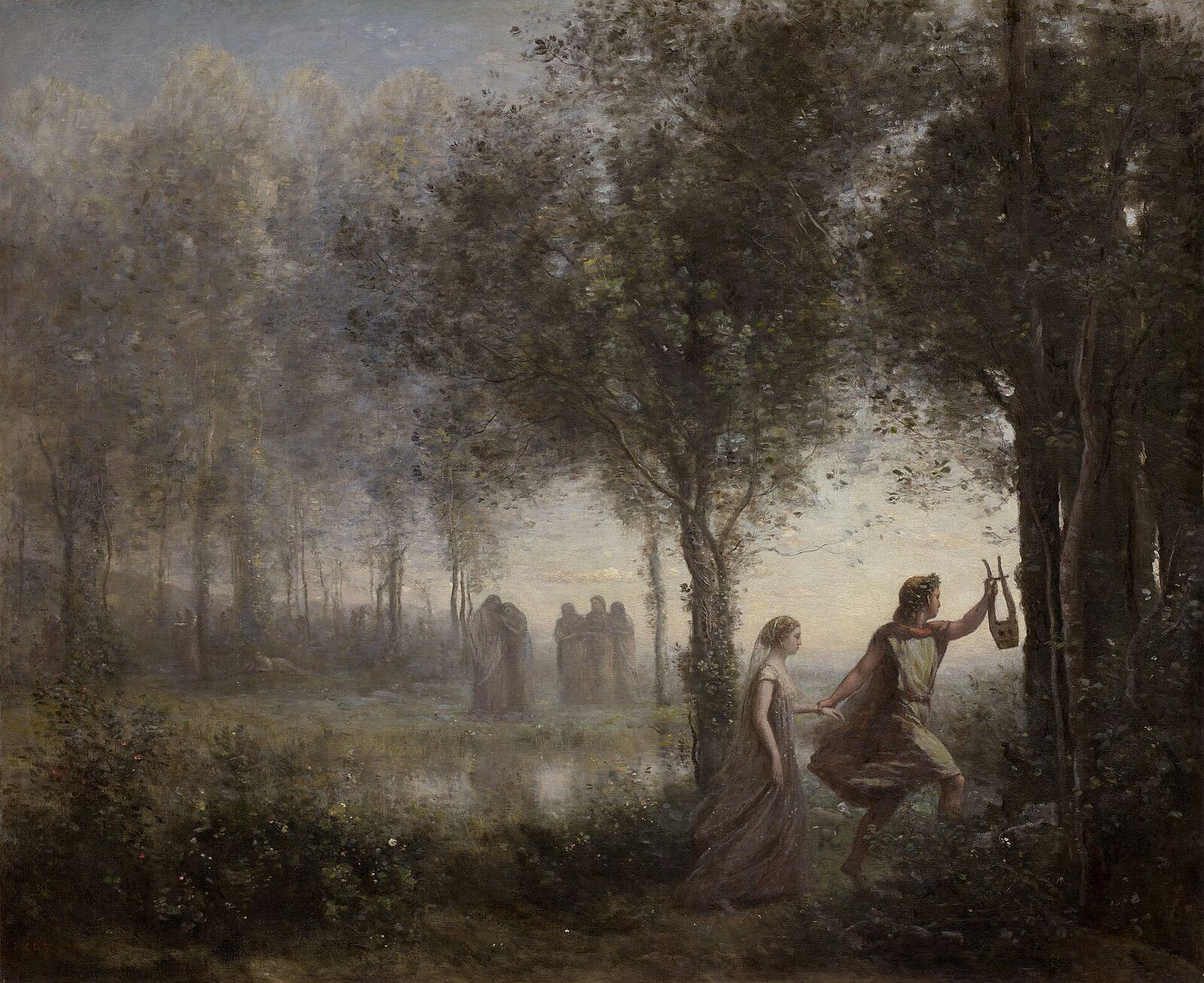
I sometimes wonder whether this is what makes longing so deeply human: the knowledge that what we most want to hold on to may vanish the moment we try to possess it. Perhaps the tragedy of Orpheus is not simply that he looks back, but that he cannot bear the uncertainty of not knowing whether Eurydice is still there. His need for reassurance destroys the very thing he wishes to keep.
WKW’s characters seem to understand this instinctively. They hesitate, look away, miss their chances, live in silences and leave things unsaid. Their love is most intense in the space between what they feel and what they manage to say. They seem to know that some things are better left unfinished—that the moment we try to define or possess an emotion, we risk diminishing it.
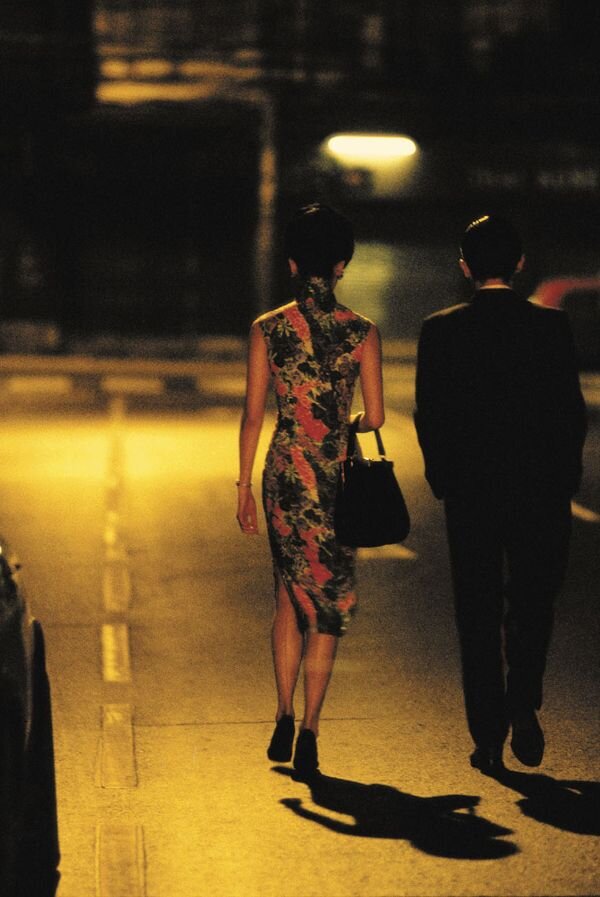
His characters cannot escape their memories, and neither, it seems, can I escape his films. I would happily trade all my memories of them for the thrill of discovering them all over again.
Thanks for reading.
Further watching
Films discussed, all directed by Wong Kar-wai: As Tears Go By (1988), Days of Being Wild (1990), Chungking Express (1994), Ashes of Time (1994), Fallen Angels (1995), Happy Together (1997) and In the Mood for Love (2000). Cinematography on most by Christopher Doyle. Yumeji’s Theme by Shigeru Umebayashi; the Angkor Wat Theme by Michael Galasso.
Credits
Photographs
All photographs are from Wikimedia Commons and are used under their licences: Portland Street neon by Wpcpey (CC BY-SA 4.0); Stanley Street neon by VasenkaPhotography (CC BY 2.0); Hong Kong night street by Wilfredor (CC0); Chungking Mansions by Kent Wang (CC BY 2.0); the Central–Mid-Levels escalator by K.C. Tang (CC BY-SA 3.0); Angkor Wat by Bjørn Christian Tørrissen (CC BY-SA 4.0). Corot’s painting is in the public domain. The photograph in the yellow field is my own. Stills from In the Mood for Love (Block 2 Pictures, 2000) are from my own collection; all rights belong to their owners, and they are used here for review and commentary.
Video
All videos are embedded from YouTube and remain with their uploaders: MUBI, In Depth Cine, BBC Moving Pictures (via Films Extras), clarencito, Cinematic Vibes, Laranja.x, Fairytale, sarmizeghetooza, Just The Best Scenes, KURTZ and Cinema Solace. All rights in the films, their music and their images belong to their owners.