“You are a bad judge of human nature if you bring people like me into the Zone.” -THE WRITER
This one line is an outpouring—rather timid, a little tired and disappointed—from the Writer, one of the three men who make the journey: the Stalker, the Writer, and the Scientist. But first, what is the Zone?
To establish the premise of the film, a few fictions have to be entertained. It begins with the Zone: a vast expanse of land that has been altered by some unusual change. What unusual change could overtake an entire geography of land, forest and river? Many things—an industrial disaster, a meteorite strike, a nuclear detonation. Something of such magnitude and scale that it has altered the very nature of the particles that make up all matter. So the Zone is a myth; the Zone is wonder; the Zone is uncertain terror; the Zone is something that has awakened. What is it that is so difficult to figure out, that follows a surprisingly uncertain trajectory of its own, so often wonder and so often terror? Is it something personal to us? Is it our desires? Or is it whatever desires our desires?
The Zone is human consciousness that is no longer natural. It has been altered. Many people spend entire lifetimes without ever questioning the socio-cultural order, accepting it as an inevitable condition of life. But it was an accident, whatever it was. Man was not designed to live embedded in culture and politics. For millions of years he lived unencumbered, free and largely unconstrained—and then something happened, and the landscape changed. The Zone may denote that change of landscape.
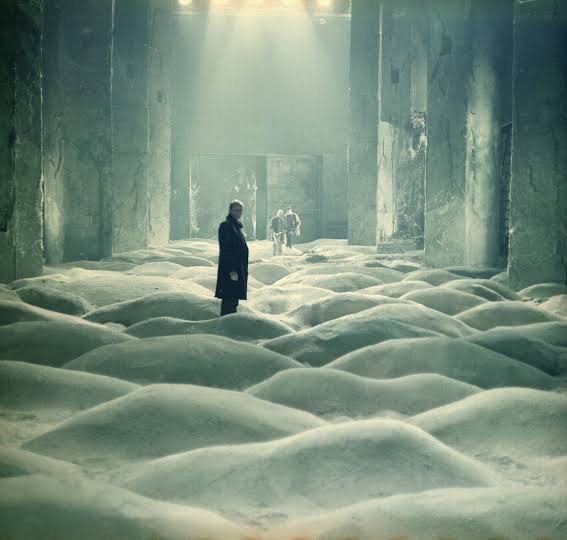
Not everyone can enter the Zone, and so it has to be guarded. The landscape has to be wired, fenced and militarised. It is the army that guards the Zone, yet even the army cannot manoeuvre successfully inside it. Remember, the Zone is no ordinary landscape. It has hills, forests, rivers, lakes, fields and dilapidated structures; it has coins, gold watches and everyday utensils lying at the bottom of its rivers, rusted tanks and pulverised bullets. It speaks circumstantially of what it once was and what became of it. It holds the corpses of people who tried to enter and whom the Zone did not allow through. It is full of death traps, but those traps are not static. What is a river now may become magma at its will; what is spacious may constrict and suffocate; and when any of this will happen, nobody knows. And so Stalkers are needed.
Who are these Stalkers? They are the people who have spent years learning the Zone and have begun to understand it—not to flirt with it, not to abuse it, not to penetrate it, but to manoeuvre respectfully through it. The Stalker is the only one who can take people inside the Zone and, once inside, into the Room (of which more later). Ours has moved through the Zone for decades. He is old, weary and sick, as if he has seen things that disturbed him deeply. He is like a saint. The way he speaks resembles prayer, carrying the pain of one who knows he will always be misunderstood. This time he has two companions, a Writer and a Scientist, and both want to enter the Zone, find their way through it, and reach the Room. The Room is the place that grants the deepest desires of man.
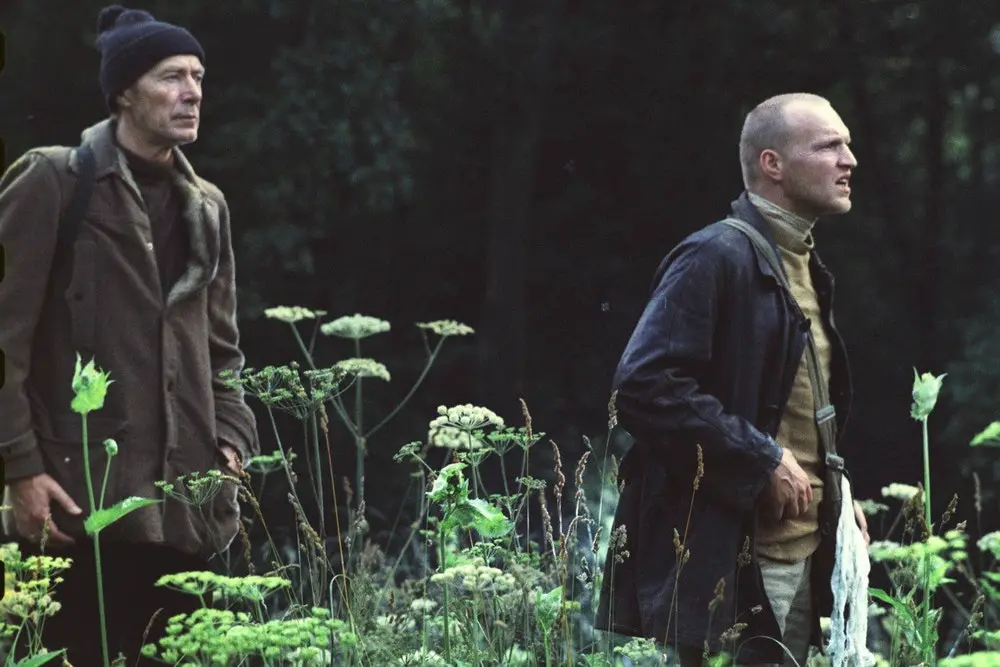
In pursuit of that deepest desire, the Stalker has watched many people die. He is a saint who has seen, with his own eyes, what a man’s deepest desires can do to him. And the dissatisfaction born of insatiable longing—the sense that nothing is ever enough—leaves his lips as a poem, as a prayer, once he has brought the Writer and the Scientist to the threshold of the Room after a deadly sojourn. The poem was written by Arseny Tarkovsky, the director’s father.
"Now the summer is gone,
As if it hasn’t been here.
In the sun it’s warm.
But it is not enough.
Everything what could come true
Like a five-fingered leaf
Fell straight into my palm,
But it is not enough.
Neither evil, nor good
Was lost in vain,
Everything burned in light,
But it is not enough.
Life kept me under its wing,
Took care of me and saved me,
I was lucky indeed.
But it is not enough.
The leaves were not burnt,
The branches were not broken…
The day is clean like glass,
But it is not enough."
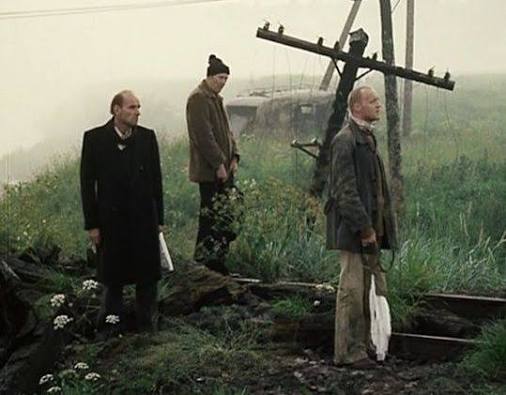
A spiritual dissatisfaction: after all material satisfaction, after possession, after accumulation, after everything—even when everything is fine—what is left? Why this deep-seated urge to crave and scratch, every single day, until death finally slays us? Titles, estates and applause, as if these could certify existence. It is an artificial scarcity that makes a beggar of you, and dims your vision until you see everybody else as a beggar too.
The Stalker knows it will never be enough. He knows there is no point exhausting oneself, wasting one’s life away on the fulfilment of desires that are socially produced—desires whose very nature mutates as social realities change. The desires we call real are outcomes of conditioning, of production, of the power structures of society; change any of these and you will be craving something else altogether. And at the very last, a man may believe that his deepest desire is the thing that will redeem him—that will give complete and irreversible joy, resolve every complication and bring freedom. But is joy, is freedom, is an unhindered life truly our deepest desire? Do we even know what our deepest desire is? Remember: the Room grants the deepest desires of man.
And so the Stalker tells the story of Porcupine, his teacher, the man who taught him how to move through the Zone.
Porcupine’s Story
Porcupine was a legendary guide who knew the Zone better than anyone alive. We never meet him. He reaches us only in fragments, in what the travellers say to one another on their way in.
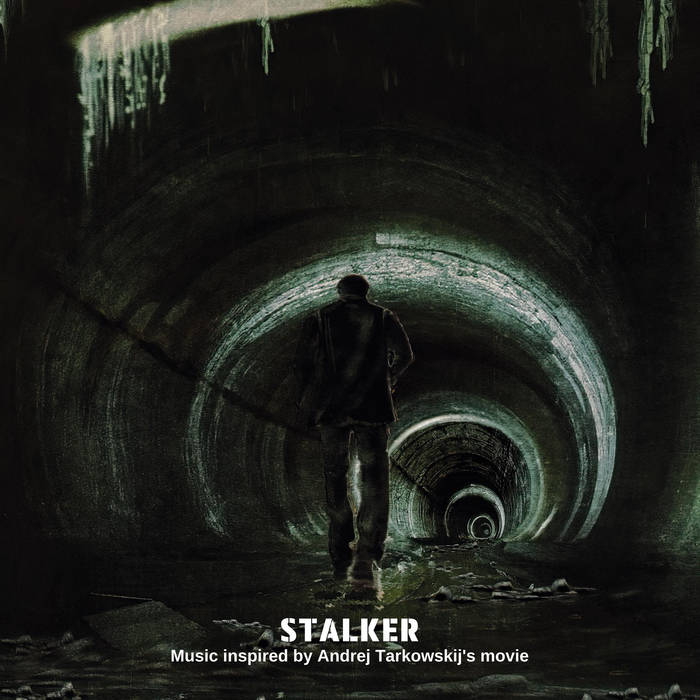
Once, Porcupine took his younger brother into the Zone. On the road to the Room lies a tunnel the guides call the Meat Grinder, and few who enter it come out. His brother went in first. He never came out.
Porcupine went on alone, and he reached the Room. Everyone assumed they knew what he had asked for, because it was what any grieving man would ask for: his brother, alive again. He went home and waited. His brother did not come back. Within a week Porcupine was fabulously rich. A short time later, he hanged himself.
Why? Because the Room does not grant the wish you speak aloud. It does not even grant the wish you believe you hold. It grants the desire buried deepest in you, the one you would never admit, not even to yourself. Porcupine truly believed he wanted his brother back; he knelt in the Room and asked for him with his whole heart. The Room gave him money. That was when he learned the truth about himself: beneath the grief and beneath the love, what he really wanted was wealth.
The money was never a reward. It was a verdict.
And Porcupine could not live with what the Room had shown him.
* * *
The Stalker has witnessed some terrible things. He does not say everything, but his very demeanour suggests he is guarding a knowledge that would protect everybody: that one need not be so hard and so rigid in life. In one of the conversations the three have among themselves—about what man is, what life is, where poetry, music and art belong, and what is an essential condition of life and what is not—the Stalker tries to soften the adorned identities of their rigid existential order. So much artifice, so much self-coercion, is not a precondition for living. In words drawn from the Tao Te Ching, he reflects that at birth a person is soft and supple, and at death rigid and hard. A young tree bends and is full of sap; a dead one is dry and stiff. So hardness and strength belong with death, and weakness and pliancy belong with life. Whatever has hardened will not win.
He wants the Writer and the Scientist to become helpless like children, because only something soft can change, and only something that can change is still alive. What a beautiful thought—a meditation, a prayer, as they call it, through cinema, in Andrei Tarkovsky’s lens. The Stalker wants to shed every ideational structure: the rigid, unbearable burdens of identity; the inessential conditions of living we can no longer separate ourselves from; modern civilisation itself; ideas of liberty that are, at bottom, antithetical to any real approach to freedom. Only a simplicity and ordinariness that knows no order, something almost prehistoric, can find the unnatural Zone natural.
At the threshold of the Room, where the Writer could enter and realise his deepest desire, he is afraid—terrified. He does not know what his deepest desire might be. Throughout the journey he has dared to admit, piece by piece, who he might be. He chose to delve into it; he chose to listen to the Stalker. At first he argued his position: his modern civilisation, his understanding of culture and of the purpose of living. But he listens, he sees the Zone, and the revelation happens. When the Stalker asks him why he thinks Porcupine killed himself, he says Porcupine was given the essence of his true nature. Conscience and soul-searching were all invented by the mind. When Porcupine realised that, he hanged himself.
Conscience and soul-searching were invented by the mind. They do not lie at the foundation of our deepest part. And so, faced with the realisation of his deepest desire, the Writer says: I won’t go into your Room. I won’t pour the filth of my soul onto anyone’s head.
Porcupine’s fate turns the Room from a miracle into a mirror, and nobody wants to look into it.
When the three men finally stand at its threshold, none of them steps inside. The Writer refuses; he suspects that whatever lies at the bottom of his soul is not noble, and he would rather not have it proven. The Scientist reveals that he has carried a bomb all along. He meant to destroy the Room, fearing that one day someone with a dark hidden desire would reach it and bring catastrophe upon the world. In the end he cannot bring himself to do it; he takes the bomb apart and scatters its pieces into the water.
The Stalker, who has spent his life bringing desperate people here, is left heartbroken. The two men he guided have lost faith in the one place he believed could still offer hope. The Writer will not enter because he does not know what may become of him; the Scientist wanted to destroy the Room so that the world would stay safe forever. Both are afraid of the deepest human desire. The Stalker laments that this is not a good thing, not a hopeful thing. People have no hope, no belief in themselves. They are afraid of themselves. The Room is not dangerous, and the Zone is not dangerous. The rooms and the Zones are carried inside people’s hearts.
* * *
There is a desire that can be known—one we consciously recognise, fathom and reflect upon, sometimes say out loud and many times keep hidden. But is there also a desire so subconscious, so unrealised, unreflected and undreamt, that one day we ourselves will be thrilled, astonished and terrified by it? Then would self-knowledge not be a dangerous thing? And why so much questing—the quest to know who you are and what all you can have—until everything you are is laid bare? Perhaps that is what “Stalker” leaves us with: not an answer, but a threshold. The Room is still waiting. The only question is whether we are soft enough to step inside.