Part Three · Meaning and the Self
Chapter 11
Labels That Stick
Some places try to remake people completely. And some labels follow people wherever they go. How do people cope, and how can we help?
Featuring Goffman · Merton · Durkheim
Assisted and Curated by Claude, Referenced and Collated by me
The man at the gate
Imagine a young man who spent eight years in an armed group hiding in the forest. He carried a gun, moved camp every few nights, obeyed commanders and lost friends. One day, for many tangled reasons, like being tired, ill, missing his family or hearing an appeal on the radio, he gives himself up. He walks into a police camp, and his old life ends.
What happens next matters a lot, for him and for the whole effort to bring people like him back into normal life. He's registered and may live for months in a centre with others like him, with new clothes, a daily routine, classes and job training. Later he goes to a village or town, where he must find work and perhaps reconnect with a family that may welcome him or fear him. Everywhere he goes, he carries an invisible past. Some people may see him as dangerous, some as a traitor and some as a hero. He must decide whom to tell, when and how much.
A thinker called Erving Goffman studied situations like this long ago, though in very different places: mental hospitals, prisons, and people with disabilities or from looked-down-upon groups. His ideas fit this young man, and many other people too.
Total institutions
In the 1950s, Goffman spent a year inside a huge mental hospital in Washington with about seven thousand patients. He pretended to be an assistant to the sports director so he could move around and watch. He came up with the idea of the total institution: a place where many people live and work together, cut off from the outside world, following a strict routine.
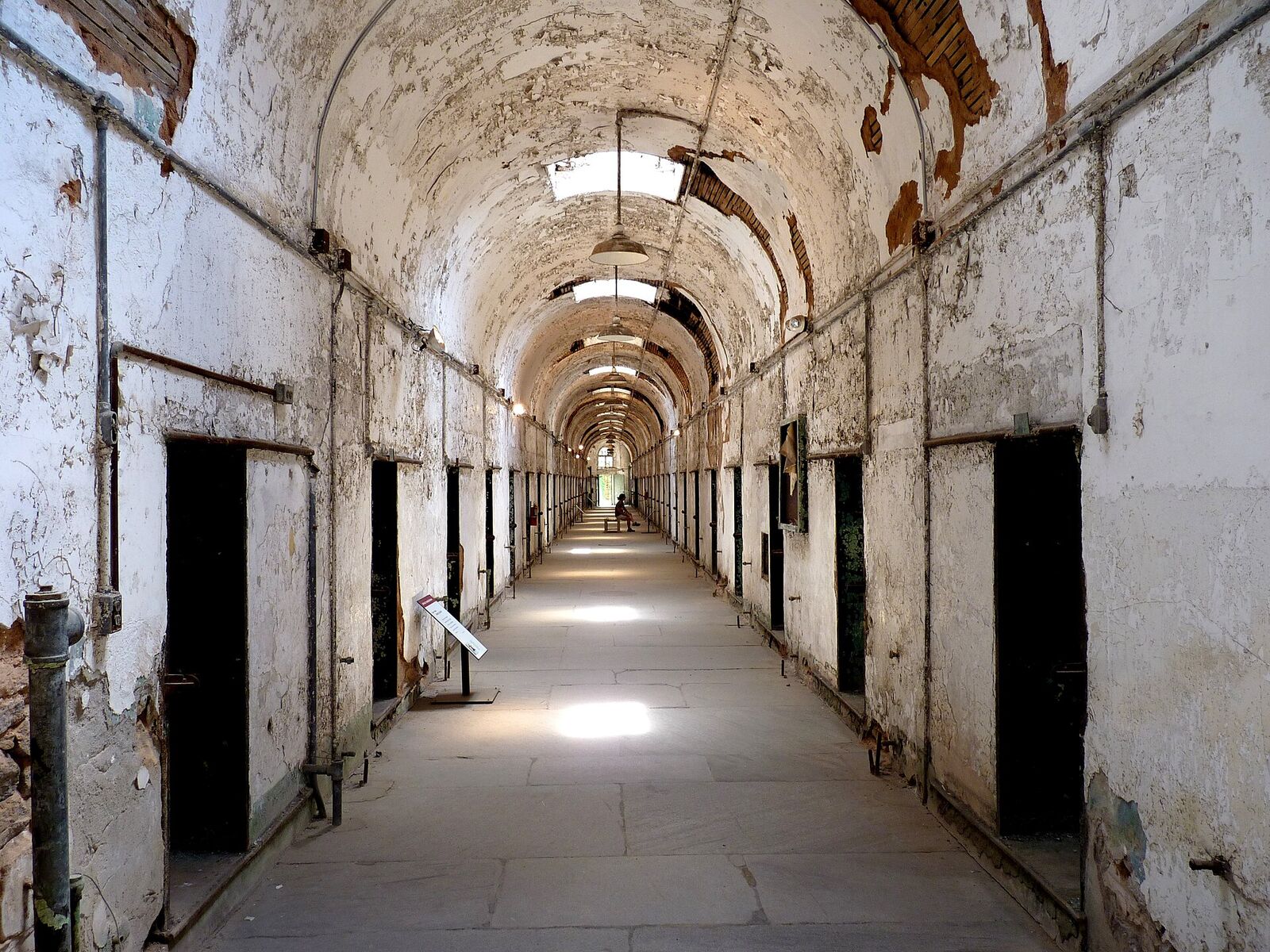
His list was surprisingly long: prisons, hospitals, orphanages, army barracks, ships, boarding schools, monasteries and camps. In India we could add hostels, training academies, children's homes, old-age homes and rehabilitation centres. Normally, we sleep, work and play in different places with different people. In a total institution, everything happens in one place, under one authority, on a strict timetable, alongside many others who are all treated the same.
Stripping away the old self
Goffman said that when you enter a total institution, your old self gets stripped away. You arrive with your own clothes, name, belongings and roles like son, husband or worker. Then you're photographed, given a number, your belongings are taken, you're given a uniform and a standard haircut. Bells and whistles tell you when to wake, eat, work and sleep. Your time isn't your own anymore.
Anyone who has been through army or police training, or the first weeks of a strict boarding school, will recognise parts of this: the first-day haircut, matching uniforms, shouted orders and drills practised again and again. Armies know that to make a soldier, they must first unmake the civilian. Ragging in colleges, where seniors bully newcomers, is a cruel, unofficial version of this. It has caused real suffering, which is why it's now banned.
Goffman said this isn't always meant to be cruel. Staff often believe they're helping. But managing many people in one closed place tends to strip away their individuality anyway. In 2001, at Erwadi in Tamil Nadu, people with mental illness were being kept in chains near a shrine, in the belief this would cure them. After a terrible fire there, the Supreme Court stepped in, and people paid more attention to how those with mental illness are treated.
Managing many people in one closed place strips away their individuality, even if the staff mean well.
The secret life inside
But Goffman also saw something hopeful. Inside every institution, people find small ways to keep their sense of self. He called this the underlife. Patients hid food in their clothes, used cigarettes like money, found corners where staff couldn't see, made friends with certain attendants and joked about the staff. Every prison has its secret swaps, slang and ways of passing time and keeping hope.
Goffman noticed different ways people cope. Some withdraw into themselves. Some refuse to cooperate. Some get so used to the institution that they feel more comfortable inside than outside. Some try to be perfect inmates. Most "play it cool", mixing these ways to get through with as little harm as possible.
Goffman said these small acts show something about who we are. We get our place in the world from families and organisations, but we get our individuality from the small ways we push back. We find ourselves in the cracks.
What this means for places that want to help
For anyone running a rehabilitation centre, a children's home or a prison that wants to reform people, Goffman has a warning and a lesson. The warning: uniforms, numbers, searches and constant watching can make people withdrawn and bitter instead of changed. The lesson: how a person is welcomed at the gate shapes who they become. Places do better when they respect people's dignity, let them keep some belongings and privacy, involve them in decisions, keep links with family and treat them as people, not just files. A former fighter treated as a person with a future is more likely to build that future.
Spoiled identity
Goffman also wrote about stigma: a mark that makes others see someone as less than a whole person. He described three kinds: marks on the body, like a disability; supposed flaws of character, like having been in prison or having had mental illness; and the group you're born into, like race, religion or caste, which can stain a whole family.
Goffman said stigma isn't really inside the person. It's in how others see them. The same thing can be shameful in one place and admired in another. A battle scar might bring honour among soldiers but fear among villagers. A former fighter may be a traitor to old comrades, a danger to new neighbours, a hero to some and a success story to officials. The stigma is in the eyes that see.
Seen or hidden
Goffman separated people whose stigma is visible, who must cope with stares and pity, from people whose stigma can be hidden. Those with hidden stigma must constantly decide whom to tell and when, and live with the worry of being found out. Goffman called hiding it passing. People avoid certain topics, make up cover stories and fear that someone from their past will show up.
Think of a young man from a Dalit family who moves to a city for a job. His colleagues assume he's from their caste. He might change his surname, avoid talking about his village, and stay silent when people make jokes about "quota candidates". That constant hiding is exhausting. And if the truth comes out, some people may suddenly turn cold. That's the unfairness of stigma.
Think of people affected by leprosy. For centuries, they were driven from their villages, whether or not they could spread it, because people thought the disease was a curse. Since the 1980s, leprosy can be cured. But the stigma stayed. Many cured people still live in special colonies, with their children and grandchildren, who've never even had the disease! Goffman called this courtesy stigma: when the label spreads to family and friends too.
Stigma isn't inside the person. It's in how others look at them.
Friends who understand
Goffman said people with stigma find support from two kinds of people. "The own" are others who share the same stigma, who understand without needing explanation. That's why support groups help so much. "The wise" are people who don't share it but understand it and treat the person as normal: nurses, social workers, family, kind officials and friends. They build a bridge to the wider world.
When former fighters return to normal life, both matter. Other former fighters understand them best, and some become strong voices for peace. But they also need "the wise": a kind official, a teacher, an employer willing to give them a chance, or a village elder who speaks up for them.
Becoming what you're called
Merton described the self-fulfilling prophecy: a false belief that makes people act in ways that make it come true! His example was a bank. A rumour spreads that a perfectly healthy bank is in trouble. Everyone rushes to take their money out. Banks don't keep all the money in cash, so it can't pay everyone at once, and it fails! The rumour was false, but it came true because people believed it.
This happens with labels too. If employers think a group is unreliable and won't hire them, the group stays poor, which seems to "prove" the belief. If teachers expect certain children to fail, they may give them less attention. In one famous study, teachers were told that some randomly picked pupils were about to bloom, and those pupils actually did better, probably because teachers treated them differently!
India's saddest example is a British law from 1871 that labelled whole communities as "criminal" from birth. Many were travelling herders, traders, entertainers and forest people. They had to report to police and carry passes to travel. After independence, the law was removed in 1952, but the stigma didn't disappear. Some communities, like the Pardhis of central India, have said they're still blamed whenever something is stolen nearby, and refused jobs and homes. When a group is denied land, schooling and honest work, and always treated as suspects, it gets pushed to the edges.
Why societies need outsiders
Durkheim said crime is normal: every society has it. Imagine a monastery full of saints. Even there, tiny faults like a careless word would cause a scandal! Every society decides some things are wrong, and if serious crimes disappear, it simply finds smaller ones to disapprove of. He also said that when people are shocked by a crime together, they feel united and remember their shared values. The rule-breaker shows everyone where the line is.
This helps explain why societies often hold on to their "outsiders". Labelling someone as the bad one helps others feel good about themselves. So stigma isn't just a mistake that can be fixed with facts. It does a job for the people who use it, which is why it's so hard to get rid of.
The return
Think again of the young man at the gate. Goffman tells us the place that receives him will shape who he becomes. When he leaves, he'll either hide his past or face stares and closed doors. Merton tells us that if neighbours expect him to go back to violence, their suspicion might push him back. Durkheim tells us some people may want to keep seeing him as the enemy. And all of it tells us what would help: a welcome that respects his dignity, links with his family, a real job, support from people who share his past and from kind people who accept him, and slowly changing what others expect of him.
These things aren't only in minds and labels. They're also in our bodies: how we stand, eat, wash and touch. That's the next chapter.